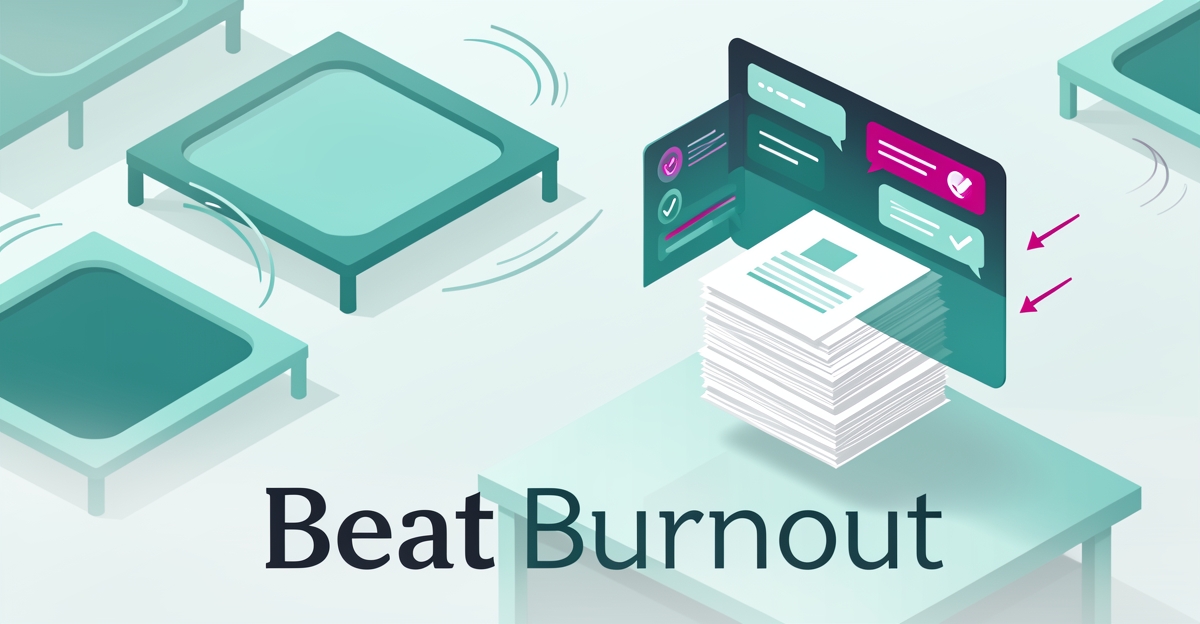
How AI Can Reduce Staff Burnout in High-Traffic Trampoline Parks
Key Facts
- Workers typically spend several hours a day on routine tasks that AI could handle, per recent workplace studies
- Workplaces using AI tools thoughtfully have reported meaningful drops in emotional exhaustion, according to workplace research covered by CNBC
- Tool-switching overhead—juggling multiple disconnected systems—is a primary driver of AI-related mental fatigue
- Poorly integrated AI (many fragmented tools, no training) can intensify work instead of reducing it
- AI employees handle routine workflows like check-ins and guest tracking end-to-end, freeing staff for safety oversight
- AI literacy training helps staff collaborate with AI confidently instead of fighting it
Hire a team member that works 24/7 — for less than a part-time wage.
AI receptionists, SDRs, dispatchers and 99+ roles. Trained on your business, fully managed.
Not sure where to start? Ask our AI planner
The Hidden Cost of Routine Work in High-Traffic Parks
Beneath the excitement of soaring jumps and laughter, trampoline park staff face a hidden drain on their energy: the relentless cycle of routine tasks that consume their shifts. Workers in high-traffic recreational facilities commonly spend hours each day on automatable administrative work like check-ins, guest tracking, and basic communication—time that could instead be devoted to safety oversight and creating memorable guest experiences. This constant task-switching between systems for attendance, waivers, and guest inquiries creates a cognitive burden that accumulates throughout the day, leaving employees mentally fatigued before their shifts even end.
The impact of this administrative overload manifests clearly in decision fatigue. Workplace burnout research as of late 2026 identifies juggling multiple outputs and systems simultaneously as a leading source of exhaustion. In trampoline parks, this often looks like staff juggling separate platforms for check-in procedures, safety waiver tracking, and guest communication channels—each requiring different mental models and interaction patterns. When employees must constantly shift between these disconnected tools, their capacity for sustained attention on critical safety monitoring diminishes, increasing the risk of oversight during peak hours when guest volume is highest.
This routine work burden not only depletes immediate energy but also contributes to longer-term burnout risks that affect both staff wellbeing and operational consistency. AIQ Labs addresses this challenge by deploying AI Employees specifically designed to handle these repetitive administrative workflows—from automated check-in processing and real-time guest tracking to standardized communication protocols—allowing human staff to redirect their focus toward high-value activities that require human judgment, such as safety interventions, personalized guest assistance, and dynamic problem-solving during busy periods. By eliminating the cognitive overhead associated with routine task management, parks can create sustainable work environments where staff remain engaged, alert, and capable of delivering the exceptional experiences that define their brand.
AI as a Cognitive Load Reducer: Evidence from Workplace Studies
The question isn't whether AI can help exhausted trampoline park staff—it's whether it's implemented the right way. Recent evidence suggests that when AI is deployed thoughtfully, it measurably reduces burnout rather than adding to it.
One of the most compelling findings from recent workplace research covered by CNBC is that workplaces using AI tools saw a notable drop in emotional exhaustion. For an industry where staff juggle check-ins, guest tracking, safety monitoring, and parent communications simultaneously, that kind of relief matters. The same research found workers spend multiple hours a day on tasks that AI could easily handle.
The mechanism behind these numbers is cognitive load. When employees constantly switch between disconnected systems, each transition demands a mental reset. Research on workplace burnout identifies this "tool-switching overhead" as a primary driver of AI-related mental fatigue. In a high-traffic park environment, that overhead compounds fast—a front desk clerk bouncing between a check-in terminal, a waiver system, and a walkie-talkie is doing exactly the kind of context-switching that drains cognitive capacity.
This is where the "AI employee" model differs from piling more tools onto staff. Rather than adding another dashboard to monitor, a purpose-built AI employee absorbs routine workflows entirely. AIQ Labs deploys AI employees that handle tasks like guest check-ins, appointment-style bookings, and routine communication end-to-end, so human staff aren't toggling between systems—they're freed to focus on what only humans can do: watching the court, engaging guests, and keeping the floor safe.
The research supports this division of labor. Employees who use AI to ease their workload tend to be more productive, feel more in control across operational, emotional, and cognitive areas, and drive better outcomes for their teams. Leadership strategist Caroline Stokes describes AI as a "phenomenal thinking partner"—not just an upskill, but a reinvention of how work gets done.
That said, implementation quality determines the outcome. The same body of research warns that professionals juggling many fragmented AI tools daily can experience elevated stress and reduced creative problem-solving. Poorly integrated AI intensifies work instead of reducing it. The difference comes down to a few fundamentals:
- Consolidate routine workflows into a single AI system rather than adding fragmented tools
- Provide AI literacy training so staff collaborate with AI confidently instead of fighting it
- Set realistic expectations so automation lightens the load rather than creating room for more tasks
- Use AI monitoring to flag early burnout signals like long hours and low engagement
That last point deserves emphasis: AI systems in workplace studies have flagged participants as at risk of burnout based on factors like long hours and low engagement, enabling early intervention. In a trampoline park, that could mean AI detecting overtime patterns before staff hit a wall. Done right, AI doesn't just reduce today's workload—it protects your team's wellbeing over the long run.
Implementing AI Employees: From Check-Ins to Safety Focus
High-traffic trampoline parks run on constant motion, and staff pay for it in decision fatigue and repetitive admin work. Deploying AI employees for check-ins, guest tracking and communication shifts routine load off humans so they can stay focused on safety and experience.
AIQ Labs deploys AI employees to handle routine work, giving human staff more time to deliver high-quality guest experiences. In practice that means an AI receptionist manages arrivals, wristband scans and waiver confirmations while staff monitor jump zones and respond to guests in real time.
Research shows why this matters. Workplaces using AI tools thoughtfully have reported meaningful reductions in emotional exhaustion, while workers typically spend hours a day on tasks that AI could easily handle. Automating those repetitive touchpoints directly reduces cognitive overhead.
Implementation works best when it is designed around people, not just tools. Without proper workflow design, AI can intensify work rather than reduce it. The goal is to eliminate tool-switching overhead and decision fatigue from managing multiple systems. For parks that want to start smaller, a Workflow Build targets the single workflow that costs the most, while an AI Operating System connects the whole operation in phases.
A practical rollout for trampoline parks typically includes:
- Map the routine guest journey and assign check-in, tracking and messaging to a managed AI employee
- Integrate the AI employee with existing ticketing, POS and waiver systems for seamless handoffs
- Train frontline staff on how to supervise, override and escalate AI-handled interactions
- Set clear boundaries so automation supports safety focus instead of creating new monitoring burdens
Training is critical. AI literacy remains a challenge across industries, and not all employees are familiar with how to use these tools effectively, which can add pressure on top of existing workloads. Short, role-specific sessions on AI supervision help prevent the decision fatigue that comes from managing multiple systems and outputs.
Workflow design also protects against intensification. As research warns, AI can create room for more to be put on your plate if expectations rise without relief. Keeping human oversight on safety-critical decisions and using AI for routine administrative automation preserves the balance between efficiency and wellbeing.
When implemented with realistic goals, regular breaks and open communication about workload, AI employees reduce repetitive tasks and free staff to focus on the high-value work only humans can do: spotting hazards, coaching guests, and creating memorable, safe play.
Still paying for 10+ subscriptions that don’t talk to each other?
We build custom AI systems you own outright. No vendor lock-in. Full control.
Not sure where to start? Ask our AI planner
Frequently Asked Questions
How much time do trampoline park staff typically spend on automatable administrative tasks each day?
Can using AI actually increase burnout instead of reducing it?
What is an 'AI employee' and how is it different from regular AI tools?
What kind of burnout reduction have workplaces seen from using AI tools correctly?
How can AI help detect burnout before it becomes serious in a trampoline park setting?
What training do staff need to work effectively with AI employees in a trampoline park?
From Burnout to Balance: How AI Gives Your Team Time to Shine
Trampoline park staff routinely lose hours each day to repetitive administrative tasks—time that could be spent on safety oversight and creating memorable guest experiences. As we've seen, AI employees from AIQ Labs eliminate this cognitive load by handling check-ins, guest tracking, and communication end-to-end, and workplace research links thoughtful implementation with meaningful reductions in emotional exhaustion. The result isn't just less burnout—it's a team that's more alert, engaged, and free to focus on what only humans can do: watching the court, coaching guests, and keeping the floor safe. To see how this could work for your park, start with the free two-minute Fit Check to identify your highest-impact automation opportunity, then schedule a no-obligation 30-minute strategy call to map out a realistic path forward.
Make AI your competitive advantage — not just another tool.
Strategy, implementation and ongoing optimization. One partner, end to end.
Not sure where to start? Ask our AI planner