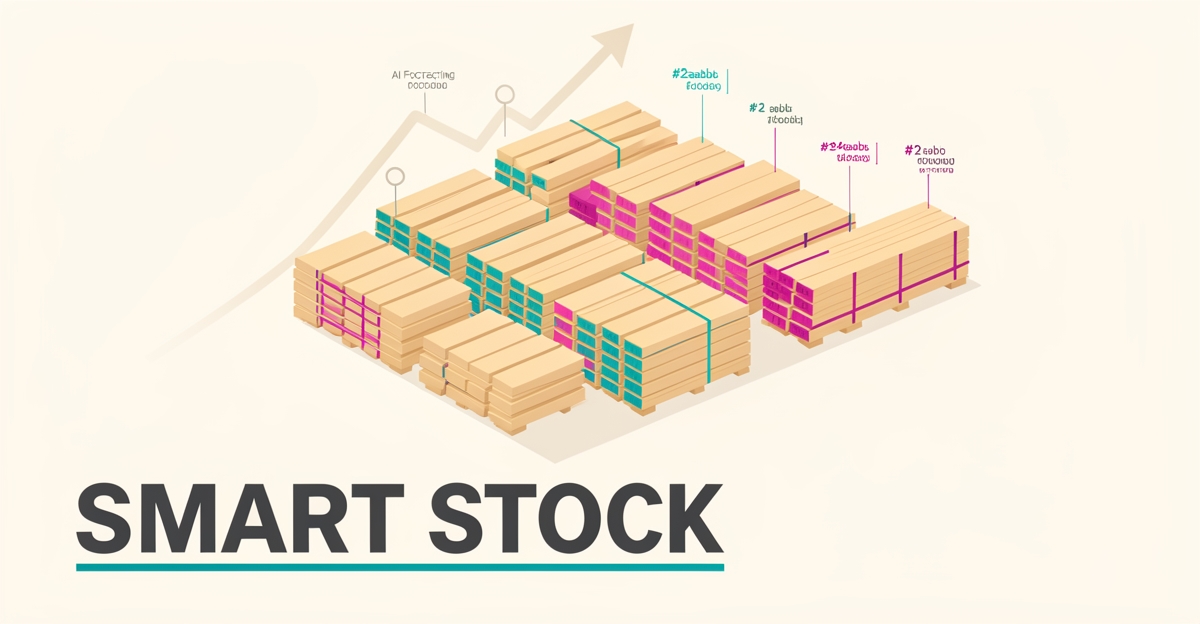
How AI Can Reduce Stockouts and Overstocking in a Lumber Business
Key Facts
- AI improves inventory forecast accuracy by 20–30% over traditional manual methods.
- Businesses using AI report 20–30% lower inventory holding costs through dynamic optimization.
- AI workflow automation eliminates over 20 hours of weekly manual data entry.
- Automated AI systems reduce operational data entry errors by up to 95%.
- Retailers adopting AI forecasting achieved 30% fewer stockouts in real-world implementations.
- Typical AI inventory implementation takes only 2 to 4 months for deployment.
- AI Inventory Managers cost 75–85% less than human equivalents while working 24/7.
What if you could hire a team member that works 24/7 for $599/month?
AI Receptionists, SDRs, Dispatchers, and 99+ roles. Fully trained. Fully managed. Zero sick days.
The High Cost of Guesswork: Why Spreadsheets Fail Lumber Inventory
Manual inventory management is a silent profit killer that leaves lumber businesses vulnerable to missed sales during peak construction seasons and bloated warehouse costs. While spreadsheets seem manageable at first, they quickly become unreliable as data complexity grows, leading to reactive guesswork rather than proactive planning.
The industry is shifting rapidly from these outdated methods to data-driven science. In 2026, AI inventory tools are no longer a luxury for large enterprises but a necessity for any lumber business aiming to remain competitive.
Traditional inventory systems wait for stock to hit zero before triggering a reorder. This reactive approach ignores critical variables like seasonal demand spikes or sudden weather changes that drive construction activity.
AI transforms this dynamic by predicting demand shifts early. This allows businesses to restock before customers even notice a shortage, turning a potential loss into a guaranteed sale.
- Eliminate Manual Data Entry: AI workflow automation can remove over 20 hours of weekly manual entry.
- Reduce Operational Errors: Automation cuts data entry errors by up to 95%.
- Improve Forecast Accuracy: AI improves prediction accuracy by 20–30% over manual methods.
- Lower Holding Costs: Smart forecasting reduces inventory holding costs by 20–30%.
When you rely on static spreadsheets, you are essentially betting on past performance without accounting for real-time variables. This leads to two expensive extremes: stockouts and overstocking.
Stockouts represent lost revenue and damaged customer trust. Meanwhile, overstocking ties up valuable capital in slow-moving lumber that occupies expensive warehouse space. AI solves this by balancing supply and demand with precision.
A real-life example of a retailer adopting AI saw 30% fewer stockouts after implementation. For a lumber business, this means ensuring popular dimensional lumber is always available when contractors need it, rather than losing sales to competitors.
Implementing AI is not just about buying software; it is an engineering challenge that requires trustworthy data. The Control System Integrators Association (CSIA) notes that industrial AI requires structured processes, not just a purchase decision.
Before deploying advanced forecasting, businesses must ensure their data foundation is solid. This includes structured SKUs and accurate synchronization across all sales channels.
- Audit Your Data: Ensure SKUs are standardized and inventory levels are real-time.
- Fix Broken Workflows: Address manual bottlenecks before automating them.
- Integrate Systems: Connect AI with existing ERP or POS systems for seamless data flow.
Transitioning from guesswork to precision requires more than just new tools; it demands a strategic shift in how you view inventory management.
The AI Advantage: Precision Forecasting and Cost Reduction
Traditional spreadsheet-based inventory management is no longer sufficient for lumber businesses facing volatile demand. AI-driven forecasting analyzes historical sales, seasonality, and external variables to predict demand with significantly higher accuracy than manual methods.
This shift transforms inventory management from a reactive burden into a proactive competitive advantage for SMBs.
Manual estimates often fail to capture complex market shifts, leading to costly overstocking or missed sales opportunities. AI systems process vast datasets to identify patterns that human analysts might overlook, ensuring you have the right materials at the right time.
According to industry research, AI-driven demand planning can improve forecast accuracy by 20–30% over traditional methods. Other data suggests AI tools typically improve accuracy by 20–50% compared to manual or rule-based approaches.
This precision allows lumber yards to:
- Analyze real-time sales trends and historical data
- Factor in seasonality and external variables like weather
- Predict demand shifts before they impact shelf availability
- Adjust safety stock levels dynamically
As noted by Sumtracker, these capabilities are now considered a necessity for competitiveness rather than a luxury in 2026.
Excess inventory ties up capital and incurs warehousing expenses, while stockouts result in lost revenue and customer dissatisfaction. AI balances these opposing forces by optimizing order quantities and timing.
Businesses using AI-driven demand planning report 20–30% lower inventory holding costs. This efficiency comes from eliminating guesswork and relying on data-driven replenishment signals.
For a lumber business, this translates to:
- Preventing dead stock of slow-moving materials
- Minimizing warehouse space costs for excess inventory
- Reducing capital tied up in unused raw materials
- Improving overall cash flow through optimized ordering
A real-life example cited by Tecnoprism highlights that a fashion retailer achieved 30% fewer stockouts after adopting AI, demonstrating the broad applicability of these savings.
AIQ Labs delivers this precision through its AI-Enhanced Inventory Forecasting service. Unlike generic software subscriptions, we build custom systems that integrate seamlessly with your existing ERP and POS infrastructure.
Our results are measurable and significant:
- 70% reduction in stockouts through predictive intelligence
- 40% decrease in excess inventory via automated reorder optimization
- 95% reduction in operational errors by eliminating manual data entry
As AIQ Labs highlights, these systems eliminate 20+ hours of weekly manual work, allowing your team to focus on growth rather than data entry.
Beyond direct cost savings, AI streamlines the entire inventory workflow. By automating routine checks and alerts, your business can maintain optimal stock levels without constant manual intervention.
AI workflow automation can eliminate 20+ hours weekly of manual data entry and reduce operational errors by 95%. This efficiency ensures that your inventory data remains accurate and actionable at all times.
The implementation process is designed for speed, with typical AI deployment taking between 2 and 4 months. This rapid timeline allows businesses to start realizing ROI quickly, rather than waiting years for a return on investment.
Implementing AI in industrial settings is an engineering challenge that requires trustworthy data and structured processes. It is not merely a software purchase but a foundational shift in how data flows through your business.
The Control System Integrators Association (CSIA) emphasizes that AI requires a secure OT-to-analytics architecture with proper data pathways.
To succeed, lumber businesses must:
- Ensure structured SKUs and real-time synchronization
- Resolve operational blockers like SKU mismatches
- Integrate AI with supplier data for lead time adjustments
- Maintain a strong data foundation before full deployment
AIQ Labs addresses this by offering a AI Workflow Fix service to rebuild critical broken workflows before deploying advanced AI systems.
Many SMBs hesitate to adopt AI due to fears of vendor lock-in and recurring subscription chaos. AIQ Labs offers a True Ownership Model where clients own the custom-built systems outright.
This approach provides:
- Complete control over customization and future development
- No vendor lock-in or platform dependencies
- Intellectual property and code ownership transfers to clients
- Elimination of ongoing subscription fees for core systems
As reported by AIQ Labs, this model allows businesses to scale operations without adding headcount or software dependencies.
To reduce stockouts and overstocking, lumber businesses should start by establishing a strong data foundation. This involves auditing current SKUs and ensuring accurate inventory synchronization across all sales channels.
Once the foundation is set, deploying an AI Inventory Manager employee can handle continuous monitoring and automated alerts. This AI employee costs 75–85% less than a human equivalent while working 24/7/365.
AIQ Labs offers a Discovery Workshop to assess your readiness and develop a tailored roadmap. This low-risk entry point allows you to test the concept with minimal upfront investment.
By choosing custom-built AI systems, lumber businesses can achieve enterprise-grade precision at an SMB-appropriate investment level. The result is a streamlined operation that maximizes profit through data-driven decision-making.
Implementation Blueprint: From Data Foundation to Automated Replenishment
Before deploying AI, you must establish a rigorous data foundation. AI cannot fix broken processes, and success requires structured SKUs and synchronized channels to function correctly.
Without clean data, algorithms produce garbage results. Traditional spreadsheet tracking creates silos that prevent real-time visibility across your lumber yard.
- Standardize SKU Naming: Ensure every board foot, length, and species has a unique, consistent identifier.
- Centralize Data Sources: Connect POS, warehouse management, and supplier systems into a single source of truth.
- Validate Historical Records: Audit past inventory counts to ensure training data reflects physical reality.
- Eliminate Manual Entry: Replace paper logs with digital capture to reduce human error in data collection.
As noted by Sumtracker, operational blockers like SKU mismatches must be resolved before AI deployment. This preparation is not optional; it is the engineering baseline for reliable automation.
Most businesses skip this step and fail. Trustworthy data is the prerequisite for any industrial AI implementation, according to the Control System Integrators Association (CSIA).
In the lumber industry, this means mapping complex variables like grain orientation, moisture content, and dimensional tolerances into your digital system.
AI transforms demand prediction by analyzing real-time and historical data, including sales trends and seasonality. However, this analysis is only as good as the input data provided.
- Audit Current Inventory Accuracy: Conduct a full physical count to calibrate your digital records.
- Map Supplier Lead Times: Record actual delivery durations, not just estimated ones, for every vendor.
- Define Reorder Points: Establish initial thresholds based on current sales velocity and buffer needs.
- Integrate Supplier APIs: Enable direct communication with distributors to automate purchase order generation.
Once your data is clean and centralized, you are ready to build the predictive engine.
With a solid foundation in place, AIQ Labs builds custom forecasting models that replace guesswork with precision. Our AI-Enhanced Inventory Forecasting service analyzes historical patterns to predict future demand.
The system evaluates seasonality, weather impacts, and local construction trends to adjust inventory levels dynamically. This proactive approach prevents the costly surprises of manual management.
Research indicates that AI-driven demand planning can improve forecast accuracy by 20–30% over traditional methods. This improvement is critical for lumber businesses where storage space is limited and capital is tied up in stock.
- Analyze Seasonal Trends: Identify peak building seasons and adjust stock levels for spring and summer rushes.
- Monitor External Variables: Factor in weather patterns and housing starts to predict demand shifts early.
- Calculate Dynamic Safety Stock: Automatically adjust buffer levels based on supplier reliability and demand volatility.
- Detect Demand Anomalies: Flag unusual sales spikes or drops for immediate human review and investigation.
By anticipating demand rather than reacting to it, you minimize the risk of stockouts during high-traffic periods.
The final step is closing the loop with automated actions. Instead of waiting for a stockout, the system triggers automated restocking alerts when inventory drops below optimal levels.
This ensures you are always prepared to meet customer demand without over-ordering slow-moving items. AI enables a proactive approach by predicting demand shifts early and monitoring inventory in real-time.
Businesses using AI-driven demand planning report 20–30% lower inventory holding costs. For a lumber yard, this means freeing up cash flow and warehouse space for higher-margin products.
- Generate Purchase Orders Automatically: Send drafts to suppliers when AI predicts a shortage within a specific timeframe.
- Send Real-Time Alerts: Notify managers via SMS or email when critical items reach low-stock thresholds.
- Optimize Order Quantities: Use AI to calculate the most cost-effective order size based on storage constraints.
- Track Supplier Performance: Monitor on-time delivery rates to adjust future ordering strategies automatically.
This seamless integration transforms your inventory management from a reactive chore into a strategic advantage.
Implementation typically takes 2 to 4 months, allowing time for proper configuration and team training. You should start with a targeted workflow fix to prove ROI before scaling.
AIQ Labs offers an AI Workflow Fix starting at $2,000 to rebuild critical broken workflows. This phased approach minimizes risk and ensures your team is comfortable with the new system.
A real-life example of a fashion retailer showed 30% fewer stockouts after AI adoption. While industries differ, the principle of predictive precision applies universally to inventory management.
- Track Stockout Reduction: Measure the decrease in lost sales due to unavailable inventory.
- Monitor Holding Costs: Calculate savings from reduced excess inventory and improved storage efficiency.
- Evaluate Forecast Accuracy: Compare AI predictions against actual sales to refine model performance.
- Assess Operational Efficiency: Measure time saved on manual data entry and inventory counting tasks.
This structured approach ensures your AI investment delivers sustainable competitive advantages.
Why True Ownership Matters: Avoiding Vendor Lock-In
Most lumber businesses fall into the trap of renting their operational intelligence rather than owning it. Subscription-based software creates a cycle of rising costs and limited control, where your critical inventory data is held hostage by a vendor’s platform changes.
In contrast, custom-built AI systems ensure you retain full intellectual property rights to your unique business logic. This approach eliminates the "subscription chaos" that plagues small and medium-sized businesses, replacing fragmented tools with a unified, owned digital asset.
By choosing true ownership, you secure complete control over customization and future development. You are no longer dependent on a vendor’s roadmap; instead, you have a scalable infrastructure designed specifically for your lumber yard’s seasonal fluctuations and supply chain complexities.
Relying on third-party SaaS platforms for core operations often leads to diminishing returns as your business grows. These platforms rarely offer the deep, two-way API integrations required for complex inventory management across multiple sales channels.
Consider the financial impact of recurring fees versus one-time development costs. The table below illustrates why ownership is the superior long-term strategy for lumber businesses managing high-volume SKUs.
| Factor | Subscription Model | AIQ Labs Custom System |
|---|---|---|
| Long-Term Cost | Cumulative monthly fees | One-time development cost |
| Data Control | Limited by vendor permissions | Full ownership of data & code |
| Integration | Generic, often shallow APIs | Deep, custom ERP/POS integration |
| Scalability | Restricted by plan tiers | Unlimited, built for your growth |
This shift from renting to owning transforms AI from an operational expense into a valuable company asset.
Your existing ERP and POS systems hold the historical data necessary for accurate forecasting, but they often operate in silos. Custom AI development bridges these gaps, creating a single source of truth that eliminates manual data entry errors.
Research indicates that AI workflow automation can eliminate 20+ hours weekly of manual data entry while reducing operational errors by 95% according to AIQ Labs. For a lumber business, this means your inventory levels update in real-time, preventing the costly discrepancies that lead to overstocking or sudden stockouts.
When your AI system integrates directly with your accounting and project management tools, you gain predictive intelligence that spreadsheets simply cannot match. This seamless connectivity allows for automated reorder optimization based on real-time sales patterns and construction seasonality.
Beyond software ownership, the cost structure of AI employees offers a dramatic advantage over human staffing. Traditional hiring involves significant overhead, including benefits, taxes, and training time for roles like inventory coordination or dispatch.
An AI Inventory Manager provides continuous oversight and automated alerting for a fraction of the cost of a human equivalent. This managed service model allows you to deploy specialized intelligence without the long-term financial burden.
- 75–85% lower cost compared to human employees in equivalent roles
- 24/7/365 availability for monitoring stock levels and supplier delays
- Zero missed calls or days, ensuring consistent operational continuity
- Continuous optimization as the AI learns from your specific business data
Mini Case Study: A mid-sized trade services firm replaced manual dispatching with an AI-driven platform, automating scheduling and lead capture end-to-end. This move eliminated the need for additional administrative staff while improving response times as demonstrated in AIQ Labs’ client success stories.
By combining owned software with managed AI labor, you achieve enterprise-grade efficiency without the enterprise-grade price tag. This dual approach ensures your business remains agile, cost-effective, and fully in control of its digital future.
Transitioning to this model requires a strategic partner who understands both the engineering and the industry.
Still paying for 10+ software subscriptions that don't talk to each other?
We build custom AI systems you own. No vendor lock-in. Full control. Starting at $2,000.
Frequently Asked Questions
How much can AI really reduce my stockouts compared to spreadsheets?
Is implementing AI too complicated for a lumber yard without an IT team?
Does AI actually save money on excess lumber inventory?
Why should I choose a custom AI system over a monthly subscription software?
Can an AI employee replace my current inventory manager role?
What kind of data do I need to get accurate AI predictions for lumber?
Stop Guessing, Start Growing: The AI Advantage for Lumber Businesses
The high cost of guesswork is no longer an acceptable risk for lumber businesses. By replacing unreliable spreadsheets with AI-driven inventory forecasting, you can eliminate the dual threats of stockouts and overstocking. As outlined, AI transforms reactive operations into proactive planning, analyzing sales trends, seasonality, and project forecasts to predict demand with 20–30% greater accuracy than manual methods. This precision not only prevents lost revenue and damaged customer trust but also reduces inventory holding costs by up to 30%, freeing up vital capital. At AIQ Labs, we don’t just offer software; we deploy custom AI systems that continuously update inventory levels and send automated restocking alerts. Built on enterprise-grade frameworks, our solutions are designed for true ownership without vendor lock-in, ensuring you maintain control over your operational intelligence. Don’t let manual inefficiencies erode your margins. Schedule a free AI Audit & Strategy Session with AIQ Labs to identify high-ROI opportunities and discover how we can architect your competitive advantage.
Ready to make AI your competitive advantage—not just another tool?
Strategic consulting + implementation + ongoing optimization. One partner. Complete AI transformation.