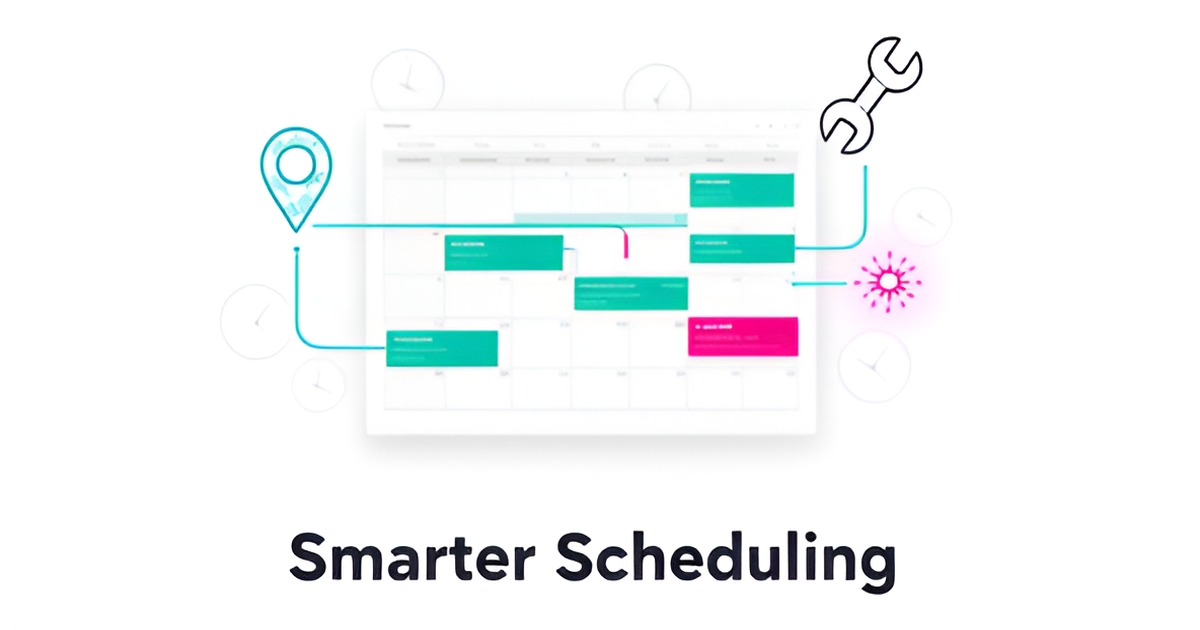
How AI Can Reduce Technician Wait Times and Improve Job Scheduling
Key Facts
- Idle time between jobs is one of the largest hidden labor costs in field service—technicians are paid whether or not they are on a job
- AI scheduling typically generates schedules faster than manual dispatch while improving workforce utilization, though exact figures vary by operation
- Predictive models can forecast no-shows and demand fluctuations, letting schedulers act before delays occur
- Dynamic re-routing adjusts schedules in real time when cancellations or delays happen, reducing wasted travel
- Customers switch providers after a small number of poor service experiences, making reliability a competitive factor in local markets
- AIQ Labs has deployed 200+ multi-agent systems and runs 4 live SaaS products daily
Hire a team member that works 24/7 — for less than a part-time wage.
AI receptionists, SDRs, dispatchers and 99+ roles. Trained on your business, fully managed.
Not sure where to start? Ask our AI planner
The Technician Wait Time Problem Costing Field Service Revenue
The technician wait time problem is silently eroding field service revenue, one idle hour at a time. Manual dispatch creates inefficiencies that ripple through operations, leading to overtime costs, missed appointments, and ultimately, customer churn. Industry reporting on AI scheduling consistently finds that automated scheduling outperforms manual methods on both speed and workforce utilization—highlighting the gap between current practices and potential performance.
This utilization gap directly impacts the bottom line. Field service businesses lose revenue when technicians sit idle between jobs or are forced into costly overtime to cover scheduling gaps. Manual systems struggle to optimize complex variables like travel time, technician skills, and real-time job changes, resulting in inefficient routes and underused capacity. The consequence is not just higher operational costs but also a degraded customer experience—when service is delayed or inconsistent, satisfaction drops and loyalty erodes. In competitive local markets, alternatives are a phone call away.
Poor scheduling doesn't just frustrate customers—it drives them away. Customer research has long shown that people switch brands after only a few poor service experiences, making reliability a critical competitive factor in field service. Each missed appointment or excessive wait time increases the risk of churn. The cumulative effect is a leaky bucket: businesses invest in marketing and lead generation only to lose customers to preventable scheduling failures.
- Idle time between jobs reduces daily job completion rates and increases labor costs per job
- Overtime expenses rise as schedulers scramble to cover gaps created by poor planning
- Missed appointments damage customer trust and increase the likelihood of negative reviews
- Inconsistent service windows lead to no-shows and wasted technician trips
- Reactive scheduling prevents proactive customer communication and expectation management
AIQ Labs addresses this challenge through AI Workflow Builds—a fixed-price engagement that rebuilds the one workflow costing you the most, which for most field service businesses is dispatch and scheduling. These systems learn from historical dispatch data to predict technician availability, optimize job sequencing, and minimize idle time. They integrate with existing field service tools to create dynamic schedules that adapt to real-time changes, ensuring technicians spend more time on revenue-generating work and less time waiting or traveling inefficiently. By closing the utilization gap, businesses can increase daily job capacity without adding headcount.
How AI Scheduling Predicts Availability and Matches Jobs to Capacity
AI-powered scheduling transforms how technicians are matched to jobs by predicting availability and optimizing capacity in real time. These systems use machine learning to analyze historical data and forecast technician schedules and no-show risk, enabling proactive adjustments before delays occur. By processing complex variables like skills, equipment, and location simultaneously, AI reduces scheduling conflicts and minimizes idle time between jobs.
AI scheduling typically generates plans far faster than manual methods while improving workforce utilization. The speed gain comes from algorithms that evaluate thousands of scheduling permutations in seconds—work that would take dispatchers hours to complete manually. The result is more jobs completed per day with fewer gaps in technician schedules.
Natural language processing (NLP) parses incoming service requests to extract key details like preferred timing, required skills, and customer location. Reinforcement learning then refines matching strategies over time, learning which combinations of technician and job yield the highest completion rates and customer satisfaction. Dynamic re-routing adjusts schedules in real time when delays occur, cutting travel time through optimized sequencing.
Multi-objective optimization balances competing priorities—such as minimizing drive time, maximizing skill-equipment alignment, and respecting technician availability—to increase daily job completion rates. These systems continuously learn from outcomes, improving accuracy with each scheduling cycle.
- NLP converts unstructured requests into structured scheduling data
- Reinforcement learning improves matching accuracy through iterative feedback
- Dynamic re-routing reduces travel time and prevents bottlenecks
- Multi-objective optimization weighs skills, equipment, location, and time
- Predictive analytics forecasts no-shows and demand fluctuations
AIQ Labs builds custom scheduling agents that integrate these techniques into field service workflows, learning from historical dispatch data to optimize daily technician capacity. By aligning job requirements with real-time availability, these systems reduce wait times and improve first-visit resolution rates. The adaptive nature of AI scheduling ensures schedules remain efficient even as conditions change throughout the day.
From Dispatch to Done: AI Agents That Learn Your Field Operations
AI-powered scheduling is transforming field service by turning reactive dispatch into proactive workflow optimization. AIQ Labs builds scheduling agents that learn from historical data to fill calendar gaps, auto-promote slow periods, and integrate with CRM, dispatch, and calendar tools. This approach reduces idle time and increases technician throughput without adding headcount.
These systems analyze patterns from past scheduling data to predict technician availability, no-show risk, and optimal job sequencing based on travel time, skills, and equipment needs. The result is smarter resource allocation that maximizes daily job completion rates. Each completed job refines the model's predictions, improving accuracy over time.
AIQ Labs' multi-agent architecture enables continuous learning, and you own the scheduling logic end-to-end—no vendor lock-in, no per-seat rental of someone else's dispatch brain. This is the difference between renting an AI feature and owning an AI Operating System built in phases around your operation.
- Predicts technician availability and job duration using historical patterns
- Identifies calendar gaps and auto-suggests promotions for slow periods
- Integrates with CRM, calendar, and dispatch systems via API
- Coordinates multiple agents for real-time decision-making
- Improves continuously through performance feedback loops
By connecting scheduling intelligence to AI Employees—such as an AI Dispatcher or AI Service Coordinator—AIQ Labs creates a closed-loop system where planning, execution, and follow-up are handled autonomously. This integration eliminates manual handoffs and ensures schedules adapt in real time to changes like cancellations or delays. Businesses gain a production-ready, owned solution that scales with their operations.
Implementation Roadmap for Smarter Field Service Scheduling
Rolling out smarter scheduling fails when teams try to automate messy processes. A phased, data-first roadmap reduces risk and builds trust while capturing the efficiency gains AI scheduling can deliver.
Start with a focused audit of current dispatch bottlenecks. Map where technician wait time, travel inefficiencies, and manual rebooking occur. The gains from AI scheduling depend on clean inputs—automating a broken process just makes the breakage faster.
Pilot one crew or location before scaling. A limited trial lets you test matching logic, route optimization, and real-time adjustments without disrupting the whole operation. Utilization improvements are easiest to measure in a controlled pilot.
Data quality determines performance. Gather historical scheduling records, technician availability and skills, customer preferences, and service duration estimates. Poor data produces suboptimal decisions, so normalize and validate before training models.
Train teams on augmentation, not replacement. Address job security concerns directly and show how the system handles repetitive optimization while humans handle exceptions and customer relationships. Transparent communication about how decisions are made supports algorithmic fairness and adoption.
Integrate with existing systems for a seamless workflow. Connect calendars, CRMs, dispatch tools, and communication platforms so the AI can access live capacity and update schedules automatically. AIQ Labs builds these integrations as part of a fixed-price workflow build, phased so you see value at each milestone before committing to the next.
Gather structured feedback from technicians and customers after the first weeks. Use AI-generated reports to identify slowdowns and refine constraints like travel time, equipment needs, and skill matching.
Iterate on the optimization logic. The learning component improves over time as the system analyzes outcomes, cancels, and completion rates. This continuous refinement is what turns a pilot into sustained gains.
Enable proactive delay prediction as the final step. With enough history, models can anticipate disruptions and automatically adjust appointments, keeping customers informed in real time. Schedules generated automatically free dispatchers for higher-value work.
A practical rollout follows this sequence:
- Audit bottlenecks and define success metrics for wait time and utilization
- Pilot with one crew/location and ensure high-quality historical data
- Train teams, integrate systems, and establish human-in-the-loop overrides
- Collect feedback, iterate models, and activate proactive delay prediction
Change management, compliance, and fairness controls should be built in from day one, not added later.
Still paying for 10+ subscriptions that don’t talk to each other?
We build custom AI systems you own outright. No vendor lock-in. Full control.
Not sure where to start? Ask our AI planner
Frequently Asked Questions
How much can AI scheduling actually reduce technician wait time?
Will AI scheduling replace my dispatchers or office staff?
How accurate is AI at predicting scheduling problems like no-shows?
What kind of ROI can I expect from implementing AI scheduling?
How does AI scheduling improve customer satisfaction?
What's the biggest risk when implementing AI scheduling?
From Idle Hours to Revenue Hours
Technician wait time is not a scheduling annoyance, it is lost revenue compounding with every gap, overtime hour, and missed appointment. AI scheduling closes that gap by predicting availability, matching skills to jobs in real time, and continuously learning from dispatch history to reduce idle time and increase daily completions without adding headcount. The shift from reactive dispatch to proactive optimization means fewer travel inefficiencies, better first-visit resolution, and a more reliable experience for customers who will switch after just a few poor service moments. Start with a focused audit of bottlenecks, pilot with one crew using clean historical data, and build from there with human-in-the-loop controls. AIQ Labs builds scheduling agents that learn your operations and integrate with the tools you already use—200+ multi-agent systems deployed, built in phases, owned outright. Take the 2-minute Fit Check at aiqlabs.ai/apply, then book a free 30-minute strategy call to map your biggest scheduling bottleneck and identify a high-ROI automation path. No obligation if there isn't a clear win.
Make AI your competitive advantage — not just another tool.
Strategy, implementation and ongoing optimization. One partner, end to end.
Not sure where to start? Ask our AI planner