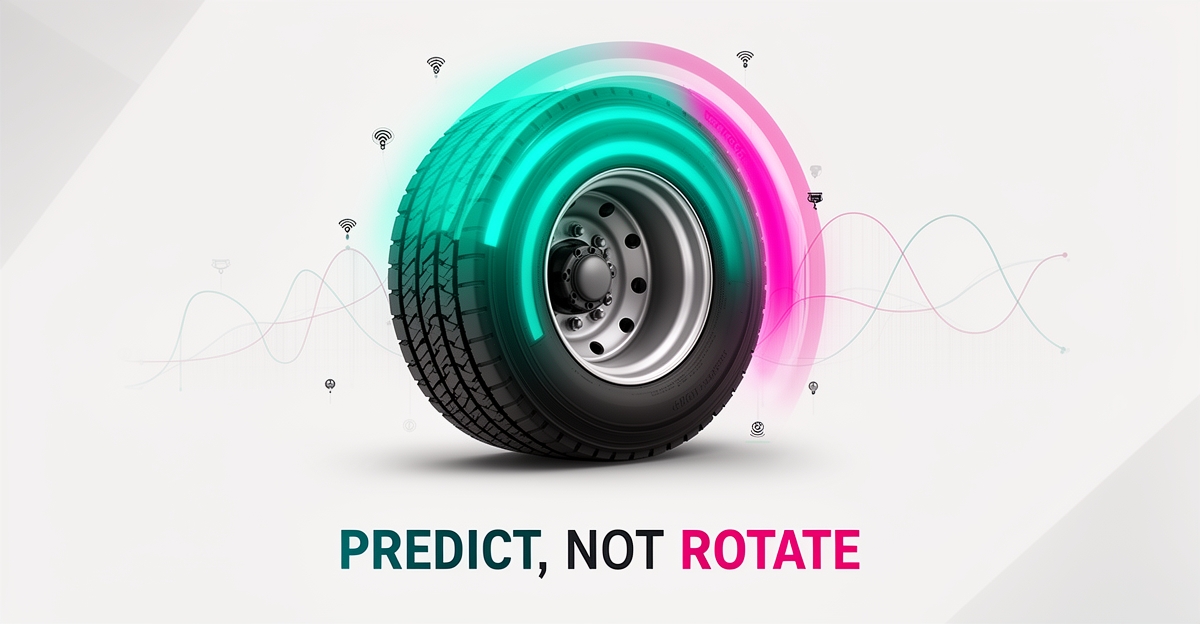
How AI Can Reduce Tire Damage from Poor Rotation Schedules
Key Facts
- Industry analyses report average savings of roughly $3,200 per vehicle annually with AI-powered tire wear prediction according to industry research
- Optimized rotation schedules can extend tire life by an estimated 25-40% by maximizing usable tread per fleet optimization studies
- AI systems can analyze 150+ variables per tire to predict wear patterns with accuracy rates reported as high as the mid-90s based on predictive maintenance research
- Fleets using AI-powered tire management have reported reductions in roadside failures of around 78% per industry analysis
- Improper tire management is estimated to cost US fleets hundreds of millions of dollars annually in unnecessary replacements and downtime per executive summary data
- AI models can forecast tire failure probability with reported accuracy in the mid-90s, enabling proactive maintenance before blowouts occur according to tire health research
Hire a team member that works 24/7 — for less than a part-time wage.
AI receptionists, SDRs, dispatchers and 99+ roles. Trained on your business, fully managed.
Not sure where to start? Ask our AI planner
The Cost of Calendar-Based Rotation: Why Fixed Schedules Fail Fleets
Fleet managers often assume that rotating tires every 5,000 to 7,500 miles is sufficient to ensure even wear and maximize lifespan. However, calendar-based rotation schedules ignore critical variables like individual vehicle usage patterns, load distribution, and real-time road conditions, leading to uneven tread wear that can slash tire life by an estimated 25 to 40 percent. This inefficiency translates into premature replacements and avoidable expenses that plague fleets nationwide.
The financial impact adds up: industry estimates place the annual cost of improper tire management to US fleets in the hundreds of millions of dollars, driven by unnecessary replacements, roadside breakdowns, and wasted tread life. For a typical commercial vehicle, this means replacing tires long before their potential lifespan is exhausted—sometimes discarding a large share of usable tread. Static schedules fail to adapt to the realities of fleet operations, where one vehicle might haul heavy loads daily while another sits idle for days, yet both receive the same rotation interval.
- Fixed rotations don’t account for axle-specific wear, causing steer tires to degrade faster than drive or trailer positions.
- Vehicles operating in urban stop-and-go conditions experience different wear patterns than those on long-haul routes, yet both follow the same schedule.
- Load imbalances—common in partial or unevenly distributed cargo—create irregular wear that calendar-based maintenance cannot detect or correct.
- Without real-time wear data, fleets miss early signs of misalignment or inflation issues that accelerate tire degradation.
- The result is a cycle of premature replacements, increased downtime, and inflated maintenance budgets that erode fleet profitability.
By ignoring these operational nuances, traditional approaches not only waste money but also increase safety risks, as worn tires are more prone to blowouts and loss of traction. Moving beyond fixed intervals requires a shift to data-driven strategies that respond to actual tire conditions—precisely where AI-powered optimization delivers measurable value.
From Reactive to Predictive: How AI Analyzes 150+ Variables Per Tire
For decades, fleet managers rotated tires on a fixed calendar—commonly every 20,000 to 30,000 miles for a Class 8 vehicle's first rotation, regardless of what the tires actually needed. That guesswork is exactly why improper tire management costs US fleets so much each year. AI is replacing that guesswork with precision.
The shift is from reactive to predictive, condition-based maintenance. Instead of asking "how long has it been?", AI asks "what is happening to this tire right now?" Modern systems pull data from telematics, tire pressure monitoring systems (TPMS), and onboard vehicle sensors to build a real-time picture of each tire's health. According to predictive maintenance research, AI systems can analyze more than 150 variables per tire to generate these insights.
That depth of analysis translates into strong accuracy. Industry reports suggest AI models can predict tire wear rates 60 to 90 days out with accuracy in the mid-90s, and identify irregular wear patterns with similar precision. The same models are reported to forecast tire failure probability with roughly 94% accuracy—meaning fleets know which tires are at risk long before an expensive roadside blowout occurs.
What does this look like in practice? The workflow is straightforward:
- Integrate the AI system with existing telematics, TPMS, and fleet management platforms
- Let the AI analyze incoming data to detect wear patterns and predict remaining tread life
- Generate dynamic rotation schedules tailored to each tire's actual condition
- Trigger automated alerts when tires hit critical wear thresholds or show unusual patterns
The contrast with traditional rotation is stark. Calendar-based schedules treat every tire identically, ignoring differences in load distribution, route demands, and driver behavior. Data-driven systems make dynamic adjustments per vehicle—and the payoff is substantial, with optimized rotation schedules potentially extending tire life by 25-40%.
This is where the operational dimension matters. When AI-driven scheduling is woven into a fleet's broader workflows—automated service reminders, proactive maintenance notifications, timely work orders—vehicle uptime improves and customers experience fewer disruptions. AIQ Labs builds exactly this kind of integration through its AI Workflow Builds, rebuilding the one workflow that costs a fleet the most so every vehicle gets the right care at the right time without adding administrative burden.
The financial case is compelling: industry analyses report average savings of about $3,200 per vehicle annually with AI-powered tire wear prediction, which compounds quickly across a mid-sized fleet. Moving from reactive to predictive isn't just a maintenance upgrade—it's a fundamental improvement in how fleets operate.
The Financial Case: Savings Per Vehicle and Fewer Blowouts
The financial argument for AI-powered tire management has moved well beyond theoretical projections—fleets are now reporting documented returns that make adoption a straightforward business decision rather than a speculative investment.
According to industry research, fleets using AI-powered tire wear prediction report an average of $3,200 in annual savings per vehicle. For a mid-sized operation running a few hundred vehicles, that compounds into seven-figure annual savings—a figure that transforms tire management from a maintenance line item into a strategic cost lever.
The savings break down across several categories, each addressing a distinct pain point in traditional fleet operations:
- Roadside incident avoidance: Each prevented blowout can save roughly $850 in emergency service costs, with some estimates placing the value of avoiding a roadside tire replacement at $1,500 or more when you factor in downtime and logistics disruption.
- Extended tire life: Optimized rotation schedules can increase tire lifespan by an estimated 25-40%, translating to meaningful savings per tire by maximizing usable tread.
- Inventory optimization: Better demand forecasting can free up tens of thousands of dollars in working capital previously tied up in excess tire stock.
- Failure prevention: Fleets have reported reductions in roadside failures of around 78% after implementing AI-powered monitoring systems.
These aren't marginal improvements. Industry analyses estimate that improper tire management costs U.S. fleets hundreds of millions of dollars annually—much of it preventable through better rotation timing and early wear detection.
What makes these returns achievable is the predictive accuracy of modern AI systems. Current platforms can analyze more than 150 variables per tire and, per industry research, achieve high accuracy in forecasting wear rates over 60- to 90-day windows. That level of precision allows maintenance teams to schedule rotations based on actual need rather than arbitrary mileage intervals.
Implementation does require upfront planning. Data quality matters—AI models only perform as well as the telematics and sensor inputs they receive. Integration with existing fleet management systems can introduce complexity, particularly for operations running legacy software. These aren't trivial considerations, but they're solvable with the right technical partner.
AIQ Labs works with fleets to integrate AI-driven scheduling into existing workflows, ensuring data flows cleanly between systems and that maintenance teams can act on insights without disruption. The goal isn't to add another dashboard—it's to make tire management a source of measurable, recurring savings.
Implementing AI Tire Intelligence: Integration Steps for Fleet Operations
Transitioning from fixed tire rotation schedules to AI-driven dynamic planning begins with seamless data integration. Fleet operations must first connect their existing telematics and tire pressure monitoring systems (TPMS) to a centralized AI platform that can ingest and analyze real-time vehicle data. This foundational step enables the system to collect critical inputs such as mileage, load distribution, braking patterns, road conditions, and inflation levels—all of which influence tire wear rates. By establishing secure, automated data flows, fleets create the continuous feedback loop necessary for intelligent scheduling decisions. According to industry research, AI systems can analyze over 150 variables per tire to predict wear patterns with high accuracy, making data integration a non-negotiable first step.
Once data pipelines are active, the AI engine begins modeling wear trajectories specific to each vehicle and tire position. Unlike traditional methods that rely on fixed intervals—often every 20,000 to 30,000 miles for Class 8 vehicles—AI-driven systems generate dynamic rotation schedules based on actual usage and wear progression. This shift allows fleets to maximize tread utilization, potentially extending tire life by 25-40% as shown in fleet optimization studies. The system continuously recalibrates recommendations as new data arrives, ensuring rotations occur precisely when wear imbalance begins to develop, rather than on arbitrary calendars. This proactive approach not only preserves tire integrity but also reduces the likelihood of irregular wear patterns, which AI can identify with high precision.
AIQ Labs supports this transition through AI Workflow Builds that connect AI tire intelligence directly into fleet maintenance operations. Builds are delivered at a fixed price, in phases, and owned outright—so data insights translate into actionable work orders without dependency on third-party platforms. The integration process includes mapping AI-generated rotation alerts to existing maintenance calendars, triggering automated service tickets when thresholds are met, and providing technicians with clear, data-backed rotation plans. This end-to-end ownership model allows fleets to refine and scale the system over time, adapting to evolving operational needs while maintaining full control over their AI assets. As a result, tire maintenance evolves from a reactive cost center into a predictable, optimized function that extends asset life and minimizes unplanned downtime. With AI-powered tire management delivering reported average annual savings of $3,200 per vehicle, the financial and operational benefits of this shift are both measurable and sustainable.
Still paying for 10+ subscriptions that don’t talk to each other?
We build custom AI systems you own outright. No vendor lock-in. Full control.
Not sure where to start? Ask our AI planner
Frequently Asked Questions
How much does poor tire rotation really cost fleets?
Can AI actually predict tire wear accurately enough to trust?
Will AI tire management save money per vehicle?
How much longer can tires last with AI-optimized rotation?
Does AI reduce blowouts and roadside downtime?
What data does AI need to start optimizing rotations?
From Calendar to Condition: The New Standard for Fleet Tire Care
Calendar-based rotation was built for simplicity, not for the realities of modern fleet operations. When schedules ignore axle-specific wear, load imbalances, and route demands, fleets lose an estimated 25 to 40 percent of usable tread life and contribute to the hundreds of millions of dollars lost annually to improper tire management in the U.S. AI changes the equation by moving from fixed intervals to predictive, condition-based maintenance. By analyzing 150+ variables per tire from telematics, TPMS and onboard sensors, AI can forecast wear 60 to 90 days out with high accuracy, identify irregular patterns early, and trigger dynamic rotation plans tailored to each vehicle. The result is longer tire life, substantially fewer roadside failures, and reported average savings of $3,200 per vehicle annually according to industry research. If you are ready to replace guesswork with real-time insight, start with a data integration audit of your telematics and TPMS feeds, map rotation alerts to existing work orders, and pilot AI-driven scheduling on a high-mileage subset. AIQ Labs helps fleets integrate this intelligence into existing scheduling workflows so every vehicle gets the right care at the right time. Start the two-minute Fit Check at https://aiqlabs.ai/apply to map your biggest bottleneck and identify high-ROI automation opportunities.
Make AI your competitive advantage — not just another tool.
Strategy, implementation and ongoing optimization. One partner, end to end.
Not sure where to start? Ask our AI planner