How AI Can Reduce Vehicle Misclassification in Salvage Yards
Key Facts
- Manual vehicle identification in salvage yards typically runs slow — often 15-30 minutes per vehicle — and is a common source of year, make, and model errors.
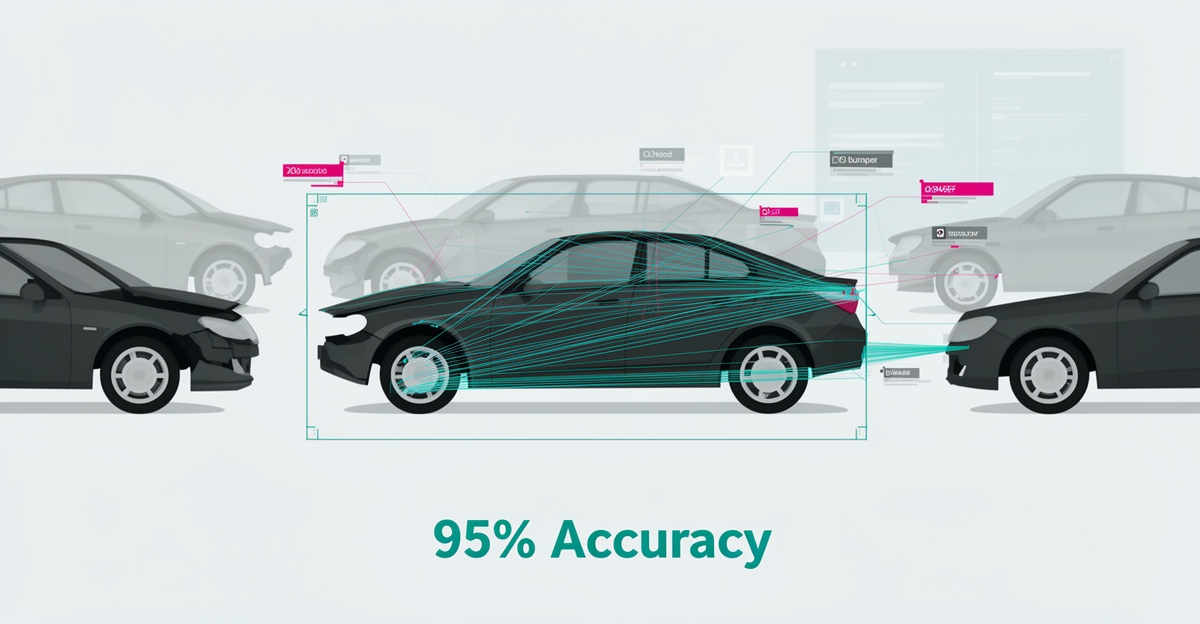
- AI-powered vehicle analysis platforms report identification accuracy around 95% while processing complete vehicle profiles in under 60 seconds according to AI vehicle analysis data.
- AI systems can automatically identify large numbers of parts per vehicle in a single analysis pass per AI-powered vehicle analysis benchmarks.
- OCR technology can reduce manual lookup time substantially by automating the reading of part numbers and manufacturer stamps according to salvage industry guides.
- Adding contextual details like vehicle make, model, and year meaningfully improves AI identification accuracy versus image-only submissions according to AI part identification guides.
- AI-powered part identification typically achieves strong accuracy, but only when photos meet minimum quality standards according to industry analysis.
- Computer vision and OCR cross-verify visual features against VIN plate text, minimizing errors from obscured or damaged components.
Hire a team member that works 24/7 — for less than a part-time wage.
AI receptionists, SDRs, dispatchers and 99+ roles. Trained on your business, fully managed.
Not sure where to start? Ask our AI planner
The Cost of Vehicle Misclassification in Modern Salvage Operations
Every minute a vehicle sits unidentified in a salvage yard, it represents frozen capital and missed revenue opportunities. Modern yards processing hundreds of units weekly cannot sustain the bottlenecks that manual identification creates.
Traditional vehicle classification relies on visual inspection and database cross-referencing that is both slow — commonly 15-30 minutes per vehicle — and error-prone. In high-volume operations, this translates to hours of daily labor spent on identification alone, with error rates that cascade into mispriced inventory, incorrect part listings, and customer disputes. According to industry analysis of salvage operations, these manual methods create a ceiling on throughput that no amount of staffing can overcome.
The financial impact compounds across multiple vectors:
- Misclassified vehicles enter inventory systems with wrong year, make, or model data
- Parts pulled from misidentified donors carry incorrect fitment information
- Online listings show compatibility errors that trigger returns and damage seller ratings
- Insurance and compliance documentation reflects inaccurate vehicle specifications
AI-powered vehicle analysis now reports identification accuracy around 95% while processing complete vehicle profiles in under 60 seconds, identifying large numbers of parts per vehicle automatically. This shift from minutes to seconds per unit fundamentally changes yard economics — staff redirect from lookup tasks to higher-value activities like quality control and customer service.
AIQ Labs builds custom classification systems trained on salvage-specific vehicle data, integrating directly with existing yard management platforms to eliminate the manual lookup bottleneck entirely. The technology doesn't just accelerate identification; it creates a reliable data foundation that improves every downstream process from pricing to parts fulfillment.
How Computer Vision and OCR Achieve High Vehicle Identification Accuracy
Computer vision and OCR technologies are transforming vehicle identification in salvage yards by combining visual recognition with text extraction. This integrated approach enables AI systems to analyze vehicle photos, read VIN plates, decode part numbers, and recognize manufacturer logos with precision. The result is a comprehensive identification process that completes in under a minute per vehicle while maintaining high accuracy, significantly reducing the costly misclassifications that plague traditional methods.
AI-powered vehicle analysis achieves high vehicle ID accuracy by leveraging deep learning models trained on extensive automotive datasets. These systems simultaneously process visual features — such as body shape, grille design, and lighting elements — while applying OCR to extract alphanumeric codes from VIN plates, engine blocks, and component labels. The dual-analysis approach cross-verifies findings, ensuring that visual recognition matches textual data before final classification, which minimizes errors from obscured or damaged components.
The technology identifies large numbers of parts per vehicle through systematic scanning of high-resolution images captured from multiple angles. Computer vision models detect and classify components ranging from major assemblies like transmissions and axles to smaller items such as sensors, brackets, and fasteners. Meanwhile, OCR engines decode stamped or printed identifiers including part numbers, date codes, and manufacturer markings that might be missed by visual inspection alone. This combined capability creates a detailed parts inventory that supports accurate pricing, compatibility checks, and efficient yard operations.
OCR technology can cut manual lookup time dramatically by automating the reading of critical text that traditionally required staff to physically inspect and interpret markings. In salvage environments where parts may be dirty, corroded, or partially obscured, OCR provides consistent readability where human eyes struggle. When paired with computer vision, the system can suggest likely part identities even when only partial text is visible, using contextual clues from surrounding components and vehicle models to fill gaps in data.
This technical workflow delivers measurable operational benefits for salvage yards aiming to improve classification reliability. By completing identification in under a minute per vehicle with high accuracy, facilities can process higher volumes with fewer errors, reducing the likelihood of selling incorrect parts or undervaluing inventory. The speed and precision of AI-powered analysis allow staff to focus on verification and customer service rather than time-consuming manual lookups, directly addressing the inefficiencies that contribute to misclassification costs in the industry. AIQ Labs develops custom vision-OCR systems trained on specific yard data to optimize these identification workflows for unique inventory mixes and operational conditions.
Why Contextual Data Improves AI Classification
A vehicle's photo alone rarely tells the whole story. When salvage yards feed AI systems contextual data alongside images, they unlock dramatically better classification performance.
The difference is measurable. According to industry guides on AI-powered part identification, adding contextual information such as vehicle make, model, and year substantially improves identification accuracy compared to image-only submissions. This single adjustment transforms AI from a helpful tool into a precision instrument for salvage operations.
Context works because it narrows the possibility space. An alternator from a 2015 Honda Civic shares visual similarities with hundreds of other alternators, but when the AI knows the exact vehicle, it can cross-reference manufacturer specifications, part numbering conventions, and model-specific variations. The system moves from pattern matching to informed identification.
Location data adds another layer of intelligence. Regional variations in vehicle specifications, trim levels, and manufacturer standards mean that a truck sold in Canada might have different components than the same model sold in the southern United States. AI systems trained on these nuances, like the custom classification solutions developed by AIQ Labs, leverage geographic context to reduce ambiguity and improve accuracy.
Photography quality remains equally critical to AI performance. The best contextual data cannot compensate for blurry, poorly lit, or incomplete images. Guides note that AI-powered part identification performs best when images meet minimum quality standards.
- Capture multiple angles showing mounting points, connection interfaces, and identifying marks
- Ensure adequate lighting without harsh shadows or overexposure that obscures details
- Include close-ups of part numbers, manufacturer stamps, or casting marks when visible
- Photograph the part in context on the vehicle before removal when possible
- Clean excessive dirt or grease that obscures critical identifying features
OCR technology amplifies these photography practices by extracting text from images automatically. When parts retain visible part numbers or manufacturer logos, OCR can turn a 15-minute database search into a seconds-long automated query.
The combination of rich contextual data and quality photography creates a compounding effect. AI systems receive both visual patterns and structured metadata, enabling them to cross-validate identifications and flag uncertainties for human review. This hybrid approach delivers the high vehicle ID accuracy that modern salvage operations require, according to performance data from AI vehicle analysis platforms.
For salvage yards processing hundreds of vehicles monthly, these accuracy improvements translate directly to reduced misclassification costs, faster inventory turnover, and fewer customer disputes over incorrect parts.
Integrating AI Classification Into Salvage Yard Workflows
Integrating AI vehicle analysis into salvage yard workflows transforms isolated tools into a cohesive operational system. By connecting image recognition directly to inventory databases, yards can automatically update part listings as vehicles arrive, eliminating manual data entry and reducing misclassification errors. This seamless flow ensures that every scanned vehicle contributes accurate, real-time data to the yard's central inventory system, creating a single source of truth for parts availability and condition.
AI-powered analysis delivers measurable efficiency gains across core operations. With high vehicle identification accuracy and the ability to identify large numbers of parts per vehicle in under 60 seconds, yards can process incoming inventory far faster than traditional methods allow. This speed not only accelerates the time-to-market for salvaged parts but also frees staff to focus on higher-value tasks like customer service and quality control, rather than repetitive manual lookups.
The integration extends beyond inventory to enhance customer interactions and internal assessments. When AI identifies a vehicle's make, model, and year with high precision, it enables automated compatibility checks for parts inquiries, reducing incorrect shipments and improving customer trust. Condition assessment becomes more consistent as AI applies standardized criteria to every vehicle, minimizing subjective judgments that lead to pricing inconsistencies or missed salvage opportunities.
To maximize effectiveness, yards should follow proven practices for AI integration. This includes training staff to capture consistent, high-quality photos using proper lighting and angles, providing contextual vehicle details to boost identification accuracy, and establishing validation protocols for edge cases like heavily corroded or rare-model parts. Combining AI's speed with human expertise ensures reliability while maintaining the flexibility to handle complex scenarios.
AIQ Labs supports this end-to-end transformation through AI Workflow Builds — rebuilding the one workflow that costs your yard the most, at a fixed price and in phases — so systems integrate with your existing yard management tools through deep API connections rather than replacing them. The result is a streamlined operation where AI handles repetitive classification tasks, and human teams focus on decision-making and relationship-building, driving both efficiency and accuracy across the salvage yard ecosystem.
Building a Custom AI Classification System for Your Yard
Deploying a custom AI classification system starts with understanding that off-the-shelf models rarely capture the unique inventory mix, lighting conditions, and damage patterns of a specific yard. A tailored approach trains on your own vehicle photos, VIN records, and historical misclassification data so the model learns the exact edge cases that generic systems miss. Industry guides consistently show that providing contextual details such as make, model, and year improves identification accuracy compared to image-only submissions, making your proprietary data the decisive advantage.
The implementation path follows four disciplined phases. First, audit and label a representative image set — covering high-turn parts, common damage angles, and known confusion pairs — then enrich each sample with VIN-derived metadata. Second, train a computer vision pipeline that fuses visual features with OCR extraction; combined vision-plus-OCR systems are where the strongest accuracy and speed results are reported. Third, embed the model into daily workflows through direct CRM and inventory integration so every new intake photo triggers an instant classification that writes back to the yard management system. Fourth, establish a continuous feedback loop where human verifiers correct low-confidence predictions, automatically retraining the model on a regular schedule.
- Curate a labeled dataset spanning your top part categories and seasonal inventory shifts
- Fuse vision embeddings with OCR text extraction for part numbers and manufacturer stamps
- Deploy via API into existing CRM and inventory platforms for real-time write-back
- Automate scheduled retraining using verified corrections from yard staff
AIQ Labs structures this journey across its current service lineup. An AI Workflow Build tackles the classification pipeline itself — fixed price, built in milestones, so you see working software at every phase. AI Employees can staff the ongoing verification and retraining loop with a managed AI inventory specialist that runs around the clock at roughly 80% less cost than a human hire. And for yards that want classification, inventory, pricing, and customer inquiries running on one connected layer, an AI Operating System ties it together — built in phases and owned outright by you. Payment is flexible too: start monthly, build in milestones, or own it outright. The result is a classification engine that grows more precise with every vehicle that enters your yard.
Still paying for 10+ subscriptions that don’t talk to each other?
We build custom AI systems you own outright. No vendor lock-in. Full control.
Not sure where to start? Ask our AI planner
Frequently Asked Questions
How accurate is AI compared to manual vehicle identification in salvage yards?
Can AI really identify that many parts from just photos?
Does OCR actually save time on part lookups?
Will bad photos ruin AI classification accuracy?
How much does adding vehicle context improve AI results?
What if my yard has unique damage patterns or rare models?
From Misclassification to Precision: Building Your AI Advantage
The journey from costly vehicle misclassification to precise, AI-powered identification is clear: slow, error-prone manual methods are being replaced by systems that identify vehicles in under a minute with high reported accuracy, automatically cataloguing parts as units arrive. This transformation directly impacts salvage yard economics by reducing pricing errors, minimizing returns from incorrect part listings, and freeing staff from repetitive lookups to focus on higher-value tasks like quality control and customer service. AIQ Labs partners with salvage operations to build custom classification systems trained on yard-specific data — whether as a single fixed-price Workflow Build, managed AI Employees handling verification and retraining, or a full AI Operating System you own outright. The path forward starts with understanding your unique workflow bottlenecks — take the two-minute Fit Check, then book a free 30-minute strategy call to see how tailored AI can turn identification from a cost center into a competitive advantage for your yard.
Make AI your competitive advantage — not just another tool.
Strategy, implementation and ongoing optimization. One partner, end to end.
Not sure where to start? Ask our AI planner