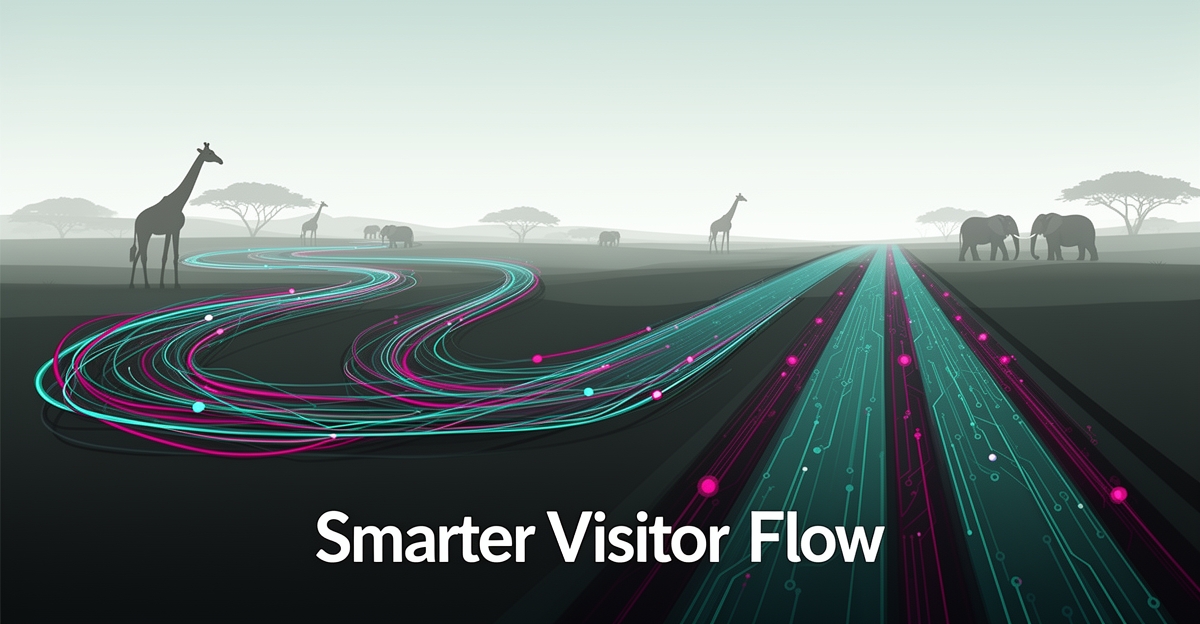
How AI Can Reduce Wait Times and Improve Visitor Flow at Your Wildlife Park
Key Facts
- Industry research suggests most customers are more likely to return when their issues are resolved quickly
- Customer experience surveys consistently show that visitors expect an immediate response to support questions
- AI agents can typically handle a large share of routine customer queries instantly, freeing staff for higher-value work
- Organizations using machine learning for resource management commonly report meaningful improvements in response times
- AI chat and voice agents are widely reported to reduce customer service costs by screening and routing only complex issues to live staff
Hire a team member that works 24/7 — for less than a part-time wage.
AI receptionists, SDRs, dispatchers and 99+ roles. Trained on your business, fully managed.
Not sure where to start? Ask our AI planner
The Visitor Flow Crisis: Why Wildlife Parks Struggle with Peak Season Queues
Wildlife parks face mounting pressure during peak season as visitor numbers surge, often overwhelming entry systems and disrupting the guest experience from the moment of arrival. Long lines at ticket booths, uneven crowd distribution across exhibits, and delayed responses to visitor inquiries create frustration that can overshadow even the most well-designed habitats and educational programs. These operational bottlenecks not only diminish immediate satisfaction but also impact long-term loyalty—industry research consistently shows that guests who get quick resolutions are far more likely to come back. When queues stretch beyond acceptable limits, parks risk damaging their reputation and losing repeat visitors who seek seamless, enjoyable experiences.
The root causes of these flow challenges are multifaceted. Entry points frequently become chokepoints as manual ticketing and ID verification processes struggle to scale with sudden influxes, leading to bottlenecks that ripple throughout the park. Once inside, guests often cluster around popular attractions while lesser-visited areas remain underutilized, creating imbalances that strain staffing and diminish overall engagement. Compounding these issues, many parks lack real-time visibility into visitor movement, making it difficult to anticipate congestion or adjust staffing dynamically. Customer experience surveys consistently find that visitors expect an immediate response when they have a question, yet traditional staffing models often fail to meet this expectation during high-traffic windows. AIQ Labs helps wildlife parks address these systemic inefficiencies through tailored workflow automation that transforms how visitors move through the space—from entry to exit—ensuring smoother, more predictable experiences even on the busiest days.
AI-Powered Workflow Automation: Streamlining Entry and Optimizing Park Operations
Picture a Saturday morning at your wildlife park: two hundred cars in the lot, one gate open, and a line of families stretching past the ticket booths before the first keeper has finished morning rounds. This is exactly the moment when AI-powered workflow automation earns its keep.
Rather than treating entry, staffing, and guest communication as separate problems, workflow automation connects them into a single responsive system. When visitor volume surges, the system can dynamically adjust entry pathways, open additional lanes, and guide guests toward timed experiences that spread crowds across exhibits instead of bunching them at popular enclosures. The result is smoother flow without the cost of permanently expanded infrastructure.
The same intelligence applies behind the scenes. Predictive analytics can forecast peak demand periods, allowing parks to allocate resources efficiently and prepare ahead of the rush rather than reacting to it. Machine learning tools take this further by analyzing historical attendance data to predict busy windows and allocate staff accordingly—organizations using machine learning for resource management commonly report meaningful improvements in response times, and many report higher efficiency in managing customer queries overall.
Automation also relieves the pressure on your front-of-house team. AI agents can typically handle a large share of routine customer queries instantly, providing 24/7 support while freeing human staff for the interactions that genuinely require a personal touch. For a park, that means fewer guests stuck in line to ask about feeding times, parking, or ticket upgrades — and more staff available where it counts.
Here's what a well-architected automation layer typically manages for a wildlife park:
- Dynamic entry lane and pathway adjustments based on real-time queue data
- Timed-experience scheduling that distributes visitors across exhibits and shows
- Staffing recommendations aligned to forecasted peak periods, avoiding overstaffing on slow days
- Automated responses to routine guest questions across chat, voice, and SMS
- Escalation rules that route complex or sensitive issues to human team members
That last point matters. Automation works best when it handles the repetitive volume while humans handle judgment calls — a distressed child, a membership dispute, an animal welfare question. The goal is not to replace your team but to remove the queue from between them and your guests.
This is where custom engineering makes the difference. Off-the-shelf tools rarely map cleanly to the realities of gates, enclosures, show schedules, and seasonal staffing. AIQ Labs builds production-grade automation through its AI Workflow Builds — rebuilding the one workflow that costs your park the most, at a fixed price and in phases — and can extend into a full AI Operating System that connects ticketing, scheduling, and communication into one layer the park owns outright, with the ability to pause, adjust, or expand as attendance patterns evolve.
The parks that automate these workflows don't just shorten lines. They create a visit that feels effortless from the parking lot to the last exhibit — and effortless visits are the ones guests repeat.
From Chatbots to Predictive Analytics: Practical AI Tools for Immediate Impact
Wildlife parks face constant pressure to balance guest satisfaction with operational efficiency, especially during peak seasons when long lines and slow service can quickly diminish the visitor experience. By deploying targeted AI tools, parks can transform how they manage entry, inquiries, and internal workflows—turning bottlenecks into opportunities for smoother flow and better engagement.
AI chat and messaging agents offer an immediate way to reduce strain on front-line staff while improving response speed. These systems can typically handle a large share of routine customer questions instantly, providing 24/7 support without adding to payroll costs. Industry benchmarks also suggest AI chat agents can meaningfully reduce customer service expenses by automating repetitive tasks like ticket inquiries, hours checks, and map requests. For wildlife parks, this means guests get quick answers about feeding times or exhibit locations while human staff focus on higher-value interactions.
Voice agents extend this efficiency to phone-based inquiries, which often spike during holiday weekends or special events. By using natural language processing to screen and route calls, voice agents can meaningfully reduce overall call volume, transferring only complex issues to live staff. This not only cuts wait times but also lowers the risk of missed calls during high-traffic periods. When integrated with scheduling systems, voice agents can even book timed entry slots or guided tour reservations directly, reducing manual entry work.
For deeper operational impact, machine learning enables predictive resource allocation that adapts to real-time demand. Parks using ML-driven tools commonly report faster response times by aligning staff and gate openings with forecasted peak periods. These systems analyze historical attendance, weather patterns, and event calendars to anticipate congestion—allowing dynamic adjustments like opening additional entry lanes or redirecting guests to less crowded zones. When paired with omnichannel support, the result is a more responsive, guest-centric operation.
AIQ Labs helps wildlife parks implement these tools not as isolated features, but as connected components of a smarter workflow—where chat agents, voice agents, and predictive models work together to reduce friction at every touchpoint. Managed AI Employees — receptionists, dispatchers, guest-service agents, and 99+ other roles — run at a fraction of the cost of a human hire and deliver measurable improvements in both visitor satisfaction and operational efficiency, without requiring parks to overhaul existing systems or hire additional seasonal staff.
Implementation Roadmap: How Wildlife Parks Can Deploy AI Workflow Automation
Long queues at the gate don’t just test visitor patience, they create bottlenecks that ripple through the entire park day. AI workflow automation changes entry from a fixed process into a responsive system that adapts to real demand.
A structured implementation roadmap turns concepts into production systems that wildlife parks can own and operate. AIQ Labs aligns deployment with its three entry points — AI Employees for managed AI staff, AI Workflow Builds for rebuilding your costliest workflow, and AI Operating Systems for a fully connected operating layer — so strategy, build, and ongoing management stay under one accountable partner.
Discovery starts with business process analysis and requirements gathering. Teams map current entry, ticketing, timed experiences, and staffing workflows, then assess technology and data infrastructure. This phase defines high-value automation targets and builds the ROI model and timeline for the project.
Architecture design follows a phased approach used across custom builds. Solution architecture is documented, integrations with CRM, ticketing, and operations tools are planned, and governance for data security and human-in-the-loop controls is established. The goal is a production-ready system, not a prototype.
Development and integration build the automation layer. Custom AI agents are developed using multi-agent frameworks, connected via API to existing park systems, and tested for performance and compliance. This is where the build phase delivers owned code and deep two-way integrations that eliminate manual data entry and reduce operational errors.
Deployment and training move the system live. Production deployment is handled with role-specific user training, documentation delivery, and performance monitoring setup. Parks can start with a single AI Workflow Build on the flow that costs the most — typically entry and ticketing — then expand toward a full AI Operating System as maturity grows.
Optimization and scale keep the system improving. Continuous performance monitoring, feature enhancement, and scaling support ensure the solution evolves with seasonal demand. Managed AI Employees can be added to work alongside human teams for 24/7 coverage.
Implementation typically follows these steps:
- Discovery & Architecture to map entry pathways, timed experiences, and staffing needs
- Development & Integration to build custom agents and connect ticketing, CRM, and operations tools
- Deployment & Training for go-live with staff enablement and monitoring
- Optimization & Scale to refine resource allocation and expand automation across departments
The business impact is measurable. Predictive analytics can help forecast peak demand periods, allowing wildlife parks to allocate resources efficiently and prepare ahead. Organizations using machine learning for resource management commonly report faster response times, and AI agents can handle a large share of routine customer queries instantly, reducing staff workload and providing 24/7 support.
Visitor expectations reinforce the need for speed. Customer experience surveys consistently show that most guests expect an immediate response to support questions — and many define "immediate" as ten minutes or less. Guests who get quick resolutions are consistently more likely to return.
Parks ready to test fit can start with the two-minute Fit Check, followed by a free 30-minute strategy call to map the biggest bottleneck and identify high-ROI automation opportunities. A targeted AI Workflow Build delivers results in weeks, with the option to scale through Start Monthly, Build in Milestones, or Own It Outright payment models.
Still paying for 10+ subscriptions that don’t talk to each other?
We build custom AI systems you own outright. No vendor lock-in. Full control.
Not sure where to start? Ask our AI planner
Frequently Asked Questions
How can AI actually reduce wait times at our wildlife park's entry gates during peak season?
Will implementing AI chatbots mean we lose the personal touch that makes our park special?
What kind of return on investment can we expect from AI workflow automation in our first year?
Is AI workflow automation only for large parks with big budgets, or can smaller wildlife parks benefit too?
How do we know the AI won't make mistakes, like sending guests to the wrong exhibit or misanswering questions?
What’s the first step if we want to explore AI for our park without committing to a full system right away?
Turn Peak Season Chaos into Seamless Visitor Journeys
Wildlife parks don’t have to choose between managing crowds and delivering memorable experiences. By using AI-powered workflow automation to streamline entry, predict peak demand, and handle routine inquiries through chat and voice agents, parks can reduce wait times, balance visitor flow, and free up staff for meaningful interactions—all without overhauling existing systems. The result is smoother operations, higher satisfaction, and stronger loyalty, especially when quick issue resolution is what brings guests back. If you’re ready to map your biggest bottleneck and explore a tailored automation solution, start with the two-minute Fit Check and a free strategy call to see where AI can make the most impact for your park.
Make AI your competitive advantage — not just another tool.
Strategy, implementation and ongoing optimization. One partner, end to end.
Not sure where to start? Ask our AI planner