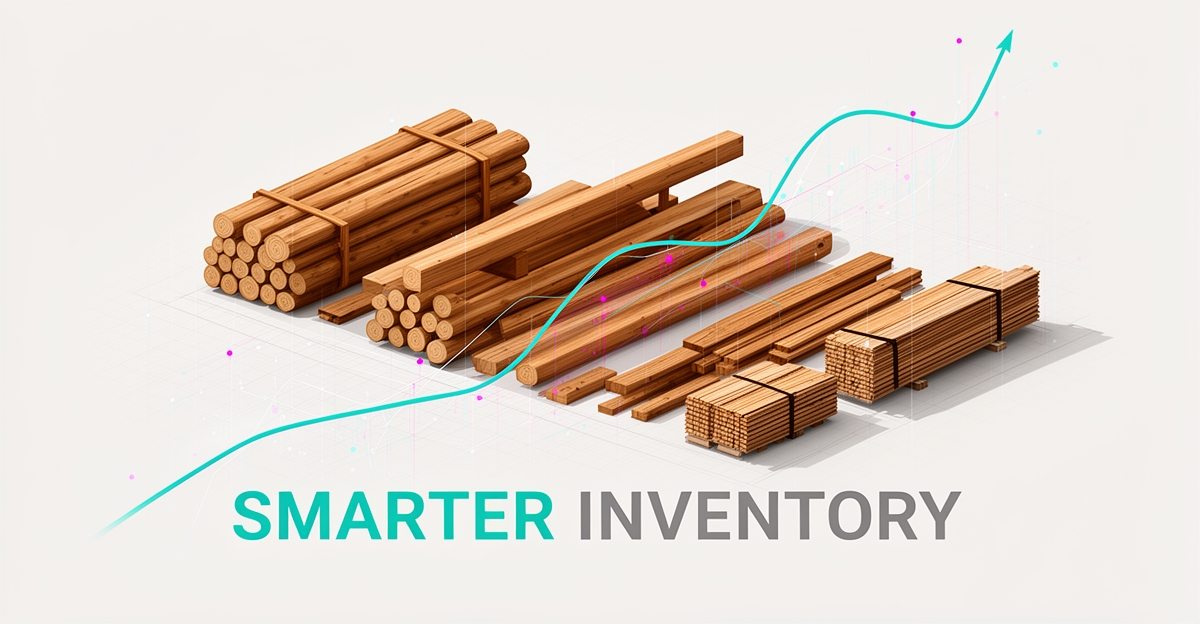
How AI Can Streamline Inventory Management for Log Home Material Suppliers
Key Facts
- AI-powered inventory systems typically reduce both stockouts and excess inventory for suppliers by learning each business's unique demand patterns rather than relying on historical averages
- Machine learning models continuously refine demand predictions as new sales and stock data flows in, improving forecast accuracy over conventional spreadsheet methods
- Real-time tracking creates a dynamic feedback loop: when stock movement changes unexpectedly, reorder triggers and safety stock calculations adjust automatically
- Automating reordering and supply chain workflows frees staff from manual purchase order work and reduces emergency freight charges
- Optimized working capital—less cash tied up in dead stock, fewer rush orders—directly improves cash flow for seasonal businesses
Hire a team member that works 24/7 — for less than a part-time wage.
AI receptionists, SDRs, dispatchers and 99+ roles. Trained on your business, fully managed.
Not sure where to start? Ask our AI planner
The Inventory Pain Points Facing Log Home Suppliers
When spring building season hits, log home suppliers face a familiar scramble: contractors calling for timber packages, beams flying out of the yard, and roofing materials moving faster than anyone predicted. Then winter arrives, and half that inventory sits untouched, tying up cash for months.
This seasonal whiplash defines the log home materials business. Demand doesn't follow a smooth curve—it spikes with construction seasons, weather windows, and regional building cycles. Suppliers who guess wrong on the high side end up with excess inventory eating up yard space and working capital. Guess wrong on the low side, and stockouts send frustrated builders to competitors who have the beams in stock.
The physical nature of the inventory compounds the problem. Timber, logs, and beams are bulky, heavy, and expensive to store. Unlike a retailer tracking small widgets, a log home supplier manages sprawling yards where a single miscount of large-diameter logs or engineered beams can represent thousands of dollars in error.
- Seasonal demand swings that make historical averages unreliable
- Bulky, high-value materials where every unit counts
- Stockouts that cost sales vs. excess stock that drains cash flow
- Manual yard counts that consume hours and introduce errors
Most suppliers still run this complexity through spreadsheets. Someone walks the yard with a clipboard, keys numbers into a file, and hopes the data stays current until the next count. It rarely does. By the time a purchase order goes out, the spreadsheet is already stale—and the true cost of manual tracking hides in missed orders, emergency freight charges, and dead stock discovered months too late.
Modern AI-powered systems can analyze historical sales, current stock levels, and expected demand to estimate future inventory needs with far greater precision than static spreadsheets. For suppliers still relying on manual counts, the stockout-versus-overstock dilemma isn't a staffing problem—it's a data problem. And it's exactly the kind of operational bottleneck that AIQ Labs' AI Workflow Builds are designed to solve, with custom forecasting models that learn each business's unique demand patterns to reduce stockouts and cut excess inventory.
How AI Forecasting and Real-Time Tracking Reduce Stockouts
AI-powered demand forecasting transforms inventory management by analyzing historical sales, seasonal patterns, and current stock levels to predict future needs. For log home material suppliers dealing with timber, beams, and roofing components, this means anticipating demand fluctuations before they impact operations. Machine learning models continuously refine these predictions as new data flows in, improving forecast accuracy over traditional methods and making predictive, data-driven operations the norm rather than the exception across supply chains.
Real-time tracking provides live visibility into inventory levels, creating a dynamic feedback loop that enhances forecasting reliability. When the system detects sudden changes in stock movement—such as an unexpected beam shipment delay or a roofing material surge—it instantly adjusts reorder triggers and safety stock calculations. This responsiveness is critical in the log home industry, where material lead times can vary due to seasonal harvesting or transportation constraints.
Together, AI forecasting and real-time tracking reduce stockouts by enabling proactive replenishment rather than reactive scrambling. Suppliers can automate reorder points based on predicted consumption rates, current lead times, and desired service levels, minimizing the risk of running out of critical materials during peak building seasons. Integrating predictive analytics with live inventory data also cuts excess stock while improving cash flow—benefits that directly support sustainable operations for log home material businesses. AIQ Labs develops production-grade systems that unify these capabilities—over 200 multi-agent systems deployed to date—helping suppliers maintain optimal stock levels without over-investing in infrastructure or manual oversight. For businesses ready to explore these improvements, starting with a two-minute Fit Check can identify specific workflows where AI-driven forecasting and tracking deliver measurable results.
Automating Reordering and Supply Chain Workflows
Automating reordering and supply chain workflows with AI eliminates guesswork in inventory planning for log home material suppliers. By analyzing historical usage patterns, seasonal demand fluctuations, and supplier lead times, AI systems generate precise reorder points and optimal order quantities for materials like timber, beams, and roofing. This automation reduces manual intervention while maintaining optimal stock levels.
AI-driven reorder optimization continuously adjusts recommendations based on real-time data, preventing both stockouts and overstock situations. Machine learning algorithms identify subtle demand patterns that traditional forecasting methods miss, such as regional building trends or weather-related project delays, directly reducing excess inventory costs.
Integration with existing supply chain tools creates a seamless flow from inventory tracking to procurement execution. AI systems connect with ERP platforms, supplier portals, and logistics software to automatically generate purchase orders when stock levels fall below dynamically calculated thresholds. This end-to-end automation cuts order processing time dramatically, freeing staff to focus on supplier relationship management and strategic sourcing.
Machine learning-driven predictions enhance supply chain resilience by anticipating disruptions before they impact operations. By analyzing external factors like lumber market volatility, transportation delays, and regional construction activity, AI systems recommend proactive inventory adjustments. The result is improved cash flow through optimized working capital—less capital tied up in excess inventory, fewer stockout-related rush order costs.
Automated workflows also strengthen supplier collaboration through consistent, data-driven ordering patterns. Suppliers receive more predictable demand signals, enabling better production planning and potentially volume-based pricing advantages. For log home material suppliers, this translates to more stable pricing and improved supply reliability during peak building seasons.
AIQ Labs develops these intelligent reordering systems as part of comprehensive inventory management solutions, integrating with existing business tools while providing full ownership of the AI infrastructure. The technology continuously learns from transaction data, improving accuracy over time without requiring manual model retraining. This adaptive capability ensures the system remains effective as market conditions and business needs evolve.
Implementation Roadmap for AI Inventory Management
Log home material suppliers face unique inventory challenges due to the variable nature of timber, beams, and roofing materials, where overstocking ties up capital and stockouts delay critical projects. Implementing AI inventory management begins with deploying software that analyzes historical sales, seasonal trends, and real-time demand signals to forecast needs with precision. This foundation enables suppliers to shift from reactive replenishment to proactive, data-driven ordering that aligns with project timelines and cash flow goals.
The next step involves connecting real-time tracking with existing inventory tools to monitor stock levels continuously. Modern tracking systems use optical and machine learning technologies to record material quantities, condition, and location as they move—eliminating manual counts and providing live visibility into yard operations. For log home suppliers, this means knowing exactly how much green timber is curing or how many roofing bundles remain in specific zones without physical checks.
Machine learning algorithms then process tracking and sales data to predict future requirements, factoring in variables like regional building trends and supplier lead times. Automation triggers reorder points when thresholds are met, generates purchase orders, and updates accounting systems seamlessly. AIQ Labs supports this transition through AI Workflow Builds—rebuilding the one workflow that costs the most, at a fixed price and in phases—so suppliers can start with inventory reordering and scale toward an AI Operating System as needs evolve, with the system owned outright. Payment is flexible too: start monthly, build in milestones, or own it outright. To begin, complete the two-minute Fit Check at https://aiqlabs.ai/apply, then book a free 30-minute strategy call to map your biggest inventory bottleneck and identify high-ROI automation opportunities.
From Seasonal Scramble to Predictable Supply
Seasonal demand swings, bulky high-value materials, and manual yard counts leave log home suppliers stuck between costly stockouts and cash-draining overstock. AI changes that equation by turning historical sales, seasonal patterns, and real-time stock data into precise forecasts, live visibility, and automated reorder points that adapt as conditions shift. The result is fewer emergency freight charges, less dead stock, and more reliable supply during peak building windows. For suppliers ready to move from reactive spreadsheets to proactive operations, the shift starts with identifying the highest-impact workflow and building a system that learns your unique demand patterns over time. AIQ Labs builds production-grade inventory forecasting and tracking that integrates with existing supply chain tools and is owned outright by the business. Start with a two-minute Fit Check at https://aiqlabs.ai/apply and book a free 30-minute strategy call to map your biggest inventory bottleneck and see where AI-driven forecasting delivers measurable results.
Make AI your competitive advantage — not just another tool.
Strategy, implementation and ongoing optimization. One partner, end to end.
Not sure where to start? Ask our AI planner