How AI Can Transform Project Management for Spec Home Builders
Key Facts
- Industry research suggests AI implementation can save project managers roughly 20-30% of their time on routine tasks, though results vary by organization
- Organizations using AI in project management typically report meaningful improvements in project delivery times—often cited in the 15-25% range
- AI project management tools require high-quality, clean data to deliver accurate predictions and insights
- Generative AI can identify, analyze, and prioritize project risks early, recommending mitigation before delays occur
- AI adoption often triggers a temporary productivity dip during transition, requiring structured training and change management
- Effective AI implementation generally follows a phased framework spanning foundation building, pilots, scaling, and advanced integration
- AI doesn't replace project managers—it enhances human capabilities to deliver better project outcomes
Hire a team member that works 24/7 — for less than a part-time wage.
AI receptionists, SDRs, dispatchers and 99+ roles. Trained on your business, fully managed.
Not sure where to start? Ask our AI planner
The Hidden Costs of Manual Project Management in Spec Home Building
Spec home builders operate in a high-stakes environment where a single delay ripples across sales, financing, and customer satisfaction. Manual project management creates friction at every handoff, turning complexity into cost.
Disconnected systems force project managers to chase updates across BIM tools, spreadsheets, and financial software. Information lives in silos, so decisions rely on outdated snapshots rather than real-time conditions. Reactive problem-solving becomes the norm when visibility is limited.
Project managers lose capacity for strategic work because routine administration consumes their day. Industry research suggests AI implementation can deliver roughly 20-30% time savings on routine project management tasks. That time is currently spent on manual data entry, status chasing, and report compilation.
The cost of fragmentation shows up as delays and budget pressure. Organizations implementing AI in project management typically report meaningful improvements in delivery times—often cited in the 15-25% range. Spec builders without integrated workflows rarely capture that gain.
Manual processes also amplify risk. Without predictive visibility into material costs, labor availability, and client feedback loops, teams respond after problems occur. Generative AI can identify, analyze, and prioritize risks early, recommending mitigation actions before delays materialize.
Common bottlenecks include:
- Disconnected systems requiring duplicate entry between project management software, BIM tools, and financial systems
- Reactive problem-solving driven by late status updates and fragmented client feedback
- Administrative overload consuming a significant share of project manager time on routine tasks
- Poor data quality blocking reliable forecasting and risk analysis
High-quality, clean data is a prerequisite for effective AI, yet manual workflows make consistent data hard to maintain. Implementation guides consistently emphasize that AI project management tools require clean, well-structured data. Without it, predictive insights degrade.
This is where connected systems change the equation. AIQ Labs builds integrations tailored to spec home building operations—connecting BIM tools, project management software, and financial systems into one cohesive workflow through AI Workflow Builds or a full AI Operating System. Syncing timelines, client feedback, and material costs enables proactive delay and budget overrun prediction.
Traditional project management relies heavily on manual data entry and human intuition for decision-making. AI-enhanced approaches automate routine tasks and provide predictive insights for proactive management. The shift from reactive to predictive is the difference between absorbing hidden costs and controlling them.
How AI Integrates Timelines, Budgets, and Client Feedback Into One Dynamic System
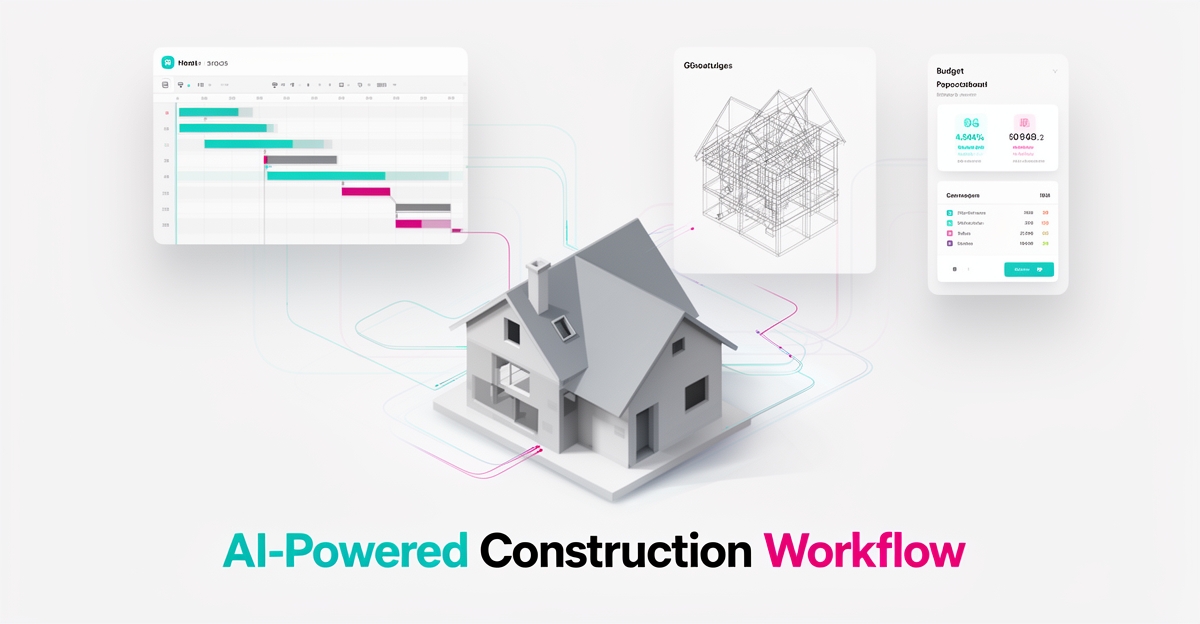
AI is redefining how spec home builders manage projects by creating a unified system where timelines, budgets, and client feedback continuously inform one another. This integration connects BIM models, project management software, and financial platforms into a dynamic workflow that anticipates challenges before they disrupt progress. By syncing these systems, AI enables predictive adjustments that keep projects on track and within budget.
One of the core applications transforming construction project management is predictive analytics for delay forecasting. AI analyzes historical project data, weather patterns, supply chain indicators, and labor availability to identify potential bottlenecks weeks in advance. This foresight allows builders to reallocate resources or adjust schedules proactively, reducing the likelihood of costly overruns.
Automated documentation and reporting further streamline operations by eliminating manual data entry and status updates. AI systems generate real-time progress reports from BIM updates, task completions, and budget expenditures, ensuring stakeholders always have access to accurate information. These tools also flag discrepancies between planned and actual performance, enabling faster corrective actions—freeing teams to focus on strategic decision-making.
Intelligent resource optimization uses real-time data from job sites, supplier deliveries, and crew availability to dynamically allocate labor and materials. AI-driven allocation ensures crews are scheduled efficiently, materials arrive just-in-time, and equipment utilization is maximized across multiple projects. This adaptive approach minimizes waste and prevents idle time, directly impacting both timelines and budgets.
- Predictive analytics forecast delays using historical and real-time data
- Automated reporting cuts manual status-chasing and report compilation
- Resource optimization keeps crews and materials aligned across concurrent builds
By connecting these capabilities into a single system, AI transforms project management from a reactive process into a proactive, data-driven operation. For spec home builders, this means fewer surprises, better client communication, and projects that consistently meet schedule and budget targets. AIQ Labs builds these integrations so BIM tools, project management software, and financial systems work together as one intelligent workflow.
Enterprise AI Platforms vs. Custom Integration: What Spec Builders Actually Need
Spec home builders often face a critical decision when adopting AI for project management: should they invest in off-the-shelf platforms or pursue custom integration? While leading solutions like Microsoft Project, Smartsheet, and Monday.com offer powerful automation features, they frequently fall short when applied to the nuanced workflows of spec home building. These platforms excel at general task tracking and reporting but lack deep integration with industry-specific tools such as BIM software, supplier pricing engines, and client communication systems unique to residential construction.
The productivity gains AI can deliver only materialize when systems are properly aligned with operational realities. Generic platforms often require significant manual workarounds to handle construction-specific variables like change orders tied to material fluctuations, weather-dependent scheduling, or phased client approvals. Without seamless data flow between design, estimating, and field operations, AI insights remain fragmented and actionable only after delays have already impacted timelines or budgets.
Custom integration, as delivered by AIQ Labs, addresses these gaps by unifying BIM models, project schedules, material cost trackers, and client feedback loops into a single dynamic workflow. This approach enables predictive analytics that anticipate supply chain bottlenecks before they halt framing or predict cost overruns during finish selections—insights impossible to generate when data lives in siloed applications. Unlike off-the-shelf tools that force builders to adapt their processes to the software, custom integration adapts the technology to the builder's existing workflows, preserving operational familiarity while eliminating manual data reconciliation.
The result is not just automation, but a self-optimizing project ecosystem where AI continuously learns from historical patterns across multiple builds to refine scheduling, resource allocation, and risk prediction. For spec home builders managing tight margins and overlapping timelines, this level of integration transforms project management from a reactive function into a proactive strategic advantage—one that generic platforms cannot deliver without costly, brittle customizations that undermine long-term scalability and ownership. With AIQ Labs, what gets built is yours outright—no recurring platform dependency.
A Phased Implementation Framework for AI-Powered Project Management
For spec home builders managing multiple concurrent projects, a structured approach to AI adoption ensures sustainable transformation without disrupting ongoing operations. A four-phase framework—foundation building, pilots, scaling, and advanced integration—provides a proven roadmap, particularly valuable in residential construction where timelines and budgets demand precision. It also mirrors how AIQ Labs delivers work: in milestones, so you see value at each step.
Phase 1: Foundation Building focuses on assessing current project management processes, evaluating data quality from sources like BIM tools and financial systems, and identifying high-impact opportunities for AI integration. This initial period includes team education on AI capabilities and limitations, ensuring stakeholders understand how predictive analytics can forecast timeline issues and cost risks before they impact delivery. Establishing change management strategies during this phase addresses potential resistance and prepares teams for the temporary productivity reduction often experienced during technology transitions.
Phase 2: Pilot Implementation involves selecting 2-3 non-critical, data-rich projects for initial AI testing—such as those with strong historical data on material costs and client feedback cycles. Teams should prioritize user-friendly tools that integrate with existing project management software and scheduling systems, implementing gradual rollouts to minimize disruption. Measurable success criteria, like tracking reductions in routine task time or improvements in delivery predictability, provide clear benchmarks for evaluating pilot effectiveness before broader deployment.
Phase 3: Scaling and Optimization applies lessons from pilot projects to wider implementation across all active developments. This phase trains additional team members, develops organizational standards for AI use in areas like automated documentation and smart scheduling, and establishes AI governance frameworks for consistent application. Regular performance reviews using established KPIs enable continuous improvement and knowledge sharing across project teams.
Phase 4: Advanced Integration implements sophisticated capabilities like predictive analytics for supply chain bottlenecks and custom solutions tailored to unique builder requirements. By integrating AI insights into strategic planning, spec home builders transform AI from a tactical tool into a strategic advantage that enhances decision-making across their project portfolio. This phased approach ensures AI adoption delivers measurable value while building organizational resilience for long-term transformation.
Overcoming Implementation Challenges: Data Quality, Team Adoption, and ROI Realization
Spec home builders implementing AI in project management face real-world hurdles that can delay value realization if not addressed proactively. The most immediate barrier is data quality—AI systems require clean, standardized historical project data to deliver accurate predictions, and legacy systems often contain inconsistent or fragmented information. Teams must invest time upfront to cleanse and integrate data from BIM tools, scheduling software, and financial platforms before AI can reliably forecast delays or budget overruns.
Initial investment considerations also create hesitation, particularly for smaller builders concerned about upfront costs. Implementation expenses can include software licensing, team training, and system integration. However, a phased rollout mitigates financial risk: starting with pilot projects on non-critical builds allows teams to validate AI's impact on timeline accuracy and resource allocation before scaling, spreading costs while building internal confidence. AIQ Labs' milestone-based payment model is built for exactly this—you pay as each phase proves out, and larger builds can be owned outright.
Change management presents perhaps the toughest challenge, as teams accustomed to manual workflows may resist new processes. Research confirms AI adoption often triggers a temporary productivity dip during transition, requiring skill development and structured support. To counter this, builders should appoint AI champions within project teams, provide role-specific training tied to daily tasks, and establish feedback loops that quickly address pain points. Celebrating early wins—like automated status reports that eliminate hours of administrative work each week—reinforces adoption and demonstrates tangible value.
By tackling these challenges head-on with a clear roadmap, spec builders can accelerate their path to ROI. AIQ Labs supports this journey by connecting disparate systems into a unified workflow—whether that's a single rebuilt workflow, managed AI employees handling dispatch and coordination, or a full operating layer—ensuring data flows smoothly from design to delivery while minimizing disruption during the critical transition phase.
Still paying for 10+ subscriptions that don’t talk to each other?
We build custom AI systems you own outright. No vendor lock-in. Full control.
Not sure where to start? Ask our AI planner
Frequently Asked Questions
How much time can AI save on routine project management tasks for spec home builders?
Can AI actually improve how fast we deliver spec homes?
What's the biggest hurdle when starting with AI in project management?
Will my team resist switching to AI-powered tools?
Do I need to replace my current project management software to use AI?
Is AI just for large builders, or can small spec home companies benefit too?
From Reactive Builds to Predictive Profits
Spec home building rewards builders who move from chasing updates to anticipating them. Manual, siloed workflows create hidden costs through delays, budget pressure and admin overload, while AI unifies timelines, budgets and client feedback into one dynamic system. Predictive analytics can forecast bottlenecks weeks out, automated reporting frees manager time, and intelligent resource optimization supports faster, more predictable delivery. Success hinges on clean data and a phased approach: assess, pilot on data-rich projects, scale with governance, then advance to deeper integration. If you're evaluating where to start, begin with a current-state assessment of your BIM, scheduling and financial data flows and identify the one workflow that costs you the most. AIQ Labs rebuilds that workflow at a fixed price, in phases—or builds a full AI operating system you own outright. Take the 2-minute Fit Check at aiqlabs.ai/apply, then book a free 30-minute strategy call at aiqlabs.ai/book to map your biggest bottleneck and highest-ROI automation opportunities.
Make AI your competitive advantage — not just another tool.
Strategy, implementation and ongoing optimization. One partner, end to end.
Not sure where to start? Ask our AI planner