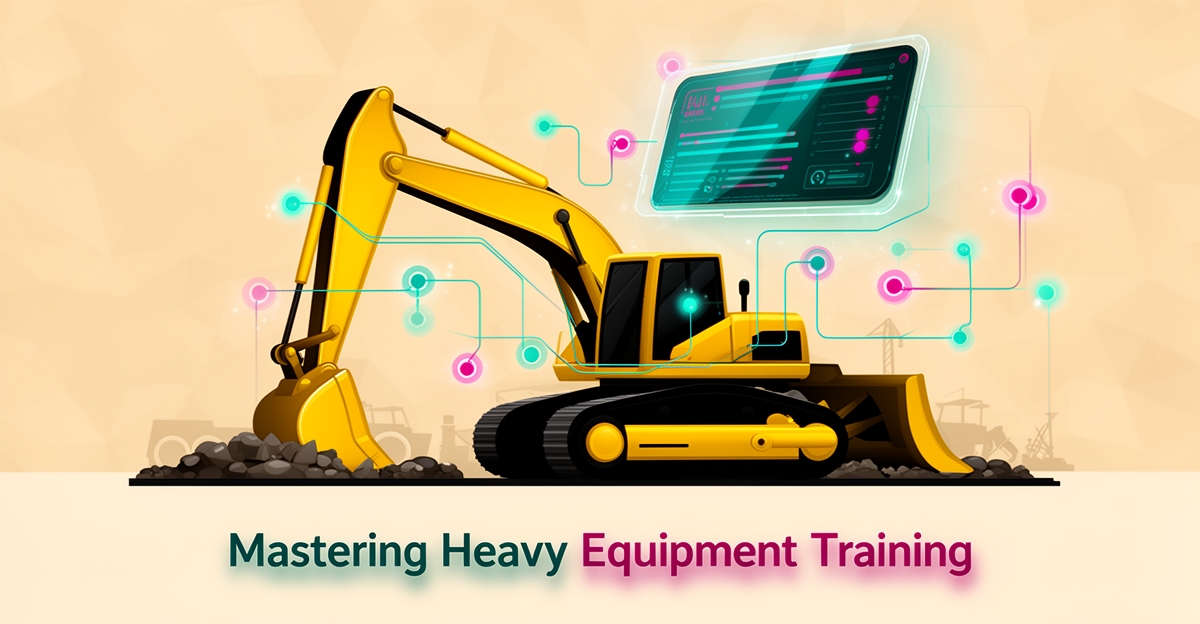
How AI-Driven Training Personalization Improves Student Success in Heavy Equipment Schools
Key Facts
- One-size-fits-all training leaves some students behind while boring others—adaptive pacing addresses both
- AI training systems can automate content updates, personalize learning journeys, and coach with performance data
- Personalized learning paths are widely associated with higher engagement and completion rates in technical training
- Large enterprises have scaled AI upskilling to hundreds of thousands of employees, showing the approach works at institutional scale
- Data-driven coaching lets instructors intervene precisely where students struggle, before unsafe habits form
Hire a team member that works 24/7 — for less than a part-time wage.
AI receptionists, SDRs, dispatchers and 99+ roles. Trained on your business, fully managed.
Not sure where to start? Ask our AI planner
The Skills Gap in Heavy Equipment Training: Why Traditional Methods Are Falling Short
The heavy equipment industry faces a persistent skills gap, with traditional training methods struggling to prepare the next generation of operators. One-size-fits-all approaches ignore individual learning needs, leaving many students behind despite completing programs. This disconnect between training and job readiness has real consequences for both graduates and employers seeking qualified talent.
Surveys of job seekers consistently suggest that a large share of applicants feel unprepared for interviews—a sign of the mismatch between what training programs deliver and what employers expect. In heavy equipment fields, this gap is particularly pronounced, as technical skills require hands-on mastery that standardized curricula often fail to provide. Students enter the job market lacking confidence in their abilities, while employers struggle to find candidates who can safely and efficiently operate complex machinery from day one.
Traditional training methods suffer from several key limitations that exacerbate this readiness gap. Fixed pacing leaves some students struggling to keep up while others become disengaged from material they've already mastered. Generic content fails to address individual knowledge gaps or build on prior experience, particularly problematic for career-changers or those with military backgrounds. Limited feedback mechanisms prevent timely intervention when students develop unsafe habits or misunderstand critical procedures. These shortcomings result in inconsistent skill development and variable job readiness across graduating cohorts.
- Inability to adapt pacing to individual learning speeds
- Generic content that doesn't address specific skill gaps
- Limited real-time feedback on technique and safety
- One-size-fits-all assessments that don't measure true competency
- Minimal personalization for diverse student backgrounds
Overcoming these challenges requires training that adapts to each student's unique journey. AI-driven personalization lets heavy equipment schools identify individual learning patterns, adjust difficulty in real time, and provide targeted coaching where it's needed most. This shift from standardized instruction to adaptive learning creates a foundation for true job readiness, ensuring graduates possess not just certificates, but the demonstrable skills employers demand.
How AI Personalization Transforms Heavy Equipment Training
AI-driven personalization transforms heavy equipment training by dynamically adjusting learning paths based on individual performance, prior experience, and pace. Rather than following a fixed curriculum, students receive tailored content that targets skill gaps while reinforcing strengths, ensuring efficient progression toward competency. The result is a responsive learning environment that evolves with the learner.
Personalized learning journeys increase engagement and completion rates by aligning training with each student's background and goals. AI systems continuously assess performance data to modify lesson difficulty, suggest supplemental resources, and flag areas needing intervention. Modern AI-powered training platforms can automate content updates, personalize learning journeys, and track and coach with data—capabilities that directly support skill mastery in technical fields.
Data-driven coaching enables instructors to intervene precisely when and where support is needed, improving both learning efficiency and job readiness. By analyzing patterns across many student interactions, AI identifies which concepts students struggle with most and recommends targeted practice. Large-scale enterprise upskilling programs—in which major employers have brought hundreds of thousands of workers through AI and data-skills training—demonstrate that this approach works at institutional scale. This level of insight allows educators to shift from reactive teaching to proactive skill development.
- Adaptive content sequencing based on real-time performance assessments
- Personalized remediation paths for challenging equipment operations or safety protocols
- Automated progress tracking that informs both student and instructor decisions
- Dynamic difficulty adjustment to maintain optimal challenge levels
- Integration of prior experience to accelerate learning for experienced learners
These mechanisms collectively reduce time-to-competency while increasing retention, particularly for complex machinery operation where procedural fluency and situational judgment are critical. As organizations prioritize upskilling to meet evolving job demands, AI-driven personalization helps ensure training investments yield measurable outcomes. The result is a training ecosystem that doesn't just teach skills, but cultivates job-ready professionals through intelligent, individualized pathways.
Implementing AI-Driven Training: A Roadmap for Heavy Equipment Schools
Adopting AI-driven training personalization can feel like a major undertaking, but the process becomes manageable when broken into clear, sequential steps. Schools that follow a structured roadmap—rather than jumping straight to software—see stronger results and fewer costly missteps along the way.
The first step is to define the problem you want AI to solve. For heavy equipment schools, that might be low course completion rates, inconsistent hands-on skill readiness, or students progressing at mismatched paces. A clearly defined problem keeps the entire implementation anchored to measurable outcomes.
Next comes collecting and preparing the data your AI system will learn from. This includes student performance records, background information, assessment scores, and learning-pace indicators. In practice, the investment required for data collection and preparation is one of the most common challenges schools face at this stage—budget for it up front.
With data in hand, the third step is choosing and implementing an AI-powered training system. Look for platforms that can automate content updates, personalize learning journeys, and track and coach with data—the three core capabilities that make personalization possible at scale. This is where a partner helps: AIQ Labs builds these systems through [AI Workflow Builds](/workflow-builds), rebuilding the one workflow that costs your school the most—fixed price, in phases—so you get a working system without an open-ended project. For schools that want training, scheduling, and student communications running on one connected layer, [AI Operating Systems](/ai-operating-systems) go further, built in phases and owned outright.
From there, the roadmap follows four more essential steps:
- Train and tune the system using your school's own student data so recommendations reflect real learning patterns.
- Test and deploy with a pilot cohort before rolling out across all programs.
- Update and maintain the system continuously so content and coaching stay current.
- Monitor for bias, since AI systems can unintentionally disadvantage certain learner groups if left unchecked.
It's worth acknowledging the trade-offs honestly. Compared to traditional training methods, AI-driven personalization brings higher costs and increased complexity—but it also delivers improved student outcomes and job readiness that traditional approaches struggle to match. Organizations that invest early in AI literacy and adaptive training consistently report stronger workforce outcomes, which is why employers increasingly value graduates trained this way.
The core promise of AI-driven learning is adaptability: learners can extend their education beyond a fixed course or curriculum, with study habits that adjust to their pace and gaps. For heavy equipment schools, that adaptability is exactly what turns enrolled students into job-ready operators.
The Future of AI in Heavy Equipment Training: Trends and Opportunities
The future of AI in heavy equipment training extends beyond the classroom, enabling continuous skill development through adaptive learning systems that respond to individual progress. AI-powered platforms can automate content updates and personalize learning journeys, ensuring training remains relevant as equipment and safety standards evolve. This adaptability supports lifelong learning, helping operators stay current with technological advancements in the field.
AI upskilling is becoming a critical component of job readiness. Major employers have run AI training programs at very large scale, and early adopters consistently report stronger workforce outcomes. For heavy equipment schools, integrating AI literacy into curricula prepares students not only to operate machinery but to engage with the digital systems increasingly embedded in modern job sites—telematics, grade-control, and fleet-management tools all reward operators who are comfortable with data.
Early adoption of AI-driven training provides institutions with a competitive edge by improving completion rates and graduate employability. Schools that leverage AI to track and coach students with data can identify skill gaps early and adjust instruction in real time.
- Personalized learning paths based on performance and pace
- Automated content updates for evolving equipment standards
- Data-driven coaching to track skill progression
- AI literacy integration for job-ready graduates
- Scalable systems that support lifelong operator development
As AI continues to reshape training delivery, heavy equipment schools that embrace these tools position themselves at the forefront of workforce preparation—delivering not just trained operators, but adaptable professionals ready for the evolving demands of the industry.
Still paying for 10+ subscriptions that don’t talk to each other?
We build custom AI systems you own outright. No vendor lock-in. Full control.
Not sure where to start? Ask our AI planner
Frequently Asked Questions
How does AI-driven training personalization actually work in heavy equipment schools?
Why are traditional heavy equipment training methods falling short?
Does AI-driven training actually improve completion rates and job readiness?
What are the downsides of adopting AI-driven training personalization?
How does AI help experienced students like military veterans or career-changers?
How do we get started implementing AI personalization at our school?
From Training Gaps to Job-Ready Graduates: The AI Advantage in Heavy Equipment Education
The path from enrollment to employment in heavy equipment operations no longer needs to follow a rigid, one-size-fits-all trajectory. AI-driven personalization transforms training by adapting to each student's pace, addressing individual skill gaps, and providing real-time coaching that traditional methods cannot match. Schools that implement adaptive learning systems position themselves for measurable improvements in completion rates and graduate readiness—outcomes that directly address the industry's growing skills shortage. For educational institutions ready to modernize their approach, the technology exists today to deliver training that evolves with each learner. AIQ Labs builds custom systems that personalize training pathways, automate progress tracking, and scale across diverse student populations—whether as a single [AI Workflow Build](/workflow-builds) or a full [AI Operating System](/ai-operating-systems) your school owns outright. If your school is exploring how AI can improve student outcomes, [start with the two-minute Fit Check](/apply) to identify where intelligent automation could make the biggest impact. The future of heavy equipment training belongs to institutions that prepare students not just to pass tests, but to excel on job sites from day one.
Make AI your competitive advantage — not just another tool.
Strategy, implementation and ongoing optimization. One partner, end to end.
Not sure where to start? Ask our AI planner