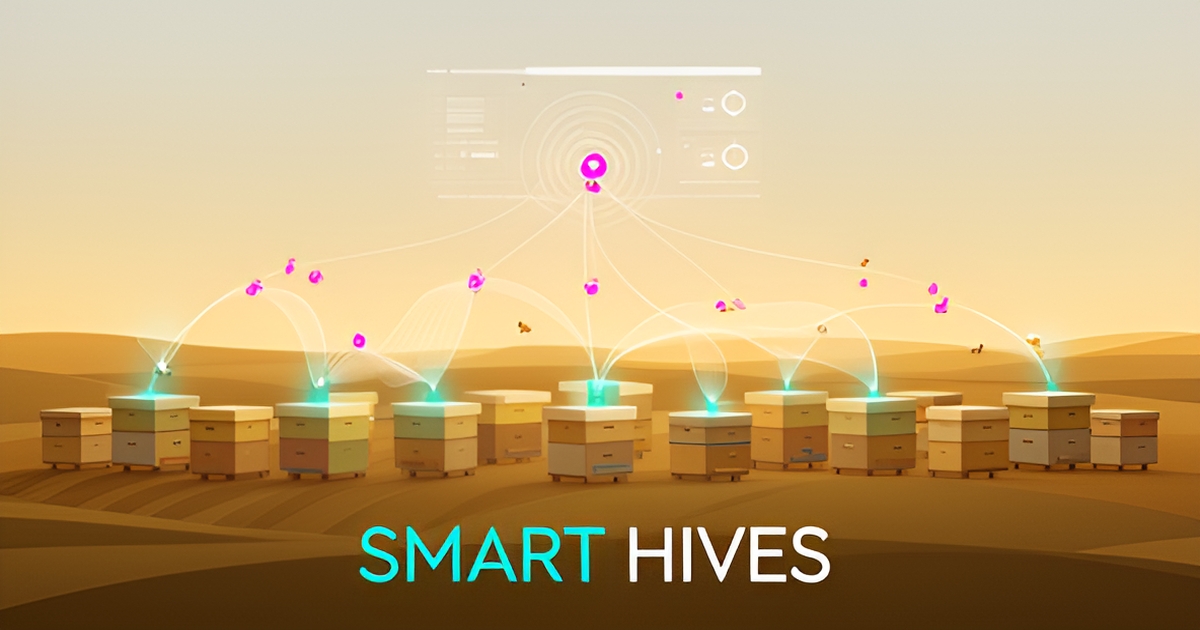
How AI Is Being Used in Commercial Beekeeping to Boost Efficiency
Key Facts
- AI platforms report detecting queenless colonies within about 24 hours via acoustic analysis, catching problems before they become catastrophic colony losses.
- Commercial beekeepers using AI-driven hive placement and timing recommendations commonly report yield increases in the 15–25% range.
- Beewise's AI platform has reported a roughly 70% reduction in colony loss while managing 250,000+ hives annually across multiple countries, according to a published case study.
- AI route optimization cuts travel time and admin work across hundreds of apiaries, scaling operations without proportional headcount growth.
- Multi-signal AI risk scoring fuses weight trends, brood patterns, and varroa loads into unified alerts, replacing single-metric guesswork with early intervention windows.
- Automated HACCP plans and audit trails turn compliance from paperwork burden into background process, meeting enterprise-grade regulatory requirements for food manufacturers and export markets.
- Bloom prediction models map forage availability weeks in advance, letting operators position hives for peak nectar flow and maximize seasonal yields.
Hire a team member that works 24/7 — for less than a part-time wage.
AI receptionists, SDRs, dispatchers and 99+ roles. Trained on your business, fully managed.
Not sure where to start? Ask our AI planner
The Hidden Costs of Traditional Beekeeping Management
Commercial beekeeping operations face significant operational challenges that drain resources and threaten profitability. Manual hive inspections remain labor-intensive and time-consuming, requiring beekeepers to physically visit each hive regularly to assess health, which becomes unsustainable at scale. Reactive colony loss management further compounds inefficiencies, as beekeepers often discover problems only after significant damage has occurred, leading to preventable losses that directly impact honey production and pollination service revenues. These traditional approaches create scalability limits that prevent operations from growing without proportional increases in labor costs and management complexity.
- Manual inspections consume excessive time that could be spent on strategic hive management and business development
- Reactive responses to colony issues result in higher losses and reduced honey yields compared to proactive intervention
- Traditional methods lack the data integration needed for informed decisions about hive placement, timing, and resource allocation
- Scaling operations using conventional approaches requires hiring additional staff, significantly increasing overhead costs
- Inconsistent monitoring creates blind spots where problems develop undetected until they threaten colony survival
The financial impact of these inefficiencies is substantial, with commercial beekeepers reporting that traditional management practices limit their ability to optimize pollination contracts and honey production schedules. Without real-time data integration across multiple hives, operations struggle to make timely decisions about hive movement for optimal nectar flows or to adjust feeding schedules based on actual colony needs. This lack of precision leads to suboptimal resource utilization and missed opportunities during critical seasonal windows. AIQ Labs addresses these industry pain points by building AI systems that turn manual, reactive processes into proactive, data-driven management approaches designed for commercial operations seeking to improve efficiency and profitability at scale.
How AI Transforms Hive Health and Operational Efficiency
Commercial beekeepers managing hundreds of apiaries no longer rely on intuition alone. AI platforms now fuse weight trends, brood-pattern shifts, and varroa trajectories into unified risk scores that surface "act now" alerts before a colony crosses the point of no return, Hive Minded AI reports. This multi-signal approach replaces single-metric guesswork with early intervention windows that matter.
- Acoustic analysis can detect queenless colonies within roughly 24 hours by identifying imperceptible buzz-frequency shifts, field tests indicate
- Prescriptive recommendations on hive placement and timing are associated with yield increases commonly reported in the 15–25% range across commercial operations, comparative evaluations suggest
- Automated route optimization for multi-crew deployments cuts travel time while scaling inspections across thousands of hives without proportional headcount growth
The operational payoff extends beyond the apiary. Beewise's AI-driven platform — running roughly 1,000 devices across multiple countries and placing 250,000+ hives annually — has reported a roughly 70% reduction in colony loss by closing the distance, time, and experience gaps that traditionally plagued large-scale beekeeping, according to a published case study. Real-time computer vision and precision robotics let managers address hive needs without physical presence, while integrated mapping and analytics turn field data into seasonal planning intelligence.
For operations juggling pollination contracts, honey markets, and regulatory compliance, this convergence of monitoring, prediction, and automation transforms beekeeping from reactive craft into managed portfolio. AIQ Labs sees the same pattern across the businesses it builds for: when domain expertise meets multi-agent AI systems that own workflows end-to-end, the result isn't incremental improvement — it's a new operating model. That's the thinking behind our AI Operating Systems approach.
AI-Driven Supply Chain, Contracts, and Seasonal Planning for Scale
Most commercial beekeeping operations still manage supply chains and client contracts with spreadsheets, phone calls, and memory. That approach breaks down fast at scale—when you're running hundreds or thousands of hives across dozens of locations, the margin for error disappears.
AI closes that gap by connecting hive-level data to business-level decisions. Platforms like Hive Minded AI already optimize daily routes for multiple crews across hundreds of apiaries, cutting travel time and admin work. The same data streams that flag a colony at risk can also inform where to place hives next season, which contracts are most profitable, and when to schedule honey extraction.
Seasonal planning is where AI delivers some of its clearest returns. According to comparative testing, commercial beekeepers using AI-driven placement and timing recommendations commonly report yield increases in the 15–25% range. That's not marginal improvement—it can be the difference between a break-even season and a profitable one, especially when multiplied across an entire operation.
The tools making this possible include:
- Bloom prediction models that map forage availability weeks in advance, letting operators position hives for peak nectar flow
- Fleet-level analytics that identify which apiaries consistently outperform—and which drain resources
- Automated contract tracking that links pollination agreements to hive performance data, flagging underperforming relationships
- Predictive yield forecasting that informs honey supply commitments to buyers before the season starts
AI also changes how operations handle compliance and traceability. Systems built for commercial scale can generate automated HACCP plans and audit trails, turning what was once a paperwork burden into a background process. For operations supplying food manufacturers or export markets, that capability isn't optional—it's table stakes.
The business case extends beyond efficiency. Nectar Technologies' prescriptive beekeeping project, backed by the Canadian Agri-food Automation and Intelligence Network, explicitly targets both colony survival and business profitability. The framing matters: AI in beekeeping isn't just about healthier bees—it's about operations that can plan, scale, and compete.
AIQ Labs works with operations facing exactly these challenges—businesses where hive data, client contracts, and seasonal logistics need to function as one system, not three separate headaches. The goal isn't to replace beekeepers' judgment. It's to give them the infrastructure to act on it at scale.
Implementing AI in Your Beekeeping Operation: From Pilot to Profit
Commercial beekeeping rewards operators who move from reactive checks to data-driven decisions, and AI makes that shift practical at scale. Operations running 50+ hives across multiple apiaries can start with a focused pilot and expand without rebuilding systems from scratch.
A pilot begins with rebuilding the one workflow that costs the most. Commercial hive monitoring platforms turn scattered weight, brood and varroa signals into fused risk levels and "act now" alerts, so crews intervene before loss trends accelerate. Route optimization for multiple crews minimizes travel time across hundreds of apiaries while voice entry and AI summaries cut inspection admin. This is the classic Workflow Build stage—fixed price, delivered in phases, as described on our Workflow Builds page.
Once the pilot proves value, the system scales to department-level automation. AI-driven acoustic monitoring can detect queenless colonies within roughly 24 hours by analyzing buzz frequency shifts, and commercial users commonly report yield gains in the 15–25% range from placement and timing recommendations. Field evaluations suggest those gains come from fleet-level analytics that optimize resource allocation across thousands of hives. Supply chain, client contracts and seasonal planning benefit from the same principle: prescriptive recommendations replace guesswork.
Full ownership comes when AI becomes the operating system for the business. AI-powered beekeeping platforms now place 250K+ hives per year with roughly 1,000 devices in the field and have reported a roughly 70% reduction in colony loss. That level of precision requires custom integration, not point tools.
A practical adoption path mirrors the maturity curve most SMBs follow:
- Pilot: Hive monitoring and early warning for one apiary cluster, using existing scales and phone inspections
- Scale: Department automation for operations, sales and compliance with unified dashboards and automated records
- Own: A complete AI operating system with custom UI, owned code and data, and managed AI employees for 24/7 coverage
AIQ Labs supports this journey with three entry points: AI Employees (managed AI staff at roughly 80% less cost than a human hire), AI Workflow Builds (rebuild the one workflow that costs the most, at a fixed price, in phases), and AI Operating Systems (one connected operating layer, built in phases, owned outright). Payment models follow the same flexibility: Start Monthly, Build in Milestones, or Own It Outright—no fake prices, no invented case-study numbers. Details are on our pricing page.
Still paying for 10+ subscriptions that don’t talk to each other?
We build custom AI systems you own outright. No vendor lock-in. Full control.
Not sure where to start? Ask our AI planner
Frequently Asked Questions
How does AI actually help commercial beekeepers catch problems before colonies die?
Can AI really detect a queenless hive faster than a beekeeper can?
What kind of yield increase can I expect from using AI in my operation?
Do I need to buy expensive sensors for every hive to use AI monitoring?
How does AI help with the business side of beekeeping, like contracts and routing?
What's the most practical way to start implementing AI without disrupting my current operation?
From Hive Data to Business Growth
Commercial beekeeping is shifting from manual checks and reactive losses to proactive, data-driven operations. AI now fuses weight trends, brood patterns and varroa trajectories into unified risk scores, delivers queen-loss detection within roughly 24 hours through acoustic analysis, and powers route optimization that scales inspections without proportional headcount growth. Those same hive-level signals extend into the business layer, informing bloom-based placement, contract profitability, seasonal yield forecasting and automated compliance documentation. The result is fewer preventable losses, yield gains commonly reported in the 15–25% range from better timing, and a managed portfolio approach to pollination and honey production. Operations ready to move from pilot to profit typically start with early-warning monitoring for one apiary cluster, then expand to department-level automation for operations, sales and compliance. If you're evaluating how to connect hive data, client contracts and seasonal logistics into one system, take the 2-minute Fit Check at https://aiqlabs.ai/apply and book a free 30-minute strategy call to map your highest-ROI automation opportunity. Platforms like Beewise demonstrate the scale possible, placing 250K+ hives per year with a reported roughly 70% reduction in colony loss in a published case study.
Make AI your competitive advantage — not just another tool.
Strategy, implementation and ongoing optimization. One partner, end to end.
Not sure where to start? Ask our AI planner