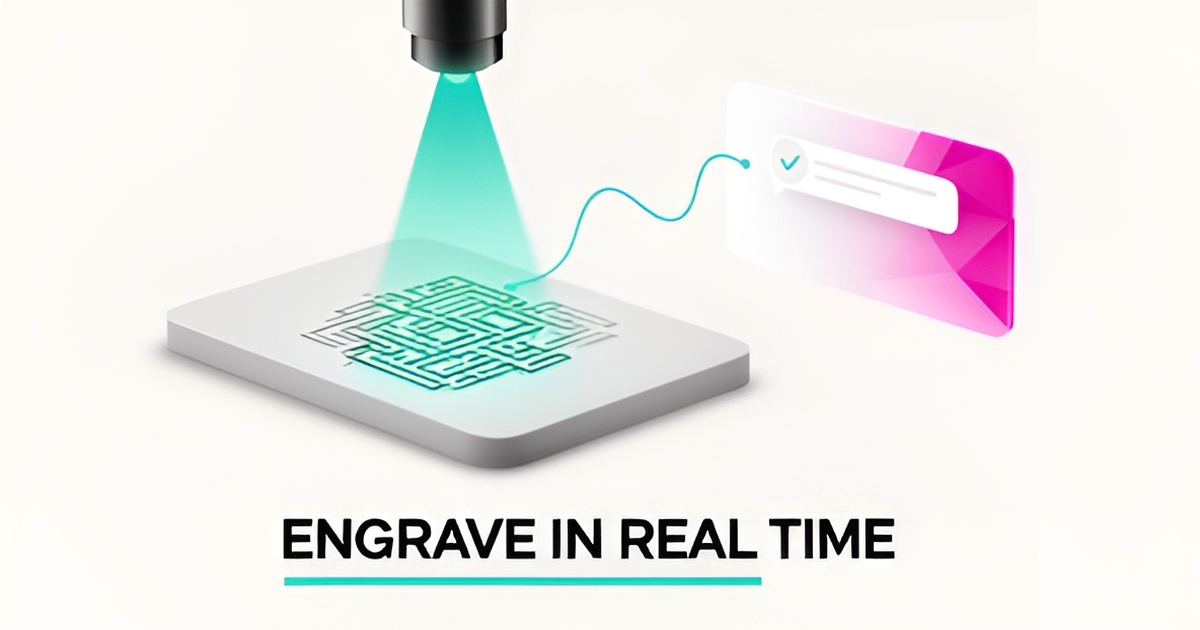
How AI-Powered Chatbots Can Handle Custom Engraving Requests in Real Time
Quick Answer: Discover how AI chatbots turn custom engraving requests into production-ready specs in seconds—no manual interpretation. See how real-time validation and instant previews close the personalization gap.
Key Facts
- Major consumer brands have normalized instant engraving previews at checkout, raising customer expectations across every product category that offers personalization.
- Modern chatbot platforms can be trained on your own design guidelines, material specs, and style sheets so responses stay grounded in what your equipment can actually produce.
- Chatbot builders typically support multi-channel deployment across website chat, WhatsApp, and Instagram, so customers can submit requests wherever they already are.
- AIQ Labs has deployed 200+ multi-agent systems and runs four live SaaS products daily—conversational front-ends connected to real production workflows are proven territory.
Hire a team member that works 24/7 — for less than a part-time wage.
AI receptionists, SDRs, dispatchers and 99+ roles. Trained on your business, fully managed.
Not sure where to start? Ask our AI planner
Table of Contents
- The Real-Time Personalization Gap in Custom Engraving
- How AI Chatbots Bridge Design and Manufacturing in Real Time
- From Conversation to Production: Integrating AI Chatbots with Engraving Systems
The Real-Time Personalization Gap in Custom Engraving
The expectation for instant personalization has shifted dramatically in recent years. Customers now demand real-time feedback when customizing products, from previewing engravings to confirming delivery timelines. This shift creates a significant gap between what consumers experience with streamlined services and what many businesses still deliver through manual workflows.
Large consumer brands have set the modern standard for personalization: free engraving on popular devices, with emoji, names, initials, numbers, and dates combined in an instant preview before purchase—and, in many cases, no slowdown in delivery. That level of immediacy and flexibility is increasingly expected across product categories, including automotive customization.
However, many engraving workflows—particularly in industries like automotive—still rely on manual interpretation of customer requests. When a customer submits a custom design for a license plate or handlebar, staff must interpret handwritten notes, verbal descriptions, or unstructured digital inputs. This process introduces costly delays and errors, especially when requests involve specific fonts, spacing, or material constraints. Unlike automated preview systems, manual workflows lack real-time validation, leading to rework, material waste, and customer dissatisfaction when the final engraving doesn't match expectations.
The consequences of this gap extend beyond simple inconvenience. In automotive applications, where precision and durability are critical, an incorrect engraving can compromise part functionality or require expensive replacement. Manual interpretation also limits scalability; each custom request consumes valuable staff time that could be allocated to higher-value tasks. As customers grow accustomed to instant previews and guaranteed turnaround times from market leaders, businesses using manual processes risk losing trust and market share.
Bridging this gap requires more than just faster engraving machines—it demands intelligent systems that can interpret customer intent, validate designs against technical constraints, and deliver instant feedback. AI-powered chatbots trained on engraving standards and style guidelines offer a path forward, enabling real-time request handling that matches consumer expectations while reducing reliance on manual interpretation. For businesses in custom parts manufacturing, closing this personalization gap isn't just about improving service—it's about aligning with the new standard of immediate, accurate customization that customers now consider basic.
How AI Chatbots Bridge Design and Manufacturing in Real Time
When a customer requests a custom engraving on a license plate or handlebar, the gap between creative vision and production reality often introduces delays, miscommunication, and costly errors. AI-powered chatbots trained on engraving design standards close that gap by interpreting natural language requests, validating technical feasibility, and generating production-ready specifications in seconds.
Modern chatbot platforms let businesses deploy assistants that understand design constraints without inventing options the manufacturing equipment can't execute. Grounding the chatbot in your own data—design guidelines, material specifications, and style sheets—keeps responses tied to what's actually possible. Many platforms also let you correct a bad answer with a single edit rather than retraining the whole system, so the chatbot validates character limits, font compatibility, and spacing rules before a job reaches the shop floor.
- Natural language understanding translates "I want my initials in a script font with a small star" into precise vector paths
- Real-time preview mirrors the instant feedback customers already get from major consumer brands at checkout
- Multi-channel deployment lets customers submit requests via website chat, WhatsApp, or Instagram without changing workflows
- Integration with laser marking systems routes validated specs directly to production
Industrial laser providers have spent decades developing marking processes across metals, plastics, ceramics, and glass—and those process constraints are exactly what a chatbot must respect. AIQ Labs builds these end-to-end systems where conversational agents sit atop multi-agent architectures, connecting customer intent to manufacturing execution without manual handoffs. The result: a customer describes what they want, the chatbot confirms it can be made, and the file hits the laser queue—all in the time it takes to refresh a browser. If this describes a workflow you'd like rebuilt, AIQ Labs' AI Workflow Builds target exactly this kind of high-cost, handoff-heavy process at a fixed price, in phases.
From Conversation to Production: Integrating AI Chatbots with Engraving Systems
AIQ Labs bridges the gap between customer conversation and physical production by connecting AI chatbots directly to industrial engraving workflows. This integration transforms validated design requests into automated manufacturing actions without manual re-entry or delays, creating a seamless path from idea to finished product.
The process begins when a customer describes their custom engraving request—such as a license plate with specific text and emoji combinations or handlebars featuring a logo and date—through the chatbot interface. Using natural language understanding trained on engraving design standards, the AI interprets the request, validates it against technical constraints like character limits and material compatibility, and generates a production-ready design file. This eliminates the need for human designers to manually translate conversational input into machine-readable instructions.
An end-to-end flow—quote to delivery, with validated engraving designs triggering automated laser processing without intermediate steps—is the blueprint here. When the chatbot confirms a request meets all specifications, such as staying within the character limit common for metal tags or using only laser-compatible fonts, it sends a direct command to the engraving system. Modern industrial laser hardware is precise enough that the final output matches the validated design exactly, provided the design intent reaches the machine uncorrupted.
Key integration steps include connecting the chatbot's output to the engraving machine's control system via API, implementing real-time design preview so customers see exactly what will be produced, and setting up automated quality checks that verify spacing, alignment, and depth before laser activation. This creates a closed loop where customer intent, AI interpretation, and physical production remain synchronized.
The result is a system where a customer can request a custom engraving at any time, receive instant validation and preview, and have the item begin production immediately—all without human intervention in the design-to-manufacturing handoff. This approach not only reduces turnaround time but also minimizes errors caused by manual data entry or miscommunication between sales and production teams. For businesses that want this connected across their whole operation—not just one workflow—AI Operating Systems build one connected layer, in phases, that you own outright.
Still paying for 10+ subscriptions that don’t talk to each other?
We build custom AI systems you own outright. No vendor lock-in. Full control.
Not sure where to start? Ask our AI planner
Frequently Asked Questions
Can an AI chatbot actually handle custom engraving requests in real time?
Yes, by interpreting natural language, validating against design constraints, and sending production-ready specs to the laser. The key is grounding the chatbot in your own design standards and equipment capabilities so it only promises what your machines can deliver.
How do consumer engraving experiences set the standard for instant personalization?
Major brands offer free engraving on popular devices with a mix of emoji, names, initials, and numbers, an instant preview before purchase, and no delivery slowdown. That's the baseline customers now bring to every custom product conversation.
Will a chatbot stop me from making engraving mistakes like wrong fonts or character limits?
A properly trained chatbot can validate character limits, font compatibility, and spacing before a job reaches the shop floor. Grounding responses in your own data—rather than a general-purpose model's guesses—is what makes this reliable.
Can the chatbot connect directly to my laser engraving equipment?
Yes, validated specs can be routed via API to laser marking systems. The integration work is exactly the kind of handoff-heavy workflow AIQ Labs rebuilds under its AI Workflow Builds service.
What makes industrial laser engraving different from consumer engraving?
Industrial providers handle more complex materials and processes—marking, annealing, color change, carbonization, and deep engraving across metals, plastics, ceramics, lacquers, glass, and organic materials. Your chatbot needs to know these constraints, not just the marketing copy.
How precise is the final engraving when it comes from a chatbot workflow?
Precision is maintained by the industrial hardware. The chatbot's job is to make sure design intent reaches the machine uncorrupted—correct file, correct constraints, correct material settings. The laser does the rest.
From Concept to Cut: Why Real-Time Engraving Is Now Within Reach
AI-powered chatbots are closing the gap between customer imagination and production reality in custom engraving by interpreting natural language requests, validating designs against technical constraints, and delivering instant previews—just like the seamless personalization experiences customers already know. This eliminates manual interpretation errors, reduces turnaround time, and ensures every engraving matches expectations before it reaches the laser. For businesses in automotive, aerospace, or custom parts manufacturing, this means fewer reworks, higher customer satisfaction, and the ability to scale personalization without adding headcount. The technology exists today: train a chatbot on your engraving standards, integrate it with your laser systems, and deploy across channels where your customers already engage. AIQ Labs has deployed 200+ multi-agent systems and runs four live SaaS products daily, so this isn't theoretical work. Start with the 2-minute Fit Check, then take a free, no-obligation 30-minute strategy call. It's a working session to map your biggest bottleneck and identify where AI can deliver real ROI, not a sales pitch. Book your free 30-minute strategy call and discover what's possible when customer intent meets production precision.
Make AI your competitive advantage — not just another tool.
Strategy, implementation and ongoing optimization. One partner, end to end.
Not sure where to start? Ask our AI planner