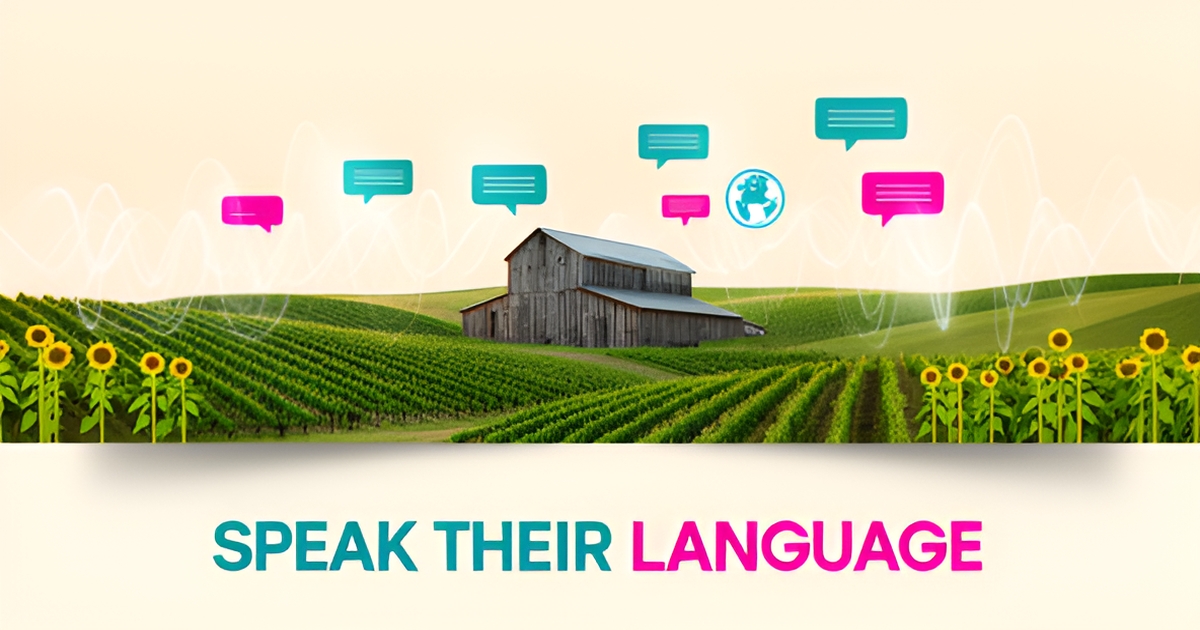
How AI Voice Technology Can Serve Multilingual Agritourism Visitors
Key Facts
- Consumer research consistently shows a large majority of buyers prefer purchasing in their native language—and trust and conversions drop when that option is missing.
- The voice AI market has been growing rapidly and is widely projected to keep expanding at a double-digit rate through the 2030s.
- Multilingual voice agents typically need to respond in under one second to maintain natural conversation flow.
- Real-time language switching detection generally occurs within a few hundred milliseconds, routing audio through language-specific pathways while preserving context.
- Modern multilingual speech recognition can achieve low word error rates even in noisy, code-switched environments.
- Direct multilingual processing by LLMs preserves cultural context and formality levels that internal translation often misses.
- Global buyers increasingly expect service in their native language 24/7—something AI phone agents deliver without expanding headcount.
Hire a team member that works 24/7 — for less than a part-time wage.
AI receptionists, SDRs, dispatchers and 99+ roles. Trained on your business, fully managed.
Not sure where to start? Ask our AI planner
The Language Barrier Challenge in Agritourism
A family from Japan calls to book a weekend farm tour, but no one on staff speaks Japanese. The phone rings, the opportunity passes, and the booking goes elsewhere. This scenario repeats daily across agritourism operations as international visitor numbers climb and language diversity expands.
The stakes are clear. Consumer research has repeatedly found that a large majority of buyers—often cited around three-quarters or more—prefer purchasing in their native language, and that trust erodes and sales slip when that option isn't available. For farms and rural attractions, this preference directly impacts booking conversions, on-site spending, and the likelihood of positive reviews that drive future visitation.
Yet the operational reality creates a genuine bind. Hiring multilingual staff for every language your visitors speak isn't feasible for most family-run operations. Global buyers increasingly expect service in their native language around the clock, but delivering that traditionally meant expanding headcount and payroll costs that most agritourism businesses simply cannot absorb.
The challenge extends beyond simple translation. Effective multilingual communication requires:
- Real-time language detection that identifies the caller's language within seconds
- Accent handling that distinguishes regional variations like Mexican versus Argentinian Spanish
- Code-switching support for guests who naturally blend languages mid-sentence
- Cultural nuance preservation so formality levels match visitor expectations
Voice technology specialists have found that direct multilingual processing outperforms internal translation because it keeps cultural context intact. "How can I help you?" and "¿En qué puedo ayudarle?" carry different levels of formality that shape the entire guest experience before a single booking is confirmed.
This is where multilingual AI voice agents change the equation. Rather than choosing between accessibility and affordability, farms can now deploy systems that handle greetings, answer questions, and process bookings in dozens of languages simultaneously. AIQ Labs builds these capabilities into AI Employees that work alongside existing teams, ensuring no caller reaches a dead end regardless of when they call or what language they speak.
The result is inclusive service without operational strain. A single AI voice agent can manage inquiries in English, Mandarin, Spanish, and Punjabi during the same hour, maintaining natural conversation flow while human staff focus on delivering exceptional on-site experiences. For agritourism operators watching competitors capture international visitors, the question has shifted from whether to offer multilingual support to how quickly they can implement it.
How Multilingual AI Voice Agents Solve Real-Time Communication
A Japanese family arrives at your farm-to-table restaurant and asks about your gluten-free options in their native tongue. Your staff freezes. A multilingual AI voice agent steps in, detects the language, and responds instantly—all within a fraction of a second.
This seamless interaction relies on four coordinated components working in real time. A functional system requires speech-to-text (STT), large language models (LLMs), text-to-speech (TTS), and orchestration software acting as "air traffic control" to manage the pipeline.
The entire exchange must occur in under one second to maintain natural conversation flow. This demands streaming transcription that processes speech as it happens, rather than waiting for complete sentences. When a guest switches from English to Mandarin mid-sentence—known as code-switching—the system typically detects the change within a few hundred milliseconds and routes audio through language-specific pathways without losing context.
Accuracy matters critically at the first step. If STT mishears "schedule a tour" as "cancel my booking," even the smartest downstream AI cannot fix that error. Modern multilingual systems can achieve low word error rates even with background noise and mixed-language conversations, though real-world performance varies by environment and audio quality.
Cultural preservation separates adequate translation from genuine hospitality. Research on multilingual processing shows that direct multilingual processing by LLMs outperforms internal translation because it preserves cultural context and appropriate formality levels. "How can I help you?" and "¿En qué puedo ayudarle?" carry different social weights that literal translation often misses.
The orchestration layer handles the complexity of these interactions by:
- Managing interruptions when guests speak over the agent
- Tracking conversation state across language transitions
- Maintaining context for booking details and preferences
- Routing calls to human staff when situations exceed AI authority
For agritourism operators, this technical stack translates to practical capability. AIQ Labs has deployed 200+ multi-agent systems and runs four live SaaS products daily, building voice agents on production-grade frameworks that handle the nuances of agricultural terminology across languages—whether explaining a terroir tour to French visitors or describing harvest schedules to Japanese guests. The result is 24/7 multilingual support that meets the expectations of global visitors for service in their native language.
Implementation: From Booking to On-Site Support for Global Guests
Global guests decide on an agritourism stay in seconds, and language friction is the fastest way to lose them. Multilingual voice support turns first contact into a confident, welcoming experience instead of a barrier.
Implementation starts with automated greetings that meet visitors in their native language. AI voice agents deliver service in native languages 24/7 without expanding headcount, meeting the expectations of global buyers. Real-time language detection identifies the spoken language within seconds, while streaming transcription processes speech as it happens to keep replies natural.
From booking to on-site support, the workflow is designed as a continuous conversation. Response times must stay under one second to ensure the conversation feels natural, and orchestration software acts like air traffic control for the voice agent, managing timing between components and handling interruptions. Direct multilingual processing by LLMs preserves cultural context and appropriate levels of formality.
AIQ Labs deploys managed AI employees through the Start Monthly model, so farms get build, training, integrations, monitoring and improvements with no upfront AI expertise required. The system integrates with existing farm management tools and booking platforms for a single source of truth. If your multilingual booking flow is the one workflow costing you the most missed reservations, a targeted Workflow Build may be the faster starting point.
A practical rollout for agritourism typically covers:
- Automated multilingual greetings and 24/7 booking on phone, web and SMS
- Real-time translation for tour guides and on-site staff interactions
- Voice-driven reservations with calendar and payment integration
- Accent handling and code-switching for mixed-language families
Consumer research consistently shows that a large majority of people prefer buying in their native language, highlighting the importance of multilingual support for trust and sales. The voice AI market has been scaling quickly, with most industry projections pointing to sustained double-digit growth through the coming decade.
Cultural nuance matters as much as translation. High-quality voice synthesis matches rhythm, emotion and cultural tone, and orchestration keeps conversation state across language transitions. When a language switch is detected—typically within a few hundred milliseconds—the system routes audio through language-specific pathways while maintaining context.
The result is inclusivity without added staffing. Guests receive clear, human-like guidance from arrival to checkout, and teams focus on hospitality while managed AI employees handle routine inquiries around the clock.
Still paying for 10+ subscriptions that don’t talk to each other?
We build custom AI systems you own outright. No vendor lock-in. Full control.
Not sure where to start? Ask our AI planner
Frequently Asked Questions
Why does offering multilingual support actually matter for my agritourism business?
How can AI voice agents handle multiple languages simultaneously without hiring multilingual staff?
What happens if a guest switches languages mid-sentence during a conversation?
Does AI translation preserve the cultural nuances that matter for hospitality?
How accurate is the speech recognition when dealing with different accents or background noise?
What's actually involved in implementing multilingual AI voice technology for a farm or agritourism operation?
The Sound of Inclusive Hospitality
The language barrier in agritourism isn't just a communication gap—it's a revenue leak that compounds with every missed booking and frustrated guest. As international visitor numbers climb, the farms that thrive will be those that meet guests in their native language from the first hello to the final checkout. Multilingual AI voice agents close this gap without the operational strain of hiring for every language, handling real-time detection, code-switching, and cultural nuance across dozens of languages simultaneously. Consumer research consistently shows most buyers prefer purchasing in their native language, and the voice AI market keeps scaling to meet that demand. For family-run operations, the question isn't whether to adopt multilingual support, but how quickly they can deploy it without losing another season. AIQ Labs deploys managed AI employees through a Start Monthly model that includes build, training, integrations, and ongoing optimization—at a fraction of the cost of a human hire. Ready to see where multilingual voice support fits your operation? Start the two-minute Fit Check and book a free 30-minute strategy call to map your highest-ROI opportunity.
Make AI your competitive advantage — not just another tool.
Strategy, implementation and ongoing optimization. One partner, end to end.
Not sure where to start? Ask our AI planner