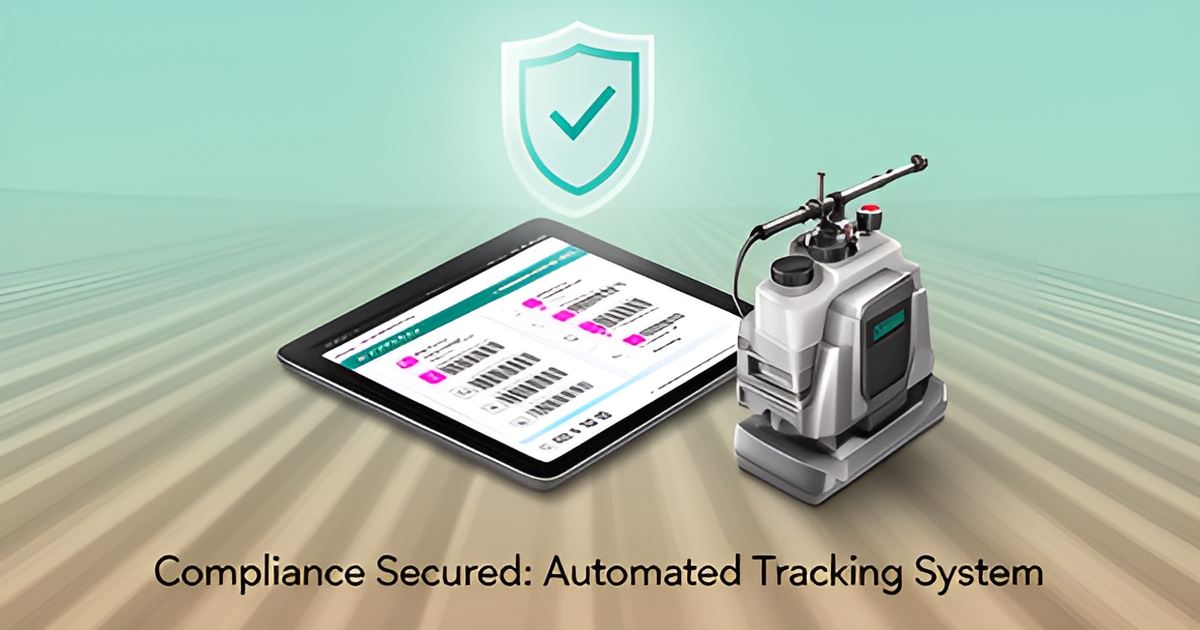
How an AI Compliance Officer Can Ensure Your Pesticide Use Meets Regulatory Standards
Key Facts
- AIQ Labs builds AI employees for regulated agriculture with strict documentation needs
- The EU AI Act, in force since August 1, 2024, classifies AI systems into minimal, limited, high, and unacceptable risk categories
- AI compliance monitoring applies rules uniformly, without the bias, fatigue, or oversight gaps that affect manual processes in regulated industries
- AIQ Labs' Start Monthly model typically costs around 80% less than a human hire and includes build, training, monitoring, and improvements — see the Fit Check
- Manual pesticide logs create audit failures from incomplete records and transcription errors
- AI tools minimize human error by applying rules uniformly at scale in compliance monitoring
- AIQ Labs has deployed 200+ multi-agent systems and runs 4 live SaaS products daily
Hire a team member that works 24/7 — for less than a part-time wage.
AI receptionists, SDRs, dispatchers and 99+ roles. Trained on your business, fully managed.
Not sure where to start? Ask our AI planner
The Compliance Challenge in Modern Agriculture
Regulatory pressure on pesticide documentation keeps tightening as auditors demand verifiable, timestamped proof of every application. Manual logs, paper forms and spreadsheet tracking create gaps that regulators increasingly treat as compliance failures. The cost of those gaps rises as AI and data protection rules mature.
Agricultural businesses face growing requirements to maintain clear records of AI systems, including purpose, risk levels and data processing. Compliance guidance in this area emphasizes that documentation must be maintained, that a cross-functional team should oversee AI compliance, update protocols and provide training, and that transparency is required — with plain-language explanations of AI decision-making and data handling.
The EU AI Act, in force since August 1, 2024, introduces a risk-based classification of minimal, limited, high and unacceptable risk. The Act's framework requires stringent controls for high-risk AI systems, including fairness testing, transparency and user data clarity. U.S. businesses operating in the EU must comply to avoid penalties and build trust.
Manual tracking fails this standard. Handwritten application logs invite transcription errors, missing fields and delayed entries. Spreadsheets are prone to version confusion and unauthorized edits. Paper records slow audits and make real-time reporting impossible during inspections.
These weaknesses translate directly into risk:
- Audit failures from incomplete or inconsistent pesticide use records
- Penalties for non-compliance with EU AI Act and data protection requirements
- Reputational damage when transparency and explainability cannot be demonstrated
- Operational slowdowns as staff manually reconcile logs under regulatory scrutiny
AI can monitor application logs, track chemical usage and generate compliance reports automatically, reducing audit risks. That capability aligns with how AI compliance monitoring is applied in regulated industries to ensure rules are applied uniformly, without the bias or fatigue that affect human reviewers.
Traditional methods also struggle with consent, data minimization and anonymization requirements under frameworks like GDPR, CCPA and similar regional laws. These rules are foundational, not optional, for businesses using AI with operational data.
AIQ Labs builds AI employees specifically for regulated agricultural services with strict documentation needs. By automating log capture, usage tracking and report generation, these systems create auditable trails that meet evolving standards while reducing manual error.
Compliance is not just about avoiding penalties; it is an opportunity to strengthen trust and demonstrate ethical AI practices. As documentation expectations rise, the gap between manual processes and regulatory readiness widens.
How an AI Compliance Officer Automates Regulatory Adherence
Pesticide records can't afford gaps. One missed application log or mis-tracked chemical usage can trigger penalties during an audit and erode trust with regulators.
An AI Compliance Officer replaces manual checklists with continuous oversight. It monitors application logs in real time, tracks chemical usage against approved limits, and flags deviations before they become violations. This automated vigilance reduces human error and creates an audit-ready trail that stands up to scrutiny.
Regulatory documentation is now a core compliance requirement. Current guidance emphasizes maintaining clear records of AI systems, including purpose, risk levels, and data processing. For agricultural services, that means every spray event, product batch, and operator action is logged with context and retained for review.
Transparency is equally critical. Users must understand AI decision-making and data handling via plain-language explanations, and a cross-functional team should oversee AI compliance, update protocols, and provide training. Automated documentation and transparency are how compliance shifts from reactive to provable.
The EU AI Act, in force since August 1, 2024, introduces a risk-based classification of minimal, limited, high, and unacceptable systems. High-risk AI systems require stringent controls, including fairness testing, transparency, and user data clarity. U.S. businesses operating in the EU must comply to avoid penalties and build trust.
AI tools can support compliance by automatically monitoring, analyzing, and flagging activity based on predefined regulatory and internal standards. Technologies like natural language processing and machine learning understand and score activity at scale, minimizing human error by applying rules uniformly without bias or fatigue.
AIQ Labs builds such AI employees specifically for regulated agricultural services with strict documentation needs. The system is designed for the realities of field operations:
- Real-time log monitoring of applications, weather conditions, and equipment calibration
- Chemical usage tracking against label restrictions and inventory records
- Automated compliance report generation for audits and regulator submissions
- Audit trails with timestamped actions and human-in-the-loop escalation
Compliance is not just about avoiding penalties; it is an opportunity to strengthen your business by building trust and demonstrating a commitment to ethical AI practices. With continuous monitoring and audit-ready reports, teams spend less time reconstructing history and more time operating safely within the rules.
Implementing AI Compliance in Your Agricultural Operations
Implementing an AI Compliance Officer begins with assessing your current pesticide application workflows to identify documentation gaps and integration points. AIQ Labs helps map out how data flows from field equipment to reporting systems, ensuring the AI can monitor application logs and track chemical usage effectively as part of its core function. This foundational step aligns with the need for clear records of AI systems, including purpose and risk levels, which supports transparency and audit readiness under evolving regulatory expectations.
Integration connects the AI employee with your existing farm management tools, chemical inventory systems, and scheduling platforms. Once deployed, the AI continuously monitors inputs, flags discrepancies in real time, and generates standardized compliance reports — reducing manual effort and human error during audits. This automated oversight mirrors capabilities seen in regulated industries where AI ensures uniform rule application, a critical advantage when managing complex, region-specific pesticide regulations.
Ongoing management includes regular performance monitoring, retraining on updated regulatory guidelines, and optimizing tool integrations as operations scale. AIQ Labs' Start Monthly model supports low-risk adoption by handling build, training, monitoring, and improvements under a flat monthly plan — typically around 80% less than the cost of a human hire — with flexibility to pause or adjust as needed. This approach allows agricultural businesses to maintain compliance rigor while adapting to changes in chemical use patterns or reporting requirements, all without expanding internal headcount or disrupting seasonal workflows. For larger needs, AI Workflow Builds rebuild the one workflow that costs you the most at a fixed price, and AI Operating Systems connect everything into one layer you own outright.
Still paying for 10+ subscriptions that don’t talk to each other?
We build custom AI systems you own outright. No vendor lock-in. Full control.
Not sure where to start? Ask our AI planner
Frequently Asked Questions
Do I really need an AI compliance officer for pesticide records, or is manual logging enough?
What does the EU AI Act mean for my farm if I use AI for pesticide tracking?
How does AI help with documentation and transparency requirements?
Can AI reduce audit failures and penalties for pesticide use?
What data protection rules apply when AI handles my spray records?
How quickly can I implement an AI compliance system without hiring staff?
From Compliance Burden to Competitive Advantage
The regulatory landscape for pesticide use has shifted decisively — manual logs and spreadsheet tracking no longer meet the standard for audit-ready documentation. As the EU AI Act and global data protection laws raise the bar for transparency, traceability, and explainability, agricultural businesses face a clear choice: continue reconciling fragmented records under pressure, or adopt continuous, automated oversight that turns compliance into a credible operational asset. An AI Compliance Officer closes the gap by monitoring application logs in real time, tracking chemical usage against approved limits, and generating timestamped, audit-ready reports without adding headcount. The result is not just risk reduction — it's the ability to demonstrate ethical AI practices and regulatory readiness on demand. For teams ready to move from reactive documentation to provable compliance, the next step is a focused conversation about your current workflow gaps and integration points. Start the two-minute Fit Check at aiqlabs.ai/apply to see where automation delivers the fastest return — no obligation, just clarity on the path forward.
Make AI your competitive advantage — not just another tool.
Strategy, implementation and ongoing optimization. One partner, end to end.
Not sure where to start? Ask our AI planner