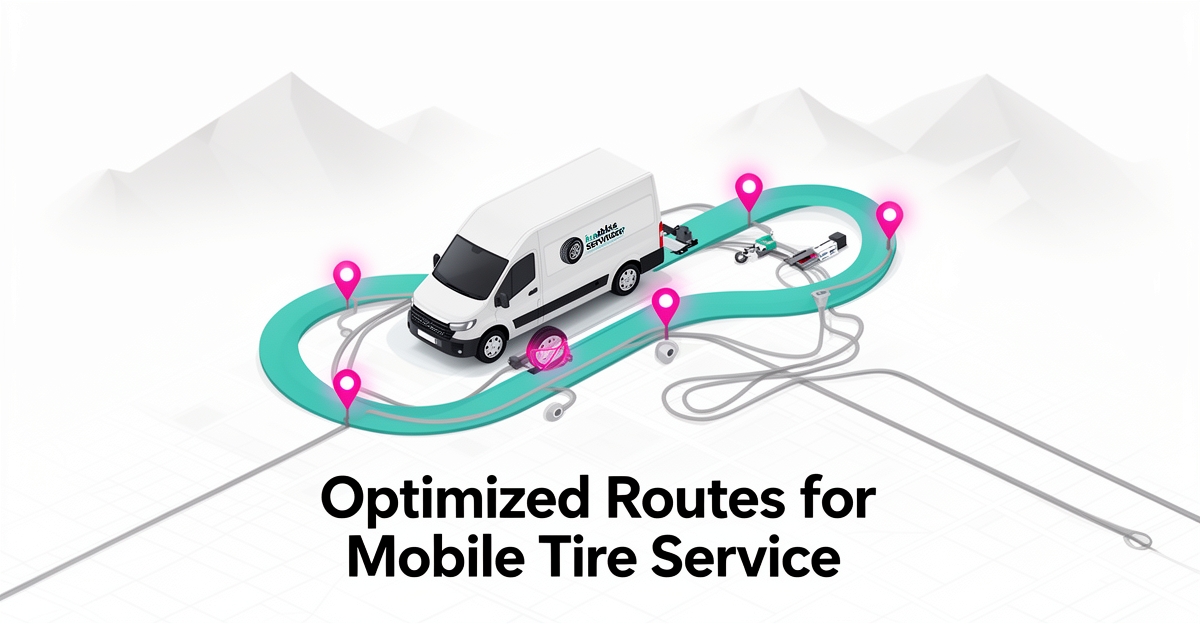
How an AI Dispatch Agent Can Improve Route Efficiency for Mobile Tire Service Teams
Key Facts
- AI-optimized routing typically reduces fuel consumption compared to manual route planning, with savings compounding daily across a fleet
- Real-time rerouting around traffic and closures typically improves on-time arrival rates for mobile service teams
- Automated assignment and tracking typically cuts dispatcher workload substantially, freeing staff for exceptions and customer service
- Predictive maintenance signals can reduce unexpected vehicle downtime when connected to fleet health data
- Proactive ETA updates and delay notifications typically reduce inbound "where's my tech?" calls
- AIQ Labs has deployed 200+ multi-agent systems and runs 4 live SaaS products daily
Hire a team member that works 24/7 — for less than a part-time wage.
AI receptionists, SDRs, dispatchers and 99+ roles. Trained on your business, fully managed.
Not sure where to start? Ask our AI planner
The Hidden Costs of Manual Dispatching for Mobile Tire Teams
Manual dispatch for mobile tire teams looks busy on the surface, but the cost is hidden in every inefficient mile and missed window.
Dispatchers juggle phone calls, texts, and spreadsheets while trying to match technicians, trucks, and urgent flat repairs. Human judgment can't process real-time traffic, vehicle capacity, and job urgency simultaneously, so routes get built on guesswork and last-minute changes.
Fuel burn rises fast. When routes are planned manually, vans backtrack, idle in avoidable traffic, and carry unnecessary miles—waste that compounds daily across a fleet carrying heavy inventory.
On-time performance slips as well. For mobile tire service, a late arrival means a stranded driver, lost labor, and a damaged reputation. Every missed window triggers refunds, reschedules, or a review you didn't want.
Dispatcher workload becomes a bottleneck. Without automation handling assignments and tracking, teams face burnout, turnover, and costly errors during peak demand.
The hidden costs show up in maintenance and customer service too.
- Idle time and backtracking increase fuel use and technician hours.
- Missed appointment windows trigger refunds, reschedules, and negative reviews.
- Reactive maintenance causes unexpected downtime and service gaps.
- Customers call for status updates because ETAs are uncertain.
Manual systems also leave predictive signals unused. Without connected fleet data, maintenance relies on scheduled checks and driver reports, so failures happen in the field—on the way to a paying job.
Customer friction adds to the cost. With manual dispatch, each "where are you?" call pulls a dispatcher away from routing and adds wait time for the customer.
AI-driven dispatch systems analyze traffic, vehicle availability, and job urgency to optimize routes and reduce idle time. AIQ Labs builds managed AI dispatchers—part of its AI Employees service—that integrate with your existing scheduling software to improve service delivery and driver productivity, without forcing a rip-and-replace.
The core problem is clear: manual route planning can't compete with real-time data analysis, leading to wasted resources and frustrated customers. Excessive fuel consumption, missed windows, and dispatcher burnout are symptoms of a system built for yesterday's demand.
Teams that stay manual pay for it in margin, morale, and retention.
How AI Dispatch Agents Optimize Routes and Reduce Idle Time
Every minute a mobile tire service vehicle spends idling in traffic or crisscrossing the city on a poorly planned route, the business loses money. Manual dispatching simply cannot process the volume of real-time variables needed to keep a fleet moving efficiently.
Modern AI dispatch agents solve this by continuously analyzing live traffic patterns, current vehicle locations, and the urgency of incoming tire repair jobs. Instead of relying on human intuition, the AI calculates the most efficient sequence of stops, ensuring the right technician is sent to the right job at the right time.
The impact on daily operations is significant. When an emergency flat tire call comes in, the AI dispatch agent doesn't just assign it to the nearest vehicle; it dynamically recalculates routes for the entire fleet to absorb the new job with minimal disruption. Automating these decisions frees your dispatcher to focus on customers rather than juggling maps.
For mobile tire service teams, the specific advantages of AI-driven route optimization include:
- Dynamic rerouting around unexpected traffic jams or road closures
- Prioritization of urgent roadside assistance calls over standard tire rotations
- Maximizing the number of service calls completed per shift
- Reducing vehicle wear and tear through smarter mileage management
These systems can also monitor the health of your fleet. When connected to vehicle data, an AI dispatcher can flag maintenance needs before breakdowns occur, reducing unexpected downtime and keeping revenue-generating vans on the road.
Implementing this level of AI-powered route optimization transforms dispatching from a stressful guessing game into a precise, repeatable process. By integrating an AI dispatch agent with existing scheduling software, mobile tire businesses can cut idle time, complete more jobs per day, and improve their bottom line.
Beyond Routing: Predictive Maintenance and Customer Communication
AI dispatch agents deliver value far beyond route calculations. By continuously monitoring vehicle health and usage patterns, these systems can predict maintenance needs before breakdowns occur. This predictive capability allows service teams to schedule repairs during planned downtime, minimizing disruptions to daily operations and avoiding costly emergency fixes.
In addition to maintenance intelligence, AI dispatch agents enhance customer communication by handling inquiries about service status, providing accurate ETAs based on real-time traffic and job progress, and proactively notifying customers of any delays. This transparency reduces the need for customers to call for updates. Teams benefit from fewer interruptions, allowing dispatchers and technicians to focus on service delivery rather than fielding repetitive status requests.
For businesses looking to implement these capabilities, AIQ Labs builds managed AI dispatchers that integrate predictive maintenance and intelligent communication tools directly into existing dispatch workflows. These systems are built to scale with operational needs while maintaining full system ownership and seamless integration with current scheduling and CRM platforms. The result is a more resilient, responsive service operation that keeps vehicles on the road longer and customers informed every step of the way.
Implementing AI Dispatch: A Practical 4-Phase Roadmap
Implementing AI dispatch requires a structured approach to deliver measurable gains in route efficiency. The process begins with connecting the AI agent to existing tools like GPS tracking, scheduling software, and customer databases to create a unified operational view. This integration enables the system to access real-time traffic data, vehicle availability, and job urgency for intelligent routing decisions. Once connected, the next step involves configuring optimization parameters such as service windows, vehicle capacities, and job priorities to align with business-specific constraints. AIQ Labs supports this phase through custom builds that ensure seamless two-way API integrations without disrupting current workflows.
With the system configured, teams launch a pilot program focused on a single route or service zone to validate performance under real conditions. During this phase, the AI agent analyzes historical and live data to refine routing recommendations, reducing idle time and improving dispatch accuracy. Automating routing and real-time tracking typically reduces dispatcher workload significantly, allowing human supervisors to focus on exception handling rather than manual assignment. After validating results—such as reduced fuel use or improved on-time arrivals—the system scales across all routes and regions. This phased method minimizes risk while building confidence in AI-driven dispatch as a core operational asset.
- Connect AI to TMS, GPS, and customer data sources
- Set route optimization rules with vehicle capacities and time windows
- Run a pilot on one route to measure fuel savings and on-time improvements
- Scale deployment after validating KPIs like on-time service and call reduction
To see how this roadmap applies to your mobile tire service operations, start with a free strategy call to assess your current dispatch workflow and identify high-impact automation opportunities. AIQ Labs provides end-to-end support—from system integration to ongoing optimization—ensuring your AI dispatch agent delivers sustained efficiency gains. Begin the Fit Check at https://aiqlabs.ai/apply, then schedule your free 30-minute strategy call at https://aiqlabs.ai/book to map your biggest bottleneck before any build begins.
Custom AI Dispatch Solutions Built for Your Mobile Tire Business
Mobile tire service teams face constant pressure to maximize every service call while minimizing wasted time and fuel. An AI dispatch agent transforms this challenge by intelligently matching jobs to vehicles based on real-time traffic, technician availability, and urgency—directly cutting idle miles and boosting daily job capacity.
AIQ Labs builds managed AI dispatchers as part of its AI Employees service, integrating seamlessly with your existing scheduling software—no need to replace current systems. You can start monthly, build in milestones, or own the system outright, so your dispatch automation evolves with your business. For teams with one workflow that costs the most—like dispatch—a Workflow Build rebuilds it at a fixed price, phased. And when you want dispatch connected to scheduling, billing, and customer communication in one layer, an AI Operating System ties it together, built in phases and owned outright.
Our custom dispatch systems go beyond basic routing by incorporating predictive maintenance alerts and real-time customer ETAs—reducing unexpected downtime and cutting the inbound status calls that eat dispatcher time, freeing them to focus on exceptions and complex scheduling.
AIQ Labs designs dispatch automation that pays for itself through measurable efficiency gains—lower fuel costs, higher technician utilization, and fewer missed appointments—without requiring a full IT overhaul. We begin with a deep dive into your current workflows, then architect a solution that connects to your CRM, GPS tools, and job management platforms using secure API integrations.
- Analyze historical service data to identify routing inefficiencies
- Configure AI routing with your vehicle capacities and service windows
- Deploy a pilot route to validate performance before full rollout
- Continuously optimize based on real-time traffic and job completion data
Ready to see how an AI dispatcher can transform your mobile tire service operations? Start the Fit Check for a free two-minute assessment, then schedule a 30-minute strategy call with our team to map your biggest bottleneck and explore high-ROI automation opportunities—no obligation, just clarity.
Still paying for 10+ subscriptions that don’t talk to each other?
We build custom AI systems you own outright. No vendor lock-in. Full control.
Not sure where to start? Ask our AI planner
Frequently Asked Questions
How much can AI dispatch reduce fuel consumption for mobile tire service teams?
Will using an AI dispatcher increase my team's workload or require new hiring?
Can AI dispatch help prevent unexpected vehicle breakdowns in the field?
How does AI dispatch improve customer communication and reduce service calls?
Is implementing AI dispatch disruptive to our current scheduling and GPS systems?
What does an AI dispatch build cost, and how fast is the payback?
From Guesswork to Growth: How AI Dispatch Delivers Real Savings
Manual dispatching may keep mobile tire teams moving, but it's silently draining profits through wasted fuel, missed appointments, and overburdened dispatchers. AI dispatch agents change that by optimizing routes in real time, cutting idle miles, improving on-time performance, and lifting routine work off your dispatcher's plate. Beyond routing, they predict maintenance needs to avoid field breakdowns and proactively update customers—reducing inbound status calls. These are measurable gains that protect margins, boost technician productivity, and strengthen customer trust. For teams ready to stop guessing and start scaling efficiently, the next step is clear: see where AI can make the biggest impact in your operation. Start the Fit Check for a free two-minute assessment, then schedule a no-obligation strategy call to map your biggest bottleneck and validate ROI potential—because smarter dispatching shouldn't require a complete overhaul, just a smarter start.
Make AI your competitive advantage — not just another tool.
Strategy, implementation and ongoing optimization. One partner, end to end.
Not sure where to start? Ask our AI planner