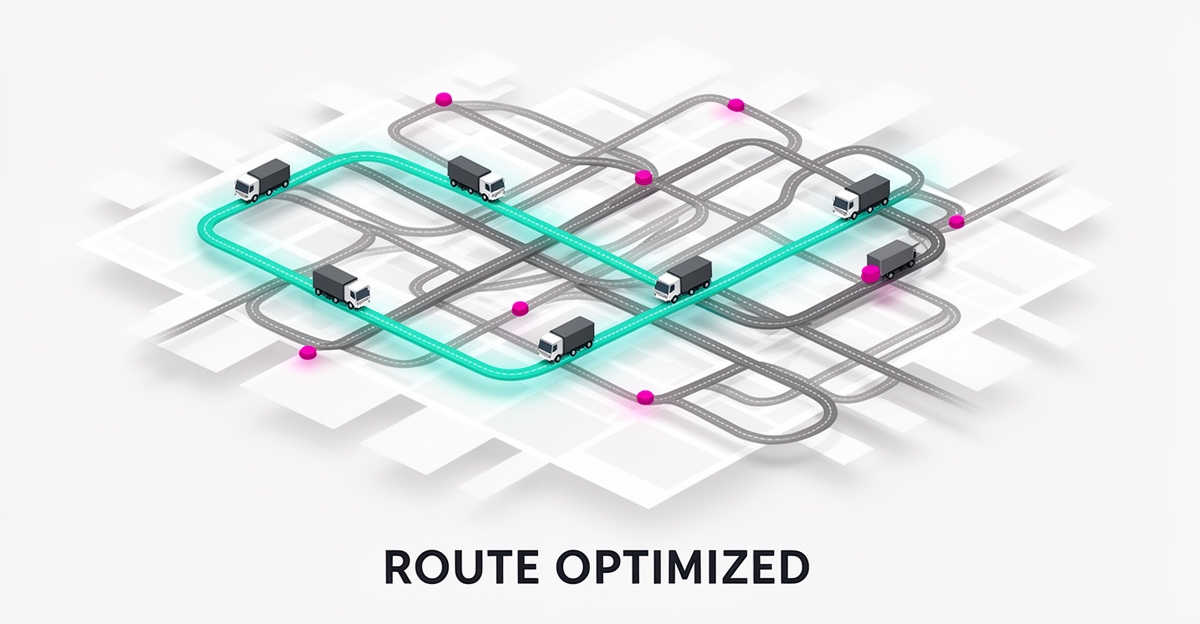
How an AI Dispatch Agent Can Optimize Route Planning for Fleet Washes
Key Facts
- Industry reports suggest AI route optimization can deliver meaningful cost savings for fleet wash operations that run daily routes
- AI dispatch typically reduces fuel consumption for fleet wash businesses by optimizing stop sequence and eliminating backtracking
- AI route planning is associated with high on-time delivery rates for field service businesses, per route optimization studies
- AI dispatch agents generate optimal routes significantly faster than manual methods, per industry research
- Fewer miles driven also means reduced vehicle wear, lower maintenance costs, and longer asset lifespans
- Faster route planning and less transit time can allow more daily job completion without adding staff
Hire a team member that works 24/7 — for less than a part-time wage.
AI receptionists, SDRs, dispatchers and 99+ roles. Trained on your business, fully managed.
Not sure where to start? Ask our AI planner
The Hidden Cost of Inefficient Fleet Wash Routing
Manual dispatching in fleet wash operations creates costly inefficiencies that erode profitability and strain resources. Without intelligent routing, technicians often drive excessive miles between jobs, wasting fuel and time while appointments slip through scheduling gaps. These hidden costs compound daily, turning operational friction into measurable financial drain.
Industry data on AI route optimization suggests it can meaningfully reduce fuel consumption and total miles driven—two of the largest variable expenses in field service fleets. For a mid-sized fleet wash business, even a modest fuel reduction compounds into significant monthly savings, while fewer miles driven mean reduced vehicle wear, lower maintenance costs, and extended asset lifespans. Your actual numbers depend on your routes, fleet size, and starting point.
Beyond fuel, inefficient routing leads to significant idle time where technicians wait between jobs or circle back due to poorly sequenced stops. AI dispatch agents address this waste by analyzing vehicle type, wash requirements, location clusters, and technician availability to generate optimal routes in seconds—far faster than manual methods. This precision helps technicians spend more time washing vehicles and less time in transit, often allowing more daily job completion without adding staff.
The cumulative effect of these inefficiencies includes missed appointments, dissatisfied customers, and overtime labor costs as teams rush to compensate for poor scheduling. AI-driven routing is associated with high on-time arrival rates, transforming reliability from a hope into a predictable outcome. For fleet wash businesses where reputation hinges on punctuality and consistency, this level of dependability protects customer retention and supports premium pricing.
By replacing guesswork with data-driven optimization, AI dispatch agents turn routing from a cost center into a competitive advantage—freeing up capital, labor, and customer trust for reinvestment in growth. AIQ Labs builds this capability through AI Workflow Builds, rebuilding the routing workflow that costs you the most at a fixed price and in clear phases. The result is a leaner, more responsive service model where every mile and minute contributes directly to the bottom line.
How AI Dispatch Agents Optimize Routes in Real Time
Real-time route planning is where fleet wash operations either save money or burn it. An AI dispatch agent continuously ingests live data and reshapes routes as conditions change, instead of locking in a static plan at the start of the day.
The agent analyzes vehicle types, location, wash type, and technician availability to create optimal routes. This multi-variable analysis enables intelligent route planning and driver assignment that adapts to the fleet wash context.
Inputs are processed simultaneously, not sequentially. The system weighs truck size and required wash bay, travel distance and traffic, service duration by wash type, and current technician skill and proximity. Hundreds of variables are evaluated in seconds, a capacity that makes AI dispatch faster and more consistent than human dispatchers working from memory and spreadsheets.
Speed compounds into savings. Industry research on AI route optimization reports significantly faster route planning than manual methods, freeing dispatchers from manual recalculation and letting crews start sooner.
Cost impact shows up across fuel and mileage. Fleet optimization data typically attributes fuel savings and reduced miles driven to AI route optimization, which together drive overall cost savings for operations that run daily routes.
Reliability improves with the same logic. Route optimization studies associate AI-driven routing with high on-time delivery rates, which translates to tighter appointment windows and higher customer satisfaction for fleet wash clients.
In practice, an AI dispatch agent for fleet washes operates as a workflow automation system. AIQ Labs deploys this capability through AI Workflow Builds, connecting vehicle schedules, wash requirements, and technician capacity into a single real-time routing loop—built in phases so nothing breaks mid-transition.
Core real-time mechanics include:
- Live demand capture from bookings and priority washes
- Dynamic technician matching by certification, location, and availability
- Traffic and travel-time recalculation on the move
- Automatic re-routing when a wash takes longer or a truck is delayed
The result is continuous optimization rather than one-time planning. Idle time falls as crews move to the next nearest compatible job, and fuel use drops as backtracking is eliminated.
For fleet washers, this means routes that reflect reality, not assumptions. AI-driven route optimization reduces operational friction while improving service consistency—a core outcome of workflow automation in field operations.
From Manual to AI: Implementing Dispatch Automation in Your Fleet Wash
Switching from manual to AI-powered dispatch doesn't happen overnight, but it doesn't have to be overwhelming either. A structured implementation approach helps fleet wash operators move from spreadsheets and phone calls to intelligent automation while minimizing disruption to daily operations.
The transition typically follows five key stages, from initial assessment through ongoing optimization. Each phase builds on the previous one, creating a foundation for sustainable automation that delivers measurable results.
Start by documenting how your dispatch process works today. Track how long route planning takes each morning, which variables your team considers, and where bottlenecks occur most frequently.
Identify the specific pain points costing you money. Are technicians driving excessive miles between appointments? Do last-minute changes throw off entire schedules? Understanding these gaps helps you measure improvement later.
Generic dispatch software works for some operations, but fleet washes have unique requirements. Your system needs to account for vehicle types, wash package selections, water reclamation equipment on mobile units, and technician certifications.
AI dispatch agents can analyze vehicle types, location, wash type, and technician availability simultaneously to create optimal routes. This level of multi-variable analysis separates true AI systems from basic scheduling tools.
Consider whether you need a solution built specifically for your workflow. AIQ Labs rebuilds the one workflow that costs you the most—dispatch routing included—at a fixed price and in clear phases, integrating with your existing CRM, scheduling software, and customer communication platforms. If you'd rather start smaller, an AI dispatcher from the AI Employees lineup can handle routing and coordination at a fraction of the cost of a human hire.
Your AI dispatch agent needs access to real-time data from multiple sources. Connect it to your customer database, technician schedules, vehicle tracking systems, and appointment booking platform.
- Customer relationship management (CRM) system for service history and preferences
- GPS and telematics data for real-time vehicle location
- Technician scheduling and availability calendars
- Customer communication tools for automated updates
- Payment processing systems for service completion workflows
The integration phase determines how effectively your AI agent can optimize routes. Systems with AI route optimization tend to deliver the strongest fuel and mileage savings when properly connected to operational data.
Technology only works when people use it effectively. Your dispatchers need to understand how the AI agent makes decisions, when to override its recommendations, and how to handle exceptions it flags for human review.
Address concerns about job displacement directly. AI dispatch agents handle the computational heavy lifting, but human dispatchers remain essential for managing customer relationships, handling complex situations, and making judgment calls the AI escalates.
Most implementations include a parallel running period where your team uses the AI system alongside existing processes. This builds confidence and lets you validate the AI's recommendations before fully committing.
Track specific metrics from day one. Monitor fuel costs, miles driven per appointment, on-time arrival rates, and the time spent on route planning each day.
Industry studies associate AI route optimization with high on-time delivery rates and much faster route planning compared to manual methods. Your actual results depend on your starting point and how well the system integrates with your operations.
Review performance weekly during the first month, then monthly once the system stabilizes. Look for patterns in the routes the AI creates and feedback from technicians about real-world conditions the algorithm might miss.
The best AI dispatch implementations improve over time. As the system processes more of your specific operational data, it learns which routes work best for different vehicle types, which time windows customers prefer, and how to sequence appointments for maximum efficiency.
Implementation timelines vary based on system complexity and integration requirements. Simple deployments might go live in weeks, while comprehensive custom solutions with multiple integrations typically require a phased approach over several months. AIQ Labs builds in milestones so you pay for progress, not promises.
Still paying for 10+ subscriptions that don’t talk to each other?
We build custom AI systems you own outright. No vendor lock-in. Full control.
Not sure where to start? Ask our AI planner
Frequently Asked Questions
How much can AI route optimization actually save on fuel costs for a fleet wash business?
Will implementing an AI dispatch agent require replacing my current scheduling or CRM systems?
How much faster is AI route planning compared to manual dispatching?
Can AI dispatch improve on-time arrival rates for fleet wash appointments?
Is there a risk that AI dispatch will eliminate the need for human dispatchers?
What kind of data does an AI dispatch agent use to optimize routes in real time?
Turn Every Mile Into Margin
Manual dispatch is quietly draining fleet wash profitability through excess miles, idle time, and missed appointments. AI dispatch agents change that by analyzing vehicle types, wash requirements, location clusters, and technician availability in real time—cutting route planning time dramatically, reducing fuel burn, and eliminating backtracking. The result is more jobs completed per day, tighter appointment windows, and routes that adapt to traffic and delays instead of falling apart. Implementation works best when you map current pain points, connect real-time data sources, and run a parallel period to validate recommendations before full adoption. AIQ Labs builds dispatch automation into your existing CRM, scheduling, and tracking tools through AI Workflow Builds—fixed price, built in phases, owned outright—so you gain measurable efficiency without disruption. Take the 2-minute Fit Check at https://aiqlabs.ai/apply, then book a free 30-minute strategy call at https://aiqlabs.ai/book to map your biggest bottleneck. Prefer email? Reach the team at [email protected].
Make AI your competitive advantage — not just another tool.
Strategy, implementation and ongoing optimization. One partner, end to end.
Not sure where to start? Ask our AI planner