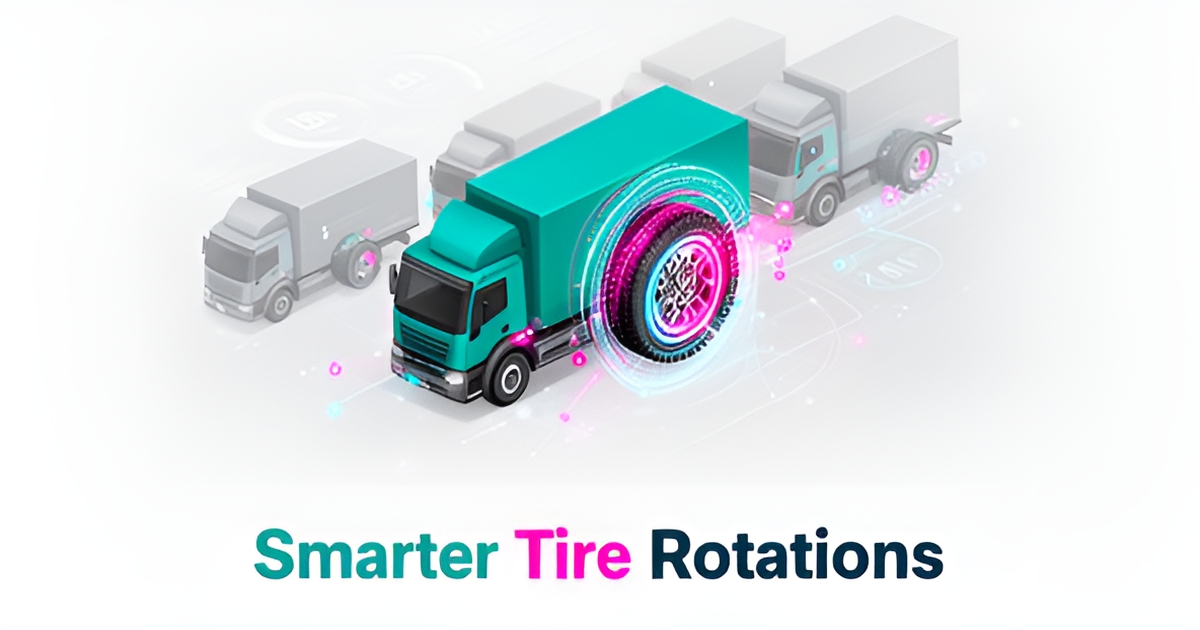
How an AI Dispatch Agent Can Optimize Tire Rotation Schedules for Your Fleet
Key Facts
- Manual dispatch and spreadsheet tracking typically cost fleets significantly more in total operating expenses than AI-optimized scheduling
- Industry analyses consistently report AI dispatch cutting daily planning time by 80–95%
- Fleets using AI-powered dispatch typically report 20–35% fewer total miles driven through optimized routing
- Missed rotation intervals can reduce tire lifespan by up to 30% through uneven tread wear
- AI dispatch agents monitor mileage, load, and seasonal data continuously — no analyst required
- AIQ Labs has deployed 200+ multi-agent systems and runs 4 live SaaS products daily
Hire a team member that works 24/7 — for less than a part-time wage.
AI receptionists, SDRs, dispatchers and 99+ roles. Trained on your business, fully managed.
Not sure where to start? Ask our AI planner
The Hidden Cost of Manual Tire Maintenance Scheduling
Fleets that rely on manual dispatch and spreadsheet-based maintenance tracking face significant financial losses. Industry analyses consistently find that manual dispatching costs meaningfully more in total operating expenses than AI-optimized alternatives, driven by fuel waste, overtime, and administrative overhead. For a mid-sized fleet, mistimed tire rotations alone can translate into tens of thousands of dollars in avoidable annual costs.
Missed or delayed tire rotations accelerate uneven tread wear, forcing premature replacements that compound maintenance expenses. When rotations fall outside manufacturer-recommended intervals—often due to inconsistent manual tracking—tires wear irregularly on drive, steer, and trailer positions. This imbalance can reduce tire lifespan by up to 30% and increases the frequency of costly replacements, directly impacting the fleet's bottom line. Administrative burden further erodes efficiency, as dispatchers often spend 2–4 hours daily manually calculating schedules instead of focusing on operational priorities.
AI dispatch agents eliminate this guesswork by continuously analyzing vehicle mileage, usage patterns, and seasonal data to generate precise rotation schedules. Real-world implementations of AI dispatch typically report 80–95% reductions in daily planning time, freeing staff from repetitive scheduling tasks. For many fleets, the software investment is recovered quickly once premature replacements and admin hours start dropping—though exact payback periods depend on fleet size and current processes.
By automating tire rotation scheduling, AIQ Labs' AI Employees ensure maintenance aligns with actual vehicle use rather than arbitrary calendars. These systems monitor individual vehicle data in real time, adjusting recommendations based on load conditions, route types, and wear progression. The result is consistent tire wear across all positions, extended tread life, and fewer emergency replacements—turning a recurring cost center into a predictable, optimized process. Fleet operators gain not only savings but also improved vehicle uptime and safer operations through proactive, data-driven maintenance.
How AI Dispatch Agents Schedule Rotations Based on Real Usage Data
Tire rotation scheduling has long relied on fixed intervals or driver intuition, leading to uneven wear and premature replacements. AI dispatch agents transform this process by continuously analyzing real vehicle data to generate adaptive rotation plans that match actual usage patterns.
These systems track mileage accumulation, seasonal driving conditions, load characteristics, and tire wear patterns to determine optimal rotation timing for each vehicle in the fleet. Rather than applying a one-size-fits-all schedule, AI dispatch creates proactive maintenance plans that respond to how vehicles are actually used on the road. Where a human dispatcher might spend 2–4 hours each morning on planning, an AI agent typically completes the same work in minutes—freeing up significant operational capacity while ensuring no rotation window is missed.
The impact extends beyond scheduling efficiency to measurable tire lifespan improvements. By eliminating unnecessary mileage through optimized routing, AI dispatch typically reduces total miles driven by 20–35%, which directly slows tire wear rates across the fleet. This dual approach—smarter scheduling combined with reduced operational mileage—creates compounding benefits for tire longevity that manual methods simply cannot achieve.
- Continuous mileage tracking per vehicle
- Seasonal condition adjustment
- Load-based wear prediction
- Manufacturer interval compliance
- Real-time schedule adaptation
For field service operations managing fleets of vehicles, this level of precision was previously unattainable without dedicated maintenance analysts working around the clock. AIQ Labs deploys managed AI employees—including dispatchers among 99+ available roles—that handle these complex scheduling workflows 24/7, ensuring tire rotation recommendations are generated continuously without human oversight while integrating seamlessly with existing dispatch systems. The result is a maintenance approach that maximizes tire investment returns through data-driven precision rather than reactive replacement cycles.
The ROI Case: Where the Savings Actually Come From
Fleet managers are finding that AI dispatch agents deliver returns from multiple directions at once, not just operational improvements. The savings stack: fewer premature tire replacements, less fuel burned on unnecessary miles, fewer admin hours, and fewer emergency service calls that pull vehicles off the road.
These returns stem from efficiency gains working together. AI-optimized routes eliminate unnecessary mileage, poor stop sequencing, and idle time, typically producing meaningful fuel savings. Additionally, AI enables a single dispatcher to manage far more vehicles than the traditional manual ratio, dramatically reducing labor costs while scaling operational capacity. When applied to tire rotation scheduling, these same principles ensure maintenance occurs at optimal intervals, preventing premature tire wear and extending replacement cycles.
- Fewer premature tire replacements from even tread wear
- 20–35% fewer total miles driven through algorithmic dispatch
- 80–95% reduction in daily planning time
- Reduced overtime and administrative overhead
The market context confirms this is no longer experimental technology. AI-powered dispatch and maintenance scheduling have seen widespread adoption across logistics, field service, and fleet management industries as of late 2026. For companies like AIQ Labs specializing in managed AI employees for field operations, deploying dispatch agents that handle tire rotation scheduling is a natural extension of operational automation—delivering tire lifespan improvements and cost reductions without human overhead. This mainstream adoption means fleets implementing AI dispatch today are leveraging proven technology, not betting on untested solutions.
Deploying an AI Dispatch Agent: From Setup to 24/7 Fleet Coverage
Moving from manual spreadsheets to an AI dispatch agent starts with understanding how tire rotation decisions are made today. Most fleets track mileage reactively and schedule maintenance in batches, which creates uneven wear and missed intervals.
The practical path begins with assessing current scheduling processes. Document how rotation intervals are set, who triggers service, and where data lives. This baseline reveals the manual overhead that an AI Employee can absorb.
Next, connect GPS and vehicle data sources. Real-time mileage, route history, and telematics feed the model that predicts optimal rotation timing. Integration with existing fleet and maintenance systems ensures the AI works inside current workflows instead of alongside them.
Configure rotation parameters for your operation. Manufacturer recommendations, vehicle type, load profiles, and seasonal patterns are loaded as rules. The system then adjusts schedules dynamically as actual usage diverges from estimates.
Once live, the agent monitors results continuously. It flags vehicles approaching rotation thresholds, clusters maintenance geographically to reduce downtime, and logs cost impact for each rotation cycle.
AI dispatch changes the economics of fleet maintenance. Industry analyses consistently show AI-optimized scheduling cutting planning time by 80–95%, and what takes a human dispatcher 2–4 hours each morning the algorithm completes in under five minutes. That time is redirected to exception handling and driver support.
A managed AI Employee model fits this use case directly. AIQ Labs deploys dispatcher AI employees that work 24/7/365 at roughly 80% less cost than a human hire, with no vendor lock-in since clients own the system outright. The agent learns your rotation logic, integrates with your tools, and improves with performance data.
Deployment steps that deliver 24/7 coverage:
- Audit current rotation triggers and data sources
- Connect GPS, telematics, and maintenance management systems via API
- Set rotation parameters and approval workflows
- Train the AI Employee on vehicle types and service preferences
- Monitor tire lifespan, cost per mile, and schedule adherence
With continuous monitoring, the system refines intervals based on real wear patterns rather than fixed mileage. Proactive scheduling replaces reactive service, extending tire life and reducing replacement costs without adding headcount. If you'd rather rebuild the single workflow that costs you the most first, AIQ Labs also offers fixed-price Workflow Builds delivered in phases.
Start Small, Scale Fast: Your Next Step
Starting small doesn't mean thinking small. A focused pilot proves value quickly, building the confidence and data needed to scale AI across your entire maintenance operation—without disrupting what's already working.
Begin by deploying a single AI dispatch agent dedicated solely to tire rotation scheduling for one vehicle group or route. This narrow scope lets you isolate variables, measure impact clearly, and validate the system's ability to analyze mileage, usage patterns, and seasonal trends to generate optimal rotation schedules. Because the scope is limited, the risk is low and the insight is immediate.
The goal isn't perfection; it's proof. Track key metrics like tire lifespan extension, reduction in premature replacements, and labor hours saved on manual scheduling. Use these results to build a concrete business case for expansion. Once the AI agent demonstrates consistent ROI on tire rotation—such as preventing uneven wear that leads to early replacement—you gain the evidence needed to confidently scale to full maintenance dispatch, then route optimization across your fleet. For fleets ready to connect scheduling, dispatch, and maintenance into one layer, AIQ Labs builds AI Operating Systems in phases that you own outright.
AIQ Labs supports this phased approach with a free Fit Check and a 30-minute strategy call—an actual working session with an AI engineer to map your fleet's biggest bottleneck. We provide honest guidance: if there isn't a clear win from automating tire rotation scheduling, we'll tell you that too. No obligation, just clarity on where AI can deliver real, measurable value in your operations. Start here, prove the concept, then scale with confidence. Start the Fit Check leading to your free 30-minute strategy call.
Still paying for 10+ subscriptions that don’t talk to each other?
We build custom AI systems you own outright. No vendor lock-in. Full control.
Not sure where to start? Ask our AI planner
Frequently Asked Questions
How much can an AI dispatch agent actually save my fleet on tire rotations?
Will AI really rotate tires based on real usage instead of a fixed mileage schedule?
How fast does an AI dispatch system pay for itself?
How much time will my dispatchers save with AI tire rotation scheduling?
Can AI dispatch reduce the total miles my vehicles drive and wear on tires?
Is AI dispatch for tire maintenance proven or still experimental?
The Road Ahead: Turn Tire Maintenance Into a Competitive Advantage
Manual tire rotation scheduling quietly drains fleets through premature replacements, uneven wear, and hours of administrative overhead—costs that compound silently until they hit your bottom line. As this article has shown, AI dispatch agents replace guesswork with data-driven precision, tracking real mileage, usage patterns, and seasonal conditions to keep every rotation on schedule. The financial case builds from multiple directions: fewer early replacements, less fuel waste, and dramatically less planning time. But you don't need to transform your entire operation overnight. Start with a focused pilot—one vehicle group, one scheduling workflow—and let the results build your business case. AIQ Labs specializes in deploying managed AI employees like dispatch agents that work 24/7 without adding headcount, and systems you own outright with no vendor lock-in. The fastest way to find out if this fits your fleet is a conversation: take the two-minute Fit Check at aiqlabs.ai/apply, then book your free 30-minute strategy call with an AI engineer. If there's a clear win, you'll see it mapped out. If there isn't, you'll hear that too.
Make AI your competitive advantage — not just another tool.
Strategy, implementation and ongoing optimization. One partner, end to end.
Not sure where to start? Ask our AI planner