How an AI Dispatch Agent Can Streamline Service Requests for Hybrid Vehicle Repairs
Key Facts
- Industry analyses consistently find manual dispatching carries meaningfully higher total operating expenses than AI-optimized alternatives.
- A single manual dispatcher typically maxes out around 10–15 technicians; AI-supported dispatchers commonly manage several times that number.
- Mid-day rerouting that takes 15–45 minutes manually can often be recalculated in under two minutes with AI optimization.
- Surveys of service customers consistently show a majority expect text updates during active jobs—yet manual dispatchers often deprioritize delay notifications.
- AI dispatch enforces hard-constraint skill matching, ensuring only certified technicians handle high-voltage hybrid repairs.
- Industry analysts have warned that a majority of AI projects stall or get abandoned when data readiness is neglected.
Hire a team member that works 24/7 — for less than a part-time wage.
AI receptionists, SDRs, dispatchers and 99+ roles. Trained on your business, fully managed.
Not sure where to start? Ask our AI planner
The Hidden Costs of Manual Dispatch in Hybrid Repair
Every service call that rings out to voicemail while your dispatcher juggles a whiteboard is revenue walking to a competitor. For hybrid vehicle repair shops, where each job requires certified high-voltage expertise, that missed call isn't just lost income—it's lost access to some of the most profitable work in the industry.
The pattern is a structural bottleneck most shop owners underestimate. Field service owners routinely report missing calls because the dispatcher is overloaded, and small business owners commonly lose well over an hour a day to wasted time—much of it spent repeating messages and hunting for information in the wrong places. When your "front door" is a single overwhelmed human, every overload spike becomes a revenue leak.
The problem compounds as the shop grows. Research on dispatch operations suggests manual dispatch hits a practical scalability ceiling of roughly 10–15 technicians per dispatcher. Beyond that point, the only path forward is hiring a second dispatcher—which adds a full salary and benefits load plus coordination complexity. Industry analyses have also found that manual dispatching tends to carry meaningfully higher total operating expenses than AI-optimized alternatives.
The financial drain shows up in less visible line items too:
- Intuition-based assignments, backtracking, and congestion typically drive noticeably higher fuel consumption than optimized routing.
- Route planning can consume an hour or more per day manually, versus minutes with AI optimization.
- Mid-day rerouting—a sick technician, a job running long—takes 15–45 minutes of manual scrambling versus seconds to a couple of minutes algorithmically.
- For a mid-size operation, these inefficiencies stack into tens of thousands of dollars annually in fuel waste, overtime, and administrative overhead.
There's also a resilience problem that pure cost figures miss. The real difference between manual and AI dispatch isn't speed—it's what happens when something breaks. A hybrid battery diagnostic running long forces a manual dispatcher to physically reshuffle the day, contact affected customers one by one, and hope nothing slips through. Delay notifications are the first casualty, yet survey data consistently shows customers are frustrated by late arrivals and that a majority expect text updates during active jobs. Uncommunicated delays become negative reviews, and negative reviews become lost hybrid repair work.
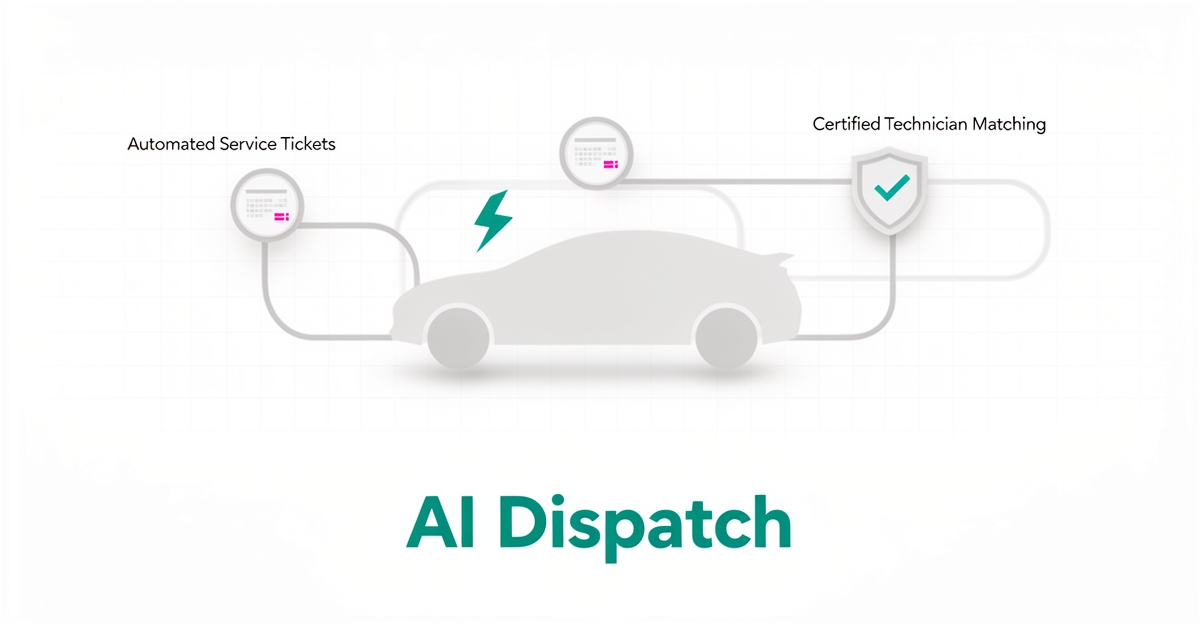
This is precisely the gap AI dispatch agents are built to close. AIQ Labs builds systems that automatically generate service tickets, assign jobs based on technician certifications and location, and follow up with customers—recovering the revenue that manual overload silently destroys. For shops running 6–20 technicians, fixing the "front door" problem often delivers a faster return than route optimization alone. You can explore this as a fixed-price workflow rebuild or start with an AI dispatcher as a managed AI employee—at a fraction of the cost of another human hire.
The hidden costs of manual dispatch aren't inevitable—they're the measurable price of asking one human to absorb complexity that outgrew them.
How AI Dispatch Transforms Hybrid Service Operations
Hybrid vehicle repairs introduce a level of technical complexity that manual dispatch systems often fail to manage safely. AI dispatch enforces hard-constraint skill matching, ensuring only technicians with specific high-voltage certifications are assigned to battery diagnostics or electrical system repairs. This prevents the common practice of "bending" skill assignments to cover gaps, which typically leads to callbacks and warranty complaints in hybrid service operations.
When disruptions occur—a technician calls out sick or a hybrid battery replacement runs longer than estimated—AI systems demonstrate their true operational value. While manual dispatch requires 15–45 minutes of scrambling to reshuffle schedules and notify customers, AI recalculates the day's assignments in seconds. This resilience transforms dispatchers from reactive coordinators into strategic operations managers who can focus on quality control rather than damage control.
The technology also automates customer transparency, addressing the majority of customers who expect text updates during active service appointments. AI dispatch platforms send automatic notifications when technicians are en route, running late, or when parts arrive, eliminating the communication gaps that often plague busy service departments.
Key technical advantages for hybrid repair operations include:
- Certification enforcement that blocks unqualified technicians from high-voltage assignments
- Real-time schedule optimization that adapts to disruptions in seconds
- Automated customer notifications that meaningfully reduce inbound support calls
- Skill-based routing that reserves senior technicians for complex hybrid diagnostics
For repair shops managing the unique demands of hybrid vehicles, AIQ Labs builds dispatch systems that integrate these technical safeguards with existing workflows. By treating certification requirements as non-negotiable constraints rather than suggestions, these systems ensure safety compliance while maximizing the utilization of specialized labor. The result is a service operation that scales efficiently without compromising the technical precision that hybrid vehicles demand.
Implementation: Building Your AI Dispatch Foundation
Before deploying an AI dispatch agent, shops must first lay a foundation built on clean data and clear workflows—without which even the most advanced system will underperform. Industry analysts have repeatedly warned that a majority of AI projects stall when data readiness is neglected, making this preparatory phase not just helpful, but essential. For hybrid vehicle repair shops, this means auditing CRM records to ensure technician skill tags reflect current certifications—especially for high-voltage systems—and that customer addresses, vehicle details, and part inventories are accurate and up to date. Garbage in means garbage out: if the AI optimizes based on outdated or incorrect data, it will generate efficient but useless schedules that lead to misassigned jobs and frustrated customers.
Equally critical is mapping the "it depends" logic that lives in a dispatcher's head—the unwritten rules for handling rush jobs, loyal customers, or neighborhood-specific constraints. AI cannot replicate human judgment unless those decision points are explicitly documented and translated into configurable rules within the system. Shops should walk through real dispatch scenarios, noting how exceptions are handled, which technicians are preferred for hybrid diagnostics, and how part availability affects scheduling. This process definition phase ensures the AI doesn't just optimize routes, but respects the nuanced logic that keeps service running smoothly. Only after these steps can a shop confidently choose between an AI front desk (to solve missed-call bottlenecks) or route optimization (to reduce drive time), based on their size, workflow complexity, and primary pain points. AIQ Labs handles this as a phased build—map the workflow, fix the data, then automate—so you see working software at each milestone rather than a big-bang rollout.
Measuring ROI: The Business Case for Automation
The financial case for moving hybrid vehicle dispatch off a whiteboard is hard to ignore once the mechanics are laid out. AI dispatch shifts cost from variable labor and waste to predictable software, while unlocking revenue that is lost to missed calls and late arrivals.
Implementations of this kind typically pay for themselves within the first few months for shops with repeatable service work. Industry analyses of AI fleet and dispatch management point to substantial annual savings from reduced fuel inefficiency, overtime, and administrative overhead—with the exact figure depending on fleet size, drive time, and how many calls you're currently missing. Rather than promising a number, AIQ Labs scopes your actual workflow first so the business case is based on your shop's real numbers, not a benchmark.
The cost structure flips at scale. A human dispatcher is a full salary and benefits line, and the practical ceiling is 10–15 technicians per person. AI dispatch changes the ratio: one supported dispatcher can manage several times that number, and the software cost scales per vehicle rather than per headcount. That's why AIQ Labs prices dispatch agents like AI Employees—typically around 80% less than the cost of a human hire—so the math works even for smaller shops.
The savings compound across operations:
- Fuel and miles: AI-powered dispatch commonly reports double-digit reductions in total miles driven and fuel costs.
- Labor efficiency: Route planning falls from an hour or more per day manually to minutes with AI, and mid-day rerouting takes seconds instead of 15–45 minutes.
- Overtime and idle time typically shrink noticeably with algorithmic optimization.
Industry comparisons consistently show manual dispatching carrying higher total operating expenses than AI-optimized alternatives, with break-even windows for well-prepared shops measured in months, not years. The investment is low risk for shops with repeatable service work and clean CRM data—especially when the build is delivered in fixed-price phases you approve at each step.
AIQ Labs builds dispatch AI systems designed for the unique demands of vehicle repair shops, automating ticket generation, skill-based assignment for high-voltage certifications, and proactive customer follow-ups. With 200+ multi-agent systems deployed, the result is fewer missed jobs, faster response times, and a dispatcher role that moves from reactive scheduling to strategic operations management.
Still paying for 10+ subscriptions that don’t talk to each other?
We build custom AI systems you own outright. No vendor lock-in. Full control.
Not sure where to start? Ask our AI planner
Frequently Asked Questions
How much time do small business owners lose each day due to manual dispatch inefficiencies?
What is the scalability limit for a single dispatcher using manual dispatch methods?
How much can hybrid vehicle repair shops save by switching to AI dispatch?
How long does it typically take for an AI dispatch system to pay for itself?
Do customers really expect text updates during active service appointments?
Why is data integrity critical before implementing an AI dispatch system?
From Bottleneck to Breakthrough: The Real Cost of Doing Nothing
The evidence is clear: manual dispatch isn't just slow—it's actively draining hybrid repair shops through missed calls, wasted fuel, overtime, and eroded customer trust. By enforcing certification requirements, optimizing schedules in real time, and automating customer updates, AI dispatch transforms a reactive cost center into a resilient, scalable operation. For shops ready to stop losing revenue to avoidable inefficiencies, the path forward starts with clean data and a clear workflow map. Take the 2-minute Fit Check to see where AI can unlock immediate value in your specific operation—because the best time to fix the front door was yesterday, and the second-best time is now. Or book your free 30-minute strategy call to explore how AIQ Labs can build a dispatch system that works as hard as your technicians do.
Make AI your competitive advantage — not just another tool.
Strategy, implementation and ongoing optimization. One partner, end to end.
Not sure where to start? Ask our AI planner