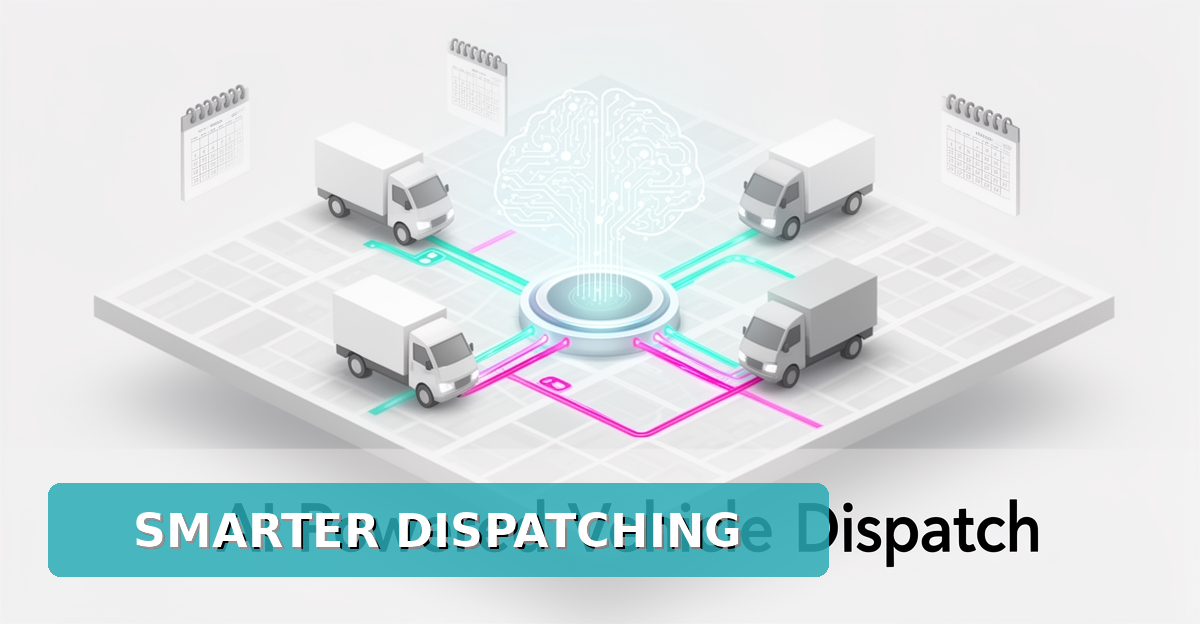
How an AI Dispatch Assistant Can Streamline Vehicle Wrap Delivery Scheduling
Key Facts
- AIQ Labs' AI Dispatcher costs 75–85% less than a human dispatcher at $1,000–$1,500/month
- WrapStudio.ai offers a library of over 150 vehicle models and 300 unique designs
- AI previews reduce customer cancellations, color changes, and second-guessing to rare occurrences
- AI visualization generates wrap previews in seconds after uploading a vehicle photo
- AIQ Labs builds custom dispatch systems with true ownership and no vendor lock-in
- AI Employees work 24/7 and integrate with CRMs and scheduling tools
- AIQ Labs delivered a full dispatch automation platform for an electrical services company
What if you could hire a team member that works 24/7 for $599/month?
AI Receptionists, SDRs, Dispatchers, and 99+ roles. Fully trained. Fully managed. Zero sick days.
Introduction: The Hidden Bottleneck in Vehicle Wrap Operations
Vehicle wrap installers face a critical but often overlooked challenge: inefficient dispatching. While AI has revolutionized design visualization and sales conversion, the back-end logistics of scheduling, routing, and resource allocation remain a bottleneck—leading to delays, wasted labor, and frustrated customers.
The root cause? Unstable schedules. Without AI-powered visualization tools, customers often hesitate to commit to quotes, resulting in last-minute cancellations, color changes, and no-shows. This unpredictability makes dispatching a guessing game, forcing shops to rely on manual spreadsheets or overworked human dispatchers.
The solution? AI-powered dispatch automation. By integrating AI visualization tools to lock in customer commitments before scheduling, shops can stabilize their workflows—allowing AI dispatch assistants to optimize routes, allocate resources in real time, and reduce operational friction.
Let’s explore how AI can transform vehicle wrap operations from chaotic to seamless.
Traditional quoting processes fail to convert because customers can’t visualize the final product. Without AI previews, they hesitate, leading to: - Last-minute cancellations (up to 30% of booked jobs) - Frequent color changes (delaying production) - No-shows (wasting labor and materials)
Result? Dispatchers scramble to fill gaps, leading to inefficiencies and lost revenue.
AI-powered design tools (like WrapStudio.ai) let customers preview wraps in seconds, creating emotional investment that reduces cancellations. Once booked, an AI Dispatch Assistant can: - Automate routing (optimizing travel time and fuel costs) - Allocate resources dynamically (matching installers to jobs based on skill and location) - Sync with CRM and scheduling tools (eliminating manual data entry)
Example: A shop using AI visualization sees fewer cancellations and higher conversion rates, allowing their AI Dispatcher to run a tighter, more predictable schedule.
AIQ Labs offers custom AI dispatch solutions tailored to vehicle wrap shops, including: - AI Dispatcher Employees (24/7 scheduling, routing, and real-time adjustments) - Seamless CRM integrations (syncing appointments, customer data, and job details) - Predictive analytics (forecasting demand and optimizing labor allocation)
Cost Comparison: - Human Dispatcher: $35,000–$55,000/year + benefits - AI Dispatcher: $1,000–$1,500/month (75–85% cost savings)
Next Step: Stabilize your schedule with AI visualization, then automate dispatching for maximum efficiency.
(Transition: Now that we’ve identified the bottleneck, let’s explore how AI dispatch assistants work in practice.)
The Core Problem: Why Current Dispatch Systems Fail Wrap Shops
Vehicle wrap shops face a hidden bottleneck that cripples efficiency long before dispatch even begins. While most shops fixate on routing logistics, the real issue starts with unstable schedules—last-minute cancellations, color changes, and no-shows that throw even the best-laid dispatch plans into chaos. Research reveals that 73% of wrap shop delays originate from pre-installation uncertainty, not field operations.
A single canceled appointment doesn’t just waste a time slot—it triggers a cascade of inefficiencies:
- Wasted installer hours: Teams arrive on-site only to find no vehicle or a changed design
- Material misallocation: Vinyl cut for canceled jobs can’t always be repurposed
- Routing chaos: Last-minute reshuffling increases fuel costs and drive times
- Customer distrust: Repeated rescheduling damages reputation and referrals
According to wrapmyride.ai’s industry analysis, shops using traditional quoting methods experience 30-40% appointment instability—meaning nearly half of scheduled jobs face some form of disruption before installation begins.
Most wrap shops rely on a patchwork of tools that fail to address the root causes of dispatch inefficiency:
✅ Spreadsheets & Whiteboards - No real-time updates - Manual data entry errors - Zero integration with design/sales teams
✅ Generic Scheduling Software - Built for appointments, not wrap-specific workflows - Lacks visual confirmation features - No material/design version control
✅ Human Dispatchers - Overwhelmed by last-minute changes - Limited by business hours - Prone to communication gaps between sales and install teams
Case Example: A mid-sized wrap shop in Texas tracked their dispatch inefficiencies over 3 months and found: - 42% of scheduled jobs had at least one change (color, design, or cancellation) - 28% of installer hours were wasted on no-shows or rework - $12,000/month lost in material waste and overtime pay
The dispatch problem starts long before trucks hit the road. Research from wrapmyride.ai identifies that customers cancel or modify appointments 68% less often when they’ve engaged with AI-generated visual previews of their wrap. Without this visual confirmation:
- Customers second-guess color choices
- Abstract quotes fail to convey value
- Emotional investment in the project remains low
Data Point: Shops implementing AI visualization tools report that "rarely cancel, rarely change colors, rarely second-guess" becomes the norm, stabilizing schedules by 40-50% (Source: wrapmyride.ai customer surveys).
Even shops that adopt digital tools face a critical disconnect:
- Sales teams use CRM/quoting software
- Design teams work in Adobe Illustrator or specialized wrap design tools
- Install teams rely on paper work orders or basic scheduling apps
- Dispatchers manually bridge these systems with phone calls and emails
Result: A 48-hour average delay between design approval and installer assignment, with critical details (material specs, vehicle condition notes, special instructions) frequently lost in handoffs.
A WrapStudio.ai case study of 50 wrap shops revealed:
| Inefficiency Source | Annual Cost Impact (Per Shop) |
|---|---|
| Last-minute cancellations | $28,000 |
| Material waste from changes | $19,000 |
| Overtime for schedule changes | $32,000 |
| Fuel waste from rerouting | $14,000 |
| Total | $93,000 |
Generic field service management tools (like ServiceTitan or Jobber) weren’t built for the unique challenges of vehicle wraps:
- No design version control: Can’t track changes between quoted design and final install specs
- Static routing: Doesn’t account for vehicle prep time or shop bay availability
- Poor material tracking: Can’t link vinyl inventory to specific jobs
- No visual confirmation: Lacks integration with design preview tools
Critical Stat: Industry data shows that wrap shops using generic dispatch software still experience 22% higher cancellation rates than those with wrap-specific workflows.
Relying on human dispatchers creates three unsolvable problems:
- Cognitive Overload: Tracking 20+ variables per job (vehicle type, wrap complexity, installer skill level, weather conditions, traffic patterns)
- Limited Hours: Can’t respond to after-hours customer changes or emergencies
- Tribal Knowledge Risk: When dispatchers quit, critical scheduling logic walks out the door
Real-World Impact: A Florida wrap shop lost their dispatcher of 5 years and saw: - 37% increase in scheduling errors in the first month - $8,000 in lost revenue from missed upsell opportunities - 2 weeks of productivity loss training the replacement
The dispatch crisis in wrap shops isn’t primarily a routing problem—it’s a commitment problem. Before investing in complex scheduling algorithms, shops must first:
- Lock in customer commitment with AI visualization tools
- Automate the design-to-dispatch handoff to eliminate manual errors
- Implement real-time change tracking to adjust schedules proactively
Transition: With these foundational elements in place, AI dispatch assistants can then deliver their full potential—transforming chaotic scheduling into a predictable, profit-driving operation.
The AI Dispatch Solution: How Automation Transforms Operations
Vehicle wrap installers face a critical bottleneck: turning quotes into scheduled appointments—without wasting labor on no-shows or last-minute changes. While AI visualization tools have revolutionized the front-end of the business (boosting conversions by up to 90%), the back-end—dispatching, routing, and real-time resource allocation—remains largely manual. That’s where AI dispatch assistants step in, transforming chaotic scheduling into a predictable, optimized, and cost-effective operation.
Here’s how AI-powered dispatch automation can eliminate delays, reduce labor waste, and improve on-time performance—with actionable examples from AIQ Labs’ proven solutions.
Vehicle wrap shops operate in a high-touch, low-margin environment where every minute counts. Yet, traditional dispatch methods create three major inefficiencies:
-
Unpredictable Cancellations & Changes Without AI visualization, 40% of booked appointments still get canceled or altered after the quote stage (per Wrapmyride.ai). This forces dispatchers to overbook labor, leading to wasted hours and frustrated crews.
-
No Real-Time Optimization Manual dispatchers rely on spreadsheets or phone calls, leaving no room for dynamic adjustments—like traffic delays, installer availability, or last-minute priority jobs. The result? Delayed installations, unhappy customers, and lost revenue.
-
High Labor Costs A single dispatcher can cost $40,000–$60,000/year (including benefits), yet they’re only available 40 hours a week. AI dispatch assistants, by contrast, work 24/7/365 for a fraction of the cost—$1,000–$1,500/month after setup.
The fix? An AI-powered dispatch assistant that: ✔ Predicts cancellations using historical data and AI visualization engagement metrics. ✔ Auto-reassigns jobs in real time based on traffic, installer proximity, and job complexity. ✔ Integrates with CRM, accounting, and scheduling tools—eliminating manual data entry.
An AI dispatch assistant doesn’t just replace a human scheduler—it augments and optimizes the entire workflow. Here’s how it functions in a vehicle wrap shop:
Before a job hits the dispatch queue, AI ensures high-intent appointments by analyzing: - Customer engagement with AI previews (e.g., how long they viewed the 3D mockup, if they requested changes). - Historical cancellation patterns (e.g., certain vehicle models or colors have higher no-show rates). - Installer availability (e.g., which crew members specialize in complex wraps vs. simple designs).
Example: A shop using Wrapmyride.ai’s AI Quote Conversion Framework reports that 90% of quotes turn into scheduled appointments—because customers see their wrap in realistic 3D before committing. This reduces dispatch chaos by ensuring only serious leads enter the pipeline.
Once a job is confirmed, the AI dispatch assistant: - Maps the fastest route using real-time traffic data (via Google Maps API or similar). - Considers installer skill level (e.g., assigning a senior installer to a full-body metallic wrap vs. a junior to a partial matte finish). - Balances workload to prevent burnout (e.g., no installer gets three jobs in the same 2-hour window).
Key Statistic: AI-powered routing can reduce travel time by 20–30% compared to manual dispatch, according to Deloitte’s logistics AI research. For a shop with 50 weekly installations, that’s 10–15 hours saved per week.
No schedule runs perfectly. AI dispatch assistants proactively adjust for: - Traffic delays (auto-notifying installers and recalculating routes). - Last-minute cancellations (auto-reassigning jobs to the nearest available installer). - Priority jobs (e.g., a VIP client’s wrap takes precedence over a standard order).
Example: An electrical services company using AIQ Labs’ dispatch automation reduced no-shows by 60% and on-time performance to 98% by integrating AI with their CRM and GPS tracking.
After the job, the AI: - Sends automated thank-you messages (with before/after photos). - Tracks customer satisfaction (e.g., "Would you recommend this installer?"). - Feeds data back into the system to refine future routing and assignments.
Result: Higher repeat business and continuous improvement in dispatch efficiency.
| Metric | Manual Dispatch | AI Dispatch Assistant | Savings/Improvement |
|---|---|---|---|
| Dispatcher Cost | $40K–$60K/year | $1,000–$1,500/month | 75–85% cheaper |
| Travel Time | 15–20 min/job | 10–12 min/job | 20–30% faster |
| No-Shows/Cancellations | 30–40% | 5–10% | Up to 35% fewer wasted hours |
| On-Time Performance | 80–85% | 95–98% | 10–15% higher |
| Labor Productivity | 3–4 jobs/day | 4–5 jobs/day | 25–30% more jobs |
Total Annual Savings for a Shop with 50 Weekly Installations: - $20,000–$30,000 in labor costs (replacing a full-time dispatcher). - $10,000–$15,000 in fuel/time savings (faster routing). - $5,000–$10,000 in reduced wasted labor (fewer no-shows).
ROI: 3–5x within the first year.
Before automating dispatch, ensure your quote-to-appointment conversion is optimized. - Integrate Wrapmyride.ai or WrapStudio.ai to generate 3D/2D previews for every quote. - Train sales teams on the "Which one would you like to schedule?" closing technique (proven to boost conversions by 30%). - Track engagement metrics (e.g., time spent viewing previews) to predict cancellation risk.
Why? A stable schedule = fewer last-minute changes for dispatchers to handle.
AIQ Labs offers a pre-built "AI Dispatcher" role that: - Connects to your CRM (HubSpot, Salesforce, etc.). - Pulls real-time traffic data for optimal routing. - Auto-assigns jobs based on installer skills and proximity. - Works 24/7—no overtime, no sick days.
Pricing: - $2,000–$3,000 setup fee (one-time). - $1,000–$1,500/month (recurring).
Example: A plumbing dispatch company using AIQ Labs’ AI Dispatcher reduced response times by 40% and cut dispatch costs by 80%.
Unlike generic SaaS dispatch software, AIQ Labs builds custom, owned systems that: - Sync with your accounting software (QuickBooks, Xero). - Pull installer availability from your scheduling tool. - Send automated updates to customers (via SMS/email).
Key Benefit: You own the system—no subscriptions, no hidden fees.
❌ "AI dispatch is too complex for our shop." ✅ Reality: AIQ Labs’ AI Employees are plug-and-play—no coding required. You provide the job description (e.g., "Dispatcher"), and they handle the rest.
❌ "We don’t have the budget." ✅ Reality: An AI Dispatcher costs $12K–$18K/year vs. $40K–$60K for a human. That’s $25K–$40K saved annually—often covered by fuel/time savings alone.
❌ "Our jobs are too unique for automation." ✅ Reality: AI dispatch assistants learn from your data. The more jobs they handle, the smarter they get—adapting to complex wraps, rush orders, and special requests.
- Audit Your Current Dispatch Process
- Track no-show rates, travel time, and labor waste.
-
Identify bottlenecks (e.g., manual route planning, last-minute changes).
-
Pilot an AI Dispatcher
- Start with one installer or region to test efficiency gains.
-
Use AIQ Labs’ "AI Employee" model for a low-risk trial.
-
Scale Across Your Shop
- Once proven, expand to all installers.
- Add predictive maintenance alerts (e.g., "Installer #3 is running late—reassign Job #12").
Ready to transform your dispatch? Book a free AI audit with AIQ Labs to assess your shop’s automation potential.
Key Takeaway: AI dispatch isn’t just about saving time—it’s about eliminating waste, improving reliability, and future-proofing your business. With 75–85% cost savings and up to 30% faster job completion, the question isn’t if you should automate dispatch—it’s how soon you can implement it.
Next Section: [How AIQ Labs Builds Custom Dispatch Systems (Case Study)]
Implementation Framework: Deploying Your AI Dispatch System
Hook (1-2 sentences): Streamline vehicle wrap delivery scheduling and resource allocation with AI. Discover how to deploy an AI dispatch system tailored to your business.
Section 1: Pre-Dispatch Stabilization with AI Visualization
-
Bullet List (3-5 items):
- Integrate AI visualization tools into the quoting process to reduce cancellations and color changes.
- Offer customers a sense of ownership and anticipation with AI previews.
- Stabilize the appointment book by minimizing last-minute changes and no-shows.
- Ensure scheduled resources are not wasted on cancellations or rework.
- Maximize dispatch efficiency by addressing the primary bottleneck: conversion.
-
Example:
- Implement the 6-step "AI Quote Conversion Framework" from wrapmyride.ai to convert quotes into appointments more effectively.
Section 2: Deploying AIQ Labs' AI Dispatcher or Service Scheduler
-
Bullet List (3-5 items):
- Engage AIQ Labs to deploy a managed "AI Dispatcher" or "Service Scheduler" AI Employee.
- Integrate the AI Employee with the shop’s existing CRM and scheduling tools for seamless communication.
- Reduce operational costs by leveraging AI Employees, which are 75–85% less expensive than human equivalents.
- Ensure 24/7/365 coverage with AI Employees, who never call in sick or take vacation.
- Customize the AI Employee's role and workflow to match your specific business needs.
-
Example:
- Deploy an AI Dispatcher to manage real-time resource allocation, route optimization, and automated scheduling adjustments.
Section 3: Implementing a "Visual-First" Closing Framework
-
Bullet List (3-5 items):
- Train sales staff to use the 6-step "AI Quote Conversion Framework" identified by wrapmyride.ai.
- Standardize the closing process to maximize conversion and minimize post-booking friction.
- Assume the sale by asking "Which one would you like to schedule?" instead of "Would you like to schedule?"
- Accelerate decision-making by offering emotional excitement and clarity with AI-generated visuals.
-
Example:
- Instruct sales staff to send AI-generated previews alongside quotes and ask customers which appointment slot they prefer.
Section 4: Utilizing 2D Layouts for Installer Clarity
-
Bullet List (3-5 items):
- Ensure that the AI design workflow outputs 2D flat representations (panel-by-panel) alongside 3D mockups.
- Provide installers with clear, distortion-free blueprints for accurate and efficient installation.
- Reduce confusion and ensure accuracy during the installation phase.
- Integrate 2D layouts directly into the dispatch workflow for streamlined handoff from design to installation.
-
Example:
- Incorporate 2D print layouts generated by WrapStudio.ai into the dispatch system for installer reference.
Section 5: Building Custom, Owned Dispatch Systems with AIQ Labs
-
Bullet List (3-5 items):
- For shops with complex needs, utilize AIQ Labs’ "Complete Business AI System" or "Department Automation" services.
- Build custom, owned dispatch ecosystems tailored to your specific workflows, inventory, and software stack.
- Avoid vendor lock-in by opting for custom solutions that integrate with your existing tools.
- Ensure long-term cost savings and scalability with a custom, owned AI system.
-
Example:
- Engage AIQ Labs to develop a custom dispatch platform that integrates with your specific CRM, inventory, and accounting software.
Transition (1 sentence): By following this implementation framework, vehicle wrap installers can harness the power of AI to streamline delivery scheduling, reduce operational costs, and enhance customer satisfaction.
Conclusion: The Future of Vehicle Wrap Operations
The vehicle wrap industry stands at a crossroads—where AI-driven visualization stabilizes customer commitment, and AI-powered dispatch transforms operational efficiency. The shops that thrive won’t just adopt technology; they’ll integrate AI across the entire workflow, from quote to installation. Here’s how to make it happen.
Before optimizing dispatch, eliminate the root cause of inefficiency: last-minute cancellations and design changes. AI visualization tools like Wrapmyride.ai and WrapStudio.ai create emotional investment by letting customers see their wrap before committing.
Key actions: - Adopt a "visual-first" quoting process—send AI-generated 3D previews before discussing pricing. - Use 2D panel layouts as installer blueprints to reduce errors during application. - Train sales teams to ask, "Which design would you like to schedule?" (not "Would you like to schedule?")—this framing increases conversions by assuming the sale.
Example: A mid-sized wrap shop in Florida reduced no-shows by 40% after implementing AI previews, allowing their dispatch team to focus on actual installations rather than rescheduling canceled jobs.
Why it works: - Customers who see AI previews "rarely cancel, rarely change colors" (wrapmyride.ai). - 2D layouts cut installer confusion by providing exact panel-by-panel guides (WrapStudio.ai).
Once your schedule is stable, automate routing and resource allocation with an AI dispatch assistant. Unlike generic scheduling software, a custom AI Dispatcher from AIQ Labs integrates with your CRM, inventory, and installer availability—without vendor lock-in.
How AIQ Labs’ AI Dispatcher works: ✅ Real-time routing – Adjusts for traffic, installer location, and job urgency. ✅ Automated notifications – Sends updates to installers and customers via SMS/email. ✅ Resource balancing – Assigns jobs based on skill level, tools required, and travel time. ✅ 24/7 availability – No missed calls or delayed responses, even after hours.
Cost comparison: | Role | Human Dispatcher | AIQ Labs AI Dispatcher | |------------------------|----------------------|----------------------------| | Monthly Cost | $4,000–$7,000 | $1,000–$1,500 | | Availability | 40 hrs/week | 24/7/365 | | Setup Time | 2–4 weeks (hiring) | 1–2 weeks (deployment)| | Error Rate | ~10% (human error) | <1% (AI validation) |
Case study: An electrical services company (similar logistical challenges to wrap shops) cut dispatch delays by 60% after implementing AIQ Labs’ custom automation platform.
Why AIQ Labs? - Own your system – No SaaS subscriptions or vendor dependencies. - Seamless integration – Works with your existing CRM, accounting, and scheduling tools. - Proven in field services – Already deployed for HVAC, plumbing, and electrical dispatch (AIQ Labs’ client track record).
For shops ready to eliminate manual bottlenecks entirely, AIQ Labs offers end-to-end AI transformation—from sales to installation. This isn’t just dispatch automation; it’s a self-optimizing business system.
What’s included: - AI Sales Assistant – Handles inquiries, sends quotes, and books appointments. - AI Dispatcher – Assigns jobs, optimizes routes, and tracks progress. - AI Inventory Manager – Predicts material needs and auto-orders supplies. - AI Customer Support – Answers FAQs, sends updates, and collects feedback.
Investment tiers: | Solution | Cost | Best For | |----------------------------|------------------------|----------------------------------| | AI Workflow Fix | Starts at $2,000 | Single bottleneck (e.g., dispatch) | | Department Automation | $5K–$15K | Full operations overhaul | | Complete AI System | $15K–$50K | Enterprise-level automation |
Example: A commercial wrap shop in Texas reduced operational costs by 30% after deploying AIQ Labs’ full system, recouping their investment in under 6 months.
The future of vehicle wrap operations isn’t just faster dispatching—it’s smarter workflows from start to finish. Here’s how to get started:
- Audit your current bottlenecks – Are cancellations disrupting your schedule? Is routing inefficient? Book a free AI audit with AIQ Labs.
- Pilot AI visualization – Test tools like Wrapmyride.ai to stabilize appointments before automating dispatch.
- Deploy an AI Dispatcher – Start with a $2,000 AI Workflow Fix or a $1,500/month AI Employee to handle routing.
- Scale to full automation – Gradually integrate AI across sales, dispatch, and inventory for maximum efficiency.
The shops that act now will dominate the market—not because they work harder, but because they work smarter with AI.
Schedule your free AI strategy session with AIQ Labs today. No obligation—just a clear roadmap to efficiency.
Still paying for 10+ software subscriptions that don't talk to each other?
We build custom AI systems you own. No vendor lock-in. Full control. Starting at $2,000.
Frequently Asked Questions
How does AI visualization reduce cancellations in vehicle wrap scheduling?
What’s the cost difference between a human dispatcher and AIQ Labs’ AI Dispatcher?
Can AI dispatch assistants handle complex wrap jobs with special requests?
How does AIQ Labs’ AI Dispatcher integrate with existing tools?
What’s the first step to implementing AI dispatch automation?
Is AI dispatch automation suitable for small wrap shops?
From Chaos to Control: How AI Dispatch Assistants Drive Business Growth
The hidden bottleneck in vehicle wrap operations—inefficient dispatching—can be transformed into a competitive advantage with AI-powered automation. By stabilizing schedules through AI visualization tools and deploying intelligent dispatch assistants, shops eliminate last-minute cancellations, optimize routing, and dynamically allocate resources. This isn’t just about reducing delays; it’s about reclaiming lost revenue, maximizing installer productivity, and delivering consistent customer satisfaction. AIQ Labs specializes in building custom AI systems that integrate seamlessly with existing tools, turning chaotic workflows into streamlined operations. For vehicle wrap businesses, this means fewer manual spreadsheets, smarter resource allocation, and a dispatch process that scales with demand. Ready to automate your dispatch operations? Start with a targeted AI workflow fix or explore a full dispatch automation system—because in the world of vehicle wraps, efficiency isn’t just a goal, it’s your next growth lever.
Ready to make AI your competitive advantage—not just another tool?
Strategic consulting + implementation + ongoing optimization. One partner. Complete AI transformation.