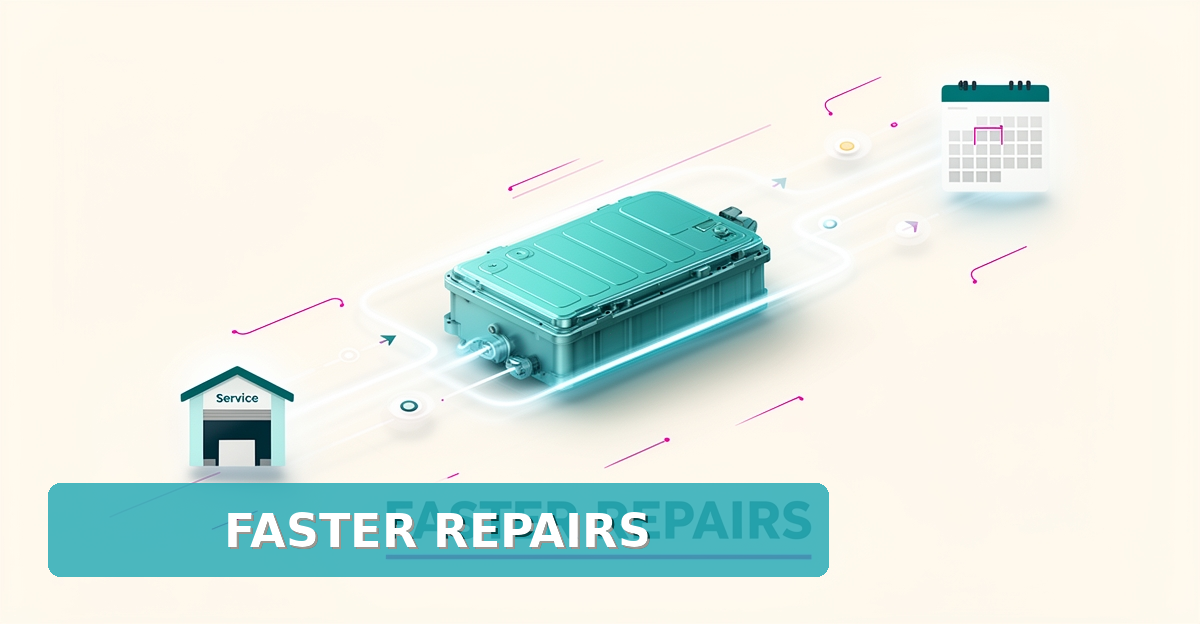
How an AI Dispatch System Can Cut Wait Times for EV Battery Repairs
Key Facts
- Manual dispatch relies on guesswork about technician availability, which compounds delays as EV repair demand grows
- AI dispatch assigns jobs based on real-time availability, skill sets and urgency, typically eliminating the coordination delays that stretch wait times
- Route optimization using live traffic data commonly reduces travel time and lets technicians complete more jobs per shift
- Predictive analytics forecast demand spikes so service centers can staff proactively instead of reactively
- Automated customer updates reduce perceived wait times even when a repair itself takes time
Hire a team member that works 24/7 — for less than a part-time wage.
AI receptionists, SDRs, dispatchers and 99+ roles. Trained on your business, fully managed.
Not sure where to start? Ask our AI planner
The Growing Bottleneck in EV Service Centers
EV service centers are facing a growing bottleneck as demand for battery repairs outpaces their ability to respond efficiently. Manual dispatch systems, still widely used in many shops, rely on technician availability guesswork and reactive scheduling, leading to prolonged customer wait times and technician misallocation. As EV adoption accelerates, these inefficiencies are amplified, creating frustration for customers who expect timely, reliable service.
Customers increasingly struggle to find trustworthy, timely service providers — and EV owners waiting on a battery repair feel that gap most sharply. It's not just inconvenient: it erodes trust and pushes customers toward competitors with faster turnaround. Without intelligent systems to prioritize urgent repairs and match the right technician to the right job, service centers remain trapped in a cycle of delays and underutilized labor.
AI-powered dispatch systems address this by automating scheduling based on real-time technician availability, skill sets, and job urgency, while optimizing routes using live traffic and location data. By eliminating manual coordination delays and enabling proactive resource allocation, these systems typically compress wait times dramatically — often from tens of minutes to just a few. The result is not only faster service but also higher first-time fix rates and improved technician utilization.
- Automated scheduling reduces manual effort and prevents conflicting assignments
- Intelligent routing cuts travel time, increasing daily job capacity
- Real-time monitoring allows dynamic adjustments for urgent repairs or delays
- Predictive analytics forecast demand spikes, enabling proactive staffing
- Enhanced communication keeps customers informed, reducing perceived wait times
AIQ Labs builds workflow automation systems that integrate these capabilities directly into EV service operations, transforming dispatch from a reactive bottleneck into a proactive advantage. By aligning technician skills with job requirements and minimizing idle time, AI dispatch ensures that complex battery repairs are handled swiftly and accurately — turning long waits into a thing of the past.
How AI Dispatch Systems Optimize EV Repairs
AI dispatch systems are transforming how service providers manage technician workflows, directly impacting customer wait times and operational throughput. By leveraging automated scheduling, intelligent routing, real-time monitoring, and predictive analytics, these systems enable faster, more accurate job assignments and dynamic adjustments throughout the service day. This level of optimization is especially critical in time-sensitive environments like EV battery repair, where delays can compound customer frustration and operational bottlenecks.
AI-powered dispatch reduces wait times through intelligent scheduling that matches technician availability, skill sets, and job urgency in real time. Automated scheduling eliminates manual coordination delays and ensures that the right technician is assigned to the right job at the right time, minimizing idle periods and service gaps. This precision directly supports faster response times in high-demand service environments.
Intelligent routing, powered by real-time traffic and location data, typically cuts travel time meaningfully and increases completed jobs per day. By continuously optimizing routes based on current conditions, AI reduces unnecessary mileage and enables technicians to reach more customers per shift. These gains translate directly into higher service capacity without expanding the workforce.
Real-time monitoring and predictive analytics allow dispatch systems to anticipate delays, reallocate resources proactively, and adjust schedules on the fly. When unexpected events occur — such as traffic congestion or urgent repair requests — the system dynamically reroutes technicians or reprioritizes jobs to maintain service levels. This adaptability ensures consistent performance even under fluctuating demand.
- Automated scheduling reduces manual effort and prevents conflicts
- Intelligent routing minimizes travel time and fuel consumption
- Real-time monitoring enables dynamic schedule adjustments
- Predictive analytics forecast demand and prevent bottlenecks
AIQ Labs designs these capabilities into cohesive dispatch solutions tailored for high-demand service environments. By combining automated scheduling, intelligent routing, and predictive analytics, AI dispatch systems create a responsive operational framework that reduces wait times, increases job completion rates, and improves overall service reliability — directly addressing the core challenges in EV battery repair workflows.
Implementing AI Dispatch with AIQ Labs: From Fix to Full System
AIQ Labs builds workflow automation systems that improve operational efficiency and customer experience in high-demand EV service centers. Starting with a single workflow — like EV repair dispatch — lets you target a critical pain point with a robust, custom solution. This is the AI Workflow Builds entry point: we rebuild the one workflow that costs you the most, at a fixed price, in phases.
An AI dispatch system reduces wait times by analyzing technician availability, skill sets, and job requirements to automatically schedule tasks, minimizing manual effort and scheduling conflicts. By integrating real-time data on traffic conditions and job locations, the system determines the most efficient routes for technicians, reducing travel time and fuel consumption.
The system continuously monitors task progress and dynamically adjusts schedules in response to unforeseen events like traffic delays or urgent requests, ensuring optimal resource allocation. Route optimization typically boosts throughput without adding headcount. Predictive analytics further enhance operations by forecasting demand and identifying potential bottlenecks before they disrupt service.
- Automated scheduling based on technician skills and availability
- Intelligent routing using real-time traffic and job data
- Dynamic adjustment for traffic delays or urgent requests
- Predictive analytics for demand forecasting
- Enhanced communication with real-time updates
As you validate results in the initial workflow, you can scale further. AIQ Labs offers two other entry points: AI Employees — managed AI staff such as dispatchers and service coordinators at roughly 80% less cost than a human hire — and AI Operating Systems, one connected operating layer built in phases across your whole operation.
Payment is straightforward: Start Monthly, Build in Milestones, or Own It Outright. Every system AIQ Labs builds is owned outright by you — the code, the agents, and the data — with no vendor lock-in or platform dependencies. This eliminates software subscription chaos and keeps you in full control of customization and future development, aligned with long-term growth goals.
The phased implementation — from one workflow fix to a full operating layer — delivers measurable results early while building toward enterprise-grade AI capabilities. Each phase builds on the last, creating a unified operational system that transforms disconnected tools into a seamless workflow. This structured progression keeps AI adoption practical, risk-managed, and directly tied to business outcomes, positioning EV service centers for sustained efficiency and customer satisfaction.
Still paying for 10+ subscriptions that don’t talk to each other?
We build custom AI systems you own outright. No vendor lock-in. Full control.
Not sure where to start? Ask our AI planner
Frequently Asked Questions
How does an AI dispatch system actually reduce wait times for EV battery repairs?
What specific results can EV service centers expect from implementing AI dispatch?
Is AI dispatch worth the investment for a small EV repair shop?
How does AI dispatch handle urgent battery repair requests that come in unexpectedly?
Will AI dispatch replace my human dispatchers and service advisors?
How difficult is it to implement an AI dispatch system in an existing EV service center?
Turning EV Service Delays into a Competitive Advantage
AI-powered dispatch systems are no longer a futuristic concept — they're delivering real results today by cutting EV battery repair wait times through smarter scheduling, real-time routing, and predictive resource allocation. For EV service centers facing rising demand and technician bottlenecks, that means faster repairs, higher first-time fix rates, and improved customer trust — without expanding headcount. The path forward starts with identifying your most critical workflow bottleneck. AIQ Labs helps EV service providers begin with a targeted workflow build — like dispatch automation — at a fixed price, with full ownership from day one. To see how this applies to your operation, take the 2-minute Fit Check and then book a free 30-minute strategy call to map your biggest opportunity before building anything.
Make AI your competitive advantage — not just another tool.
Strategy, implementation and ongoing optimization. One partner, end to end.
Not sure where to start? Ask our AI planner