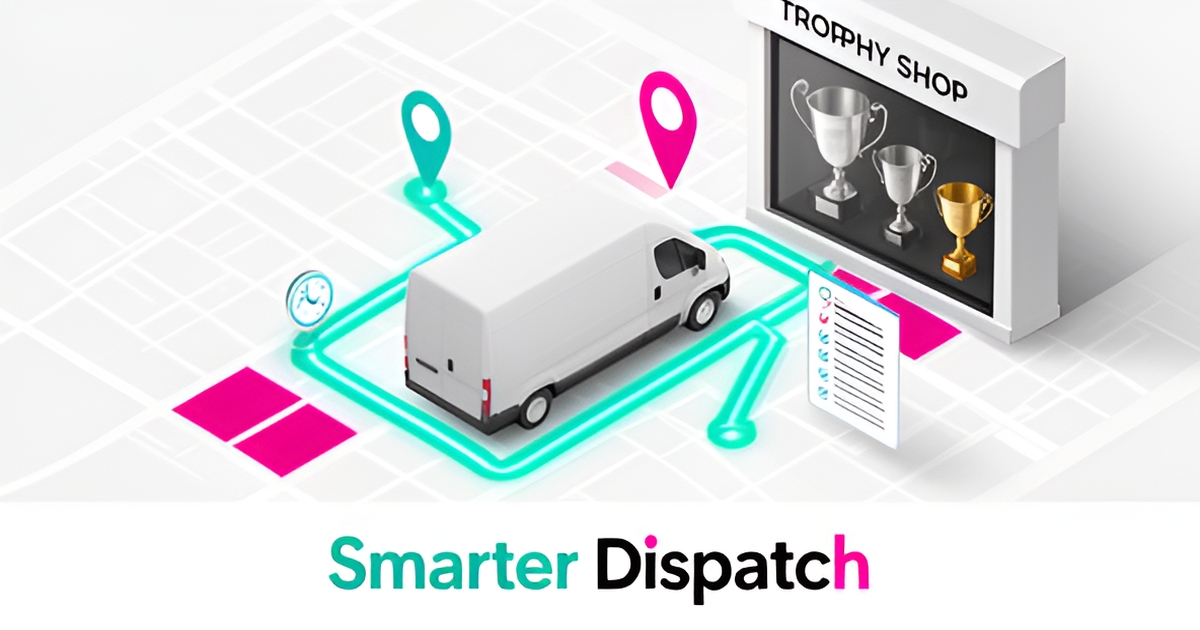
How an AI Dispatch System Can Help Trophy Shops Manage Custom Delivery Requests
Key Facts
- AI adoption has grown steadily across business functions in recent years, with most large organizations now using AI in at least one area of operations
- Trophy and awards shops increasingly treat AI as a practical necessity for remaining competitive as of 2026, according to AIQ Labs industry analysis
- AI dispatch systems automate resource allocation by assigning the nearest available driver using real-time GPS tracking and GIS integration, per Computer-Aided Dispatch system capabilities
- AIQ Labs has deployed 200+ multi-agent systems and runs four live SaaS products daily, giving it direct operational experience with dispatch-style workflows
Hire a team member that works 24/7 — for less than a part-time wage.
AI receptionists, SDRs, dispatchers and 99+ roles. Trained on your business, fully managed.
Not sure where to start? Ask our AI planner
The Delivery Bottleneck: Why Trophy Shops Struggle with Custom Orders
When a championship tournament needs 200 custom trophies delivered across three venues by Saturday morning, or a corporate awards ceremony requires same-day delivery of personalized plaques, traditional manual dispatch methods quickly become a bottleneck. Trophy shops face a critical operational inflection point where the complexity of custom delivery requests collides with outdated coordination methods.
The root of the problem lies in fragmented systems that force staff to juggle spreadsheets, phone calls, and paper logs to manage deliveries. According to industry analysis, trophy and awards shops struggle with operational inefficiencies including manual data entry and fragmented software subscriptions that create information silos. When delivery requests arrive through multiple channels—phone, email, walk-ins—critical details about engraving specifications, delivery windows, and venue requirements often get lost in translation.
These manual processes create cascading failures during peak demand periods. Event-based sales generate unpredictable spikes that overwhelm static scheduling systems, forcing dispatchers to make routing decisions without real-time visibility into driver locations or vehicle capacity. A growing share of enterprises now use AI specifically to reduce production and operations management work, recognizing that manual coordination simply cannot scale with transaction complexity.
The specific pain points manifest in several operational failures:
- Missed delivery windows due to poor route optimization and lack of real-time traffic data
- Double-booked drivers or vehicles resulting from disconnected scheduling calendars
- Inability to confirm pickup times accurately, leading to customer dissatisfaction and rushed engraving work
- Inefficient resource allocation where drivers crisscross territories unnecessarily
These inefficiencies carry measurable costs. When delivery coordination fails, shops face not only expedited shipping fees and wasted fuel but also damaged client relationships in an industry where timing is everything. A delayed trophy delivery for a retirement dinner or youth sports banquet represents a permanent black mark on a shop's reputation.
The shift toward AI-driven solutions is accelerating as businesses recognize these limitations. AI adoption across business functions has risen steadily year over year, and organizations increasingly attribute a measurable share of earnings to AI implementations—evidence that the technology delivers financial impact beyond efficiency gains.
For trophy shops, the stakes are particularly high because custom orders often involve irreplaceable, time-sensitive events. Unlike standard retail deliveries, a delayed awards shipment cannot simply be rescheduled for next week. AIQ Labs identifies this as a competitive necessity rather than a luxury: shops relying on manual dispatch risk losing clients to competitors who can guarantee precise delivery windows through automated coordination.
The bottleneck extends beyond logistics into customer experience. Modern buyers expect real-time tracking and proactive communication about their custom orders. Manual systems force staff to play phone tag for status updates, consuming productive hours that could be spent on craftsmanship rather than logistics coordination. As we examine how AI dispatch systems resolve these specific pain points, the contrast between reactive manual coordination and proactive automated management becomes starkly apparent.
How AI Dispatch Systems Transform Delivery Logistics
Trophy shops handling custom orders for regional events live or die on precise timing. When a delivery window slips for a championship plaque or corporate award, the cost is immediate. AI-powered Computer-Aided Dispatch systems turn reactive logistics into a controlled, predictable operation.
Modern CAD platforms were built for emergency response and now power logistics where speed and accuracy matter. They log delivery requests, assign resources, track movement, and maintain continuous communication between dispatch and field units. For trophy shops, that framework maps directly to custom order pickups and event-based deliveries.
Automated task assignment replaces manual dispatcher judgment with real-time data. The system receives a delivery request, creates a record, and recommends the nearest available unit based on location, availability and estimated travel time. This real-time GPS tracking through GIS integration keeps dispatchers and drivers aligned without constant phone checks.
Integrated communication workflows keep everyone informed. Dispatchers can chat with delivery personnel, share route updates, and push status notifications to customers automatically. The result is improved coordination for multi-stop event days and fewer missed handoffs on high-value custom orders.
For trophy and awards businesses, the shift is urgent. As of 2026, trophy and awards shops are recognizing AI as a practical necessity for remaining competitive. Rising expectations for faster turnaround and seamless digital experiences make manual dispatch a liability.
AIQ Labs sees this pressure daily with SMBs managing custom fulfillment, having deployed 200+ multi-agent systems across operational workflows. The core mechanics that deliver value are:
- Call-taking and record creation that auto-logs order details and customer location
- Resource dispatching that automatically assigns the nearest available driver
- Real-time communication with chat, messaging and status updates
- Incident logging for compliance, reporting and future optimization
By automating data entry, resource tracking and dispatching, CAD systems significantly reduce the risk of mistakes caused by manual processes. Information is accurately logged and miscommunication between dispatchers and delivery personnel is eliminated.
Integration with GPS and Automatic Vehicle Location enables continuous visibility. When a delivery request arrives, the system can auto-populate customer information, suggest optimal routes, and confirm pickup times without dispatcher rekeying.
The ultimate goal is operational efficiency through data-driven decision making. Comprehensive logs provide the evidence base for future optimization, stronger compliance demonstration, and smarter scheduling during peak event seasons.
For regional or event-based sales, this means consistent delivery performance without adding headcount. If you'd rather not build this yourself, AIQ Labs also offers AI Employees—managed AI staff, including dispatchers, at a fraction of the cost of a human hire.
Implementation Blueprint: From Assessment to Optimization
Trophy shops face growing pressure to deliver custom awards quickly and accurately, especially during peak seasons or regional events where timing is critical. Manual scheduling and fragmented communication often lead to delays, missed pickups, and dissatisfied customers. An AI dispatch system transforms this workflow by automating resource allocation, providing real-time tracking, and integrating with existing tools—ensuring every delivery aligns with customer expectations without adding operational complexity.
Begin by assessing your current delivery operations to identify bottlenecks in scheduling, pickup confirmation, and coordination for custom orders. This step reveals inefficiencies like manual data entry or inconsistent communication that AI can resolve. As noted in industry analysis, trophy and awards shops are recognizing AI as a practical necessity for remaining competitive due to rising customer expectations for faster turnaround times and seamless digital experiences. Understanding these pain points sets the foundation for a targeted AI implementation that addresses real workflow challenges.
Next, integrate the AI dispatch system with your existing CRM, GPS tracking, and order management tools to enable automated data flow and real-time visibility. Connect call-handling software with customer databases so delivery requests automatically populate key details like location and order specifications. Configure resource dispatching to assign the nearest available delivery unit based on real-time vehicle location, availability, and estimated travel time—mirroring the automated assignment capabilities of Computer-Aided Dispatch (CAD) systems proven to enhance coordination and reduce human error. Finally, train staff on the new system, establish clear communication channels for updates, and monitor performance to continuously refine routes and response times.
This is exactly how AIQ Labs approaches the work. Through AI Workflow Builds, we rebuild the one workflow that costs you the most—at a fixed price, in phases. You pay per milestone, keep what's built, and scale only when ready. For shops that want dispatch as part of a fully connected operation, AI Operating Systems deliver one connected layer you own outright. No fake prices, no lock-in—just a clear path from your worst bottleneck to a system that runs it.
Still paying for 10+ subscriptions that don’t talk to each other?
We build custom AI systems you own outright. No vendor lock-in. Full control.
Not sure where to start? Ask our AI planner
Frequently Asked Questions
How does an AI dispatch system actually reduce delivery delays for custom trophy orders?
Can AI dispatch systems integrate with the tools I already use in my trophy shop?
What specific problems do trophy shops face with manual delivery coordination during peak seasons?
Is AI really necessary for small trophy shops, or is it just for large businesses?
How does real-time tracking in an AI dispatch system improve customer experience for custom trophy deliveries?
What kind of return on investment can trophy shops expect from implementing an AI dispatch system?
From Chaos to Coordination: The Future of Trophy Delivery Is Here
The days of juggling spreadsheets, phone calls, and crossed fingers during championship season are over. AI dispatch systems transform trophy shop delivery logistics from reactive scrambling into proactive, data-driven coordination—ensuring that custom awards arrive precisely when and where they're needed, every time. With AI adoption now mainstream across business functions, the technology has moved from competitive advantage to operational necessity. For trophy shops ready to eliminate delivery bottlenecks, the path forward starts with honest assessment: Where do your current workflows break down during peak demand? Which manual processes consume the hours you could spend on craftsmanship? AIQ Labs helps SMBs answer those questions with systems built in phases, owned outright, and priced honestly—no vendor lock-in, no disruption, just measurable results. Ready to see what's possible? Start with the two-minute Fit Check and book a free strategy call to map your highest-ROI automation opportunity. If there's a clear win, we'll show you exactly how to capture it.
Make AI your competitive advantage — not just another tool.
Strategy, implementation and ongoing optimization. One partner, end to end.
Not sure where to start? Ask our AI planner