How an AI Dispatch System Can Improve Field Technician Efficiency in Auto Body Shops
Key Facts
- Industry research suggests roughly a third of field service companies lose well over an hour daily to inefficient dispatching industry research indicates
- AI dispatch deployments typically report travel time reductions of 30–40% within the first month field service data confirms
- AI-powered routing commonly reduces miles per job by 20–35% field service data confirms
- A majority of companies report improved efficiency after AI dispatch implementation analytics show
- Most customers now expect text updates during active service jobs field service benchmarks
- Many customers feel reassured seeing a technician photo and name before visits field service benchmarks
- Technician dispatch optimization AI market is projected to grow at a 22.7% CAGR through 2033 market analysis confirms
Hire a team member that works 24/7 — for less than a part-time wage.
AI receptionists, SDRs, dispatchers and 99+ roles. Trained on your business, fully managed.
Not sure where to start? Ask our AI planner
The Dispatch Bottleneck Costing Auto Body Shops Time and Revenue
Manual dispatch systems in auto body shops create hidden costs that erode both technician productivity and shop revenue. When dispatchers manually assign jobs based on fragmented information, technicians often spend valuable hours idle, waiting for the next work order or driving inefficient routes between locations. This constant context switching and poor scheduling leads to significant time waste that directly impacts the bottom line. Industry research indicates that roughly 30% of field service companies lose an average of 96 minutes per day to wasted time from inefficient dispatching practices—nearly two full work hours lost daily per technician industry research indicates. These idle hours represent not just lost labor but missed opportunities to complete additional repairs, increasing revenue potential without adding headcount.
Beyond idle time, manual dispatch contributes to excessive travel waste as jobs are assigned without considering technician location, vehicle type, or real-time traffic conditions. Technicians frequently crisscross service areas, backtracking or taking longer routes simply because the dispatcher lacked visibility into optimal sequencing. This inefficiency burns unnecessary fuel, increases vehicle wear and tear, and delays response times for customers waiting on repairs. Field service deployments typically show AI-powered dispatch systems reducing travel time by 30–40 percent within the first month by intelligently matching jobs to the nearest qualified technician while factoring in skill sets and job priority field service data confirms. Such reductions not only cut operational costs but also improve first-time fix rates and customer satisfaction through faster, more reliable service.
The cumulative effect of these inefficiencies is slower response times, which frustrate customers and limit a shop's ability to handle urgent repairs or walk-in vehicles. When dispatch relies on phone calls, whiteboards, or spreadsheets, updating schedules in real time becomes nearly impossible, leading to bottlenecks during peak hours. Shops using manual methods often struggle to adapt to last-minute changes, resulting in missed appointments or technicians arriving unprepared for the job at hand. However, businesses that have adopted AI-driven dispatching report measurable improvements, with a majority noting increased efficiency after implementation due to automated scheduling, dynamic route optimization, and better workload distribution analytics show. These gains free up technicians to focus on skilled work rather than waiting or traveling, directly boosting throughput and revenue potential.
For auto body shops looking to overcome these dispatch bottlenecks, AIQ Labs offers managed AI Employees—including AI Dispatcher roles—that integrate with existing workflows to assign jobs based on location, vehicle type, and repair priority. By automating the decision-making process, shops can eliminate idle hours, reduce travel waste, and respond faster to customer needs. This approach transforms dispatch from a reactive chore into a proactive advantage, ensuring technicians spend more time repairing vehicles and less time waiting for the next assignment.
How AI Dispatch Matches Location, Vehicle Type and Repair Priority
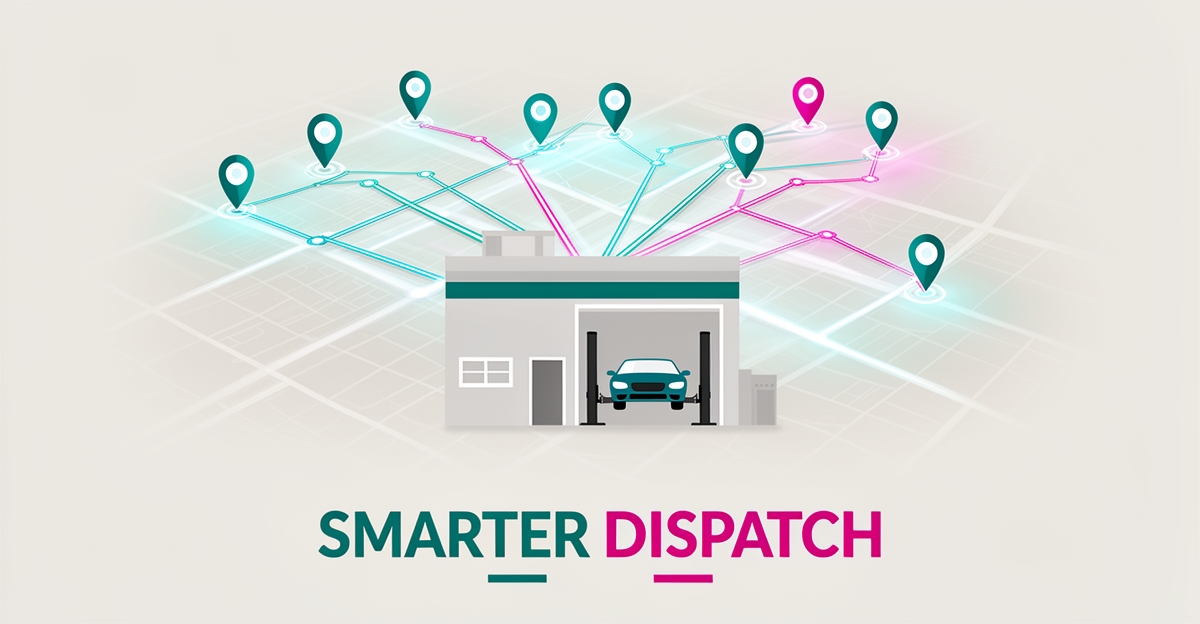
AI-powered dispatch systems transform how auto body shops assign work by intelligently matching technicians to jobs based on location, vehicle type, and repair priority. Instead of relying on manual scheduling, AI analyzes real-time data to ensure the right technician with the right skills is sent to each job, reducing idle time and improving first-time fix rates. This capability is especially valuable in auto body shops where repairs vary widely—from minor dents to structural frame work—requiring specific certifications and equipment.
Using skill-based matching, AI dispatch systems evaluate technician qualifications against job requirements, ensuring only certified technicians handle complex repairs like unibody straightening or ADAS recalibration. Zone-based routing further enhances efficiency by grouping jobs within geographic clusters, minimizing backtracking and unnecessary travel. These systems also balance workloads across technicians, preventing bottlenecks while ensuring urgent repairs—such as drivable vehicles needing same-day attention—are prioritized over less critical tasks.
Real-time optimization continuously adjusts schedules as conditions change, factoring in live traffic, job duration estimates, and emergency requests. According to industry research, deployments commonly see a 30–40 percent reduction in travel time within the first month. Additionally, AI-powered routing typically delivers a 20–35% reduction in miles per job per day, directly lowering fuel costs and vehicle wear. Automated customer updates keep clients informed with arrival notifications and delay alerts, meeting the expectation of most customers who want text updates during active jobs as noted in field service benchmarks.
- Skill-based matching for vehicle type and repair certifications
- Zone-based routing to minimize travel between jobs
- Real-time optimization for traffic and job duration changes
- Workload balancing to prevent technician burnout
- Automated customer updates for improved transparency
By integrating these capabilities, AIQ Labs' AI Dispatcher—trained on your shop's workflows and integrated with your scheduling tools—ensures every job is assigned with precision, turning dispatch from a reactive task into a proactive efficiency driver.
From Manual to Managed AI Dispatcher: Implementation for Auto Body Shops
Auto body shops still relying on manual dispatch often face delays, mismatched assignments, and idle technicians due to inefficient scheduling. Transitioning to an AI-powered dispatcher transforms this process by using real-time data to match jobs with the right technician based on location, skill set, and repair urgency—cutting response times and reducing wasted hours. According to industry research, a majority of companies report improved efficiency after deploying AI in dispatching, while studies show travel time reductions of 30–40% within the first month of implementation.
To begin the shift, shop owners should first identify scheduling bottlenecks—such as repeated delays in certain zones, frequent skill mismatches, or technicians waiting between jobs. Analyzing these patterns reveals where manual processes fail and where AI can add the most value. Next, ensuring data quality is critical: technician certifications, vehicle specialties (e.g., frame repair vs. paint work), and job priority levels must be accurate and up to date. Poor data leads to poor AI decisions, so cleaning and standardizing this information upfront prevents downstream inefficiencies.
Integration with existing shop management systems follows, allowing the AI dispatcher to pull job details and push updates without disrupting current workflows. AIQ Labs supports this through flexible payment models—Start Monthly for rapid deployment, Build in Milestones for phased adoption, or Own It Outright for full system ownership—each designed to fit different operational rhythms and budgets. Once live, continuous monitoring helps refine performance: tracking metrics like average response time, technician utilization, and job completion rate enables ongoing optimization. As market analysis confirms, the technician dispatch optimization AI market is projected to grow at a 22.7% CAGR through 2033, underscoring the long-term value of investing in intelligent dispatch today.
Why Auto Body Shops Are Adopting AI Dispatch Now
Auto body shops are hitting a wall with manual dispatch as demand climbs and crews stay lean. The pressure to turn bays faster while keeping customers informed is pushing owners toward automation now, not later.
Labor shortages and rising operational costs are forcing a rethink of how jobs get assigned. Industry research shows a majority of companies report improved efficiency post-AI deployment, a signal that shops are chasing measurable gains rather than incremental tweaks. With roughly 30% of field service companies reporting 96 minutes lost per day to wasted time, idle hours directly erode margins in a labor-constrained market.
Customer expectations have also shifted. Recent field data finds 97% of homeowners expect text updates during active jobs, and 58% are reassured when they see a technician photo and name before a visit. Transparency is no longer a nice-to-have; it is the baseline for trust and retention.
Market momentum reinforces the urgency. The technician dispatch optimization AI market is forecast at a 22.7% CAGR through 2033. Market analysis points to rapid adoption as AI moves from pilot to core operations.
Adoption drivers for auto body shops include:
- Skilled technician shortages that make skill-based matching and workload balancing essential
- Rising fuel and vehicle costs where AI routing can cut travel time 30–40% within the first month
- Demand for real-time text updates and technician visibility that manual dispatch cannot scale
What was once a competitive advantage is becoming table stakes. Analyst commentary notes AI-powered dispatching will transform from a competitive advantage to an essential business function in the next two to three years as pricing becomes accessible to smaller businesses.
AIQ Labs sees this shift in the field service segment, where assigning jobs based on technician location, vehicle type, and repair priority cuts response times and reduces idle hours. Fully trained AI dispatchers work alongside human technicians under flexible payment models—Start Monthly, Build in Milestones, or Own It Outright—making scalable, ROI-positive automation practical for shops that need results now.
Still paying for 10+ subscriptions that don’t talk to each other?
We build custom AI systems you own outright. No vendor lock-in. Full control.
Not sure where to start? Ask our AI planner
Frequently Asked Questions
How much time do technicians typically waste each day due to inefficient manual dispatching?
Can AI-powered dispatching really reduce travel time for auto body shop technicians?
What percentage of homeowners expect text updates during active repair jobs?
How does AI dispatching handle complex repairs that require specific certifications?
Is implementing an AI dispatcher difficult for small auto body shops with existing systems?
What measurable improvements do shops see after adopting AI-powered dispatching?
From Bottleneck to Competitive Edge
Manual dispatch is quietly draining auto body shops through idle technicians, inefficient travel, and delayed responses. When jobs are assigned without real-time visibility into location, vehicle type, and repair priority, shops lose hours each day to context switching and backtracking, while customers wait longer for updates. AI-powered dispatch changes that equation by matching the right certified technician to the right job, grouping work by zone, balancing workloads, and adjusting routes instantly for traffic and urgent requests. The result is less wasted time, lower fuel and wear costs, and faster, more transparent service. For shops ready to move beyond spreadsheets and phone calls, AIQ Labs offers managed AI Employees, including AI Dispatcher roles that integrate with existing workflows under flexible payment models—Start Monthly, Build in Milestones, or Own It Outright. Start with a clear view of your current bottlenecks, clean your technician and job data, and test how automated, skill-based matching performs in your shop. Take the two-minute Fit Check at aiqlabs.ai/apply for a free 30-minute strategy call to map your biggest dispatch constraint and identify high-ROI automation opportunities. A majority of companies report improved efficiency post-AI deployment according to industry research.
Make AI your competitive advantage — not just another tool.
Strategy, implementation and ongoing optimization. One partner, end to end.
Not sure where to start? Ask our AI planner