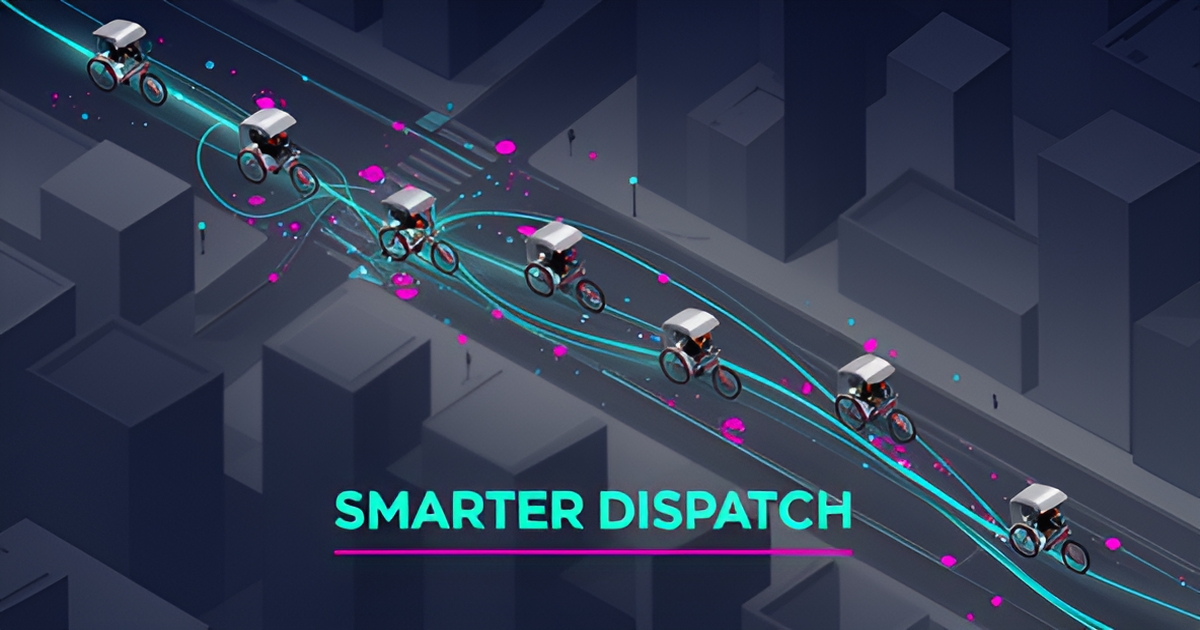
How an AI Dispatch System Can Improve Pedicab Fleet Utilization
Key Facts
- Predictive allocation typically reduces idle time meaningfully compared to reactive dispatch, with industry analyses pointing to reductions in the 25% range as of late 2026
- AI-powered dispatch generally reduces mileage by roughly 20-35% versus manual methods, cutting fuel costs and equipment wear
- Optimized routing and reduced idle time typically enable fuel savings in the 10-15% range
- Manual dispatch commonly consumes 2-4 hours daily on route planning, while AI calculates optimal routes in seconds
- AI dispatch balances driver workloads, reducing earnings volatility and increasing consistent income across the fleet
- AIQ Labs has deployed 200+ multi-agent systems and runs 4 live SaaS products daily — dispatch systems are built on production experience, not theory
Hire a team member that works 24/7 — for less than a part-time wage.
AI receptionists, SDRs, dispatchers and 99+ roles. Trained on your business, fully managed.
Not sure where to start? Ask our AI planner
The Pedicab Fleet Utilization Problem
Pedicab operators lose money every time a driver circles empty or waits for a call that never comes. Manual dispatch leaves fleets reacting to demand instead of shaping it, and the cost shows up in idle hours, wasted miles, and uneven pay.
Reactive assignment drives significant idle time compared to predictive allocation. Industry analyses of fleet dispatch as of late 2026 point to idle time reductions in the 25% range when fleets shift from reactive to predictive assignment. That gap is the difference between a driver earning and a driver waiting.
Manual boards create uneven workloads across the fleet. Some drivers stack short rides while others sit. Comparative research on AI dispatch versus manual dispatch notes that manual dispatch leads to uneven workloads and increased waiting time, while AI balances workloads and reduces waiting time. Earnings volatility follows directly from dispatch inconsistency.
Fuel and mileage bleed quietly. The same comparative research shows AI-powered dispatch can reduce mileage by roughly 20-35% compared to manual dispatch. Less deadheading means lower fuel costs and less wear on equipment.
Route planning under manual control is slow and error-prone. Manual dispatch typically spends 2-4 hours daily on route planning. AI dispatch, by contrast, calculates optimized routes in seconds and typically delivers fuel savings in the 10-15% range by eliminating unnecessary mileage and poor stop sequencing.
The financial impact scales with fleet size. Larger fleets running manual dispatch tend to bleed the most — more vehicles means more idle capacity compounding hour by hour. For pedicab operators running tight margins, that recovery funds expansion instead of waste.
Common pain points that keep utilization low include:
- Idle time from reactive assignment rather than anticipating demand patterns
- Manual route planning that takes hours and misses traffic and weather shifts
- Uneven driver workloads that reduce earnings and increase churn
- Lack of real-time matching between rider location, driver availability, and historical performance
AI dispatch systems address this by intelligently assigning riders to drivers based on location, availability, and historical performance. This is workflow automation applied to field operations, where real-time data and machine learning replace phone calls and guesswork.
AIQ Labs builds custom dispatch platforms through AI Workflow Builds — rebuilding the one workflow that costs you the most, at a fixed price, in phases. You own the system outright rather than renting another subscription tool. With proper data quality and driver adoption, the shift from reactive to predictive allocation turns idle capacity into revenue.
How AI Dispatch Optimizes Fleet Utilization
AI-powered dispatch systems transform pedicab fleet operations by intelligently matching riders to drivers using real-time location, availability, and historical performance data. This approach moves beyond reactive assignment to predictive allocation, ensuring vehicles are positioned where demand is anticipated rather than simply responding to immediate requests. By continuously analyzing trip patterns, traffic conditions, and driver availability, AI dispatch reduces unnecessary mileage and wait times while maximizing vehicle productivity. Fleets implementing such systems typically see meaningful efficiency gains and idle time reductions compared to manual dispatch methods.
These gains translate directly into operational savings and improved service reliability. AI-optimized routing eliminates inefficient stop sequencing and detours, typically resulting in 20-35% fewer miles driven per vehicle. Combined with reduced idling, this generally produces fuel savings in the 10-15% range, lowering both operating costs and environmental impact. For larger fleets, those savings compound across every vehicle, every shift, every day of the season.
- Real-time GPS tracking enables dynamic rerouting based on live traffic and demand shifts
- Historical performance data predicts peak demand zones and optimal driver positioning
- Availability algorithms ensure only active, nearby drivers receive ride requests
- Machine learning continuously refines matching accuracy based on completed trips and feedback
- Integration with scheduling tools aligns driver shifts with forecasted demand patterns
Successful implementation depends on accurate data collection and driver engagement with the platform. Inaccurate location inputs or inconsistent usage can undermine the system's predictive capabilities, while proper training ensures drivers trust and effectively use AI-generated assignments. When these foundational elements are in place, AI dispatch becomes a core component of fleet optimization — real-time decision-making that reduces manual effort and improves resource utilization across transportation operations.
Predictive Allocation vs Reactive Dispatch
Reactive dispatch waits for the request to arrive and then finds the closest available pedicab. Predictive allocation watches demand forming and moves capacity into place before the bell rings. That timing difference changes how busy the fleet looks hour to hour.
Predictive allocation anticipates demand patterns through historical data, real-time signals, and operational context to pre-position fleet capacity to meet anticipated demand. Current fleet dispatch analyses describe predictive allocation as the architectural shift defining the best AI-driven fleet management solutions. The result is fewer empty cruises between jobs and steadier pickups across the district.
Reactive allocation responds after requests arrive. It optimizes each assignment in isolation, which creates bursts of activity followed by gaps. Drivers end up chasing the next ping, and utilization drops when demand shifts quickly. Idle time accumulates because the system has no forward view of where riders will appear next.
Predictive models change the dispatch logic from chase to position. They learn where and when rides cluster, then nudge drivers toward those zones during natural transition windows. Industry analyses point to idle time reductions in the 25% range compared to reactive allocation. Utilization improves by matching the right vehicle to the right job at the right time.
Mileage also falls when the system stops over-reacting. AI dispatch comparisons find AI-powered dispatch can reduce mileage by roughly 20-35% compared to manual dispatch. Shorter repositioning trips mean less pedaling between fares, lower fatigue, and more time earning.
Workload balance follows naturally. Predictive pre-positioning spreads demand across the fleet instead of stacking it on whoever is closest at the moment. Drivers see more consistent ride flow, reduced waiting time, and higher earnings without longer shifts.
For pedicab operators, the practical gains show up as:
- Pre-positioning near event exits, transit stops, and nightlife corridors before surges begin
- Smoother handoffs between high and low demand blocks to avoid driver bunching
- Balanced daily earnings across the fleet instead of a few drivers capturing most rides
- Fewer empty repositioning trips that waste driver energy and customer wait time
AIQ Labs builds custom dispatch platforms that intelligently assign riders to drivers based on location, availability, and historical performance — either as a standalone Workflow Build or as part of a fuller AI Operating System that connects dispatch with scheduling, payments, and reporting in one layer you own outright.
Predictive allocation does not replace driver judgment. It gives drivers better starting positions and clearer next moves, so human decisions are faster and more profitable.
Implementing AI Dispatch for Pedicab Fleets
Implementing AI dispatch for pedicab fleets begins with assessing current operations to identify bottlenecks in route planning and driver assignment. Many fleets still rely on manual processes that take 2-4 hours daily for route planning, leading to inefficient mileage and increased idle time. By evaluating existing workflows, operators can pinpoint where AI-driven optimization will deliver the greatest impact, such as reducing unnecessary travel or improving demand anticipation.
Ensuring data quality is critical for AI dispatch accuracy, as inaccurate GPS locations or incomplete driver profiles can undermine predictive allocation. Fleets must verify that their systems collect reliable real-time information, including vehicle locations and availability, to enable the AI to make informed decisions. Poor data quality directly reduces prediction accuracy, limiting the system's ability to cut idle time versus reactive methods.
Choosing a platform with route optimization and real-time tracking allows pedicab fleets to leverage AI for smarter driver assignment based on location, availability, and historical performance. AIQ Labs builds custom dispatch platforms with fixed pricing and phased delivery, integrating with your existing tools through deep API connections. These systems calculate optimal routes in seconds, accounting for traffic and demand patterns — and because you own the build outright, there's no per-vehicle subscription fee eating into margins as the fleet grows.
Driver training ensures adoption and maximizes the benefits of the new system, as even advanced AI delivers limited value if drivers are unfamiliar with the platform. Training should focus on how to use real-time tracking, accept optimized assignments, and understand how predictive allocation reduces waiting time. When drivers trust the system, workloads become more balanced, increasing earnings and reducing fuel consumption through eliminated unnecessary mileage.
Monitoring performance after deployment allows fleets to refine their AI dispatch strategy and sustain improvements in utilization. Continuous tracking of metrics like idle time, miles driven, and fuel use helps identify areas for adjustment, ensuring the system evolves with changing demand patterns. Fleets that get the fundamentals right typically reach break-even quickly, and the system keeps compounding value season after season because it's owned, not rented.
Still paying for 10+ subscriptions that don’t talk to each other?
We build custom AI systems you own outright. No vendor lock-in. Full control.
Not sure where to start? Ask our AI planner
Frequently Asked Questions
How much idle time can an AI dispatch system actually cut for a pedicab fleet?
What kind of fuel savings can we expect from AI-optimized routing?
Will drivers actually use the system, or is adoption a common problem?
How does pricing work for a custom AI dispatch build?
What makes predictive allocation different from just assigning the closest driver?
Can AI dispatch also handle calls and bookings, not just driver assignment?
From Pedaling in Circles to Positioning for Profit
The math is hard to ignore: predictive allocation cuts idle time substantially compared to reactive dispatch, and every empty mile eliminated goes straight back to your margin. For pedicab operators running tight margins, those recovered hours and miles are the difference between a fleet that survives event season and one that grows through it. The path forward doesn't require a leap of faith — start by auditing how many hours your dispatch board spends planning routes each day, then measure where your drivers actually sit idle. If the numbers look anything like industry benchmarks, an AI dispatch platform built around your routes, your drivers, and your demand patterns will pay for itself quickly. That's the approach we take at AIQ Labs: custom dispatch systems you own outright, not another subscription bolted onto your operation. Curious whether it fits your fleet? Take the two-minute Fit Check at aiqlabs.ai/apply and book a free 30-minute strategy call. If there isn't a clear win, we'll tell you that too — no obligation, just clarity on where your idle capacity is hiding.
Make AI your competitive advantage — not just another tool.
Strategy, implementation and ongoing optimization. One partner, end to end.
Not sure where to start? Ask our AI planner