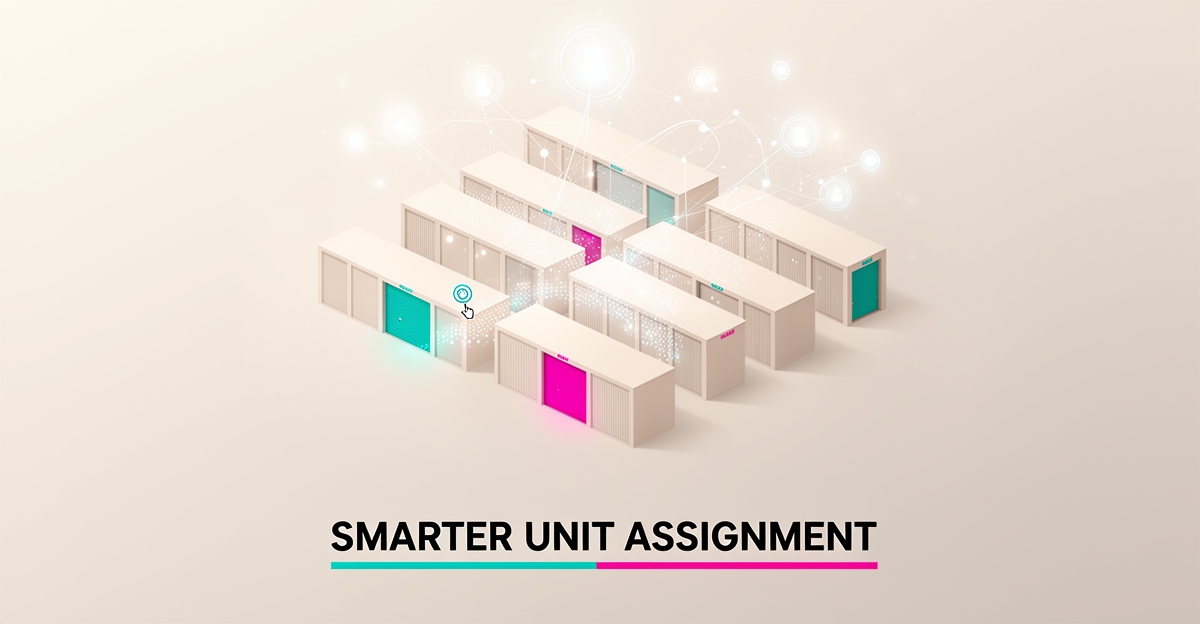
How an AI Dispatch System Can Optimize Unit Assignments for Self-Storage
Key Facts
- Workflow automation has become standard practice across logistics-adjacent industries as of late 2026.
- AI dispatch systems typically reduce operational costs significantly by eliminating manual matching labor and reducing turnover.
- AI-powered dispatch can meaningfully improve time estimates — valuable for customers coordinating movers, trucks and schedules.
- Manual unit assignment tends to inflate operational costs in self-storage through overtime, vacancies and churn.
- AI analyzes facility capacity, customer profiles and moving timelines for smarter unit assignments.
- AIQ Labs has deployed 200+ multi-agent systems and runs 4 live SaaS products daily.
Hire a team member that works 24/7 — for less than a part-time wage.
AI receptionists, SDRs, dispatchers and 99+ roles. Trained on your business, fully managed.
Not sure where to start? Ask our AI planner
The Hidden Cost of Inefficient Unit Assignment in Self-Storage
Many self-storage facilities still rely on manual unit assignment processes, leading to hidden costs that erode profitability and customer satisfaction. When staff manually match customers to units based on paper logs or basic spreadsheets, they often overlook optimal fits—resulting in frequent unit turnover, underused space, and frustrated tenants who wait too long or receive unsuitable options. This inefficiency directly impacts the bottom line, as operational costs rise when labor is wasted on repetitive matching tasks that could be automated.
Workflow automation has become standard practice across logistics-adjacent industries as of late 2026, yet many self-storage operators continue using manual methods that inflate operational costs through overtime labor spent reassigning units, lost revenue from vacant spaces that could have been better utilized, and customer churn due to poor move-in experiences. Manual assignment also limits scalability—each new tenant requires more staff time, creating a linear cost curve that hinders growth.
The consequences extend beyond finances. Poor unit matching leads to higher turnover as tenants quickly outgrow or dislike their assigned space, triggering costly move-outs and re-leasing cycles. Underutilized space becomes a silent profit leak—every square foot sitting empty represents lost monthly income that compounds over time. Meanwhile, customers face delays, miscommunication, and a lack of personalization, damaging trust and reducing the likelihood of referrals or long-term leases.
Common pain points in manual unit assignment include:
- Inconsistent application of unit sizing rules across staff
- Difficulty tracking real-time availability during peak move-in periods
- Inability to factor in customer timelines or special requirements (e.g., climate control, ground-floor access)
- Delayed updates to availability logs leading to double-bookings or vacant units
- Over-reliance on employee memory rather than data-driven decisions
These challenges create a cycle where facilities spend more to manage less—using more labor to achieve worse outcomes. Breaking this cycle requires shifting from reactive, manual processes to proactive, intelligent systems that continuously optimize assignments based on live facility data, customer profiles, and operational constraints. By doing so, self-storage operators can reclaim lost efficiency, reduce turnover, and turn unit assignment from a cost center into a competitive advantage.
How AI Analyzes Capacity, Profiles, and Timelines for Smarter Assignments
Behind every smart unit assignment is a quiet calculation happening in seconds — one that weighs far more variables than any human dispatcher could track at once. AI dispatch systems bring this analytical muscle to self-storage operations, turning raw operational data into assignments that stick.
At its core, the AI's logic rests on three inputs. First, it continuously ingests facility capacity data — which units are vacant, which are reserved, and how space is distributed across unit sizes and building zones. Second, it builds a picture of each customer through their profile: preferred unit sizes, move-in and move-out patterns, and historical behavior. Third, it factors in moving timelines, predicting when demand will spike and when units will free up.
This matters because self-storage demand is anything but uniform. Move-ins cluster around certain seasons, month-end dates, and life events, while turnover concentrates in predictable patterns. An AI system cross-references these signals to forecast demand before it arrives. Rather than simply handing the next available unit to the next caller, it can reserve the right unit for the right customer at the right moment — reducing turnover and improving overall space utilization.
The payoff is measurable. AI-powered dispatch systems assign resources efficiently by analyzing capacity, profiles, and timelines, minimizing turnover while improving the customer experience. As of late 2026, this capability has become standard practice across logistics-adjacent industries, and self-storage operators who adopt it pull ahead of competitors still matching units by hand.
Accuracy improves alongside efficiency. AI-powered dispatch systems can meaningfully improve time estimates — a benefit that translates directly to self-storage, where customers coordinating movers, trucks, and schedules depend on reliable timing. When a facility can confidently tell a customer exactly when their unit will be ready and when staff support will be available, satisfaction follows.
So what does the assignment logic actually look like in practice? A well-designed AI dispatch workflow evaluates:
- Current and projected unit availability across every size category and zone of the facility
- Customer profile signals, such as unit size preferences and typical move-in or move-out timing
- Anticipated demand spikes based on moving timelines and seasonal patterns
- Operational constraints, including staffing availability and access scheduling
The result is an assignment that balances what the customer wants with what the facility can sustainably deliver. This is the same principle behind the AI Workflow Builds AIQ Labs designs for businesses — systems that match demand patterns against operational constraints so both space and staff time are used better, not just faster.
One caveat deserves attention: these systems are only as good as the data feeding them. AI dispatch requires accurate, up-to-date information on capacity, profiles, and timelines to function effectively. Facilities with clean, current records gain the full benefit; those with stale data should treat data quality as the first step of any implementation.
When capacity, profiles, and timelines feed a single intelligent system, unit assignment stops being a guessing game and becomes a predictive, self-correcting process — one that keeps units filled, customers informed, and operations running on schedule.
Implementing AI Dispatch: From Assessment to Ongoing Optimization
Moving from manual unit assignment to AI-driven dispatch starts with clarity about where time and revenue leak today. Self-storage operators who map capacity, customer profiles, and moving timelines first can design a system that assigns units efficiently and minimizes turnover.
Assessment sets the foundation. Review current operations including facility capacity, customer profiles, and moving timelines. Identify manual handoffs between sales, leasing, and operations, and audit data quality across property management tools. High-quality data is essential because AI dispatch systems require accurate and up-to-date information on facility capacity, customer profiles, and moving timelines to function effectively.
Goal definition turns assessment into measurable outcomes. Teams typically target cost reduction, customer experience improvement, and utilization gains — for example, more accurate move-in windows for storage customers and fewer staff hours spent on manual matching.
System selection balances integration and ownership. AIQ Labs designs custom AI workflows that match demand patterns and operational constraints, ensuring better utilization of space and staff time. Depending on scope, that can start with a single AI Workflow Build for the assignment process, or grow into a full AI Operating System that connects leasing, operations and billing into one layer. The approach emphasizes owning your system outright, so you control customization and future development. Integration with existing property management tools, transportation management systems, and CRM is planned from the start to avoid silos.
Implementation follows a phased path that reduces risk and builds adoption:
- Discovery and architecture to map processes, data flows, and ROI targets
- Custom development and integration with property management and communication platforms
- Staff training and controlled go-live with monitoring and failsafes
- Continuous optimization based on utilization, turnover, and satisfaction metrics
Ongoing optimization is where value compounds. Monitor unit assignment speed, vacancy duration, and customer satisfaction alongside cost per move. Workflow automation is now standard practice across logistics-adjacent industries, and self-storage is catching up. Systems also need robust cybersecurity measures to protect facility capacity and customer data.
Measurable ROI tracking closes the loop. Define baseline KPIs before launch, then track improvements in assignment efficiency, turnover reduction, and staff hours saved. Because the system is built custom and owned by you, enhancements can be added without subscription constraints or platform dependencies.
Still paying for 10+ subscriptions that don’t talk to each other?
We build custom AI systems you own outright. No vendor lock-in. Full control.
Not sure where to start? Ask our AI planner
Frequently Asked Questions
How does an AI dispatch system actually decide which storage unit to assign to a customer?
What kind of cost savings can self-storage facilities expect from AI dispatch?
Will AI dispatch work if our facility data is messy or outdated?
How does AI dispatch improve the customer experience during move-in?
What's involved in implementing an AI dispatch system for a self-storage facility?
Do we own the AI dispatch system, or are we locked into a vendor subscription?
Turn Unit Assignment Into a Predictable Growth Engine
Manual unit assignment quietly drains margin through overtime reassignments, vacant square footage, and frustrated move-ins. Shifting to an AI dispatch approach changes that equation by continuously analyzing live capacity, customer profiles, and moving timelines to place the right tenant in the right unit at the right moment, reducing turnover and improving utilization. Implementation starts with assessing current leaks, cleaning data, defining measurable goals around cost, experience and occupancy, and building a phased rollout with training and ongoing optimization. When capacity, profiles and timelines feed a single intelligent system, assignment becomes predictive and self-correcting rather than reactive. AIQ Labs helps self-storage operators design custom AI workflows that match demand patterns against operational constraints—with 200+ multi-agent systems deployed and a build-you-own-it ownership model. Start the 2-minute Fit Check at https://aiqlabs.ai/apply for a free 30-minute strategy call to map your biggest bottleneck and identify high-ROI automation opportunities. If there isn't a clear win, we'll tell you. Prefer to start smaller? An AI Employee can handle front-desk calls and unit inquiries while you scope the bigger build.
Make AI your competitive advantage — not just another tool.
Strategy, implementation and ongoing optimization. One partner, end to end.
Not sure where to start? Ask our AI planner