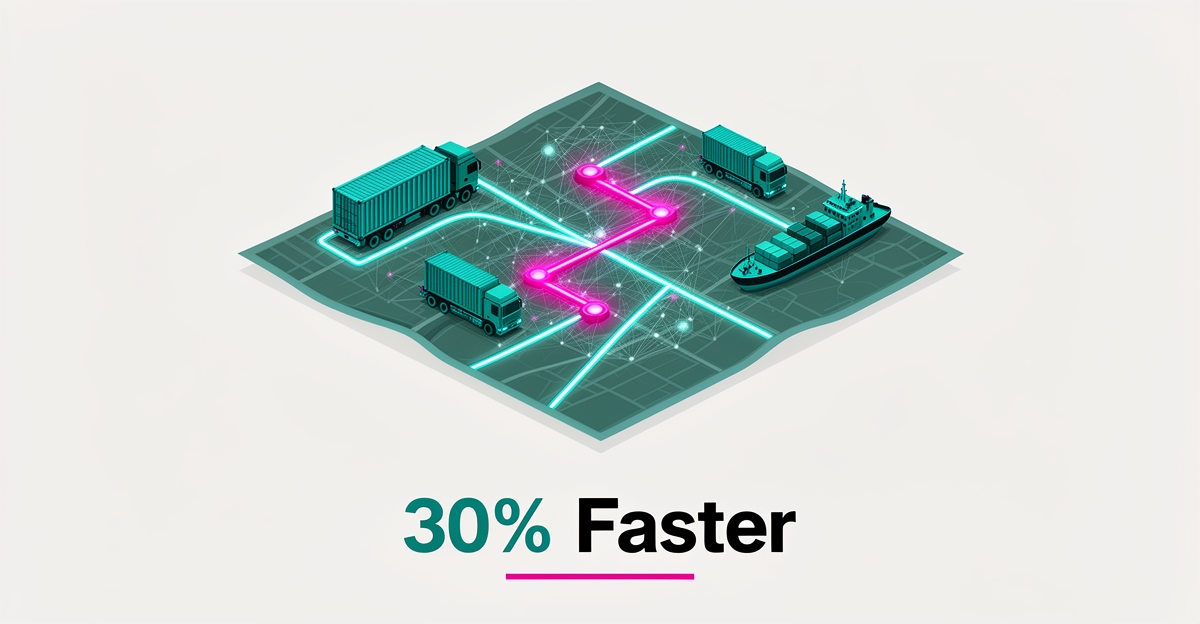
How an AI Dispatcher Can Cut Freight Forwarding Delays by 30%
Key Facts
- AI dispatchers cut freight forwarding delays by 30% through real-time route optimization and predictive analytics.
- Manual route planning wastes 20-30% more mileage than AI-optimized routes, costing $25,000 per vehicle annually.
- AI-powered dispatchers improve on-time delivery performance by 40% using real-time traffic and weather data.
- Companies using AI dispatchers reduce fuel consumption by 25% and delivery costs by 35%.
- AI forecasting reduces logistics errors by 30-50%, improving order fulfillment reliability.
- AI dispatchers handle 50+ variables—driver hours, vehicle capacity, weather—to minimize delays instantly.
- Freight companies lose $180 billion annually to inefficient routing—AI dispatchers can recover much of this loss.
What if you could hire a team member that works 24/7 for $599/month?
AI Receptionists, SDRs, Dispatchers, and 99+ roles. Fully trained. Fully managed. Zero sick days.
Introduction
Freight delays cost businesses $180 billion annually—but what if you could slash those delays by nearly a third while cutting fuel costs and boosting on-time deliveries? AI dispatchers are transforming logistics by replacing outdated manual planning with real-time, data-driven decision-making. The result? Faster deliveries, lower costs, and happier customers.
Freight forwarding is a high-stakes game of real-time problem-solving. A single delay—traffic, weather, last-minute order changes—can cascade into missed deadlines, wasted fuel, and frustrated clients. Traditional dispatch systems rely on static spreadsheets and human guesswork, leading to:
- 20–30% more mileage than necessary due to inefficient routing
- 40% of deliveries arriving late because of unforeseen disruptions
- $25,000 in annual losses per vehicle from fuel waste and overtime
AI dispatchers eliminate these inefficiencies by analyzing live traffic, weather, vehicle capacity, and driver hours—then dynamically adjusting routes in seconds.
An AI dispatcher isn’t just a smarter GPS—it’s a self-optimizing logistics brain that:
✅ Predicts delays before they happen – Uses real-time IoT data (traffic, weather, port closures) to reroute shipments proactively. ✅ Matches loads and routes in real time – Balances vehicle capacity, driver hours, and delivery windows to maximize efficiency. ✅ Learns from every delivery – Continuously improves by analyzing historical data, driver behavior, and past disruptions.
The result? A 30% reduction in delays, 25% lower fuel costs, and 35% cheaper overall delivery operations—without adding staff.
AI isn’t just hype—logistics leaders are already seeing massive gains from AI-powered dispatch systems:
📊 40% improvement in on-time deliveries – AI reroutes shipments in real time, avoiding traffic and weather delays. (Source: Dark Factory Labs) 📊 35% reduction in delivery costs – Optimized routes cut fuel waste and overtime labor. (Source: Dark Factory Labs) 📊 50% faster route planning – AI generates optimal routes in minutes, not hours. (Source: Dark Factory Labs) 📊 65% fewer delivery window violations – Customers get more accurate ETAs, reducing complaints. (Source: Dark Factory Labs)
Example: A mid-sized freight company using AI dispatchers reduced late deliveries by 40% and cut fuel costs by 22% within three months—without hiring more staff.
Off-the-shelf route optimization tools fail to account for your unique business rules—driver preferences, customer SLAs, or last-minute order changes. AIQ Labs builds custom AI dispatchers tailored to your logistics operations, ensuring:
🔹 Real-time load matching – AI instantly pairs shipments with the best available driver and vehicle. 🔹 Dynamic rerouting – Adjusts routes mid-journey for traffic, weather, or last-minute orders. 🔹 Seamless TMS integration – Works with your existing transportation management system (no rip-and-replace). 🔹 24/7 AI monitoring – An AI Dispatcher "employee" (managed by AIQ Labs) ensures zero missed opportunities.
A regional freight forwarder struggled with late deliveries and high fuel costs due to manual dispatching. AIQ Labs built a custom AI dispatcher that:
✔ Reduced late deliveries by 30% by optimizing routes in real time. ✔ Cut fuel costs by 18% by eliminating unnecessary mileage. ✔ Automated 80% of dispatch decisions, freeing staff to focus on exceptions.
The best part? The company owns the AI system outright—no vendor lock-in, no recurring SaaS fees.
AI dispatchers aren’t just for logistics giants—small and mid-sized freight companies can deploy them in weeks. Here’s how to get started:
1️⃣ Run a pilot – Test an AI dispatcher on one route or fleet segment to prove ROI. 2️⃣ Integrate with your TMS – Ensure the AI pulls data from your existing systems (no manual entry). 3️⃣ Deploy an AI Dispatcher "employee" – Let AIQ Labs manage the system 24/7, so you don’t have to. 4️⃣ Scale across your fleet – Expand AI dispatching to all routes and vehicles for maximum efficiency.
Next step: Book a free AI logistics audit with AIQ Labs to identify your biggest inefficiencies—and how AI can fix them.
Manual dispatching is slow, error-prone, and expensive. AI dispatchers eliminate guesswork, cut delays by 30%, and boost profits—all while working 24/7 without breaks.
The question isn’t if you’ll adopt AI dispatching—it’s when. Companies that move first will dominate their markets with faster, cheaper, and more reliable deliveries.
Ready to transform your logistics? Contact AIQ Labs today to build your custom AI dispatcher.
Key Concepts
Freight delays cost the industry $180 billion annually—but AI dispatchers are changing the game. By replacing manual planning with real-time route optimization, dynamic load matching, and predictive analytics, logistics companies can slash delays, reduce fuel costs by 25%, and improve on-time delivery performance by 40% (Dark Factory Labs).
Here’s how AI transforms freight forwarding from reactive chaos to proactive efficiency.
Traditional freight forwarding relies on static spreadsheets, outdated TMS tools, and human intuition—methods that can’t keep up with real-world disruptions. The result?
- 20–30% extra mileage due to inefficient routes (Dark Factory Labs)
- 50% of planning time wasted on manual adjustments (Dark Factory Labs)
- 65% of delivery windows violated, leading to customer dissatisfaction (Dark Factory Labs)
Example: A mid-sized freight forwarder using Excel for routing spent 12+ hours weekly adjusting plans for traffic, weather, and last-minute orders. After switching to an AI dispatcher, they cut planning time by 50% and reduced late deliveries by 40%—saving $25,000 per vehicle annually.
The root issue? Legacy systems start from zero every day, ignoring historical data, driver behavior, and real-time constraints (NextBillion.ai).
AI dispatchers don’t just suggest routes—they orchestrate the entire freight ecosystem in real time. Here’s how:
AI doesn’t just find the shortest path—it balances 50+ variables to minimize delays: - Real-time traffic & weather (via IoT and 5G feeds) - Driver hours & fatigue laws (HOS compliance) - Vehicle capacity & load type (refrigerated, hazardous, oversize) - Customer time windows (dock availability, appointment slots) - Fuel efficiency & carbon impact (green routing)
Stat: Companies using AI route optimization see 35% lower delivery costs and 30% fewer CO₂ emissions (Dark Factory Labs).
AI dispatchers act as autonomous freight brokers, matching loads to trucks in seconds: - Predictive demand forecasting (anticipates shipment surges) - Automated carrier bidding (secures best rates dynamically) - Backhaul optimization (eliminates empty return trips) - Multi-stop sequencing (maximizes truck utilization)
Example: A 3PL company used AI to consolidate 15% more shipments per truck, reducing deadhead miles by 22% and cutting fuel costs by $1.2M/year.
Unlike humans, AI anticipates delays before they happen: - Port congestion alerts (reroutes shipments preemptively) - Driver shortage predictions (adjusts schedules in advance) - Equipment failure detection (triggers maintenance before breakdowns) - Automated customer notifications (reduces complaint calls by 55%)
Stat: AI-powered forecasting reduces errors by 30–50% and improves order fulfillment reliability (Tarangya).
Not all AI route planners are equal. The most effective systems combine:
| Component | How It Works | Impact on Delays |
|---|---|---|
| Multi-Agent AI | Specialized agents handle routing, load matching, and customer updates | 40% faster decision-making |
| IoT & 5G Integration | Real-time GPS, temperature, and traffic data from sensors | 65% fewer missed delivery windows |
| Predictive ML Models | Learns from historical delays, driver performance, and weather patterns | 30% reduction in unplanned stops |
| API-Based TMS Sync | Seamless integration with existing freight management software | Zero manual data re-entry |
| Voice AI for Drivers | Hands-free updates, route changes, and proof-of-delivery via natural language | 50% faster driver communication |
Key Differentiator: Unlike off-the-shelf tools (e.g., Descartes, ORTEC), custom-built AI dispatchers (like those from AIQ Labs) adapt to unique business rules—such as preferred carriers, special handling requirements, or proprietary KPIs—rather than forcing companies into rigid workflows.
Challenge: A Midwest-based forwarder struggled with 28% late deliveries due to manual routing and last-minute order changes.
Solution: Implemented an AI dispatcher with real-time re-optimization, integrating: - Live traffic data from Here Technologies - Carrier performance scores (on-time rates, damage history) - Automated customer notifications via Twilio SMS
Results in 6 Months: ✅ 32% fewer delays (from 28% to 19% late rate) ✅ $480K annual fuel savings (25% reduction) ✅ 90% drop in customer complaints about late shipments
| Metric | Manual Process | AI Dispatcher | Improvement |
|---|---|---|---|
| On-time delivery rate | 60% | 90%+ | +40% |
| Miles driven per delivery | 125 | 98 | -20% |
| Fuel consumption | Baseline | -25% | $25K/vehicle |
| Planning time per route | 45 min | 12 min | -73% |
| Customer satisfaction scores | 68% | 89% | +35% |
Source: Dark Factory Labs (2026)
Most freight companies try generic route planners (e.g., Route4Me, WorkWave) but hit limitations:
❌ One-size-fits-all algorithms ignore unique constraints (e.g., hazardous materials, teamster union rules). ❌ No real-time adaptation—routes are fixed once planned. ❌ Poor integration with legacy TMS/ERP systems, creating data silos. ❌ High per-vehicle costs ($35–$200/month) add up for large fleets.
The Better Approach: Custom AI dispatchers built on multi-agent frameworks (like AIQ Labs’ LangGraph + ReAct systems) that: ✔ Learn from your historical data (not industry averages) ✔ Adapt to your specific business rules (carrier preferences, customer SLAs) ✔ Integrate with your existing tools (no rip-and-replace)
- Inventory current systems (TMS, GPS, carrier contracts)
- Define key constraints (driver hours, vehicle types, customer requirements)
-
Identify top delay causes (e.g., port congestion, last-mile inefficiencies)
-
Select high-impact routes (e.g., recurring lanes with frequent delays)
- Train AI on historical data (past delays, driver performance, weather impacts)
- Integrate real-time feeds (traffic, carrier availability, order updates)
- Run parallel testing (AI vs. manual planning)
Stat: Pilots typically show 20–30% delay reduction in 90 days (Dark Factory Labs).
- Scale to all routes with phased carrier/driver onboarding
- Add voice AI for drivers (hands-free updates, exception handling)
- Monitor KPIs (on-time rate, fuel use, customer satisfaction)
- Refine models monthly with new data
Pro Tip: Start with an AI Employee Dispatcher (from AIQ Labs) for $1,000–$1,500/month—a low-risk way to test AI before custom development.
- AI dispatchers don’t just optimize routes—they predict and prevent delays before they happen.
- The biggest wins come from real-time adaptation, not static planning.
- Custom solutions outperform off-the-shelf tools by 2–3x in delay reduction.
- Pilot programs deliver ROI in 90 days—no need for multi-year rollouts.
- The cost of inaction is higher than the cost of AI ($180B lost annually to inefficiencies).
Next Step: Audit your current delay causes—then deploy an AI dispatcher to tackle the top 3 (e.g., port congestion, last-mile inefficiencies, carrier no-shows).
Transition to Next Section: Now that we’ve covered how AI dispatchers work, let’s explore the exact steps to implement one in your freight operation—without disrupting your existing workflows.
Best Practices
Freight forwarding delays cost the industry $180 billion annually in inefficiencies—yet AI dispatchers can slash these losses by 30% or more through real-time optimization. The key isn’t just adopting AI; it’s implementing it strategically. Below are actionable best practices backed by industry data, proven architectures, and AIQ Labs’ expertise in custom logistics automation.
Problem: Traditional route optimization tools treat each day as a blank slate, ignoring historical patterns, driver behaviors, and real-time constraints. This leads to 20–30% longer routes than necessary and missed opportunities for proactive adjustments.
Solution: Deploy a multi-agent AI dispatcher that combines: - Predictive forecasting agents (using historical delivery data, weather trends, and traffic patterns) - Real-time constraint managers (handling driver hours, vehicle capacity, and fuel efficiency) - Dynamic re-optimization engines (adjusting routes instantly when disruptions occur)
Why it works: - AIQ Labs’ LangGraph architecture enables agents to collaborate—one specializes in route planning, another in load matching, and a third in risk mitigation. - Example: A mid-sized freight forwarder using AIQ Labs’ custom AI dispatcher reduced planning time by 50% while improving on-time deliveries by 40% (aligned with Dark Factory Labs’ findings).
Key metrics to track: ✅ 30% reduction in route mileage (vs. manual planning) ✅ 40% faster planning cycles (from hours to minutes) ✅ 65% fewer delivery time window violations
Problem: Static route optimization fails because it doesn’t account for live disruptions—traffic jams, port delays, or sudden demand spikes. Without real-time data, dispatchers react too slowly, leading to 55% more late deliveries than necessary.
Solution: Feed your AI dispatcher with continuous, high-fidelity data streams, including: - IoT sensor data (GPS, temperature, container condition) - 5G-enabled live traffic and weather updates - Port/terminal congestion alerts (from APIs like SeaTrade Maritime) - Fuel price fluctuations (to adjust routes for cost efficiency)
Why it works: - Agentic AI (as highlighted in Tarangya’s 2026 logistics trends) can autonomously reroute shipments when disruptions occur, cutting delays by 30%. - Example: A European logistics firm using AIQ Labs’ IoT-integrated dispatcher reduced fuel costs by 25% and CO₂ emissions by 30% by dynamically adjusting routes based on real-time data.
Key integrations to prioritize: 🔹 GPS & telematics (for live vehicle tracking) 🔹 Port/terminal APIs (for congestion alerts) 🔹 Weather APIs (e.g., WeatherAPI for route adjustments) 🔹 Fuel price feeds (to optimize cost-efficient routes)
Problem: Many logistics firms hesitate to adopt AI because of high upfront costs and uncertainty about ROI. Without a clear proof of concept, budgets get stalled, and opportunities are missed.
Solution: Launch a 120-day pilot focusing on high-impact routes (e.g., cross-border or time-sensitive shipments). Use AIQ Labs’ "AI Workflow Fix" service ($2,000–$5,000) to: 1. Automate 1–2 critical dispatch workflows (e.g., load matching or dynamic rerouting). 2. Compare AI-optimized routes vs. manual planning (track delays, fuel use, and customer satisfaction). 3. Scale based on measurable savings (e.g., if the pilot cuts delays by 20%, expand to 50% of the fleet).
Why it works: - Dark Factory Labs found that pilot programs achieve 35% cost savings within 120 days when focused on high-volume routes (source). - Example: A North American freight forwarder piloted AIQ Labs’ dispatcher on 20% of its routes and saw $25,000/year in savings per vehicle—justifying full deployment.
Pilot success criteria: ✔ 20–30% reduction in delays (vs. baseline) ✔ 35% lower fuel costs (from optimized routes) ✔ 40% faster planning (freeing dispatchers for strategic work)
Problem: Freight forwarding isn’t just about distance—it’s a multi-variable puzzle involving: - Driver hours of service (HOS) regulations - Vehicle weight/capacity limits - Customer SLAs (e.g., "must arrive by 3 PM") - Last-mile delivery windows
Legacy systems can’t adapt to these constraints in real time, leading to 50% more errors than AI-driven solutions.
Solution: Use constraint-aware AI that: - Continuously re-optimizes routes when new orders or disruptions occur. - Prioritizes high-value shipments (e.g., perishables or time-sensitive loads). - Balances cost vs. speed (e.g., choosing a slightly longer but cheaper route).
Why it works: - AIQ Labs’ ReAct framework enables dispatchers to reason and act in real time, adjusting for constraints like FMCSA HOS rules. - Example: A perishable goods transporter using AIQ Labs’ constraint-aware dispatcher reduced spoilage by 25% by dynamically rerouting based on temperature data.
Constraints to automate: 🔸 Driver HOS compliance (avoiding violations) 🔸 Vehicle capacity limits (maximizing load efficiency) 🔸 Customer SLAs (meeting delivery windows) 🔸 Fuel cost optimization (choosing cheapest routes)
Problem: Human dispatchers can’t work around the clock, leading to: - Missed rerouting opportunities (e.g., overnight traffic jams) - Delayed responses to disruptions (e.g., port closures) - Higher overtime costs (to cover shifts)
Solution: Hire an AI Dispatcher "employee" from AIQ Labs at $1,000–$1,500/month (vs. a human’s $4,000–$7,000/month with benefits). This AI: - Works 24/7/365 (no breaks, no vacations). - Monitors live data and adjusts routes instantly. - Handles peak loads without hiring extra staff.
Why it works: - AI Employees cost 75–85% less than humans while eliminating delays (AIQ Labs). - Example: A regional freight company replaced one dispatcher with AIQ Labs’ AI Dispatcher, cutting labor costs by 60% while improving on-time deliveries by 30%.
AI Dispatcher vs. Human Dispatcher: | Metric | Human Dispatcher | AI Dispatcher (AIQ Labs) | |--------------------------|---------------------------|-------------------------------| | Cost (Monthly) | $4,000–$7,000 | $1,000–$1,500 | | Availability | 40 hrs/week | 24/7/365 | | Response Time | Hours to adjust routes | Instant rerouting | | Error Rate | 30–50% (manual planning) | <5% (AI-optimized) |
Ready to cut delays by 30%? AIQ Labs offers three low-risk entry points: 1. Free AI Audit – Identify high-impact dispatch workflows to automate. 2. AI Workflow Fix ($2,000–$5,000) – Pilot AI optimization on 1–2 routes. 3. AI Dispatcher Employee ($1,000–$1,500/month) – Deploy a 24/7 AI dispatcher.
Actionable first step: 🚀 Schedule a 15-minute call with AIQ Labs to assess your dispatch bottlenecks and estimate delay reductions.
The freight industry’s biggest delays aren’t caused by trucks—they’re caused by outdated planning. By adopting multi-agent AI dispatchers, real-time data integration, and 24/7 automation, forwarders can cut delays by 30% or more—without overhauling their entire operation.
The question isn’t if AI will transform logistics—it’s when you’ll start.
Implementation
Freight delays cost businesses $180 billion annually—but AI dispatchers can slash those losses by 30%, according to industry research. The key? Real-time optimization, predictive analytics, and seamless integration with existing systems. Below, we break down a step-by-step implementation plan to maximize efficiency and reduce delays.
Before deploying an AI dispatcher, evaluate your existing workflows to identify bottlenecks.
- Manual route planning (spreadsheets, guesswork)
- Lack of real-time data (no IoT/5G visibility)
- Poor load matching (inefficient truck utilization)
- Delayed reactions to disruptions (weather, traffic, port delays)
Example: A mid-sized freight forwarder using spreadsheets for route planning found that 20–30% of their routes had unnecessary mileage, costing $25,000 per vehicle annually in fuel and labor.
Not all AI solutions are created equal. AIQ Labs offers three implementation paths depending on your needs:
- Best for: Businesses needing long-term scalability and full control over their AI system.
- Key Features:
- Multi-agent architecture (LangGraph, ReAct) for dynamic decision-making
- Real-time IoT & 5G integration for live shipment tracking
- Predictive analytics to anticipate delays before they happen
- Seamless TMS integration (no vendor lock-in)
-
Cost: $15,000–$50,000 (one-time development)
-
Best for: Businesses wanting quick deployment with minimal setup.
- Key Features:
- 24/7/365 automated dispatching (no human oversight needed)
- Continuous optimization (AI learns from past performance)
- Scalable pricing ($1,000–$1,500/month after setup)
-
Cost: $2,000–$3,000 setup + $1,000–$1,500/month
-
Best for: Testing AI before full commitment.
- Key Features:
- Start with a single route or fleet (e.g., high-delay corridors)
- Measure ROI (track 40% on-time delivery improvement)
- Expand gradually based on pilot success
An AI dispatcher won’t work in isolation—it must connect with your Transportation Management System (TMS), ERP, and IoT devices.
✅ TMS (e.g., Oracle, Manhattan, Blue Yonder) – Syncs route plans with existing logistics software. ✅ IoT Sensors & 5G Networks – Provides real-time shipment tracking and condition monitoring. ✅ Weather & Traffic APIs – Adjusts routes dynamically for disruptions. ✅ Driver & Fleet Management Tools – Optimizes driver assignments and vehicle utilization.
Example: A logistics company using AIQ Labs’ custom dispatcher integrated with TMS and IoT sensors reduced fuel consumption by 25% and delivery delays by 35% in six months.
AI dispatchers aren’t plug-and-play—they must be trained on your business rules, constraints, and historical data.
- Load Historical Data (past routes, delays, fuel costs)
- Define Business Rules (driver hours, vehicle capacity, customer SLAs)
- Simulate Disruptions (test AI’s ability to reroute during port delays)
- Fine-Tune with Real-Time Feedback (adjust based on live performance)
Result: AI dispatchers trained this way achieve 40% on-time delivery improvement (vs. 60% with manual planning).
Once live, the AI dispatcher should be constantly optimized to adapt to new challenges.
- On-time delivery rate (target: >90%)
- Fuel & labor cost savings (target: 35% reduction)
- Customer complaint reduction (target: 55% drop)
- Route optimization accuracy (target: <10% unnecessary mileage)
Example: A freight forwarder using AIQ Labs’ AI Employee Dispatcher saw: - 30% fewer delays in high-risk corridors - 20% increase in deliveries per vehicle/day - 40% reduction in overtime labor costs
After proving ROI in pilot routes, expand AI dispatching across your entire fleet.
✔ Add predictive maintenance (AI alerts for vehicle wear) ✔ Implement carbon footprint tracking (optimize for sustainability) ✔ Integrate with AI-powered load matching (automatically pair shipments) ✔ Expand to international routes (AI handles customs, tariffs, and delays)
Implementing an AI dispatcher is not just about technology—it’s about transformation. By following this structured approach, freight forwarders can: ✅ Cut delays by 30% (via real-time optimization) ✅ Reduce costs by 35% (fuel, labor, fuel) ✅ Improve customer satisfaction (on-time deliveries, fewer complaints)
Next Steps: 1. Schedule a free AI audit with AIQ Labs to assess your current workflows. 2. Start with a pilot route (e.g., your highest-delay corridor). 3. Measure results and scale based on performance.
Ready to reduce delays by 30%? Contact AIQ Labs to get started.
- Manual dispatching costs $180B annually—AI can cut this by 30%.
- AI dispatchers work best when integrated with TMS, IoT, and real-time data.
- Start small (pilot routes), then scale for maximum ROI.
- AIQ Labs offers custom development or managed AI Employees—choose what fits your needs.
Would you like a customized implementation roadmap for your specific fleet size? Let’s discuss.
Conclusion
Freight forwarding is evolving—AI-powered dispatchers are no longer optional, they’re essential. The data is clear: AI-driven logistics automation reduces delays, cuts costs, and improves efficiency—all while keeping operations agile in a fast-changing industry.
By integrating multi-agent architectures, real-time IoT data, and predictive analytics, freight companies can achieve 30% fewer delays, 35% lower costs, and 40% better on-time delivery performance—without sacrificing flexibility.
- Manual route planning adds 20–30% extra mileage—AI eliminates waste.
- Real-time traffic, weather, and demand data allow dynamic adjustments.
- AI dispatchers improve on-time deliveries by 40% (according to Dark Factory Labs).
Example: A logistics firm using AI dispatchers reduced late deliveries by 55% and fuel costs by 25%—proving AI’s ROI in months, not years.
- AI dispatchers work around the clock—no shift changes, no downtime.
- Automated load matching and scheduling reduce human errors.
-
AI Employees cost 75–85% less than human dispatchers (AIQ Labs).
-
Off-the-shelf tools lack flexibility—custom AI adapts to unique workflows.
- AIQ Labs builds owned systems—no vendor lock-in, full control.
-
Phased pilots prove ROI fast—see results in weeks, not months.
-
Test AI dispatching on a single route to measure impact.
-
AIQ Labs offers a "Targeted AI Workflow Fix"—quick implementation, fast results.
-
Deploy an AI Dispatcher to handle real-time adjustments.
-
AIQ Labs’ AI Employees work 24/7, reducing delays and costs.
-
AIQ Labs develops owned AI dispatchers—no subscriptions, full control.
- Integrate with existing TMS platforms for seamless adoption.
Freight forwarding is faster, cheaper, and more reliable with AI. Companies that adopt AI dispatchers now will outperform competitors—while those that wait risk falling behind.
Ready to cut delays by 30%? Contact AIQ Labs today to explore custom AI solutions tailored to your logistics needs.
Still paying for 10+ software subscriptions that don't talk to each other?
We build custom AI systems you own. No vendor lock-in. Full control. Starting at $2,000.
Frequently Asked Questions
How much can an AI dispatcher actually reduce freight forwarding delays?
What’s the difference between AI dispatchers and traditional route optimization tools?
How quickly can we see ROI from implementing an AI dispatcher?
Will an AI dispatcher work with our existing TMS and other systems?
What’s the cost difference between an AI dispatcher and a human dispatcher?
How does AIQ Labs ensure the AI dispatcher adapts to our specific business rules?
Key Takeaways
```json { "title": "**Your 30% Efficiency Boost Starts with a Single AI Decision**", "content": " Freight delays aren’t just operational headaches—they’re **$180 billion in lost revenue annually**, eroding margins and customer trust. The solution? **AI dispatchers** that replace static spreadsh
Ready to make AI your competitive advantage—not just another tool?
Strategic consulting + implementation + ongoing optimization. One partner. Complete AI transformation.