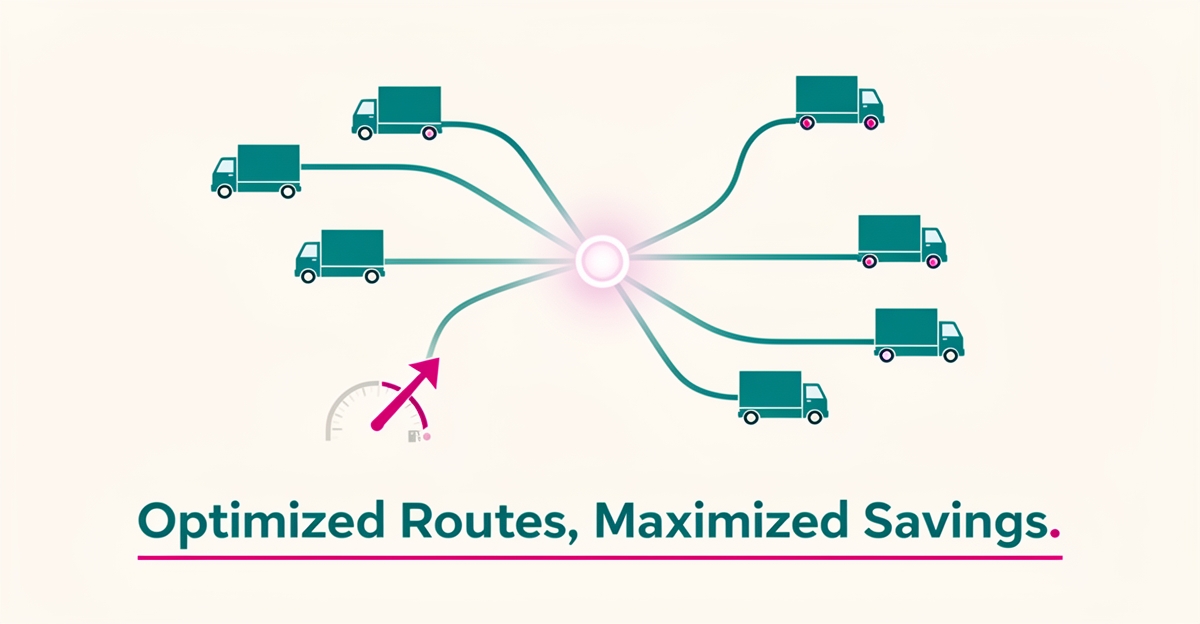
How an AI Dispatcher Can Cut Fuel Waste and Improve Route Efficiency for Fleet Managers
Key Facts
- Fleets implementing AI route optimization typically report fuel savings in the 10–15% range within the first quarter of deployment according to fleet management research
- Static routing can cause fleets to drive meaningfully more miles per route than necessary — often estimated at 12–20% based on route optimization studies
- Dynamic recalculation is commonly associated with improved on-time delivery rates, with some studies reporting gains around 23% per fleet performance research
- AI dispatch implementations often reach payback quickly — frequently within the first few months of operation validated by logistics automation research
- Predictive maintenance helps fleets avoid emergency roadside costs, which industry data places in the thousands of dollars per breakdown confirmed by industry data
- AI-driven driver coaching can meaningfully reduce fuel consumption variance between drivers shown in routing platform analytics
- Static routes ignore live traffic, weather, and delivery-window changes, compounding waste daily
Hire a team member that works 24/7 — for less than a part-time wage.
AI receptionists, SDRs, dispatchers and 99+ roles. Trained on your business, fully managed.
Not sure where to start? Ask our AI planner
The Hidden Cost of Static Routing
Traditional dispatch methods lock fleets into static routes that ignore real-time conditions, leading to significant operational waste. These rigid plans fail to adjust for traffic congestion, weather disruptions, or shifting delivery windows, forcing drivers to travel unnecessary miles. As a result, fleets experience avoidable fuel consumption and increased wear on vehicles, directly impacting the bottom line.
Route optimization studies suggest static routing causes fleets to drive 12–20% more miles per route than necessary, creating substantial inefficiencies across daily operations. For a mid-sized fleet, that excess mileage compounds into tens or even hundreds of thousands of dollars annually in avoidable variable costs — fuel, maintenance, and labor. These losses accumulate quietly but represent a major drain on profitability that many fleet managers overlook until they audit their routing performance.
- Static routes increase fuel waste by ignoring live traffic and weather data
- Excess mileage drives up maintenance costs through unnecessary engine hours
- Fixed schedules miss delivery window adjustments, causing delays and rescheduling
- Drivers spend more time idling in congestion, reducing productive driving time
- Inability to reroute around accidents or road closures compounds delays
AIQ Labs helps fleet operators overcome these limitations by building custom AI dispatch systems that dynamically optimize routes using real-time GPS, traffic, and operational data. Unlike static planning, these intelligent systems continuously recalculate the most efficient paths, ensuring vehicles avoid delays and minimize idle time. By integrating with existing telematics and fleet management tools, AI-driven dispatch turns reactive routing into a proactive advantage — cutting waste, improving on-time performance, and reducing fuel costs without requiring a complete overhaul of current operations. For fleets that want to start with a single high-impact workflow, a scoped AI Workflow Build is often the fastest entry point.
How AI Dispatchers Optimize in Real Time
Real-time conditions change faster than a dispatcher can retype a route, and every minute of delay compounds fuel waste and missed windows.
AI dispatchers ingest live GPS, traffic, weather, and vehicle data to continuously recalculate routes instead of relying on static plans. Smart route suggestions research indicates that inefficient routing can drive 12–20% more miles per route compared to optimal paths, a gap that compounds across a fleet.
Multi-agent architectures reason across constraints like capacity, driver hours, delivery windows, and vehicle health in parallel. That reasoning reduces idle time and avoids costly backtracking, directly supporting dynamic real-time recalculation.
The data inputs that power these decisions typically include:
- Live GPS and telematics for vehicle location and speed
- Real-time traffic and weather feeds for delay prediction
- Vehicle capacity, load, and maintenance status
- Driver hours and compliance limits
With those inputs, AI dispatch systems reroute mid-shift when congestion builds or a stop runs long. Fleet route optimization research reports on-time delivery improvements in the range of 23% after AI implementation, driven by fewer detours and better sequencing.
Fuel savings follow quickly. AI in fleet management use cases document average fuel cost reductions of 10–15% within the first quarter of deployment, with some fleets reaching 20–25% as drivers adapt to optimized guidance.
The financial impact scales with fleet size. The larger the fleet and the more static the current routing, the more excess mileage — and excess fuel spend — is available to recover. As a rough planning figure, industry analyses suggest a 50-vehicle fleet can recover five figures annually in fuel savings from dynamic optimization alone, depending on current consumption levels and route complexity.
For fleet operations facing these pain points, AI-driven dispatching is a core AIQ Labs capability. AIQ Labs helps fleet companies implement custom AI dispatch systems that integrate with GPS and vehicle data to deliver measurable improvements in operational efficiency — building owned systems rather than another subscription tool.
Continuous learning closes the loop. As the system logs completed routes, it refines predictions for travel time, fuel burn, and idle risk. That feedback improves future assignments and supports reduced idle time and lower fuel waste without manual intervention.
The result is a dispatch layer that adapts to the day as it unfolds, protecting margins while improving service reliability.
Measurable Fuel and Cost Savings
Fleet managers face constant pressure to control fuel costs, which often represent one of the largest variable expenses in operations. AI-powered dispatch systems directly address this challenge by optimizing routes in real time and reducing inefficient driving behaviors that waste fuel.
Research shows that fleets implementing AI route optimization typically achieve 10–15% average fuel savings within the first quarter of deployment, with some organizations realizing up to 25% reduction over time as drivers adapt to optimized routes industry analysis confirms. For a 50-vehicle fleet, that commonly translates to annual fuel cost reductions in the $50,000–$125,000 range, depending on current consumption levels and route complexity fleet management studies indicate. These savings stem not only from shorter distances traveled but also from reduced idle time, fewer unnecessary stops, and smoother acceleration patterns guided by intelligent dispatch.
Beyond route planning, AI dispatch platforms incorporate driver coaching features that significantly improve consistency across teams. Fleets using AI-driven feedback report reductions of 30% or more in fuel consumption variance between drivers, meaning high and low performers become more aligned in efficiency data from routing platforms shows. This standardization minimizes costly outliers and raises the overall fuel efficiency baseline for the entire operation.
The financial impact extends beyond fuel savings. With typical ROI payback periods often measured in weeks to a few months, fleet managers can quickly recoup their investment in AI dispatch technology logistics automation research validates. When combined with reduced maintenance costs from less vehicle wear and improved on-time delivery rates, the total operational efficiency gains create a compelling case for AI adoption in fleet management. AIQ Labs helps transportation companies implement these custom AI dispatch systems, integrating them with existing GPS and telematics infrastructure to deliver measurable improvements from day one.
From Dispatch to Full Fleet Intelligence
Modern fleet operations suffer from fragmented tools that force managers to juggle separate systems for dispatch, maintenance, compliance, and safety — creating blind spots and inefficiencies. AI dispatch transforms this landscape by unifying these functions into a single intelligent layer that prevents problems before they occur. By integrating real-time routing with predictive maintenance, compliance tracking, and driver safety monitoring, AI creates a proactive operational ecosystem that reduces waste and enhances reliability across the entire fleet.
This integration delivers measurable financial benefits, particularly in preventing costly breakdowns. AI-powered predictive maintenance analyzes vehicle sensor data to forecast component failures, allowing fleets to schedule repairs during planned downtime rather than facing emergency roadside assistance. Industry research places the average cost of a fleet breakdown above $6,000 once towing, expedited parts, and lost productivity are counted, so prevention becomes a critical lever for cost control — turning reactive expenses into predictable maintenance costs. Industry data supports savings of several thousand dollars per avoided breakdown.
Beyond maintenance, unified AI systems enhance compliance and safety through continuous monitoring. Automated tracking ensures adherence to hours-of-service regulations, vehicle inspection requirements, and jurisdictional rules, reducing the risk of fines and out-of-service violations. Simultaneously, AI analyzes driver behavior patterns — such as harsh braking, rapid acceleration, and idle time — to deliver targeted coaching that improves fuel efficiency and safety outcomes. Fleets implementing such integrated coaching see a 30%+ reduction in fuel consumption variance between drivers, promoting consistent performance across the team. Data shows this behavioral alignment directly contributes to the 10–15% average fuel savings achieved in the first quarter of AI route optimization deployment.
By consolidating dispatch, maintenance, compliance, and safety into one AI-driven platform, fleets eliminate the need for multiple software subscriptions and reduce integration complexity. This is the logic behind a connected AI Operating System: one operating layer for the whole fleet, built in phases and owned outright rather than rented per seat. The result is a smarter, more resilient fleet operation where every mile driven is purposeful, every vehicle is maintained proactively, and every driver is supported to perform safely and efficiently.
Implementing an AI Dispatcher Without Disruption
Many fleet managers hesitate to adopt AI dispatching due to fears of operational disruption or steep learning curves. However, a phased implementation approach minimizes risk while delivering measurable gains in route efficiency and fuel savings from day one. Starting with a clear assessment of current routing waste allows teams to quantify inefficiencies before making changes. Research shows fleets often drive 12–20% more miles per route than necessary due to static planning, directly inflating fuel costs and variable expenses.
The next step involves integrating the AI dispatcher with existing telematics and dispatch software, ensuring real-time GPS, fuel, and idle time data flow seamlessly into the optimization engine. This integration is critical, as AI route optimization depends on accurate, live inputs to dynamically adjust for traffic, weather, and delivery windows. Once connected, businesses configure core rules — such as vehicle specifications, time-sensitive deliveries, and driver availability — so the AI operates within operational constraints without requiring manual reprogramming for every change.
Deployment begins with human-in-the-loop oversight, where dispatchers review and validate AI-generated route suggestions before they reach drivers. This collaborative phase builds trust in the system while allowing exceptions to be handled manually during early adoption. Over time, as the AI demonstrates consistent accuracy — such as the 10–15% fuel savings commonly reported in the first quarter — oversight can shift to exception-based monitoring. Scaling is then supported through AIQ Labs' managed AI Employees model, which provides a fully trained, continuously optimized AI dispatcher running at a fraction of the cost of an equivalent human hire. This model includes ongoing training, tool integrations, and performance improvements, enabling fleets to expand AI coverage across shifts or regions without added headcount or disruption.
By following this structured rollout — assess, integrate, configure, deploy with oversight, and scale via managed AI — fleet managers transform routing from a reactive, waste-prone process into a proactive, efficiency-driven operation. The result is not just reduced fuel consumption, but improved on-time delivery rates and faster ROI, often realized within the first few months. For fleets ready to eliminate avoidable mileage and idle time, this approach turns AI adoption into a smooth evolution rather than a disruptive overhaul.
To explore how an AI dispatcher can be tailored to your fleet's specific routing challenges, start the Fit Check — a free two-minute assessment, followed by a no-obligation 30-minute strategy call with an AIQ Labs engineer to map your highest-impact automation opportunities. You can also review current engagement options on the pricing page.
Still paying for 10+ subscriptions that don’t talk to each other?
We build custom AI systems you own outright. No vendor lock-in. Full control.
Not sure where to start? Ask our AI planner
Frequently Asked Questions
How much fuel can an AI dispatcher actually save my fleet?
What's the difference between AI dispatch and the routing software I already have?
How long does it take to see ROI from an AI dispatch system?
Will my drivers actually follow AI-generated routes, or will they just ignore them?
Can AI dispatch help with maintenance costs, or is it just about fuel?
How disruptive is it to implement an AI dispatcher if we're already using telematics?
Turn Route Waste into Real Savings
Fleet managers know the frustration of watching fuel costs creep up due to static routes that can't adapt to traffic, weather, or shifting delivery windows. As we've seen, this inefficiency isn't just annoying — it's expensive, with static routing driving 12–20% more miles than necessary. AI dispatchers change that by continuously recalculating optimal routes using live GPS, traffic, and vehicle data, with typical fuel savings of 10–15% in the first quarter and meaningful on-time delivery improvements. The financial upside is clear: reduced idle time, lower maintenance costs, and fast ROI. For fleets ready to stop overpaying for inefficiency, the path forward starts with understanding your specific routing waste. AIQ Labs helps transportation companies build custom AI dispatch systems that integrate with existing telematics to deliver measurable efficiency gains from day one — as a managed AI employee, a scoped workflow build, or a full connected operating layer. To see how much your fleet could save, start the Fit Check for a free two-minute assessment, followed by a no-obligation 30-minute strategy call to map your highest-impact automation opportunities.
Make AI your competitive advantage — not just another tool.
Strategy, implementation and ongoing optimization. One partner, end to end.
Not sure where to start? Ask our AI planner