How an AI Dispatcher Can Cut Repair Response Times for Mobile Fleet Services
Key Facts
- AI-driven dispatch typically reduces fuel consumption, overtime, and empty miles compared to manual boards
- Most field service teams adopting AI scheduling report measurable productivity gains
- Full asset visibility is widely associated with higher maintenance productivity and lower repair costs
- Fast response matters: contractors who reply to inquiries within minutes book jobs far more often
- Skilled-trade labor shortages continue to pressure field service capacity as of late 2026
- Only a minority of contractors use AI in any meaningful way—early adopters gain a scheduling edge
Hire a team member that works 24/7 — for less than a part-time wage.
AI receptionists, SDRs, dispatchers and 99+ roles. Trained on your business, fully managed.
Not sure where to start? Ask our AI planner
The Cost of Slow Dispatch in Mobile Fleet Services
Manual dispatching creates significant bottlenecks in repair scheduling, directly impacting operational efficiency and profitability. When technicians wait for job assignments or travel inefficient routes, idle time accumulates and customer response times suffer. This delay not only frustrates clients but also reduces the number of jobs completed each day, eroding potential revenue. Industry analyses consistently show that fleets moving from manual dispatch to AI-driven scheduling can reclaim tens of thousands of dollars annually through reduced fuel consumption, minimized overtime, and better utilization of skilled labor.
- Technicians spend excessive time waiting between jobs due to poor scheduling visibility
- Dispatchers struggle to balance urgent requests with preventive maintenance tasks
- Customers experience longer wait times, decreasing satisfaction and retention
- Missed optimization opportunities lead to unnecessary mileage and vehicle wear
- Revenue potential is lost when available technician hours go unfilled
Beyond immediate delays, slow dispatch triggers a cascade of inefficiencies that strain mobile fleet operations. Without real-time visibility into technician locations and job statuses, dispatchers cannot dynamically reroute crews to address emergencies or consolidate nearby jobs. This rigidity increases fuel costs and extends workdays unnecessarily. Furthermore, manual systems often fail to capture leads promptly—research consistently shows contractors who respond within five minutes book jobs far more often—meaning slow dispatch directly impacts conversion rates. AIQ Labs addresses these challenges by building custom dispatch systems that integrate real-time vehicle tracking, skill-based job matching, and automated customer notifications, turning scheduling from a reactive chore into a proactive advantage. By eliminating manual handoffs and optimizing every mile driven, mobile fleet services can reclaim lost productivity and strengthen their competitive position in an increasingly demanding market.
How AI Dispatching Optimizes Real-Time Fleet Operations
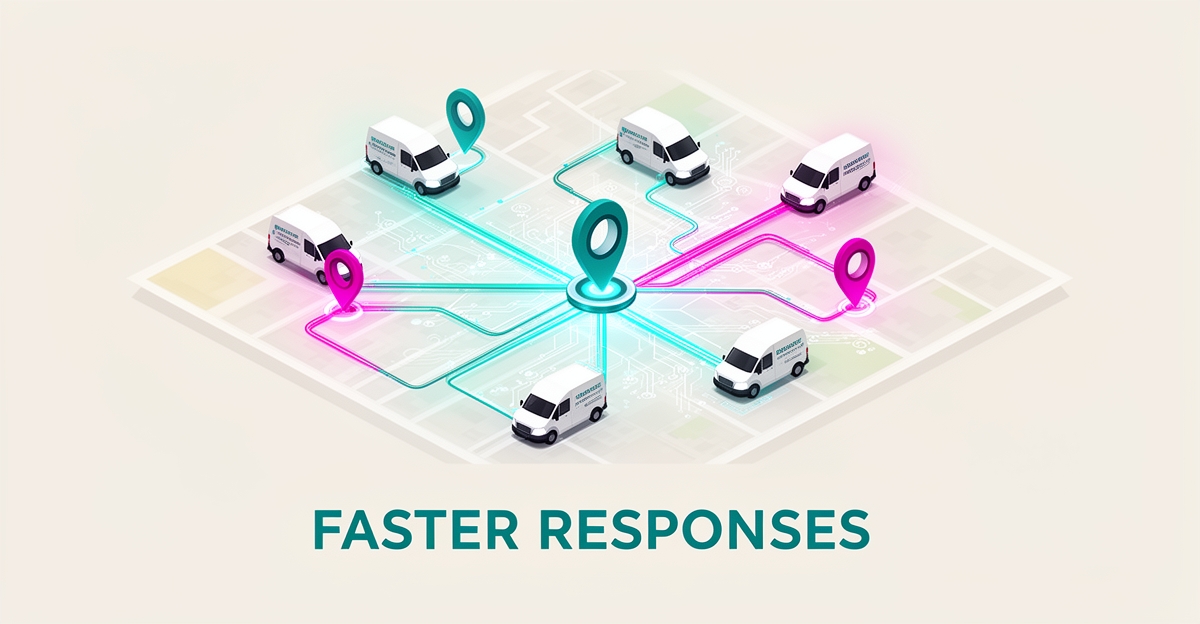
When a service call comes in, the difference between a two-hour response and a same-day fix often comes down to how quickly the right technician reaches the right location. AI-powered dispatch systems close that gap by continuously ingesting live traffic feeds, technician GPS positions, job priority flags, and equipment requirements—then calculating the optimal assignment in seconds rather than minutes.
The productivity impact is measurable. Most field service teams that adopt AI-assisted scheduling report real gains in utilization and on-time arrival rates. Fleets that switch from manual boards to algorithmic routing typically see meaningful annual savings, driven by reduced fuel burn, fewer empty miles, and higher first-time-fix rates.
- Real-time traffic and weather data reroutes technicians around delays automatically
- Skills matching ensures the dispatched tech carries the right parts and certifications
- Dynamic rebalancing shifts workloads when emergencies disrupt the schedule
- Predictive ETAs keep customers informed without manual check-in calls
AIQ Labs builds custom dispatch agents that sit on top of existing CRM and GPS platforms, turning fragmented location and availability data into a single decision layer. The result is a self-optimizing dispatch loop that learns from every completed job, continuously tightening response windows without adding headcount. For teams that want a managed option, an AI dispatcher employee can handle intake, assignment, and customer updates around the clock at a fraction of a human hire's cost.
Implementing AI Dispatch: From Integration to Measurable Results
Implementing an AI dispatcher starts with mapping current workflows and identifying integration points with existing tools like scheduling software, CRM, and GPS tracking systems. AIQ Labs begins this process with a discovery phase that analyzes operational bottlenecks and designs a solution architecture tailored to mobile fleet services. This ensures the AI system aligns with real-world dispatch logic while minimizing disruption during rollout.
Using the Build in Milestones model, deployment happens in phased increments—such as automating technician assignment first, then adding real-time route optimization, and finally enabling dynamic rescheduling based on job priority or traffic changes. Each phase is tested, validated, and approved before moving forward, allowing businesses to retain value even if they pause mid-process. This approach reduces risk and provides early visibility into performance improvements.
Once live, continuous monitoring tracks key metrics like response time, technician utilization, and on-time arrival rates. Fleets with full asset visibility typically see higher maintenance productivity and lower repair costs. These gains come from eliminating idle time, reducing fuel waste, and ensuring the nearest qualified technician is assigned to each job.
- Integrate with CRM, scheduling, and GPS tools for real-time data flow
- Map workflows to automate technician assignment and route optimization
- Deploy in phases using Build in Milestones for low-risk adoption
- Monitor performance metrics like response time and utilization
- Adjust and scale based on real-world dispatch outcomes
By tying implementation to measurable outcomes—such as faster job completion and higher first-time fix rates—mobile fleet services can validate ROI quickly. AIQ Labs supports this through ongoing optimization, ensuring the dispatcher evolves with changing demand patterns, seasonal workloads, and fleet growth. For operations where dispatch connects to scheduling, invoicing, and inventory, a broader AI operating system can tie those functions into one connected layer you own outright.
To explore how this approach fits your operations, start with a free strategy call to assess your current dispatch workflow and identify high-impact automation opportunities. AIQ Labs' team will map your biggest bottlenecks and outline a phased implementation plan—no obligation, just clarity on where AI can deliver the fastest wins. Schedule your free 30-minute strategy call to begin.
Still paying for 10+ subscriptions that don’t talk to each other?
We build custom AI systems you own outright. No vendor lock-in. Full control.
Not sure where to start? Ask our AI planner
Frequently Asked Questions
How much can AI dispatching save my mobile fleet service annually compared to manual methods?
Will implementing an AI dispatcher disrupt my current workflows or require replacing my existing tools?
How quickly can I expect to see improvements in response times after implementing AI dispatching?
Does AI dispatching really improve first-time fix rates and customer satisfaction?
Is AI dispatching only for large fleets, or can small mobile service businesses benefit too?
What if I'm not sure where to start with AI in my dispatch operations?
Turn Dispatch Delays into Competitive Advantage
Slow dispatch doesn't just frustrate customers—it quietly drains revenue through idle time, wasted fuel, and missed jobs. As this article shows, AI-powered dispatching closes that gap by automating technician assignment, optimizing routes in real time, and ensuring the right skilled technician arrives faster—boosting first-time-fix rates and customer satisfaction while cutting wasted miles. For mobile fleet services still relying on manual boards, the opportunity to reclaim lost productivity is clear and immediate. The next step is simple: see where your biggest bottlenecks lie and how AI can address them without disruption. AIQ Labs offers a free 30-minute strategy call to map your workflow, identify high-impact automation opportunities, and outline a phased implementation plan—no obligation, just clarity on where AI delivers the fastest wins. Schedule your free strategy call to begin turning repair response times into a measurable competitive edge.
Make AI your competitive advantage — not just another tool.
Strategy, implementation and ongoing optimization. One partner, end to end.
Not sure where to start? Ask our AI planner