How an AI Dispatcher Can Improve Efficiency in Tree Trimming Operations
Key Facts
- A majority of global businesses have implemented some form of workflow automation as of 2025, according to industry research
- Industry surveys report meaningful annual cost savings from workflow automation, often in the tens of thousands of dollars per industry data
- The global workflow automation market was valued at roughly $26.5 billion in 2024 and is projected to grow substantially through 2030 based on market research
- A strong majority of organizations plan to maintain or increase automation investment per industry surveys
- Most executives believe automation provides a competitive edge per executive survey data
- Payback periods for workflow automation investments are typically reported at under a year per financial analysis
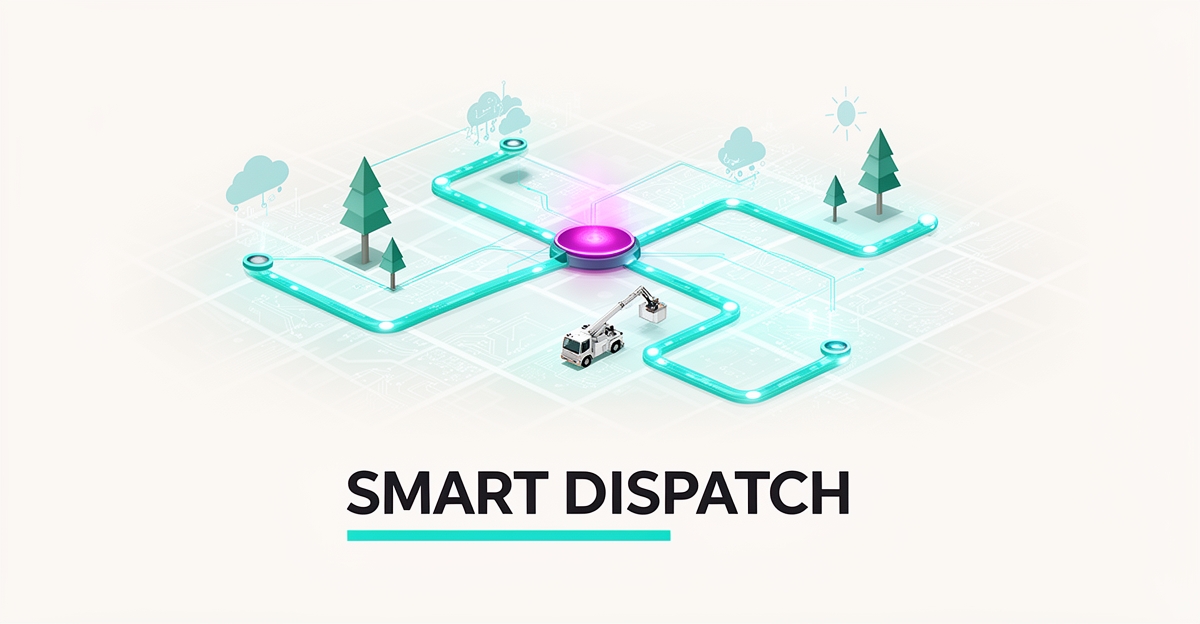
- AI dispatchers reduce idle time by assigning jobs based on real-time technician availability, weather, and service zones
Hire a team member that works 24/7 — for less than a part-time wage.
AI receptionists, SDRs, dispatchers and 99+ roles. Trained on your business, fully managed.
Not sure where to start? Ask our AI planner
The Hidden Cost of Manual Dispatching in Field Services
Manual dispatching in tree trimming looks busy on the surface, but the cost hides in the gaps between calls. A dispatcher juggling phones, spreadsheets, and weather updates makes decisions with partial information, and crews pay the price in lost hours.
In field services, idle time often starts with coordination lag. Technicians sit waiting while a dispatcher confirms availability, service zones overlap, and weather windows close without an update. Response rates slip because the right crew is not matched to the right job at the right time.
The market is moving past this friction. According to industry research, the global workflow automation market was valued at roughly $26.5 billion in 2024 and is projected to grow substantially through 2030. As of 2025, a majority of global businesses had implemented some form of workflow automation, leaving a meaningful share of field operations still reliant on manual coordination.
That reliance shows up as measurable waste. Industry surveys report annual cost savings from workflow automation often in the tens of thousands of dollars, with payback periods typically under a year. When dispatch is manual, those savings stay unrealized.
Manual processes create predictable failure points in tree trimming:
- Technician availability is tracked by memory or messages, causing double-booking or gaps
- Routing is built reactively, not optimized for geography, traffic, or equipment needs
- Weather and priority changes require phone tag, delaying urgent removals
- Service zones are enforced inconsistently, increasing drive time and fuel cost
The result is idle crews and delayed response at the exact moments customers expect reliability. Dispatchers become bottlenecks rather than enablers, and field teams lose trust in the schedule.
AI workflow and task automation changes the decision layer. An AI dispatcher can assign jobs based on real-time technician availability, live weather data, and defined service zones, reducing idle time and improving response rates. This is the core of AI Business Process Automation, where production-ready AI employees manage dispatching with real-time updates and routing optimization.
AIQ Labs deploys managed AI Employees that work alongside human teams, handling intake, scheduling, and dispatch end-to-end, typically at around 80% less cost than a human hire. The shift from manual coordination to intelligent assignment is why most organizations plan to maintain or increase automation investment, and why a majority of executives see automation as a competitive edge.
Field services that stay manual are not just slower; they are systematically more expensive.
How AI Dispatchers Optimize Job Assignment in Real Time
Tree trimming operations often face delays when jobs aren't matched efficiently with available crews, leading to idle time and missed service windows. An AI dispatcher solves this by using multi-agent systems to analyze real-time variables like technician availability, weather forecasts, and geographic zones, ensuring the right crew is sent to the right job at the right time. This dynamic assignment reduces downtime and improves response rates by continuously optimizing routes and schedules as conditions change. According to industry research, organizations implementing AI-powered workflow automation typically report payback periods under a year and meaningful annual savings. These gains come from eliminating manual coordination errors and minimizing travel inefficiencies that plague traditional dispatch methods.
The AI dispatcher doesn’t just assign jobs, it learns from patterns in service requests, crew performance, and environmental factors to make smarter decisions over time. For example, if a storm is forecasted for a specific zone, the system can pre-position crews nearby or prioritize emergency tree removal tasks before conditions worsen. It also balances workloads across technicians to prevent burnout while ensuring no crew is underutilized. Key optimization factors include real-time GPS tracking, skill-based crew matching, weather impact modeling, and zone-based workload distribution. By integrating with existing scheduling and CRM tools, the AI employee operates as a seamless extension of the team, handling dispatch logic 24/7 without fatigue or oversight gaps. AIQ Labs has deployed 200+ multi-agent systems of this kind, with continuous monitoring and improvement ensuring the system adapts to the unique rhythms of tree trimming operations.
As weather patterns grow more unpredictable and service demand fluctuates, static dispatch methods become increasingly inadequate. AI-powered dispatching introduces resilience by adjusting to last-minute cancellations, urgent requests, or access restrictions in real time. This responsiveness not only improves customer satisfaction through faster arrivals but also increases the number of jobs completed per day without adding headcount. The result is a more agile operation where every technician hour is maximized, and every service call is handled with precision, turning dispatch from a bottleneck into a competitive advantage.
Implementation: Deploying an AI Employee as Your Dispatcher
Deploying an AI Dispatcher starts with replacing manual dispatch calls with a production-ready AI Employee that learns your crews, zones, and seasonality. The goal is real-time assignment based on technician availability, weather, and service zones to cut idle time and improve response rates.
Implementation follows a proven field-services deployment process. Discovery maps current dispatch workflows, CRM and scheduling tools, and routing rules. The Start Monthly model covers build, training on business-specific workflows, tool integrations, monitoring, and improvements in a flat monthly plan that costs less than a part-time hire.
Integration connects the AI Dispatcher to existing systems so work flows without rekeying. Industry research indicates that most organizations have implemented automation in at least one business process as of 2025. Seamless integration avoids data silos and keeps dispatch decisions grounded in live data.
Training teaches the AI Employee your business language, service tiers, priority logic, and escalation paths. The agent learns technician skills, truck inventory, travel times, and customer preferences. It also ingests weather feeds and zone constraints to reroute proactively. This business-specific training is included in the Start Monthly plan and is continuously refined.
Ongoing optimization keeps performance improving after go-live. Performance is monitored against response time, utilization, and completion rates. Adjustments to routing logic, availability rules, and communication templates are made without rebuilding the system.
A typical rollout sequence looks like this:
- Map dispatch workflows and connect CRM, scheduling, and routing systems
- Build and train the AI Dispatcher on technician skills, zones, and service priorities
- Go live with phone, email, and chat presence for real-time updates and routing
- Monitor KPIs and refine rules, weather triggers, and escalation thresholds
The market context supports the move. The global workflow automation market was valued at roughly $26.5 billion in 2024 and is projected to grow substantially through 2030, according to workflow automation statistics. Organizations typically report annual savings in the tens of thousands of dollars from workflow automation, with payback periods commonly under a year.
AIQ Labs offers the AI Dispatcher as one of 99+ managed AI Employee roles under Trades & Field Services. You can start monthly, build in milestones, or own the system outright, see pricing for how the payment models work. The Start Monthly model includes build, training, integrations, and improvements with the ability to pause or adjust anytime.
Still paying for 10+ subscriptions that don’t talk to each other?
We build custom AI systems you own outright. No vendor lock-in. Full control.
Not sure where to start? Ask our AI planner
Frequently Asked Questions
What exactly does an AI dispatcher do for a tree trimming business?
How much money can workflow automation actually save a field service business?
Will an AI dispatcher work with my existing scheduling and CRM tools?
What happens if weather changes mid-day or a job gets cancelled last minute?
Is AI dispatching only for large companies, or can small tree service businesses benefit too?
How long does it take to deploy an AI dispatcher and see results?
Turn Dispatch from a Bottleneck into Your Competitive Edge
Manual dispatching in tree trimming creates hidden costs through idle crews, inefficient routing, and delayed responses, problems that compound as weather patterns grow more unpredictable. An AI dispatcher eliminates these gaps by assigning jobs in real time based on technician availability, weather data, and service zones, reducing downtime and improving response rates without adding headcount. AIQ Labs deploys production-ready AI Employees that integrate with your existing tools, learn your workflows, and optimize dispatch 24/7, so your crews spend less time waiting and more time working. To see how this applies to your operation, take the 2-minute Fit Check and book a free 30-minute strategy call to map your biggest bottleneck and identify high-ROI automation opportunities.
Make AI your competitive advantage — not just another tool.
Strategy, implementation and ongoing optimization. One partner, end to end.
Not sure where to start? Ask our AI planner