How an AI Dispatcher Can Improve Efficiency in Your Lumber Yard's Field Operations
Key Facts
- AI can process thousands of assignment combinations in under five minutes versus 2–4 hours for human dispatchers according to dispatch optimization platforms.
- Companies implementing AI dispatch complete up to 20% more jobs daily per dispatch load balancing research.
- AI route optimization drives a 15–25% reduction in travel time from industry analysis of AI dispatch implementations.
- Manual dispatch remains viable for operations with fewer than five drivers and under thirty daily stops per comparative dispatch research.
- Automation doesn't magically fix problems — it makes them visible says automation consultant Vinit Garg.
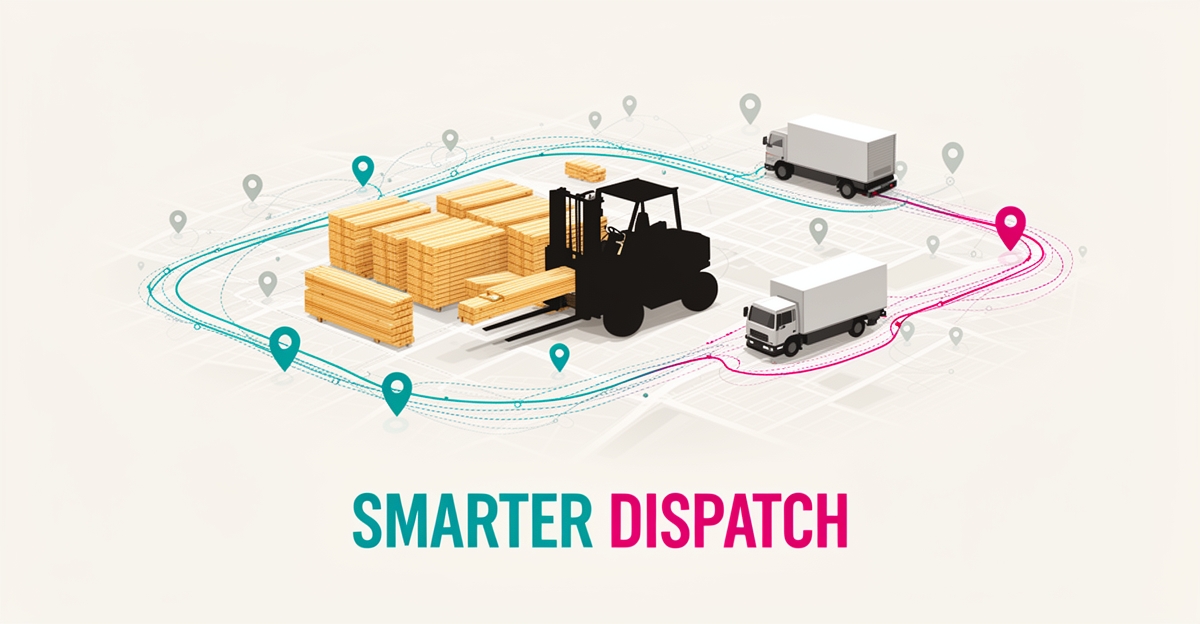
- AI-powered dispatchers automate field service coordination by assigning routes based on distance, load and traffic per the 2026 LBM industry review.
Hire a team member that works 24/7 — for less than a part-time wage.
AI receptionists, SDRs, dispatchers and 99+ roles. Trained on your business, fully managed.
Not sure where to start? Ask our AI planner
The Field Coordination Bottleneck in Lumber Yards
Every board-foot of lumber that leaves your yard depends on a chain of coordination that, in most operations, still runs on a dispatcher juggling phone calls, sticky notes, and a whiteboard. When that dispatcher is out sick or simply overwhelmed, deliveries slip, drivers sit idle, and contractors waiting on job sites start looking elsewhere.
The core problem with manual dispatch is that a human can only process so many variables at once. Route assignments based on driver memory and guesswork ignore distance, load weight, and live traffic conditions. According to dispatch industry analysis, a human dispatcher typically needs two to four hours to work through assignment combinations that an AI system evaluates in under five minutes. That gap compounds with every additional truck and delivery stop on the schedule.
Phone-based coordination carries its own hidden costs. Every call to confirm a delivery window, resolve a routing question, or chase a missed drop is time your dispatcher isn't spending on exceptions and customer escalations. Meanwhile, drivers field calls from the cab, splitting attention between the road and the schedule. The result is a pattern familiar to any yard manager:
- Uneven workloads, where one driver takes six stops while another takes two
- Reactive scheduling, where today's deliveries are planned around yesterday's problems
- Missed delivery windows that damage relationships with contractors and builders
- Poor resource utilization, with trucks and hours burned on suboptimal routes
The efficiency stakes are measurable. Companies implementing AI dispatch solutions report completing up to 20% more jobs daily, alongside a 15–25% reduction in travel time when routes are optimized in real time. A 2026 review of AI tools for the LBM industry specifically highlights AI dispatchers as a way for lumber and building material operations to assign delivery routes based on distance, load, and traffic — ensuring faster response times and better resource utilization across the yard's field operations.
There's a deeper lesson here, too. As automation consultant Vinit Garg puts it, "Automation doesn't magically fix problems — it makes them visible." Analysis of automation in high-throughput industrial operations confirms that automated systems expose inefficient process habits rather than hiding them — which is exactly what makes them valuable for yards ready to prepare well and capture wins in uptime and quality.
It's worth noting that manual dispatch isn't obsolete. Comparative research finds it still works for operations with fewer than five drivers, stable repeating routes, and under thirty daily stops. But most lumber yards outgrow that threshold quickly, and the tradeoffs shift. AI handles optimization and assignment; your people handle exceptions and relationships. The dispatcher's role evolves from route builder to operations manager.
This is also where outbound communication automation fits in. An AI Dispatcher as a managed AI employee can proactively call or message customers with delivery confirmations, delay notifications, and schedule updates, removing yet another layer of phone-based coordination from your dispatcher's day. For a lumber yard, that means drivers stay focused on deliveries, customers stay informed without anyone lifting a phone, and your coordination bottleneck starts working for you instead of against you.
How AI Dispatchers Automate Route and Load Decisions
Every morning, lumber yard dispatchers face the same puzzle: which driver takes which load, which route avoids the worst traffic, and which delivery window is actually achievable. AI dispatchers solve this in seconds by processing variables no human can juggle simultaneously.
These systems analyze distance, load weight, real-time traffic, driver skills, and parts availability to assign the right job to the right vehicle. According to industry analysis of AI dispatch implementations, companies using this approach see a 15–25% reduction in travel time and complete up to 20% more jobs daily. The AI doesn't just plan static routes—it continuously re-optimizes as new orders arrive or conditions change.
- Distance and traffic: AI calculates optimal routes using live traffic data, not just mileage, avoiding bottlenecks before drivers encounter them.
- Load capacity and weight: The system matches delivery requirements to vehicle specifications, preventing overloaded trucks or underutilized capacity.
- Technician skills and certifications: Specialized deliveries—like crane-offload or hazardous material handling—route only to qualified drivers.
- Parts and inventory availability: Before dispatching, the system verifies that required materials are loaded and ready, eliminating wasted trips.
The real advantage emerges when plans change mid-day. A contractor calls with an urgent order, a driver calls in sick, or a jobsite delays receiving a load. AI dispatchers instantly recalculate the entire day's assignments, shifting routes and notifying affected drivers automatically. Research from dispatch optimization platforms shows AI can process thousands of assignment combinations in under five minutes—a task that takes human dispatchers two to four hours.
This isn't about replacing dispatchers. It's about shifting their role from route-builders to exception managers. The AI handles the optimization math; your team handles customer relationships, complex problem-solving, and judgment calls that require local knowledge. A building materials industry report confirms that AI-powered dispatch improves delivery scheduling accuracy and resource utilization across LBM operations.
At AIQ Labs, we've built dispatch automation systems for field service businesses that integrate directly with existing tools—CRMs, inventory systems, GPS trackers. The AI learns your operation's patterns: which drivers prefer certain routes, which customers have tight receiving windows, which jobs typically run long. Over time, assignments get smarter and your operation runs leaner.
From Manual to Hybrid Dispatch: What Changes in Practice
Manual dispatch feels familiar until the order board fills up. Dispatchers build routes by hand, balance driver skill against load, and chase traffic updates in real time. The system works for small, stable fleets but breaks down as complexity grows.
AI changes the math by handling optimization at scale while keeping humans in control of judgment calls. Industry analysis shows AI dispatch can process thousands of possible assignment combinations in under five minutes, compared to 2-4 hours for human dispatchers. That speed frees dispatchers from route building and moves them toward operations management.
The effective model is hybrid. AI handles the repetitive, data-heavy work of matching jobs to capacity; people handle exceptions. Research on dispatch models describes a hybrid where AI manages optimization and driver assignment while human dispatchers manage exceptions, customer escalations, and real-time problem-solving. The dispatcher role shifts from route builder to operations manager.
In practice, the hybrid dispatch model looks like this:
- AI assigns delivery routes based on distance, load, and traffic to ensure faster response times and better resource utilization
- AI continuously re-optimizes as new orders arrive, traffic changes, or a truck is delayed
- Humans approve exceptions, handle customer escalations, and override assignments when site conditions require it
- Dashboards make problems visible so the team can act before delays cascade
The visibility gain matters. As automation experts note, automation makes existing operational practices visible. Poor process habits surface immediately when systems are automated, which is why operator training and clear dashboards are essential for adoption.
Field operations see measurable gains when load balancing is automated. Dispatch load balancing research reports companies completing up to 20% more jobs daily after AI implementation. The same analysis cites a 15–25% reduction in travel time from dynamic route optimization. Those efficiencies compound across a lumber yard's delivery fleet.
AIQ Labs approaches this through managed AI employees—an AI Dispatcher trained on yard-specific rules, carrier constraints, and customer SLAs—or, when dispatch is the single workflow costing you the most, through a fixed-price AI Workflow Build. Either way, the system integrates with your existing tools and learns from daily exceptions, improving assignments over time.
The result is faster response times, better resource utilization, and dispatchers focused on workforce planning rather than manual routing.
Making Automation Work: Data, Integration and Team Readiness
Here's an uncomfortable truth about implementing an AI dispatcher: the technology won't fix a messy operation — it will simply expose the mess faster. As one automation expert put it, "Automation doesn't magically fix problems — it makes them visible. If you prepare well, you get big wins in quality, energy, and uptime. If not, the same issues just show up on a bigger screen" (Vinit Garg). That principle applies directly to lumber yards deploying automated dispatch.
Before any AI system can assign routes based on distance, load, and traffic, you need an honest assessment of your current data. Are delivery addresses accurate? Is truck capacity information up to date? Do your dispatch records reflect what actually happens in the yard? Successful implementation starts with assessing your current data quality and integrating historical service records with external factors like traffic and weather (aiventic).
Integration is the next hurdle. An AI dispatcher can't optimize what it can't see, so it needs to connect with your dispatch system, CRM, and inventory platform. When these systems talk to each other, the AI can check parts availability before dispatching, trigger automatic orders if needed, or reschedule appointments to avoid drivers arriving unprepared (aiventic). For lumber yards, that means the system knows which loads fit which trucks and which customers are waiting before it assigns a route.
Once the foundation is in place, define your KPIs before go-live. Companies implementing AI dispatch solutions report completing up to 20% more jobs daily and achieving a 15–25% reduction in travel time (aiventic). Your baseline metrics might include:
- Average response time from order to dispatch
- Cost per delivery or per route
- On-time delivery percentage
- Truck utilization and idle time
Finally, don't neglect your people. Providing hands-on training and clear dashboards enables staff to confidently interact with automated systems and make informed decisions (industry analysis). The dispatcher's role shifts from route builder to operations manager, focusing on exceptions and customer escalations while the AI handles optimization (Upper). This hybrid model — AI for assignment, humans for judgment — tends to work best in practice.
Teams at AIQ Labs emphasize this readiness work in every engagement, because automation amplifies whatever process discipline already exists. Get the data, integration, and training right first, and the efficiency gains follow naturally.
Still paying for 10+ subscriptions that don’t talk to each other?
We build custom AI systems you own outright. No vendor lock-in. Full control.
Not sure where to start? Ask our AI planner
Frequently Asked Questions
How much more efficient can an AI dispatcher actually make my lumber yard?
Will an AI dispatcher replace my human dispatcher?
What happens when a driver calls in sick or an urgent order comes in mid-day?
How does the AI know which driver to assign to which delivery?
Is my lumber yard too small for AI dispatch, or is manual dispatch still fine?
What do I need to have in place before implementing an AI dispatcher?
Make Your Yard Run Smarter, Not Harder
Manual dispatch works until volume, traffic, and last-minute orders make it break. An AI dispatcher removes that bottleneck by matching loads to the right trucks, optimizing routes for distance, weight and live traffic, and rebalancing the day instantly when conditions change. The result is fewer idle hours, more on-time deliveries, and dispatchers freed to manage exceptions and customer relationships instead of rebuilding routes by hand. As automation makes existing habits visible, yards that prepare the data and integration foundation first see the biggest gains in uptime and quality. If you're ready to move from reactive scheduling to a hybrid model where AI handles optimization and your team handles judgment, start with a clear assessment of your current data, KPIs, and integration points. AIQ Labs can help map that path—whether that's an AI Dispatcher as a managed AI employee, a fixed-price workflow build for your dispatch process, or a full AI operating system for the whole yard. Take the two-minute Fit Check at aiqlabs.ai/apply, then book a free 30-minute strategy call to identify high-ROI automation opportunities for your yard. Companies using AI dispatch report completing up to 20% more jobs daily with improved load balancing.
Make AI your competitive advantage — not just another tool.
Strategy, implementation and ongoing optimization. One partner, end to end.
Not sure where to start? Ask our AI planner