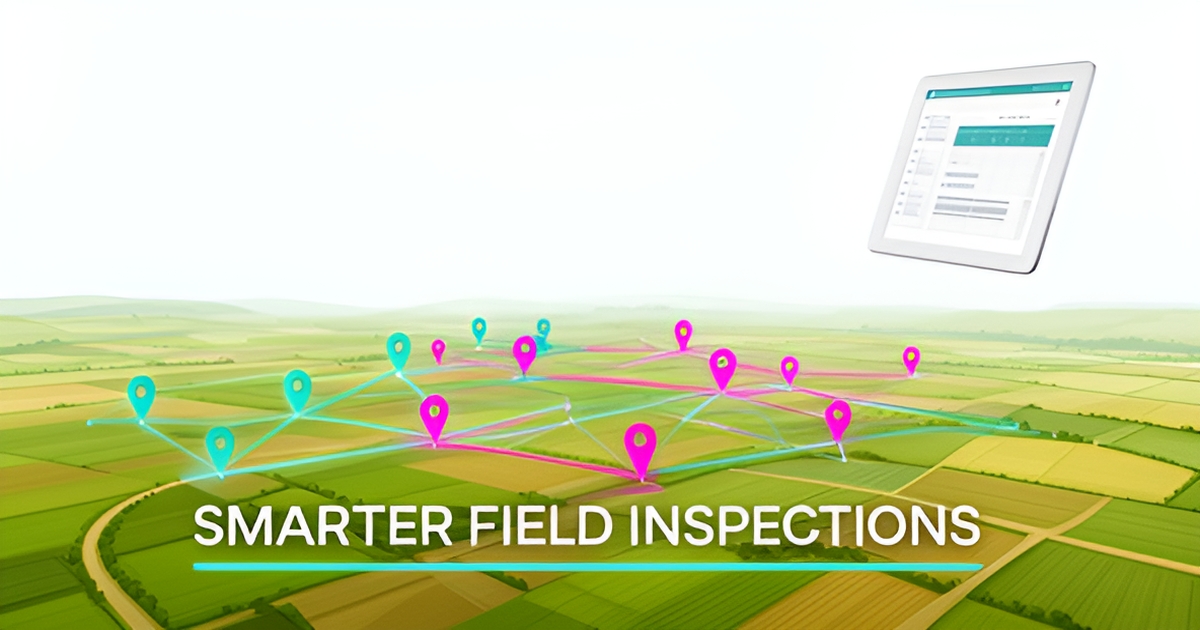
# How an AI Dispatcher Can Improve Field Lease Inspections for Agri-Real Estate
**Quick Answer:** An AI dispatcher eliminates hours of daily planning by optimizing rural lease inspections in seconds. AIQ Labs' [AI Employees](/ai-employees) ensure consistent, timely field evaluations across dispersed land portfolios without adding headcount.
## Key Facts
- AI dispatchers typically calculate optimal assignments in seconds compared to hours of manual planning each morning
- AI systems optimize routing across dispersed rural land parcels to cut travel waste and maximize on-time completion
- AI dispatchers reduce cognitive overload by unifying dispatch, routing, and follow-up in one system
- AI dispatch helps prevent missed inspection windows by adapting to weather and access changes
- Automated task tracking and reminders ensure consistent follow-up after every inspection
## Table of Contents
1. [The Rural Inspection Coordination Problem](#the-rural-inspection-coordination-problem)
2. [How AI Dispatchers Automate Field Lease Logistics](#how-ai-dispatchers-automate-field-lease-logistics)
3. [From Scheduling to Consistent On-Site Execution](#from-scheduling-to-consistent-on-site-execution)
4. [Implementation Path with AIQ Labs AI Employees](#implementation-path-with-aiq-labs-ai-employees)
## The Rural Inspection Coordination Problem
Manual scheduling breaks down when managing dispersed rural land portfolios, where inspectors face unpredictable travel distances and fragmented coordination demands. Without intelligent routing, teams waste hours backtracking between distant properties, missing critical inspection windows tied to planting cycles or lease renewals. Manual dispatch typically becomes inefficient beyond a handful of drivers or a few dozen daily stops, as planners spend significant time each morning calculating assignments that AI systems optimize in seconds. Beyond that threshold, manual coordination erodes operational efficiency through avoidable delays and resource misallocation.
Cognitive overload compounds these logistical failures when dispatchers juggle spreadsheets, calendars, and last-minute changes across isolated tools. Field service professionals report that constant context-switching between scheduling, routing, and follow-up tasks drains mental bandwidth, increasing errors in technician assignments and missed inspections. Fragmented coordination forces teams into reactive mode, where inspectors arrive late or miss follow-ups entirely because no system connects scheduling to real-time field updates.
The consequences ripple through agri-real estate operations: missed inspection windows risk lease non-compliance, excessive travel inflates fuel costs, and gaps in follow-up allow minor issues to escalate into costly disputes. Manual systems fail to adapt when weather delays access to remote parcels or when lease terms require staggered evaluations across seasons. Without automated coordination, teams cannot dynamically reassign inspectors based on real-time conditions, leading to idle technicians and duplicated efforts. These inefficiencies directly impact portfolio profitability, as every unnecessary mile and delayed inspection compounds administrative overhead in already margin-sensitive rural land management.
For organizations looking to replace this manual burden, AIQ Labs provides [AI Employees](/ai-employees) trained as dispatchers to manage inspection logistics end-to-end:
- Eliminates hours of daily manual planning through automated scheduling
- Reduces cognitive overload by unifying dispatch, routing, and follow-up in one system
- Helps prevent missed inspection windows via real-time adaptation to weather and access changes
- Cuts travel waste by optimizing routes across dispersed land parcels
- Ensures consistent follow-up through automated task tracking and reminders
This coordination gap represents not just an operational flaw but a strategic vulnerability in managing agricultural real estate assets at scale.
## How AI Dispatchers Automate Field Lease Logistics
Managing lease inspections across scattered rural properties has always been a logistical puzzle — until agentic AI entered the field. Traditional rule-based dispatch relies on static rules that break down when weather shifts or a road washes out; agentic AI evaluates inspector skills, job complexity, and live conditions simultaneously, then recalculates optimal routes in seconds rather than the hours a human planner typically needs each morning.
- Intelligent scheduling that matches inspector expertise to lease type and terrain
- Real-time adaptation to weather, road closures, and last-minute cancellations
- Automated follow-up sequences that confirm completion and flag exceptions
- Mobile field operations with offline forms, photo capture, and digital signatures
The difference shows up in the field: AI-powered
AI Employees
Hire a team member that works 24/7 — for less than a part-time wage.
AI receptionists, SDRs, dispatchers and 99+ roles. Trained on your business, fully managed.
See If You’re a Fit — AI Employees from $700/mo
Not sure where to start? Ask our AI planner
scheduling and route optimization minimizes travel time across sprawling portfolios while maximizing job completion rates. When conditions change mid-day, the system recalculates assignments automatically — no radio calls, no whiteboard rewrites. Manual dispatch can work for small teams on stable routes, but rural agri-real estate rarely fits that profile; properties are distant, access is seasonal, and inspection windows are tight.
Agentic AI field operations go further by predicting completion likelihood and recommending context-aware adjustments — for example, grouping inspections by soil region to reduce redundant travel. Mobile apps give inspectors offline access to lease terms, prior reports, and digital checklists, then sync automatically when connectivity returns. AIQ Labs deploys AI employees with role-specific knowledge to manage this end-to-end, ensuring timely, consistent on-site evaluations without adding headcount. The result is a dispatch layer that thinks like a seasoned operations manager but operates at machine speed and scale.
## From Scheduling to Consistent On-Site Execution
An agri-real estate portfolio lives or dies on consistent eyes on the ground. When lease inspections slip, risk compounds across rural parcels, tenants, and compliance records.
AI dispatchers close the gap between scheduling intent and on-site execution. They manage the full inspection lifecycle end-to-end, from first appointment to post-visit follow-up, without manual handoffs.
Scheduling starts with intelligent technician scheduling and route optimization that minimizes travel time, maximizes completion rates, and adapts to real-time conditions. Modern agentic systems analyze inspector skills, predict job complexity, and dynamically optimize routes based on real-time conditions and historical performance.
Coordination stays connected across platforms. The dispatcher connects people, processes, and real-time data to improve task execution, visibility, and decision-making across field operations — integrating with the CRM, calendar, and property management software already in use rather than forcing a platform migration.
On-site execution relies on mobile capabilities built for rural conditions: offline functionality, real-time job updates, digital forms, photo capture, and signature automation. Inspectors capture consistent evidence even with intermittent connectivity.
AIQ Labs deploys AI employees with role-specific knowledge to manage inspection logistics, ensuring timely and consistent on-site evaluations. The AI dispatcher works around the clock, learns from each route, and integrates with existing field service tools without replacing them.
The operational impact is measurable. AI dispatch can calculate optimal assignments in seconds, compared to the hours of planning a human dispatcher typically needs each morning. Algorithms recalculate automatically when conditions change mid-day, reducing idle time and missed windows.
Security and compliance are non-negotiable for land portfolios. Inspection records, technician location data, and tenant communications are handled with encryption, access controls, and audit logging appropriate to enterprise field operations — and any compliance requirements specific to your portfolio are reviewed during onboarding.
Post-inspection follow-up closes the loop. The AI dispatcher triggers automated work orders, preventive maintenance scheduling, and tenant communications based on findings, then updates the central record for portfolio visibility.
A complete inspection lifecycle with an AI dispatcher typically includes:
- Intelligent scheduling and skill-based matching for rural routes
- Mobile updates with offline forms, photo capture, and digital signatures
- Real-time tracking, ETAs, and dynamic rerouting for weather or access issues
- Automated post-inspection follow-up, reporting, and compliance documentation
The result is faster, more connected operations designed to deliver measurable results.
## Implementation Path with AIQ Labs AI Employees
Deploying an AI dispatcher for rural lease inspections doesn't require ripping out existing systems or hiring a technical team. It requires a structured implementation path that matches how field operations actually run.
AIQ Labs approaches this through its managed AI Employee model, where an **AI Dispatcher** from the Trades & Field Services category gets trained on the specific logistics of lease inspection work. You can [Start Monthly](/pricing) with setup plus a flat monthly plan, Build in Milestones with a fixed-price phased rollout, or Own It Outright — the build, training, tool integrations, monitoring, and improvements are included, and operations can pause or adjust the arrangement as needs change.
The integration layer matters most for agri-real estate portfolios. The AI dispatcher plugs into the CRM, calend
AI Development
Still paying for 10+ subscriptions that don’t talk to each other?
We build custom AI systems you own outright. No vendor lock-in. Full control.
See If You’re a Fit — AI Employees from $700/mo
Not sure where to start? Ask our AI planner
ar, and property management software already in use rather than forcing a platform migration, connecting people, processes, and real-time data across field operations.
Once connected, the AI dispatcher handles the coordination workload that manual methods struggle with. AI systems calculate optimal assignments in seconds — a process that takes human dispatchers hours of planning each morning. For rural portfolios where inspection sites sit far apart and weather windows shift daily, that speed translates directly into more completed inspections per week.
The implementation also builds in **hybrid human oversight** from day one. Many successful operations run a model where AI handles optimization and assignment while human dispatchers manage exceptions, escalations, and complex judgment calls. For lease inspections, this means the AI schedules and routes inspectors, but a human reviews flagged properties, tenant disputes, or unusual access constraints before the schedule locks.
The operational scope covers several coordinated functions:
- Automated scheduling of inspections across distributed rural properties
- Real-time route optimization that adapts to weather and road conditions
- Follow-up coordination for incomplete or flagged inspections
- Escalation routing to human managers for exceptions requiring judgment
Because the AI Employee model includes ongoing monitoring and retraining, the dispatcher improves as it learns the portfolio's seasonal patterns, inspector availability, and property access constraints. The result is a system that starts with role-specific knowledge for inspection logistics and compounds that knowledge over time — without adding headcount or software subscriptions to manage.
## Frequently Asked Questions
**How much time does an AI dispatcher actually save compared to manual scheduling for rural lease inspections?**
AI dispatch calculates optimal assignments in seconds, while human dispatchers typically spend hours each morning planning routes for dispersed rural properties. That daily planning burden is the first thing an AI dispatcher removes.
**Will an AI dispatcher work with the field service software my team already uses?**
Yes. The dispatcher integrates with your existing CRM, calendar, and property management platforms, connecting people, processes, and real-time data without requiring a platform migration.
**What happens when weather or road closures change access to remote inspection sites mid-day?**
The AI dispatcher recalculates routes automatically in real time when conditions change — no radio calls or whiteboard rewrites needed. Algorithms adapt instantly to mid-day changes, reducing idle time and missed inspection windows.
**How does the AI dispatcher handle inspectors working in areas with poor cell service?**
Mobile field apps provide offline functionality for digital forms, photo capture, and digital signatures, then sync automatically when connectivity returns. Inspectors capture consistent evidence even with intermittent connectivity across rural parcels.
**Is there still a human involved for complex decisions like tenant disputes or unusual access issues?**
Yes. Most successful operations use a hybrid model where AI handles optimization and assignment while human dispatchers manage exceptions, escalations, and complex judgment calls — capturing most AI gains while preserving human judgment for flagged properties and disputes.
**What security standards protect inspection data and technician location information?**
Inspection records, location data, and tenant communications are protected with encryption, access controls, and audit logging appropriate to enterprise field operations. Specific compliance requirements for your portfolio are reviewed during onboarding.
## Ready to Stop Drowning in Dispatch Spreadsheets?
Manual dispatch breaks down fast in agri-real estate — wasting hours daily on planning, inflating fuel costs from poor routing, and risking missed inspection windows that jeopardize lease compliance. AI dispatchers change this by optimizing routes in seconds, adapting to weather and road closures in real time, and ensuring consistent follow-up without the cognitive overload. For rural portfolios where every mile and minute impacts margins, this isn't just efficiency — it's protection for your bottom line.
AIQ Labs deploys AI Employees trained specifically as dispatchers to manage your inspection logistics end-to-end, integrating with your existing tools and working around the clock without adding headcount. If you're ready to move from reactive firefighting to proactive portfolio management, take the two-minute Fit Check at [/apply](/apply) to see if an AI dispatcher fits your operation, or book a free 30-minute strategy call at [/book](/book) to map your biggest coordination bottleneck. Questions first? Reach us at [email protected].
AI Transformation Partner
Make AI your competitive advantage — not just another tool.
Strategy, implementation and ongoing optimization. One partner, end to end.
See If You’re a Fit — AI Employees from $700/mo
Not sure where to start? Ask our AI planner