How an AI Dispatcher Can Optimize Equipment Allocation for Logging Teams
Key Facts
- Logistics managers typically spend 3–4 hours daily on manual dispatch decisions according to industry research
- AI-powered dispatch systems have been reported to reduce operational costs by up to 30% with savings increasing at scale
- Real-time route optimization and dynamic resource allocation have been credited with operational cost cuts of up to 53% in logistics operations
- AI adoption in forest operations engineering has surged since 2017 per a 173-paper systematic review
- Error rates for repetitive administrative work drop sharply after automation per dispatch automation research
- AI dispatchers evaluate terrain, weather, workload, and network economics simultaneously to optimize equipment allocation
Hire a team member that works 24/7 — for less than a part-time wage.
AI receptionists, SDRs, dispatchers and 99+ roles. Trained on your business, fully managed.
Not sure where to start? Ask our AI planner
The Logging Dispatch Bottleneck: Idle Equipment and Manual Planning
Logging teams face a daily bottleneck in equipment scheduling that directly impacts productivity and costs. Managers often spend hours each day manually coordinating dispatch decisions, a process that becomes increasingly complex due to unpredictable terrain, sudden weather shifts, and fluctuating workload demands. This reactive approach leaves valuable machinery sitting idle while crews wait for assignments, driving up operational expenses through wasted fuel, unnecessary overtime, and inefficient routing.
The consequences of manual dispatch extend beyond lost time. Idle equipment represents a direct cost with no return, as skidders, feller bunchers, and forwarders consume fuel and depreciate while stationary. Deadhead miles—when machines travel empty between jobs—further erode efficiency, burning diesel without generating revenue. During peak seasons or after weather-related delays, workload spikes force managers into rushed decisions that increase overtime and risk suboptimal routing. These inefficiencies compound daily, creating a cycle where planning consumes more time than the work it’s meant to support.
- Logistics managers typically spend 3–4 hours daily on manual dispatch decisions, according to industry research on dispatch automation.
- AI-powered dispatch systems have been reported to reduce operational costs by up to 30%, with savings increasing as operations scale.
- Real-time route optimization and dynamic resource allocation have been credited with operational cost cuts of up to 53% in logistics operations.
These challenges are especially pronounced in logging, where equipment allocation must account for steep slopes, soil conditions, and accessibility constraints that change with rainfall or snowmelt. A system that adapts to these variables in real time—rather than relying on static schedules or manager intuition—can significantly reduce non-productive time. By analyzing terrain data, weather forecasts, and job queue priorities simultaneously, an AI dispatcher ensures that the right machine is assigned to the right task at the right moment, minimizing both idle time and deadhead travel.
AIQ Labs addresses this challenge through AI Employees with dispatch logic engineered for the logging industry’s unique operational rhythms. These managed AI staff integrate with existing workflows to continuously optimize equipment allocation, turning a daily planning burden into a streamlined, automated process that keeps crews working and machines moving efficiently.
How AI Dispatchers Allocate Heavy Equipment Using Terrain, Weather and Workload
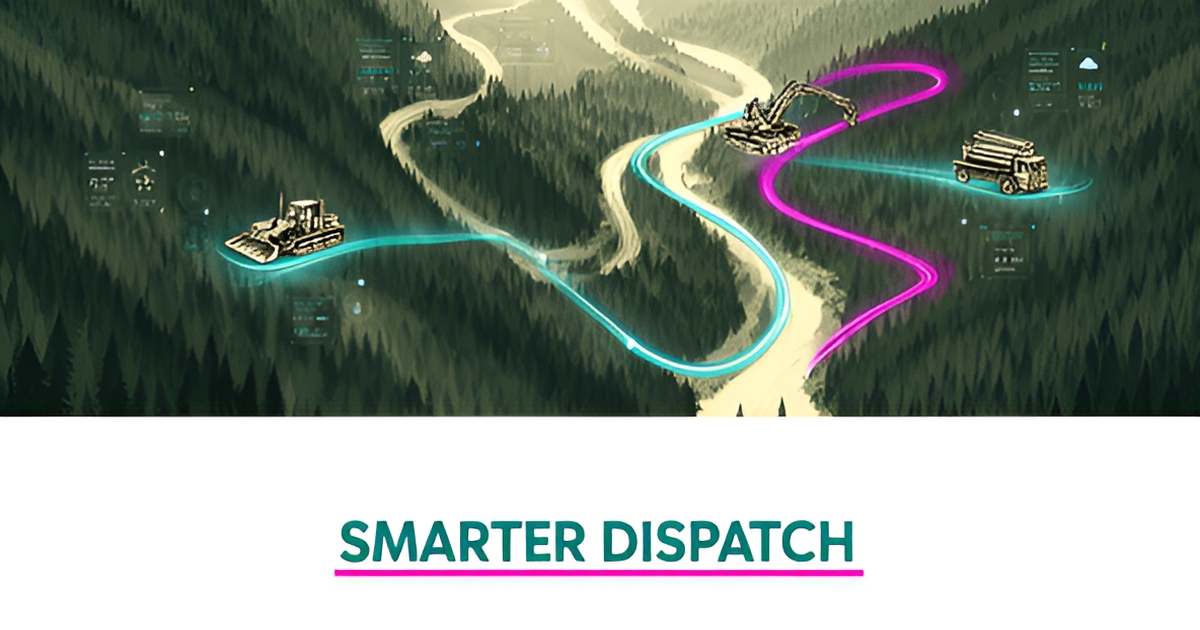
Logging dispatch has always been a balancing act between terrain, weather, and crew demand. An AI dispatcher removes the guesswork by continuously matching the right machine to the right site under real-world constraints.
AI adoption in forest operations engineering has surged since 2017, with machine learning and deep learning becoming dominant techniques for complex forest challenges. A systematic review of forest operations research confirms AI is now used to optimize wood supply chains, assess risks, and support decision support systems for harvesting.
The system ingests live terrain data, weather forecasts, equipment health, and job demand to build a dynamic allocation model. Modern AI logistics dispatch tools analyze vehicle availability, locations, traffic conditions, and operational constraints to create efficient assignments. For logging, that translates to slope stability, road access, soil moisture, and harvest windows.
Real-time re-planning is the core advantage. Dispatch automation replaces manual decision-making with AI-driven logic that analyzes hundreds of variables at once. Industry analysis of dispatch automation finds logistics managers spend 3–4 hours daily on manual dispatch decisions, time that can be reclaimed with automated allocation.
Cost and utilization improve when allocation is predictive rather than reactive. The same analysis reports AI-driven dispatch can cut operational costs by up to 53% through dynamic resource allocation. Idle time between jobs and deadhead miles fall as the system pre-positions capacity and sequences work to minimize between-job gaps.
An effective AI dispatcher for logging evaluates constraints in parallel:
- Terrain and access: slope, road condition, and extraction trail feasibility for each machine class
- Weather impact: precipitation, wind, and freeze-thaw windows that affect safety and productivity
- Workload and availability: current job demand, crew schedules, maintenance windows, and equipment utilization
- Network economics: balancing route density and site proximity to reduce fuel burn and transit time
This four-layer approach mirrors the predictive allocation framework used in advanced fleet management, where data foundation, prediction, allocation, and execution work together. Predictive allocation matches the right vehicle to the right job at the right time, reducing idle time and overtime.
AIQ Labs deploys AI Employees with dispatch logic tailored to logging industry constraints. Teams that want to go beyond a single dispatcher role can later expand into a fuller AI Workflow Build or a connected AI Operating System, but most start with one role that pays for itself first.
The result is a dispatch system that continuously learns from operational feedback, improves matching accuracy, and keeps heavy equipment productive without adding headcount.
From Reactive to Predictive Allocation: The Four-Layer AI Framework
Legacy dispatch in logging often reacts to demand after it emerges, leading to equipment sitting idle between jobs or traveling empty miles to reach the next site. This reactive approach wastes fuel, increases labor costs, and delays project timelines. Shifting to predictive allocation transforms this dynamic by anticipating demand and pre-positioning resources before they are needed.
AIQ Labs enables this shift through a four-layer AI framework designed for the logging industry’s complex operational constraints. The first layer, the Data Foundation, ensures operational data quality and completeness by aggregating terrain maps, weather forecasts, equipment telemetry, and historical job logs into a unified, reliable stream. Without clean, contextual data, downstream predictions and decisions lack accuracy—especially in remote logging environments where conditions change rapidly. The second layer, Prediction, uses machine learning models to forecast demand patterns and equipment capacity needs, analyzing seasonal harvesting cycles, road accessibility, and mill delivery schedules to anticipate where and when specific machines will be required.
The third layer, Allocation, manages multi-constraint dispatch decisioning by matching the right equipment to the right job at the right time while respecting factors like slope limitations, weather-related access restrictions, crew availability, and maintenance cycles. This layer goes beyond simple proximity matching to optimize for network-level efficiency, reducing deadhead miles and idle time between jobs. The fourth layer, Execution, handles real-time route adjustments, driver workflows, and exception handling—such as sudden weather closures or mechanical issues—by dynamically reallocating resources and updating schedules without manual intervention. Together, these layers create a closed-loop system that continuously learns from operational outcomes to improve future predictions.
This architectural approach delivers compounding benefits: predictive allocation reduces idle time by sequencing jobs to minimize between-job downtime and deadhead miles, while proactive re-allocation handles exceptions before they escalate into delays. Solutions that implement all four layers produce the strongest improvements in utilization and cost efficiency, whereas partial implementations yield only localized gains. For logging teams operating in variable terrain and weather, this end-to-end framework ensures equipment is not just dispatched, but intelligently pre-positioned to maximize productivity and minimize waste. By grounding dispatch logic in data-driven prediction and adaptive execution, logging companies transition from firefighting daily disruptions to operating with foresight and resilience.
Implementation Path for Logging Teams with AI Employees
Logging teams lose hours every day to manual dispatch calls and spreadsheet juggling. An AI Dispatcher deployed as a managed AI Employee replaces that friction with real-time, constraint-aware allocation that keeps equipment moving—at a fraction of the cost of a human hire.
Start by defining the role like a human hire. The job description covers equipment types, site access rules, operator certifications, and priority rules for harvest blocks. The AI Employee learns these boundaries during training and applies them consistently across shifts.
Training must reflect logging realities, not generic routing. The system ingests terrain maps, seasonal road conditions, weather windows, and equipment capabilities. Dispatch automation analyzes multiple variables such as terrain, weather, and workload to optimize equipment allocation, reducing idle time and fuel costs.
Integration connects the dispatcher to the tools crews already use. Telematics feeds location and utilization, dispatch software provides job status, and maintenance logs enforce service windows. AI logistics dispatch optimization tools analyze factors such as vehicle availability, delivery locations, traffic conditions, driver schedules, customer requirements, and operational constraints to create more efficient dispatch decisions.
A practical rollout follows four steps:
- Document the current dispatch workflow and decision rules with the operations lead
- Train the AI Employee on terrain constraints, equipment specs, and safety protocols
- Connect telematics, dispatch system, and job planning tools via API
- Run a supervised pilot on one crew with human override enabled
Hybrid oversight keeps the system trustworthy. Human-in-the-loop controls handle exceptions like washouts, wildlife closures, or urgent maintenance. According to industry guidance, the biggest impact comes from combining automation with human oversight, creating a hybrid model that balances efficiency with flexibility for edge cases.
The operational payoff is measurable. Logistics managers spend 3–4 hours daily on manual dispatch decisions. Industry analyses report that businesses using automated dispatch solutions reduce operational costs by up to 30%, with potential savings climbing higher as operations scale, and real-time route optimization credited with cuts of up to 53%.
AIQ Labs deploys AI Employees with dispatch logic tailored to logging’s unique constraints. The Start Monthly model covers build, training on your business, tool integrations, monitoring, and improvements—with the ability to pause or adjust anytime, letting teams prove value before scaling. When you’re ready, the two-minute Fit Check is the fastest way to see whether your dispatch workflow is a fit.
Once the pilot stabilizes, the dispatcher learns from completed jobs and continuously refines allocation. Predictive allocation reduces idle time by matching fleet capacity to anticipated demand, by sequencing jobs to minimize between-job dead time, and by handling exceptions through proactive re-allocation rather than reactive scrambling.
Still paying for 10+ subscriptions that don’t talk to each other?
We build custom AI systems you own outright. No vendor lock-in. Full control.
Not sure where to start? Ask our AI planner
Frequently Asked Questions
How much time do logging managers actually spend on manual dispatch?
Can AI really cut costs for equipment dispatch in logging?
What makes logging dispatch different from regular fleet dispatch?
Is AI adoption in forestry proven or still experimental?
Do I need to replace my whole system to use an AI dispatcher?
What’s the typical rollout for an AI dispatcher on a logging crew?
Turn Dispatch Bottlenecks into Competitive Advantage
Logging teams no longer need to accept idle skidders and deadhead miles as unavoidable costs of doing business. By shifting from reactive scrambling to predictive allocation, AI dispatchers analyze terrain, weather, and workload in real time to keep equipment productive and crews moving. The four-layer framework—data foundation, prediction, allocation, and execution—transforms dispatch from a daily planning burden into a strategic asset that compounds efficiency gains across every job. With industry research reporting that automated dispatch can cut operational costs by up to 30%, the business case extends far beyond simple convenience. AIQ Labs deploys AI Employees specifically trained for logging's unique constraints, integrating with existing telematics and workflows to deliver these results without adding headcount. Ready to stop losing hours every day to manual dispatch decisions? Start with a two-minute Fit Check at https://aiqlabs.ai/apply to identify your highest-ROI automation opportunity, or book a free 30-minute strategy call to map your implementation path.
Make AI your competitive advantage — not just another tool.
Strategy, implementation and ongoing optimization. One partner, end to end.
Not sure where to start? Ask our AI planner