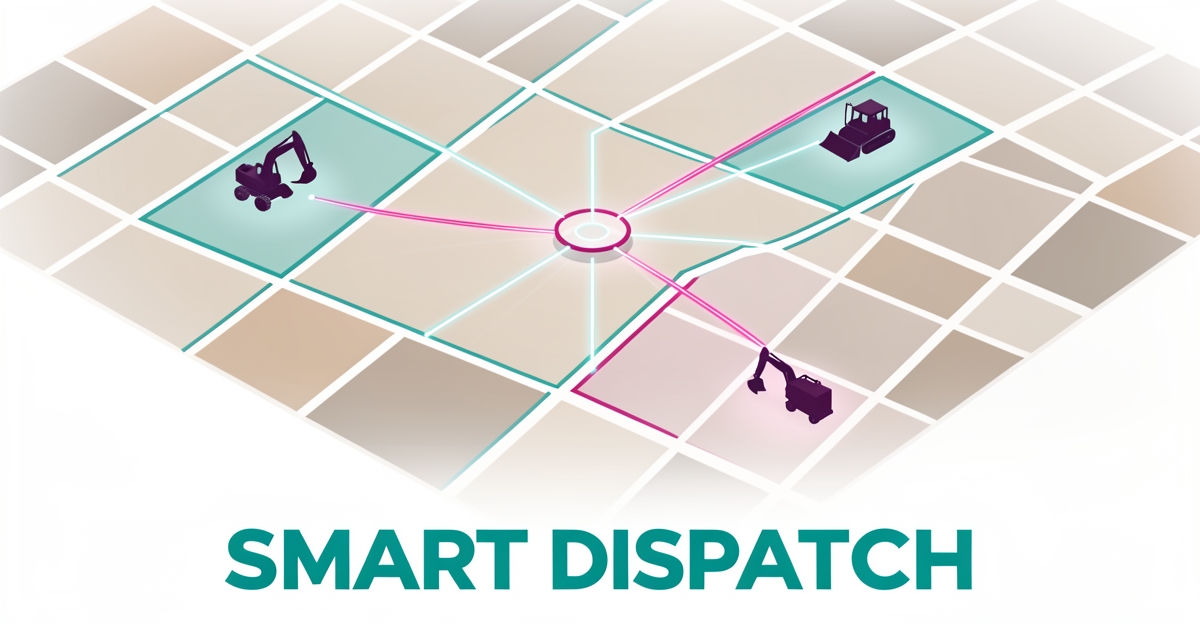
How an AI Dispatcher Can Optimize Equipment Deployment Across Rental Zones
Key Facts
- Rental fleets typically see a meaningful share of operational time lost to idle equipment, creating significant revenue loss.
- AI-powered dynamic pricing can drive meaningful revenue gains by adjusting rates to real-time demand within operator-set guardrails.
- Predictive, usage-based maintenance scheduling reduces mid-rental equipment failures compared with fixed calendar intervals.
- Automated AI communication sequences improve review rates and repeat bookings without manual follow-up effort.
- Underutilized assets—equipment sitting below roughly 40% utilization over a rolling window—can be flagged automatically for review.
- AI dispatchers work 24/7 to proactively manage equipment allocation, improving utilization across zones.
- Predictive pre-positioning cuts idle time by anticipating demand before rental requests arrive.
Hire a team member that works 24/7 — for less than a part-time wage.
AI receptionists, SDRs, dispatchers and 99+ roles. Trained on your business, fully managed.
Not sure where to start? Ask our AI planner
The Hidden Cost of Reactive Dispatching
The traditional approach to equipment dispatching often resembles a frantic game of whack-a-mole, where teams react to each new request as it arises. This reactive cycle forces dispatchers into constant firefighting, scrambling to locate available assets and reroute them to urgent jobs without foresight. The result is a significant drain on operational efficiency, where valuable time and resources are consumed by coordination rather than value-adding activity.
Industry observations suggest that rental equipment commonly sits idle for a substantial portion of its operational time each day. High idle rates typically stem from delayed responses and poor demand forecasting, leaving assets sitting unused while demand goes unmet elsewhere. For rental businesses, every idle hour represents lost revenue potential and increased fixed costs per utilization hour.
Shifting from this reactive posture to a predictive model transforms dispatching from a cost center into a strategic advantage. By leveraging historical patterns, real-time telematics, and demand forecasting, an AI dispatcher can anticipate where equipment will be needed before a call even comes in. Predictive allocation systems integrate data from GPS, job history, weather, and traffic to pre-position assets optimally across zones. This proactive stance minimizes deadhead miles, reduces customer wait times, and ensures that the right equipment is in the right place at the right time—turning anticipation into action.
Beyond Tracking: The Layers of AI-Powered Deployment
GPS tracking tells you where equipment is. An AI dispatcher tells you where it should be before demand arrives.
The shift moves operations from reactive scrambling to proactive placement. The best AI-driven systems deliver integrated predictive allocation across four capability layers that work together to reduce idle time and improve utilization.
Data Foundation unifies the signals that drive decisions. Telematics, GPS, job history, customer patterns, weather and traffic feed a single architecture. A centralized repository collates maintenance, customer service, sales and rental histories so dispatchers see current, comprehensive information. Real-time data feeds from telematics and job management software make quick, precise decisions possible.
Prediction turns history into foresight. Machine learning forecasts demand, capacity and travel time. The system learns site-specific pickup and drop-off patterns and traffic-heavy roads to adjust time predictions automatically. This is where AI replaces repetitive manual calculations with continuous modeling.
Allocation translates forecasts into operational decisions through multi-constraint optimization. Algorithms arrange stops for speed and efficiency, match equipment to vehicles by weight and size, and assign drivers by license type and hours worked. The goal is finding the route that puts the most machines on each delivery vehicle given its constraints. AI dispatch software can also flag underutilized assets, with equipment below roughly 40% utilization over a rolling 90-day window flagged for review.
Execution handles the moment-to-moment reality. In-the-moment route adjustments, exception handling and driver workflows run automatically, with automated customer notifications when ETAs change. Dispatchers retain override control for customer priority or urgency.
The four layers work as:
- Data Foundation: integrated telematics, GPS, job history, weather and traffic
- Prediction: demand forecasting, capacity prediction and travel time estimation
- Allocation: multi-constraint optimization for cost, service level and capacity
- Execution: real-time rerouting, exception handling and driver workflow
This architecture directly impacts performance. Idle equipment is wasted equipment, and predictive pre-positioning is designed to cut that waste. Operators moving from calendar-based to usage-based, AI-driven predictive maintenance also report fewer mid-rental equipment failures.
For rental businesses, AI dispatch is not about replacing expertise but automating data-intensive decisions. AIQ Labs deploys AI employees with dispatch roles that work 24/7 to improve utilization and reduce idle time across rental locations, freeing teams to focus on strategic planning and customer relationships.
From Idle Time to Uptime: The Financial Impact of AI Dispatch
The financial case for AI dispatch becomes clear when examining its direct impact on equipment utilization and revenue generation. With idle time consuming a substantial share of operational time each day, there is significant room for improvement through smarter allocation. AI-powered systems transform this idle time into productive uptime by predicting demand patterns and pre-positioning assets before rental requests even arrive. This proactive approach ensures equipment spends more time generating revenue and less time sitting unused in yards or transit between locations.
Key financial benefits emerge across multiple operational areas. Dynamic pricing capabilities, driven by real-time analysis of weather, booking velocity, and local events, let rental businesses capture more revenue by adjusting rates to match demand fluctuations within operator-set guardrails. Simultaneously, predictive maintenance—shifting from calendar-based to usage-based scheduling—reduces mid-rental equipment failures, minimizing costly downtime and extending asset lifespans. These improvements directly boost revenue per asset while lowering operational expenses associated with emergency repairs and customer compensation.
- Higher revenue capture from dynamic pricing within operator-set guardrails
- Fewer equipment failures through usage-based predictive maintenance
- Improved fleet utilization by reducing idle time
AIQ Labs integrates these capabilities into dispatch solutions through managed AI Employees that work 24/7 to optimize allocation decisions based on real-time demand, location, and equipment status. By automating the data-intensive aspects of dispatch, rental companies free human teams to focus on strategic customer relationships and business growth—turning operational efficiency into sustainable competitive advantage.
Implementing Your AI Dispatcher: A 5-Step Framework
Implementing an AI dispatcher requires a structured approach to transform equipment deployment from reactive to predictive. The process begins with establishing a robust data foundation that consolidates operational information from maintenance, sales, and rental histories into a centralized repository, ensuring dispatchers have access to comprehensive, real-time insights. This foundation enables the system to process thousands of data points, including historical demand patterns and equipment status, which is essential for accurate forecasting.
Next, integrate real-time data feeds from telematics, GPS, weather services, and traffic systems to allow the AI dispatcher to make precise, in-the-moment allocation decisions. With this live data stream, the system can dynamically adjust routes and redeploy equipment based on current conditions, reducing wasted miles and improving delivery efficiency. Predictive analytics then leverage historical usage and demand trends to forecast peak periods and anticipate shortages, enabling proactive positioning of fleet capacity before demand materializes—shifting operations from scrambling to strategic preparation.
Finally, layer in automated customer communication protocols and dynamic pricing rules to close the loop. Automated sequences for pre-arrival instructions, real-time ETA updates, and post-rental follow-ups keep customers informed without manual effort, driving higher review rates and repeat bookings. Simultaneously, the AI system adjusts rental rates within predefined guardrails based on weather, booking velocity, and local events, capturing more value during peak demand while maintaining competitiveness during slower periods. This integrated approach ensures the dispatcher continuously learns and refines its decisions, improving utilization and revenue per asset over time. AIQ Labs supports this transformation through managed AI Employees and, for deeper builds, AI Workflow Builds that rebuild the one workflow costing you the most at a fixed price.
Deploy Your AI Dispatcher with AIQ Labs
Moving from reactive dispatch to predictive deployment changes how rental zones perform. An AI Dispatcher handles the repetitive, data-intensive allocation decisions so human teams can focus on strategy and customer relationships.
AIQ Labs deploys this capability as a managed AI Employee with a dispatch role, not as software to install and maintain. The AI Employee works 24/7 to proactively manage equipment allocation based on demand, location, and equipment availability, improving utilization and reducing idle time across rental locations.
The Start Monthly model makes this an accessible, low-risk entry point. The flat monthly plan includes the build, training on your business, tool integrations, monitoring, and improvements. You can pause or adjust anytime, with costs typically well below a human hire.
A managed AI Dispatcher is built to execute the same four-layer allocation logic proven in the industry. It connects a unified data foundation from telematics, GPS, job history, weather and traffic, then applies predictive analytics for demand and travel time, multi-constraint optimization for cost and service level, and real-time execution with exception handling.
Outcomes align with what operators report for AI-powered dispatch: predictive pre-positioning is designed to cut idle time, dynamic pricing captures more revenue during peak demand, and usage-based predictive maintenance reduces mid-rental failures.
With AIQ Labs, the AI Employee is delivered as a complete team member:
- Defined dispatch role with natural phone, email, SMS and chat communication
- 24/7/365 availability with continuous learning
- Integration with CRMs, calendars, scheduling software and dispatch systems via API
- Ongoing management, retraining and optimization handled by AIQ Labs
This is the same done-for-you model used across AIQ Labs' managed AI Employee portfolio, which includes Dispatcher, Service Coordinator, Field Manager and Work Order Manager roles. The AI Employee books, qualifies, dispatches and follows up end-to-end, freeing your dispatchers from busywork. For companies ready to go further, AI Operating Systems connect dispatch into one operating layer you own outright.
If you want to test the concept with minimal risk, start with a single AI Dispatcher pilot for one zone or fleet type. Prove utilization gains and customer experience improvements, then scale across locations.
Start the 2-minute Fit Check at aiqlabs.ai/apply, then book a free 30-minute strategy call at aiqlabs.ai/book to map your biggest bottleneck and identify high-ROI automation opportunities. You can also reach the team at [email protected].
Still paying for 10+ subscriptions that don’t talk to each other?
We build custom AI systems you own outright. No vendor lock-in. Full control.
Not sure where to start? Ask our AI planner
Frequently Asked Questions
How much idle time does rental equipment typically have, and can AI dispatch actually reduce it?
Will an AI dispatcher replace my human dispatch team?
What kind of revenue impact can dynamic pricing through AI dispatch deliver?
How does AI predictive maintenance differ from our current calendar-based schedule?
What does implementation look like, and how long before we see results?
How does AIQ Labs deliver an AI dispatcher — is it software we have to manage?
Turn Idle Time Into Your Competitive Edge
The evidence is clear: reactive dispatching costs rental businesses, with equipment sitting idle and revenue opportunities slipping through the cracks. By adopting an AI dispatcher, companies shift from firefighting to foresight—leveraging predictive allocation, dynamic pricing, and automated maintenance to boost utilization, cut waste, and capture more revenue. The result isn't just efficiency; it's a strategic advantage where teams focus on growth instead of logistics. AIQ Labs makes this transition accessible through managed AI Employees that work 24/7 to optimize deployment, starting with a low-risk pilot. To see how this applies to your operation, take the 2-minute Fit Check and book a free strategy call to map your bottlenecks and uncover high-ROI automation opportunities—no obligation, just clarity on your path forward.
Make AI your competitive advantage — not just another tool.
Strategy, implementation and ongoing optimization. One partner, end to end.
Not sure where to start? Ask our AI planner