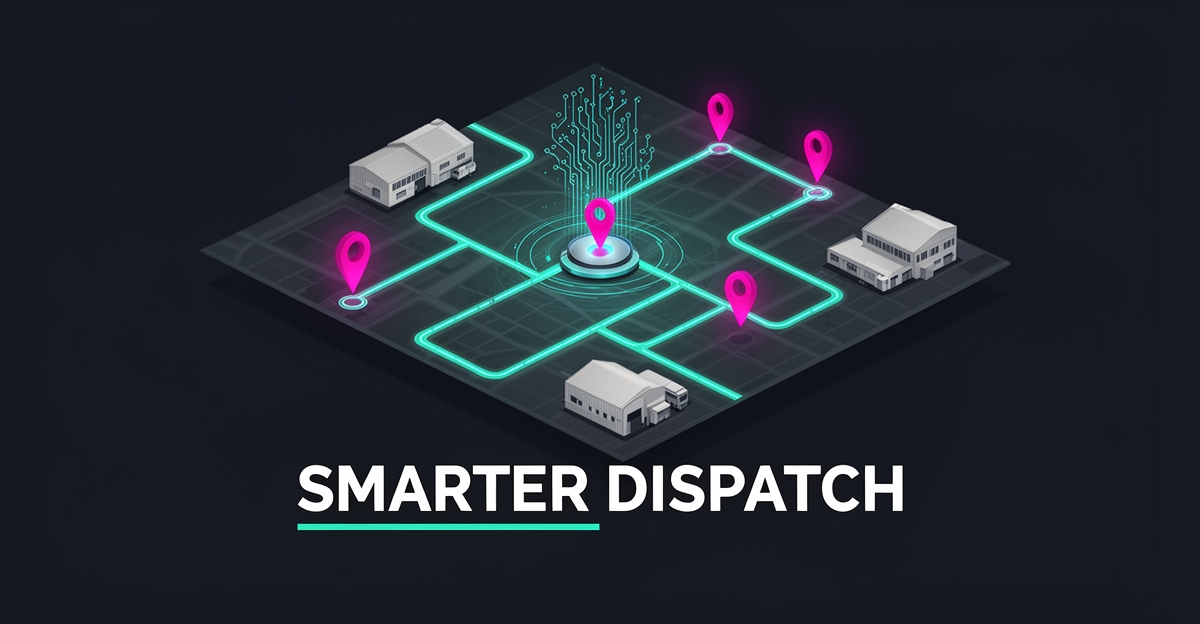
How an AI Dispatcher Can Optimize Field Service Operations for Industrial Distributors
Key Facts
- Most field service decision-makers report needing better tools to manage technician scheduling, per industry surveys as of late 2026
- A growing share of field service leaders now use AI for scheduling and routing, with adoption accelerating across industrial distribution
- AI dispatch typically reduces manual dispatch overhead by automating assignment, routing and customer notifications
- AI scheduling reshuffles technician assignments in seconds when disruptions occur, like tech call-outs or traffic delays
- AI dispatch uses constraint programming to weigh dozens of variables in parallel for optimal technician assignment
- Many field service leaders leverage AI for real-time job prioritization based on urgency, per recent industry surveys
Hire a team member that works 24/7 — for less than a part-time wage.
AI receptionists, SDRs, dispatchers and 99+ roles. Trained on your business, fully managed.
Not sure where to start? Ask our AI planner
Introduction
Field service operations for industrial distributors face mounting pressure to deliver faster, more accurate service while managing complex technician schedules and routing challenges. As teams grow and job volumes increase, manual dispatch methods struggle to keep pace, leading to inefficiencies that directly impact customer satisfaction and operational costs. AIQ Labs addresses this gap by building AI dispatchers tailored to industrial service needs, ensuring faster response times and improved delivery accuracy.
Industry surveys as of late 2026 consistently show that most field service decision-makers say they need better tools to manage technician scheduling, highlighting widespread recognition of the limitations in current approaches. A growing share of field service leaders already use AI for scheduling and routing, demonstrating steady adoption of intelligent automation in the field. These trends reflect a shift toward systems that can handle the complexity of modern service demands at scale.
AI dispatch software uses constraint programming and optimization algorithms to make assignment decisions automatically in seconds, weighing dozens of variables in parallel. This approach is more efficient and scalable than traditional dispatch software, which relies on human judgment and can become overwhelmed as the team grows. By automating technician assignment based on skills, location, availability, SLA priority, and parts readiness, AI dispatch eliminates the guesswork that slows down response times and increases travel inefficiencies.
The benefits extend beyond scheduling accuracy. Distributors that move from manual boards to AI dispatch typically see meaningful reductions in dispatch overhead, idle time, and missed service windows—all of which contribute to higher first-time fix rates and improved customer retention. The exact savings depend on fleet size, job volume, and how much manual coordination you replace, but the pattern is consistent: AI scheduling isn't about smarter decisions per job—it's about thousands of small optimizations per day that no human can hold in their head simultaneously.
When disruptions occur—such as a technician calling out or unexpected traffic delays—AI scheduling reshuffles the board in seconds and sends automatic arrival updates to affected customers. This real-time adaptability prevents cascading delays and maintains service reliability even under volatile conditions. For industrial distributors managing critical equipment and time-sensitive repairs, this level of responsiveness is not just advantageous—it's essential to maintaining operational continuity and competitive advantage.
Key Concepts
Field service dispatch for industrial distributors lives or dies on speed, accuracy, and technician utilization. Manual boards break down as job volume grows, and the combinatorial explosion of possible assignments quickly exceeds human cognitive capacity.
AI dispatch replaces judgment calls with constraint-based optimization that weighs skills, location, availability, SLA priority, and parts readiness in seconds. It uses constraint matching to assign the best-fit technician and solves multi-stop sequencing to minimize travel time and protect time-window commitments.
AI scheduling shifts the work from visual route building to real-time algorithmic optimization. Instead of a human dispatcher making judgment calls about which technician goes where, an algorithm optimizes routes, skills, and customer windows in real time.
The financial case is measurable, though it varies by operation. Distributors replacing significant manual dispatch coordination typically report meaningful annual savings from reduced overtime, lower travel costs, and fewer missed windows. The right way to size the opportunity is to map your current dispatch labor cost and travel waste—our workflow builds start exactly there, with the one workflow that costs you the most.
AIQ Labs builds AI dispatchers tailored to industrial service needs, ensuring faster response times and improved delivery accuracy.
An AI dispatcher operates on three core concepts that differentiate it from traditional field service management software:
- Constraint programming and optimization algorithms that make assignment decisions automatically, weighing dozens of variables in parallel.
- Real-time reshuffling when plans break, such as a tech call-out or traffic delay, and automatic arrival updates to affected customers.
- Continuous learning from performance data to stabilize output quality after a 30-90 day calibration period.
Traditional FSM software handles dispatch manually: a dispatcher makes judgment calls, builds routes visually, and adjusts by hand. Field service routing research consistently highlights that data quality, constraint configuration depth, and scale and job volume are critical for AI dispatch performance.
The biggest real-world win is resilience. When a job goes long or traffic adds delay, AI scheduling reshuffles the board in seconds and sends arrival updates automatically.
AI scheduling is not about smarter decisions per job — it is about thousands of small optimizations per day that no human can hold in their head simultaneously. This is the core advantage over traditional dispatch software.
For industrial distributors, this means tighter SLA compliance, lower travel cost, and more completed calls per technician without adding headcount.
Best Practices
Best practices for implementing an AI dispatcher start with ensuring data quality and precise constraint configuration—two factors proven critical for optimal performance in field service operations. AI dispatch systems rely on accurate, real-time inputs such as technician skills, location, availability, SLA priorities, and parts readiness to make effective assignment decisions. Without clean, well-structured data, even the most advanced algorithms cannot deliver consistent results, leading to suboptimal routing and missed service windows. AIQ Labs emphasizes building AI dispatchers that are trained on client-specific operational data to ensure alignment with real-world service dynamics from day one.
Equally important is allowing for a calibration period of 30 to 90 days before expecting stabilized output quality, a necessary phase during which the AI system learns from historical patterns, technician behavior, and job outcome feedback. During this time, organizations should monitor key metrics like route efficiency, on-time arrival rates, and technician utilization to fine-tune system parameters. The savings potential is real—but it depends on proper setup and ongoing refinement. Skipping the calibration phase risks undermining long-term performance and user trust in the system.
To maximize effectiveness, industrial distributors should follow these actionable steps: integrate the AI dispatcher with existing CRM and scheduling tools via API to enable seamless data flow; define clear constraint rules around skill matching, travel time limits, and emergency job prioritization; and establish a feedback loop where dispatchers and technicians can flag edge cases for continuous learning. Additionally, leveraging the AI's ability to dynamically reschedule in real time—such as when a job runs long or traffic delays occur—can prevent cascading disruptions and automatically notify affected customers, turning reactive chaos into proactive service recovery. When implemented with discipline and supported by expert guidance, AI dispatch becomes not just a tool for efficiency, but a strategic asset for scalable, resilient field service operations.
Implementation
Implementing an AI dispatcher begins with assessing your current field service workflow to identify pain points in scheduling and routing. Industry research consistently shows most decision-makers need better tools to manage field technician scheduling, highlighting a widespread need for automation. AIQ Labs starts this process by mapping your technician availability, job types, SLAs, and parts inventory to build a constraint model that mirrors real-world operational rules.
The next phase involves configuring the AI dispatcher to weigh multiple variables simultaneously—skills, location, parts readiness, and customer time windows—using constraint matching to assign the best-fit technician in seconds. This replaces manual judgment calls with parallel optimization, eliminating delays caused by cognitive overload when assigning dozens of jobs across large teams. During deployment, the system undergoes a 30-90 day calibration period to refine its recommendations based on real dispatch outcomes and technician feedback.
Finally, continuous monitoring ensures the AI dispatcher adapts to changing conditions like traffic delays or last-minute cancellations. Field service leaders using AI for scheduling report significant improvements in routing and real-time job prioritization, per recent industry surveys. By automating rescheduling and customer notifications when plans change, the system maintains service accuracy without manual intervention, allowing dispatchers to focus on exceptions rather than routine reassignment. This creates a scalable foundation for optimizing field service operations as technician teams and job volumes grow.
Conclusion
The true power of AI dispatch lies in its ability to transform daily operational chaos into predictable efficiency. While manual systems struggle with complexity, AI dispatch software uses constraint programming to weigh dozens of variables simultaneously—skills, location, availability, SLA priorities, and parts readiness—to make optimal assignments in seconds. This eliminates the cognitive overload that plagues human dispatchers as teams grow and job volumes increase.
For industrial distributors, the financial impact is substantial, though it depends on the size of the manual operation you replace. Beyond direct cost savings, AI scheduling recovers revenue by preventing leaks at the source—automatically adjusting routes when technicians run late or jobs extend, then notifying affected customers without manual intervention.
- Most decision-makers report needing better tools to manage technician scheduling effectively
- A growing majority of field service leaders already use AI for scheduling and routing optimization
- Many leverage AI for real-time job prioritization based on urgency and technician readiness
AIQ Labs builds custom AI dispatchers that integrate directly with your existing workflows, turning these benefits into measurable outcomes for your industrial distribution business. Depending on scope, a dispatcher can run as a managed AI employee or as part of a phased AI operating system that connects dispatch, scheduling, and customer communication in one layer. To explore how an AI dispatcher can optimize your specific field service operations, start with our free two-minute Fit Check to identify your highest-impact automation opportunities. Then schedule a no-obligation 30-minute strategy call with our AI engineering team to map a clear implementation path—we'll tell you honestly if there isn't a clear win. Start the Fit Check → Book Your Strategy Call
Still paying for 10+ subscriptions that don’t talk to each other?
We build custom AI systems you own outright. No vendor lock-in. Full control.
Not sure where to start? Ask our AI planner
Frequently Asked Questions
How does an AI dispatcher actually assign jobs to technicians?
What kind of cost savings can industrial distributors expect from using an AI dispatcher?
How does an AI dispatcher handle unexpected changes like a technician calling out or traffic delays?
Is AI dispatch really better than human judgment for scheduling?
How long does it take for an AI dispatcher to start delivering reliable results?
What data do I need to have in place for an AI dispatcher to work effectively?
From Dispatch Chaos to Operational Clarity
AI dispatch transforms field service from a reactive scramble into a streamlined, data-driven operation—automating technician assignments, optimizing routes, and adapting in real time to disruptions. For industrial distributors, this means reduced travel costs, higher first-time fix rates, and lower dispatch overhead, with savings that scale with the size of the manual operation you replace. AIQ Labs builds custom AI dispatchers that integrate with your existing systems, turning complexity into consistency. To see how this applies to your operations, start with our free two-minute Fit Check to pinpoint your highest-impact automation opportunity, then schedule a no-obligation strategy call with our AI engineering team to map a clear path forward—we'll tell you honestly if there isn't a clear win. Start the Fit Check.
Make AI your competitive advantage — not just another tool.
Strategy, implementation and ongoing optimization. One partner, end to end.
Not sure where to start? Ask our AI planner