## Quick Answer
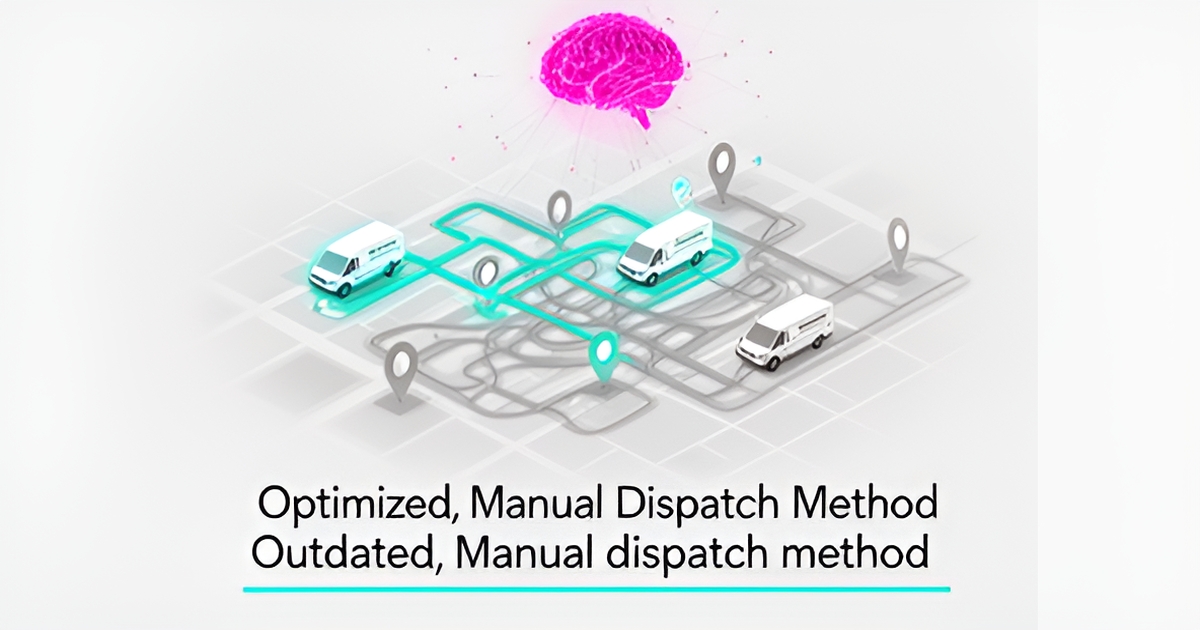
AI dispatchers cut repair lead times by optimizing job assignments in minutes—industry analyses report planning time reductions of 80–95% and mileage reductions of 20–35%. AIQ Labs' hybrid AI-human dispatch model scales fleets from 10 to 500+ drivers without added staff.
## Key Facts
- AI dispatch is reported to reduce daily planning time by 80–95% compared to manual methods, according to operational analysis
- Fleets using AI-powered dispatch typically drive 20–35% fewer total miles, cutting fuel costs and vehicle wear, based on field service data
- A single manual dispatcher can effectively manage only 10–15 drivers, while AI systems scale to 5–500+ drivers, per industry benchmarks
- Real-time GPS dashboards with AI dispatch are reported to reduce customer support calls by 30–40% through automated ETA updates
- Workflow automation is reported to reduce error rates for repetitive administrative work by 75%, per industry studies
- AI systems typically optimize job assignments in under 5 minutes versus 2–4 hours for manual dispatch
## Table of Contents
- [The Manual Dispatch Bottleneck Killing Lead Times](#the-manual-dispatch-bottleneck-killing-lead-times)
- [How AI Dispatch Optimizes Assignments in Real Time](#how-ai-dispatch-optimizes-assignments-in-real-time)
- [The Hybrid Model: AI Speed with Human Oversight](#the-hybrid-model-ai-speed-with-human-oversight)
- [Implementing AI Dispatch for Field Service Teams](#implementing-ai-dispatch-for-field-service-teams)
## The Manual Dispatch Bottleneck Killing Lead Times
For field service operations, the moment a fleet grows beyond a small team, manual dispatching shifts from a strength to a critical bottleneck. While intuition-based scheduling works well for fleets under 15 drivers, it becomes increasingly inefficient and error-prone as scale increases, directly impacting repair lead times and operational costs. A manual dispatcher typically spends 2 to 4 hours each day building schedules for a 15-driver fleet, time that could be better spent on exception management or customer engagement. This daily planning burden not only consumes valuable labor but also limits how quickly an organization can respond to changing job priorities or urgent service requests.
As fleets expand, the limitations of manual methods compound in measurable ways. Intuition-driven routing often results in 20 to 35% excess mileage due to suboptimal sequencing and unnecessary backtracking, increasing fuel consumption and vehicle wear while reducing the number of jobs completed per shift. More critically, manual dispatch struggles to balance workloads effectively, leading to scenarios where one technician is overloaded with 30 stops while another handles only 12. These imbalances drive missed appointments, delayed repairs, and dissatisfied customers—all of which extend lead times and erode service reliability. AIQ Labs addresses this challenge with AI Employees, including an AI dispatcher that works alongside human supervisors to automate optimization while preserving human judgment for complex exceptions. By shifting from manual route building to algorithmic assignment, businesses can reduce planning time from hours to minutes, eliminate wasteful mileage, and ensure balanced, scalable workloads—even as fleets grow from 10 to 500+ drivers without adding dispatch staff.
## How AI Dispatch Optimizes Assignments in Real Time
AI dispatching transforms job assignment by processing location, traffic, vehicle capacity, and technician skills simultaneously, reducing planning from hours to under five minutes. This real-time optimization enables fleets to scale from five to 500+ drivers without increasing administrative workload, as the algorithm evaluates thousands of assignment combinations in seconds. The system continuously recalculates routes when orders change mid-day, ensuring technicians are always assigned to the most efficient next job. Research shows this approach can cut planning time by 80–95% and reduce total miles driven by 20–35% compared to manual methods.
By eliminating intuition-based routing, AI dispatch minimizes idle time and missed appointments through algorithmic precision. Address validation catches errors at import, and workload balancing ensures stops are distributed evenly across drivers, preventing scenarios where one technician has 30 stops while another has only 12. Every dispatch decision includes an audit trail, supporting compliance and performance reviews while maintaining consistency across large fleets. Studies indicate workflow automation can reduce error rates for repetitive administrative wor
AI Employees
Hire a team member that works 24/7 — for less than a part-time wage.
AI receptionists, SDRs, dispatchers and 99+ roles. Trained on your business, fully managed.
See If You’re a Fit — AI Employees from $700/mo
Not sure where to start? Ask our AI planner
k by 75%, directly improving assignment accuracy.
AIQ Labs integrates this capability into its AI Employee dispatcher role, which works alongside human supervisors to manage exceptions and complex decisions. The hybrid model allows AI to handle routine optimization while humans focus on relationship-driven adjustments, such as client-specific access restrictions or neighborhood constraints. This approach preserves the speed of algorithmic assignment while leveraging human judgment where it adds the most value. Real-time GPS dashboards provide live visibility into driver locations and route progress, enabling automated ETA updates that are reported to reduce customer support calls by 30–40%. This visibility allows immediate corrective action for traffic delays or failed attempts, turning reactive damage control into proactive operations management.
## The Hybrid Model: AI Speed with Human Oversight
The most resilient dispatch operations don't choose between algorithms and people — they combine them.
AI handles the volume and velocity of routine optimization while human supervisors provide judgment for the moments algorithms can't see. That hybrid model is why fleets scale without adding headcount and still protect customer relationships.
AI dispatching fundamentally changes the logic of job assignment by moving from intuition-based planning to algorithmic optimization. Unlike manual dispatchers who rely on memory and general zone knowledge, AI systems process every stop, driver constraint, and real-time variable simultaneously. This capability allows the system to assign the most appropriate technician to a repair job based on their location and the specific vehicle type required, ensuring that the right resources are deployed immediately.
The speed of this process is a primary driver for reduced lead times. While a human dispatcher managing a 15-driver fleet may spend 2 to 4 hours each morning building schedules, an AI system completes the same task in under 5 minutes. Operational analysis shows switching from manual to AI dispatch can deliver an 80–95% reduction in daily planning time, freeing supervisors for higher-value work.
In this hybrid framework, the dispatcher's role shifts from **route builder to operations manager**. The AI system flags exceptions — such as a driver falling behind schedule or a failed delivery attempt — allowing the human supervisor to intervene only when human judgment is required. This preserves algorithmic speed and consistency while leveraging human relationships and adaptability for complex scenarios.
Human oversight remains essential for the exceptions AI is not built to resolve. Experienced dispatchers possess institutional knowledge that algorithms may lack, such as knowing that a specific client's loading dock is blocked on Tuesdays or that a particular driver should not be sent to a certain neighborhood after dark.
A practical division of labor looks like this:
- AI handles routine optimization and dynamic re-routing based on location, workload, and vehicle type
- AI manages real-time recalculation when orders change mid-day, minimizing idle time
- Human supervisors manage exceptions, customer escalations, and relationship-driven decisions
- Humans approve overrides for complex constraints and maintain client trust
This balance allows businesses to scale operations significantly, from 10 to 500+ drivers, without a proportional increase in administrative labor costs, as the AI absorbs the complexity of the growing fleet. Industry benchmarks indicate a single manual dispatcher can effectively manage only 10 to 15 drivers, while AI dispatch systems can handle fleets ranging from 5 to 500+ drivers using the same planning workflow.
AIQ Labs deploys AI dispatchers as managed AI Employees that work alongside human supervisors to maximize efficiency, with AI handling the heavy lifting of optimization and routine assignments while people focus on exceptions and customer relationships. The result is typically 20–35% fewer total miles driven compared to manual methods, directly cutting fuel, wear, and missed appointments while keeping the human touch where it matters most.
## Implementing AI Dispatch for Field Service Teams
Manual dispatch breaks down the moment volume spikes. Field teams lose hours to phone calls, re-routing, and guesswork while repair lead times stretch and idle time builds.
Implementation starts with mapping the current pain. Teams audit how long dispatchers spend building schedules, where missed appointments occur, and which constraints are applied inconsistently. That baseline reveals the repetitive, rule-based tasks that AI can absorb first.
Define the constraints the algorithm must respect. Skills, certifications, vehicle type, time windows, service areas, and real-time traffic all become inputs. Clear rules prevent the system from assigning the right technician to the wrong job.
Configure the optimization engine with those rules. If-then logic ensures a technician with a lift truck and HVAC certification receives an HVAC call, while a generalist handles a standard service visit. The system evaluates thousands of combinations in seconds.
Real-time visibility changes how supervisors work. A live GPS dashboard shows location, progress, and ETAs for every technician. Automated alerts flag delays, failed attempts, or falling behind schedule so intervention is targeted, not constant.
A hybrid workflow protects judgment where it matters. AI handles routine o
AI Development
Still paying for 10+ subscriptions that don’t talk to each other?
We build custom AI systems you own outright. No vendor lock-in. Full control.
See If You’re a Fit — AI Employees from $700/mo
Not sure where to start? Ask our AI planner
ptimization and assignments; human supervisors manage exceptions, customer escalations, and relationship-driven adjustments. This shifts the dispatcher role from route builder to operations manager.
Staff training focuses on exception handling and dashboard use. Dispatchers learn to interpret AI recommendations, override when context demands it, and coach technicians using real-time data.
Iteration locks in gains. Teams track planning time, mileage efficiency, error rates, and on-time completion. The audit trail from each dispatch decision informs refinements to constraints and logic.
Practical steps field teams use include:
- Identify manual bottlenecks such as daily schedule building that consumes 2–4 hours for a 15-driver fleet
- Define constraints and variables including technician skills, vehicle types, and customer time windows
- Activate real-time monitoring with GPS tracking and automated exception alerts
- Establish hybrid handoffs so AI optimizes routine jobs and humans handle complex exceptions
The impact is measurable. Switching from manual to AI dispatch is reported to cut daily planning time by **80–95%**, with AI completing assignments in under 5 minutes versus hours by hand. Fleets using AI-powered dispatch typically drive 20–35% fewer total miles, reducing fuel, wear, and missed appointments. A single manual dispatcher can effectively manage 10–15 drivers, while AI systems scale the same workflow to 5 to 500+ drivers without proportional admin growth.
AIQ Labs deploys AI dispatchers as managed AI employees that work alongside human supervisors, automating routine routing and assignment while preserving human oversight for exceptions. For teams whose dispatch workflow is just one of several costly processes, a broader workflow rebuild or a full AI operating system can connect dispatch to the rest of the business.
## Frequently Asked Questions
**How much time can an AI dispatcher save compared to manual scheduling for a small field service team?**
An AI dispatcher can reduce daily planning time by 80–95%, completing schedule building in under 5 minutes versus the 2 to 4 hours a human dispatcher typically spends for a 15-driver fleet. Operational analysis supports this efficiency gain.
**Will switching to AI dispatch eliminate the need for human supervisors in field service operations?**
No. AI dispatch works best in a hybrid model where AI handles routine optimization and real-time re-routing, while human supervisors manage exceptions, customer escalations, and relationship-driven decisions such as neighborhood constraints or client-specific access rules. This approach preserves human judgment where it adds the most value.
**How does AI dispatch improve mileage efficiency and reduce operational costs in field service fleets?**
AI dispatch typically reduces total miles driven by 20–35% compared to manual methods by optimizing routes and eliminating unnecessary backtracking, which lowers fuel consumption and vehicle wear. Workflow automation data supports these efficiency gains.
**Can AI dispatch systems scale with growing fleets without requiring additional dispatch staff?**
Yes. AI dispatch systems can handle fleets from 5 to 500+ drivers using the same planning workflow, while a single manual dispatcher is only effective for 10–15 drivers. This allows businesses to scale operations significantly without a proportional increase in administrative labor costs.
**What kind of real-time visibility does AI dispatch provide to supervisors and customers?**
AI dispatch provides live GPS dashboards showing driver locations, route progress, and automated ETA updates, which are reported to reduce customer support calls by 30–40% and enable immediate corrective action for traffic delays or failed attempts. This shifts operations from reactive to proactive management.
**Is AI dispatch only suitable for large field service companies, or can small teams benefit too?**
Small teams benefit significantly from AI dispatch, especially since manual scheduling becomes inefficient beyond 15 drivers. Even fleets as small as 5 drivers can use AI dispatch to save planning time, reduce mileage, and improve job assignment accuracy, with the system scaling as the team grows.
## From Bottleneck to Breakthrough: The Future of Field Service Dispatch
AI dispatching transforms field service operations by replacing manual scheduling bottlenecks with algorithmic precision—cutting planning time by 80–95%, reducing mileage by 20–35%, and enabling fleets to scale from 10 to 500+ drivers without adding dispatch staff. By pairing AI's real-time optimization with human oversight for complex exceptions, teams shift from route builders to operations managers, improving response times, lowering costs, and strengthening customer relationships. The result is a smarter, more resilient workflow where technology handles the volume and humans focus on what matters most. Ready to see how AI dispatch can unlock efficiency in your operations? Start with a free two-minute Fit Check to explore your highest-impact automation opportunities—no obligation, just clarity.
AI Transformation Partner
Make AI your competitive advantage — not just another tool.
Strategy, implementation and ongoing optimization. One partner, end to end.
See If You’re a Fit — AI Employees from $700/mo
Not sure where to start? Ask our AI planner