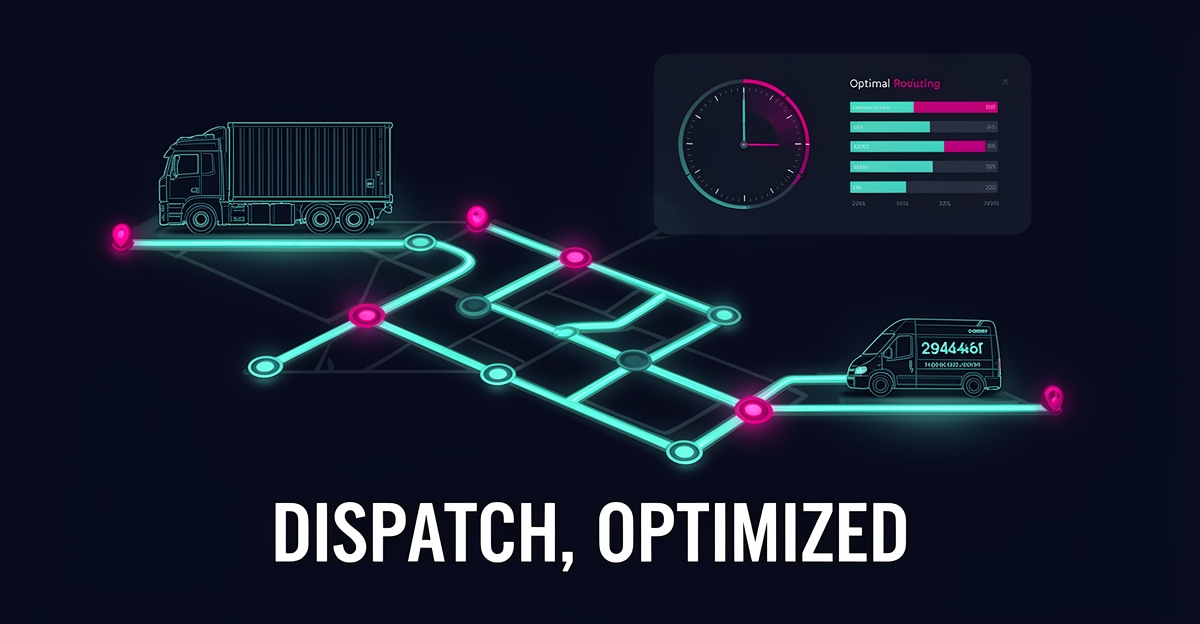
How an AI Dispatcher Can Optimize Mobile Repair Scheduling in Diesel Engine Shops
Key Facts
- AI dispatch typically cuts daily planning from 2–4 hours to under 5 minutes, an 80–95% reduction, per industry analysis.
- Fleets using AI dispatch commonly drive 20–35% fewer miles than manually routed operations, according to field service data.
- One dispatcher can typically manage only 10–15 technicians manually; AI dispatch extends that reach to hundreds with the same workflow.
- Real-time tracking and automated ETAs often reduce customer support calls by 30–40%.
- A single AI routing decision avoiding traffic can save 45 minutes, enabling one extra high-margin call daily, per dispatch software analysis.
- Manual dispatch generally works only for fleets under five drivers and 30 daily stops; beyond that, complexity typically forces a second hire.
Hire a team member that works 24/7 — for less than a part-time wage.
AI receptionists, SDRs, dispatchers and 99+ roles. Trained on your business, fully managed.
Not sure where to start? Ask our AI planner
The Hidden Cost of Manual Dispatch in Diesel Shops
The morning scramble starts before the first service truck rolls out. A dispatcher hunches over a spreadsheet, juggling technician locations, skill certifications, parts availability, and shifting customer windows — a mental calculus that consumes 2 to 4 hours of planning time every single day. Industry analysis confirms this manual ceiling: one dispatcher can effectively manage only 10 to 15 technicians before the complexity forces a second hire and doubles labor costs. Beyond that threshold, the model breaks down into missed jobs, idle techs waiting for assignments, and a dispatcher trapped in reactive firefighting instead of strategic oversight.
- Daily planning cycles stretching 2–4 hours with zero buffer for mid-day changes
- Hard scalability ceiling at 10–15 technicians per dispatcher
- No real-time visibility — locations unknown until a check-in call
- Cognitive overload driving burnout and costly errors
The hidden cost isn't just time — it's the cognitive overload quietly eroding the workforce. Workplace research has found that a large majority of workers report lacking enough time or energy to do their jobs, drowned by information volume and decision fatigue. In a diesel shop, that translates to a dispatcher making hundreds of micro-decisions daily without decision support, while much of coordination happens through ad hoc calls and quick chats that fragment focus further. The market isn't asking for more technology; it's asking for relief from the mental load that turns skilled operations managers into exhausted route builders.
AIQ Labs sees this pattern across field service operations: the bottleneck is rarely technical — it's the human capacity ceiling that manual tools impose. When dispatchers reclaim those planning hours and offload routine optimization, they shift from firefighting to the exception management and customer escalation work that actually requires human judgment. Our AI dispatchers are built for exactly this handoff.
What AI Dispatching Actually Does (And the Numbers Behind It)
Manual dispatch in diesel shops is a spreadsheet tug-of-war that burns hours before the first truck rolls. AI dispatch replaces that guesswork with real-time calculation that assigns the right technician to the right job instantly.
The system analyzes technician location, skill set, parts inventory, traffic conditions, and job priority simultaneously to build routes in under 5 minutes. Industry research shows AI dispatch typically reduces daily planning time by 80-95% compared to the 2 to 4 hours required for manual planning. That speed lets shops re-route on the fly when an emergency call comes in or a part is delayed.
Optimization is not just about speed. Fleets using AI-powered dispatch commonly report 20-35% fewer total miles driven versus manual methods. Analysis of field service operations attributes the gain to distance, traffic, and capacity-aware routing instead of intuition-based assignments. For diesel repair, lower miles means less fuel burn, less vehicle wear, and more billable hours per day.
Visibility also changes the customer experience. Operations implementing real-time tracking and automated ETA updates often reduce customer support calls by 30-40%. Fewer "where is my tech?" calls happen when customers self-serve accurate arrival windows.
The mechanics work as a continuous loop:
- Live location and skill matching pairs each job with a qualified technician who already carries the needed parts
- Traffic and time-window constraints are re-calculated continuously, not once in the morning
- Priority rules surface high-margin emergency repairs before routine maintenance
- Schedules push directly to mobile apps, removing phone tag between dispatcher and tech
A single AI decision to avoid a traffic bottleneck can save 45 minutes, allowing one extra high-margin service call daily. Dispatch software analysis notes that saving compounds when repeated across a fleet. That is the difference between a tech sitting idle and revenue on the clock.
AIQ Labs builds AI systems that automate field service workflows without manual spreadsheets or calendars, which means the same logic can be tailored to a diesel shop's parts inventory and technician certifications — either as a single workflow rebuild or as part of a broader AI operating system. The result is faster planning, fewer miles, and fewer support calls while the dispatcher shifts from route builder to operations manager.
Human judgment remains essential for exceptions, but the routine optimization is handled at scale.
Breaking the Scaling Ceiling: From Route Builder to Operations Manager
Every growing diesel shop hits the same wall: the dispatcher who once juggled everything by hand simply runs out of capacity. Industry analysis suggests manual dispatch works well for operations with fewer than five drivers, stable repeating routes, and under 30 daily stops — no software cost, no learning curve, no problem.
The trouble starts when growth arrives. Once a fleet passes roughly 10 to 15 technicians, the workload for a human dispatcher increases in direct proportion to the fleet size, often forcing the hire of a second dispatcher and doubling labor costs overnight. Each new truck added to the schedule adds another layer of complexity that no single person can reasonably process.
This is where AI flattens the curve. Instead of scaling costs linearly with headcount, an AI dispatch system absorbs the added complexity, allowing a single dispatcher to effectively manage anywhere from 5 to 500+ technicians using one consistent workflow. The algorithm handles the heavy lifting — technician location, skill set matching, traffic conditions, and job priority — recalculating the entire schedule in seconds rather than the 2 to 4 hours manual planning typically demands.
The role transformation is just as significant as the cost savings. In a manual system, the dispatcher functions as a route builder, spending hours constructing schedules and firefighting when things go sideways. With AI handling optimization and sending schedules directly to mobile apps, the dispatcher steps into an operations manager role focused on higher-value work:
- Managing exceptions the system flags for human review, such as a client's blocked loading dock or a job requiring a specialist
- Handling customer escalations and relationship-driven scenarios that demand judgment, not math
- Solving real-time problems like emergency repairs that require dynamic re-routing
- Reviewing dispatch decision trails to refine constraints and improve future optimization
There's a human benefit hiding in the numbers, too. Workplace research has found that roughly eight in 10 workers report lacking the time or energy to do their jobs due to information overload and decision fatigue. A dispatcher juggling dozens of technicians lives at the sharp end of that statistic. The market isn't asking for more technology — it's asking for relief, and automating routine scheduling decisions delivers exactly that.
The hybrid model is what makes this sustainable. AI excels at optimization and standard assignments, but human dispatchers retain local knowledge no algorithm can replicate — which driver shouldn't be sent to a certain neighborhood after dark, which client needs extra lead time. Systems built to flag these exceptions for human review, rather than forcing an automated fit, combine algorithmic speed with dispatcher expertise.
This is the approach AIQ Labs takes when building AI dispatch automation for field service operations: the system handles scale and speed, while the human shifts from reactive route builder to strategic operations manager. Growth stops meaning "hire another dispatcher" and starts meaning "capture more high-margin service calls."
The tipping point isn't a failure of your dispatcher — it's a signal that the workflow itself needs to change.
The Hybrid Model: Where AI Ends and Human Judgment Begins
The biggest objection to AI dispatching often centers on its inability to grasp nuanced, real-world constraints like a client's blocked dock on Tuesdays or neighborhood safety concerns after dark. This limitation highlights why the most effective implementations adopt a hybrid model where AI handles optimization and flags exceptions for human review, rather than attempting full automation. AI excels at processing thousands of variables simultaneously — technician location, skill sets, traffic, and job priority — to generate optimal schedules in under five minutes, a task that takes manual dispatchers 2 to 4 hours daily. However, it cannot replicate localized, experiential knowledge that prevents costly mistakes, such as sending a technician to a site with inaccessible loading docks or violating unspoken service-area norms.
In this hybrid approach, the AI dispatcher functions as a powerful co-pilot, managing routine assignments and dynamic re-routing while surfacing situational anomalies that require human judgment. For diesel repair shops, this might include flagging jobs where specific OEM-certified technicians are required, or where inventory constraints at a particular location could delay a complex engine rebuild. The system doesn't override human insight; instead, it reduces cognitive load by handling the 80-95% of scheduling that follows predictable patterns, freeing dispatchers to focus on relationship-driven decisions and escalations. This shift transforms the role from reactive route builder to proactive operations manager — a critical factor given how many workers report decision fatigue in information-heavy roles.
Successful integration depends on seamless connectivity with existing business systems. AI dispatch platforms must pull real-time data from CRM systems for customer history and preferences, ERP or inventory management tools to verify diesel parts availability before dispatch, and accounting software like QuickBooks or Xero to automate invoicing upon job completion. Without this ecosystem connectivity, the AI operates in a blind spot, potentially assigning jobs that lack necessary components or fail to trigger timely billing. Shops should also weigh common pitfalls that undermine value: per-task pricing models can become prohibitively expensive for high-volume, low-margin repairs; rigid multi-year contracts limit flexibility during seasonal fluctuations; and poorly designed implementations risk becoming "another stream of noise" rather than a source of clarity, adding complexity without reducing cognitive burden.
The goal isn't to replace the dispatcher's expertise but to amplify it — using AI to handle the computational heavy lifting while preserving space for the nuanced, context-aware decisions that only humans can make. When implemented thoughtfully, this balance ensures that optimization serves the shop's unique operational realities rather than forcing those realities to fit an algorithm's assumptions. For businesses ready to explore this hybrid approach, AIQ Labs builds AI dispatchers that integrate with your existing CRM, ERP, and accounting systems while preserving the human judgment essential to diesel repair excellence. Start the 2-minute Fit Check to begin a free 30-minute strategy call and discover how a tailored AI dispatcher can reduce planning time by 80-95% while elevating your team's strategic focus.
Implementing an AI Dispatcher in Your Diesel Shop
Transitioning from manual scheduling to an AI-powered system can feel overwhelming, but breaking it down into clear steps makes the process manageable and effective. Diesel repair shops often hit a tipping point where manual dispatch becomes unsustainable, especially when managing more than 10 to 15 technicians or exceeding 30 daily stops. At this stage, planning consumes 2 to 4 hours each day, creating bottlenecks that delay service and increase fatigue.
Begin by assessing your current operational limits. Track how long scheduling takes, how often routes require last-minute changes, and whether technicians frequently sit idle due to poor job matching. This baseline reveals whether you've surpassed the practical ceiling of manual dispatch, where efficiency drops and error rates rise.
Next, decide between an off-the-shelf platform or a custom-built AI dispatcher you own outright. Off-the-shelf routing tools offer strong field service constraint handling at a monthly per-driver cost, while others emphasize driver app usability but can scale poorly on per-task pricing for high-volume shops. For shops needing deep integration with existing CRM, ERP, or accounting systems — and full control over customization — a custom solution built through AIQ Labs' Start Monthly model eliminates vendor lock-in and aligns precisely with your workflow. You can compare payment models on the pricing page: Start Monthly, Build in Milestones, or Own It Outright.
Configure your system with critical constraints: technician skill sets (e.g., expertise in fuel systems vs. transmissions), service zones, time windows for customer availability, and vehicle inventory requirements. These inputs ensure the AI assigns the right technician to the right job, reducing mismatches that cause repeat visits or delays.
Integrate the AI dispatcher with your existing tools via APIs — connecting to your CRM for customer history, ERP for parts availability, and accounting software like QuickBooks for automated invoicing. This creates a single source of truth and eliminates manual data entry across platforms.
Deploy optimized schedules directly to technician mobile apps, providing turn-by-turn navigation and job details without phone calls. This step alone can cut planning time by 80-95%, generating schedules in under 5 minutes compared to the hours required manually.
Finally, monitor real-time performance and iterate. Use the system's exception handling to flag situations needing human judgment — like a blocked loading dock or urgent emergency repair — while refining constraints based on audit trail data. Over time, this hybrid approach boosts technician utilization, commonly reduces fuel waste by 20-35%, and shifts your dispatcher from route builder to operations manager.
Still paying for 10+ subscriptions that don’t talk to each other?
We build custom AI systems you own outright. No vendor lock-in. Full control.
Not sure where to start? Ask our AI planner
Frequently Asked Questions
How long does manual dispatch really take in a diesel shop?
At what point does manual dispatch stop scaling?
How much planning time can AI dispatch save?
Will AI dispatch reduce miles and fuel costs for my fleet?
Can AI really handle the nuances of diesel repair, like parts and certifications?
Does AI dispatch reduce dispatcher burnout?
From Spreadsheet Scramble to Strategic Dispatch
The morning spreadsheet scramble is a capacity problem, not a people problem. Manual dispatch caps out at 10 to 15 technicians per dispatcher, burns 2 to 4 hours daily on planning, and leaves shops blind to real-time location and parts constraints. AI dispatch replaces that guesswork with continuous calculation, typically cutting planning time by 80-95% to under 5 minutes, trimming miles driven 20-35%, and reducing customer support calls 30-40% through live ETAs. The real shift is role-based: dispatchers move from reactive route builders to operations managers who handle exceptions, escalations, and high-judgment work while the system manages routine optimization. For diesel shops hitting the scaling ceiling, the next step is to baseline your current limits, map technician skills and parts inventory as constraints, and test a hybrid model where AI handles standard assignments and flags exceptions for human review. If you're ready to see what that looks like for your fleet, start the 2-minute Fit Check and book a free 30-minute strategy call to map your biggest bottleneck and identify high-ROI automation opportunities. Industry analysis shows the planning time reduction is repeatable when the workflow is tailored to your shop.
Make AI your competitive advantage — not just another tool.
Strategy, implementation and ongoing optimization. One partner, end to end.
Not sure where to start? Ask our AI planner