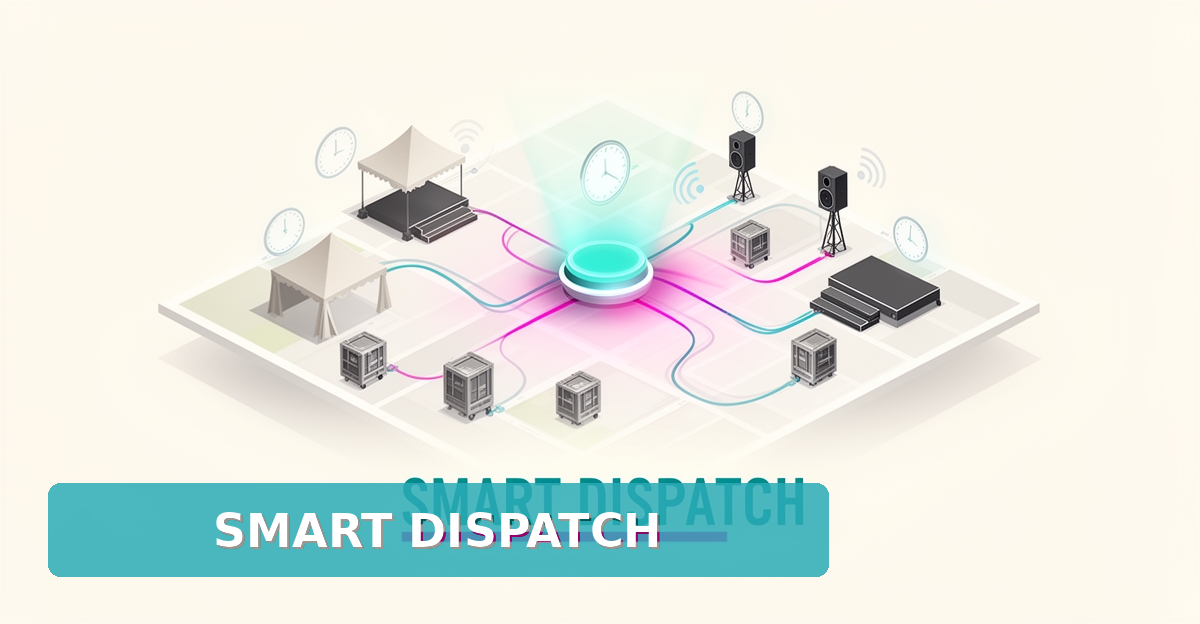
How an AI Dispatcher Can Optimize Rental Equipment Allocation for Events
Key Facts
- Industry analyses suggest a meaningful share of dispatch calls—often cited around 27%—go unanswered during peak periods, creating immediate revenue gaps, industry commentary notes
- Human dispatchers commonly spend a large portion of their time—estimates around 40%—on routine calls AI could handle instantly, industry analyses suggest
- Delayed shipments can cost $500+ per incident in expedited freight and customer penalties, according to industry commentary
- Fleets using AI-powered dispatch typically report 20-35% fewer total miles driven, fleet management comparisons show
- AI fleet management can save tens of thousands of dollars annually compared to manual dispatch, comparative analyses indicate
- Many operations report break-even on AI dispatch implementation within 1-3 months, financial analyses suggest
- AI dispatchers work 24/7 handling availability checks and scheduling while escalating only complex exceptions to humans, industry experts note
Hire a team member that works 24/7 — for less than a part-time wage.
AI receptionists, SDRs, dispatchers and 99+ roles. Trained on your business, fully managed.
Not sure where to start? Ask our AI planner
The Dispatch Bottleneck Costing Rental Operations
Most rental operations don't realize how much money walks out the door every time a dispatch call goes unanswered. Industry commentary suggests that roughly 27% of dispatch calls go unanswered, creating immediate revenue gaps that compound across peak event seasons when every piece of equipment matters.
The problem runs deeper than missed calls. Human dispatchers spend an estimated 40% of their time on routine calls — checking availability, confirming delivery windows, and relaying basic information that an automated system could handle instantly. This leaves complex routing decisions and exception handling to compete for the remaining bandwidth, often during the highest-pressure hours.
- Unanswered calls during peak event demand translate directly to lost contracts
- Idle equipment sits in yards while urgent requests sit in voicemail queues
- Delayed shipments can cost $500+ per incident in expedited freight and customer penalties
- Manual routing decisions can't adapt fast enough when weather, traffic, or last-minute changes hit
These inefficiencies create a cascade effect: a single delayed generator delivery pushes back the entire event setup timeline, triggering overtime charges for the rental crew and potential liquidated damages from the venue. AIQ Labs has seen this pattern repeatedly across trades and field service operations where dispatch sits at the center of profitability. An AI dispatcher eliminates the routine call bottleneck entirely, handling availability checks, scheduling, and confirmations 24/7 while escalating only the exceptions that require human judgment. The result isn't just faster response times — it's a dispatch operation that scales with demand instead of breaking under it.
How AI Dispatchers Dynamically Assign Gear for Events
Rental equipment moves on tight windows, and a single misrouted skid steer can cascade into missed events and lost revenue. An AI dispatcher replaces reactive call-taking with predictive assignment, matching gear to demand before a request even lands.
Demand forecasting builds the first layer. The system ingests historical rentals, seasonality, event calendars and maintenance windows to anticipate spikes by category and location. That forecast feeds location-aware allocation so inventory is pre-positioned near high-probability sites rather than sitting idle at a central yard.
Real-time availability closes the gap between forecast and execution. As bookings confirm and returns come in, the dispatcher updates a live pool of usable assets, factoring in service status and transport time. According to industry commentary, an estimated 40% of dispatcher time is spent on routine calls, while roughly 27% of dispatch calls go unanswered, creating delays that can cost $500+ per delayed shipment.
Automated routing then turns availability into action. The AI evaluates distance, traffic, driver hours and delivery windows to build efficient trips and dynamically reroute when conditions change. Fleets using AI-powered dispatch typically report 20-35% fewer total miles driven, which directly supports reduced idle time and faster response times.
The workflow typically shifts as follows:
- Demand signals trigger proactive staging of equipment near event clusters
- Real-time inventory and telematics confirm what is actually deployable now
- Automated routing assigns the nearest qualified asset with optimized delivery windows
- Routine inquiries are handled by the AI dispatcher while exceptions escalate to humans
By handling routine inquiries 24/7, the AI dispatcher ensures the right gear is at the right place at the right time while freeing human teams for complex negotiations, custom builds and relationship management. This hybrid model is where AIQ Labs applies its AI Workflow Builds practice, deploying intelligent dispatchers that work alongside human teams.
The result is a more responsive operation with less empty travel, fewer missed calls, and equipment utilization that scales with demand without proportional staffing increases.
From Manual to Hybrid Dispatch: What Changes in Practice
The difference between manual dispatch and AI-powered dispatch isn't just about speed—it's about fundamentally rethinking how rental equipment moves from yard to event site. While traditional dispatch relies on phone calls, spreadsheets, and dispatcher intuition, AI-powered systems leverage algorithms to optimize every aspect of equipment allocation.
Manual dispatch processes struggle with inherent limitations. According to industry commentary, roughly 27% of dispatch calls go unanswered, and an estimated 40% of dispatcher time is spent on routine calls that could be automated. This creates bottlenecks that delay equipment delivery and frustrate customers who expect real-time responses.
AI-powered dispatch turns these pain points into competitive advantages. Fleets using AI dispatch typically report 20-35% fewer total miles driven, translating to fuel savings and reduced equipment wear. The same comparisons show AI fleet management can save tens of thousands of dollars annually compared to manual dispatch, with many operations breaking even within 1-3 months of implementation.
The technology landscape offers three main approaches:
- Virtual receptionists that handle incoming calls 24/7, capturing rental requests and scheduling deliveries even when your office is closed
- Fleet management platforms that provide real-time GPS tracking, route optimization, and predictive maintenance alerts across your entire equipment inventory
- Specialized dispatch software designed specifically for equipment rental operations, with features like automated load planning and delivery window optimization
The most effective implementations don't eliminate human dispatchers—they elevate them. AI handles routine scheduling, route optimization, and customer notifications, while human dispatchers focus on complex logistics challenges, relationship management, and strategic decisions. This hybrid model combines the efficiency of automation with the judgment and flexibility that only experienced professionals provide.
AIQ Labs builds dispatch systems that integrate with your existing workflows, whether you need an AI Employee dispatcher to handle after-hours calls or a comprehensive dispatch layer that coordinates equipment across multiple event sites. Our solutions work alongside your team, not as replacements, ensuring you maintain the personal touch that builds customer loyalty while gaining the operational efficiency that drives profitability.
The shift from manual to hybrid dispatch isn't about choosing between humans and machines—it's about leveraging each where they excel most.
Implementing an AI Dispatcher with AIQ Labs
Implementing an AI dispatcher with AIQ Labs begins with a clear assessment of current dispatch operations to uncover inefficiencies. Many rental businesses face challenges like a meaningful share of dispatch calls going unanswered during peak periods, which directly impacts customer satisfaction and revenue potential, industry commentary shows. By mapping existing workflows, identifying bottlenecks, and establishing baseline KPIs such as response time and equipment utilization, companies create a foundation for measurable improvement. This diagnostic phase ensures the AI solution targets real pain points rather than introducing technology for its own sake.
Defining specific requirements follows naturally from the assessment, focusing on capabilities like real-time equipment tracking, demand-based allocation, and seamless communication with field teams. AIQ Labs' AI Employee dispatcher model is designed to handle routine dispatch tasks—such as scheduling, rerouting, and availability checks—freeing human staff to manage exceptions and complex client needs. Requirements should also specify integration needs with existing CRM or scheduling platforms, ensuring the AI dispatcher accesses live inventory, job schedules, and customer data without manual intervention.
Integration with core business systems is where AIQ Labs' engineering expertise ensures smooth deployment. The AI dispatcher connects to tools like HubSpot, Salesforce, or custom scheduling software to pull real-time data and execute actions such as updating job statuses or triggering notifications, and industry platforms confirm the value of unified data flow. Staff training then focuses on collaboration—teaching dispatchers how to monitor AI performance, intervene when needed, and leverage insights for strategic decisions. Finally, ongoing KPI monitoring tracks improvements in metrics like reduced idle miles (fleets using AI typically report 20-35% fewer total miles driven) and faster response times, with break-even often achieved in 1-3 months fleet management analyses suggest. AIQ Labs builds in milestones with fixed pricing, so you approve each phase before it proceeds—and you own the system outright at the end. This structured rollout ensures the AI dispatcher becomes a reliable, owned asset that scales with business growth.
Still paying for 10+ subscriptions that don’t talk to each other?
We build custom AI systems you own outright. No vendor lock-in. Full control.
Not sure where to start? Ask our AI planner
Frequently Asked Questions
How does an AI dispatcher actually decide which equipment goes to which event?
What percentage of dispatch calls do rental businesses typically miss?
Will an AI dispatcher replace my human dispatch team?
How much can AI dispatch reduce fuel and mileage costs?
What does delayed equipment delivery actually cost a rental operation?
How quickly can we expect ROI from implementing an AI dispatcher?
Turn Dispatch Bottlenecks into Competitive Advantage
The pattern is clear: unanswered calls, idle equipment, and inefficient routing cost rental operations real money—potentially $500+ per delayed shipment and a large share of dispatcher time consumed by routine tasks. An AI dispatcher doesn't just automate calls; it transforms your operation by predicting demand, optimizing routes in real time, and freeing your team to focus on high-value work like custom builds and customer relationships. The hybrid approach delivers measurable gains—typically 20-35% fewer miles driven, faster response times, and break-even often within 1-3 months—without replacing the human touch that builds loyalty. If you're ready to see where your dispatch process is leaking revenue and how AI can plug those gaps, start with the 2-minute Fit Check, then book a free, no-obligation strategy call. AIQ Labs will map your biggest bottleneck and show you exactly where intelligent automation delivers the highest return—no pitch, just clarity. Schedule your free 30-minute strategy call today and take the first step toward a dispatch system that scales with your demand.
Make AI your competitive advantage — not just another tool.
Strategy, implementation and ongoing optimization. One partner, end to end.
Not sure where to start? Ask our AI planner