How an AI Dispatcher Can Optimize Route Planning for Mobile Windshield Repair Teams
Key Facts
- AI dispatchers use real-time traffic, weather, and job locations to optimize routes, reducing fuel costs and increasing daily job completion.
- Industry research on AI-generated code has found that a substantial share of samples introduce known security flaws, which is why production dispatch systems require rigorous auditing before launch.
- Millions of credentials continue to be leaked on public code repositories each year, making security-first engineering non-negotiable for systems that handle customer data.
- Mobile windshield chip repair appointments typically run about 60 minutes of on-site service time, leaving little buffer for travel variance.
- Manual dispatch methods rely on static routing that cannot adapt to real-time events, causing technicians to lose hours between jobs.
- AI-powered dispatch systems dynamically recalculate routes when technicians finish early or cancellations occur, eliminating idle mileage and bottlenecks.
Hire a team member that works 24/7 — for less than a part-time wage.
AI receptionists, SDRs, dispatchers and 99+ roles. Trained on your business, fully managed.
Not sure where to start? Ask our AI planner
The Hidden Costs of Manual Dispatch in Mobile Windshield Repair
Manual dispatch keeps mobile glass teams reacting instead of routing. Static plans break the moment traffic stalls or weather shifts, and technicians lose hours between jobs.
Traditional dispatch relies on limited, manual data analysis and static route sequences. Drivers follow pre-set orders with basic scheduling while dispatchers juggle calls, texts, and spreadsheets across dispersed territories. Without real-time visibility, the system cannot adapt to events as they happen.
Unpredictable urban traffic inflates fuel costs and compresses daily capacity. AI-powered dispatch contrasts with this by using real-time, automated data analysis and dynamic routing. When a technician is delayed, the ripple effect spreads to every subsequent appointment, creating overtime, missed windows, and frustrated customers.
Weather delays compound the strain. Mobile chip repair providers such as CAA Mobile Chip Repair note that appointments may be cancelled or rescheduled due to inclement weather, and that service typically takes around 60 minutes to perform. In home-service models, that fixed on-site time leaves little buffer for travel variance, so one slow corridor erodes the whole day.
Coordination without real-time data also strains drivers. Technicians receive late updates, drive extra miles, and wait on site. The operational strain shows up as lower job completion, higher fuel spend, and reduced driver satisfaction. Convenience-based services that promise at-home repairs depend entirely on reliable arrival times.
The hidden costs accumulate in ways spreadsheets miss:
- Extra fuel and mileage from non-optimized back-and-forth routing
- Lost revenue from fewer jobs completed per technician per day
- Driver churn driven by inefficient days and unpredictable schedules
- Customer dissatisfaction from late or rescheduled appointments
These friction points explain why AIQ Labs builds intelligent dispatch systems tailored to mobile service operations in urban and rural markets. An AI dispatcher can be deployed as a managed AI Employee—handling calls, scheduling, and routing at a fraction of the cost of an additional human hire—or as a custom Workflow Build that rebuilds your dispatch workflow end to end.
The transition from prototype to live deployment still demands rigor. Industry analyses of AI-generated code have found that a substantial share of samples introduce known security flaws, and millions of credentials continue to leak onto public code repositories each year. That risk underscores why production dispatch must be built with security, reliability, and monitoring, not just speed.
Manual dispatch locks teams into reactive cycles. Without dynamic re-routing and real-time coordination, mobile windshield repair remains vulnerable to traffic, weather, and human error, leaving revenue and driver satisfaction on the table.
How AI Dispatchers Optimize Routes Using Real-Time Intelligence
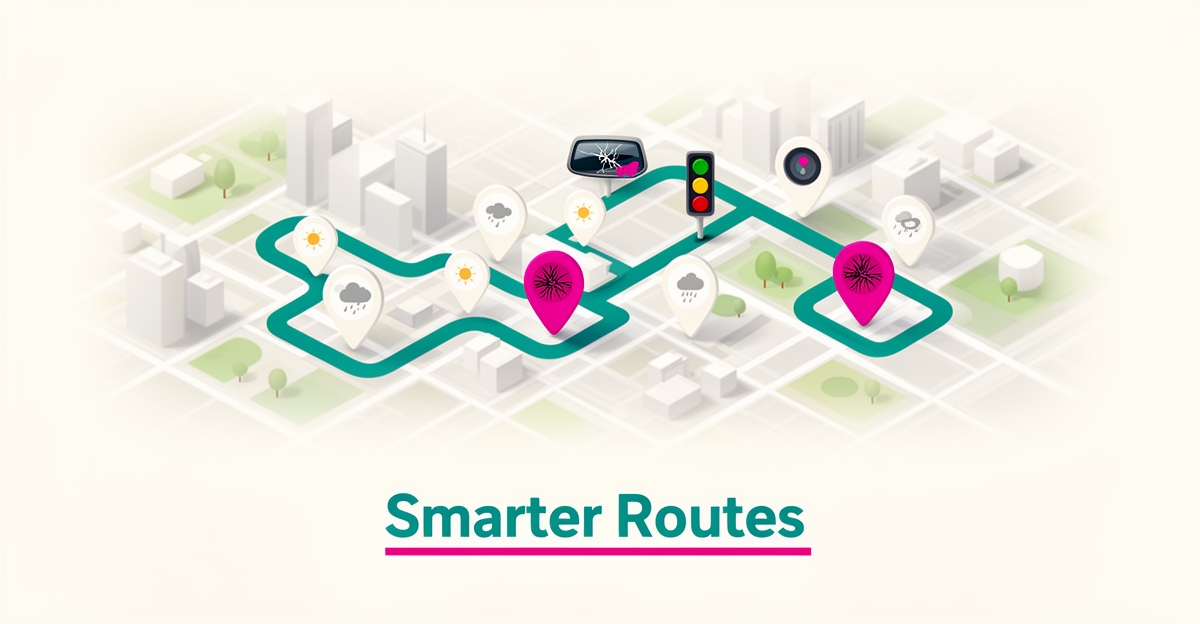
Static scheduling leaves mobile windshield repair teams vulnerable to inefficiencies that waste time and fuel, while AI dispatchers transform route planning into a responsive, intelligence-driven process. By continuously ingesting live traffic patterns, weather forecasts, and real-time job locations, these systems dynamically sequence appointments to minimize travel distance and avoid delays. This contrasts sharply with traditional methods that rely on fixed schedules and cannot adapt to sudden road closures, technician cancellations, or urgent chip repair requests that arise during the day. The result is a routing strategy that evolves with conditions on the ground, ensuring technicians spend more time repairing windshields and less time stuck in traffic or backtracking.
AI-powered dispatch achieves this through continuous data fusion and predictive modeling, where traffic congestion, precipitation forecasts, and job density are analyzed in real time to generate optimal routes. When a technician completes a job early or a customer cancels, the system instantly recalculates the most efficient path for remaining appointments, factoring in variables like service duration—typically around 60 minutes for a chip repair—and travel time between locations. This adaptability reduces idle mileage and prevents bottlenecks caused by unforeseen disruptions, directly contributing to lower fuel consumption and higher daily job completion rates. Systems that integrate real-time environmental and operational data consistently outperform static planning in variable service environments.
The benefits extend beyond efficiency gains to tangible operational improvements for mobile service providers. Optimized routing minimizes unnecessary travel, which not only cuts fuel costs but also reduces vehicle wear and technician fatigue—key drivers of satisfaction and retention in field service roles. By ensuring technicians arrive at jobs faster and with greater predictability, AI dispatchers enhance the customer experience while enabling teams to handle more appointments per shift. AIQ Labs builds these intelligent dispatch systems specifically for mobile service operations, recognizing that success depends on balancing technological precision with the realities of urban and rural road networks. In dynamic service landscapes where every minute counts, real-time route intelligence isn't just an upgrade—it's a necessity for sustainable, high-performance operations.
From Prototype to Production: Building Secure, Reliable Dispatch Systems
The leap from an AI prototype to a secure, reliable dispatch system is where many promising projects falter. While AI can generate impressive route optimization concepts, transitioning these to live mobile service operations demands a rigorous, production-focused approach.
A significant hurdle lies in the inherent vulnerabilities of AI-generated code. Industry research has found that a substantial share of code samples generated by large language models introduce known security flaws. This underscores the critical need for thorough auditing and hardening of any AI-generated components before they manage real customer data or technician schedules. The risk is amplified by the broader landscape of data exposure, with millions of credentials continuing to leak onto public code repositories each year. As deployment experts emphasize, the tools that get you to a prototype are built for speed, not durability—production means real customer details and real consequences when something breaks at 2 am.
Moving beyond ideal conditions requires a structured deployment strategy. This involves several non-negotiable steps to ensure the system is robust enough for the unpredictable nature of mobile service work:
- Thoroughly audit AI-generated code for hidden vulnerabilities and logical flaws.
- Establish dedicated staging and production environments with strict version control.
- Conduct comprehensive testing that extends far beyond "happy path" scenarios, simulating real-world disruptions like sudden traffic changes or adverse weather.
- Implement continuous monitoring, regular data backups, and clear contingency plans for system failures.
Real-world testing is paramount. An AI dispatcher might perform flawlessly in a simulated environment, but the true test comes with live traffic, unexpected road closures, and varying technician availability. Services like CAA Mobile Chip Repair note that appointments can be impacted by unforeseen circumstances or inclement weather, necessitating dynamic rescheduling. A production-ready AI dispatch system must account for these variables, ensuring technicians are always on the most efficient and safest route.
AIQ Labs specializes in building these production-ready AI solutions, with 200+ multi-agent systems deployed and four live SaaS products the company runs daily. Our approach prioritizes security-first engineering and rigorous testing, ensuring that AI dispatchers are not just intelligent, but also dependable and secure for live mobile service operations. We build systems designed for the complexities of real-world deployment, not just theoretical optimization.
Implementing AI Route Optimization: A Practical Framework for Service Businesses
Moving from manual route planning to an AI dispatcher requires more than flipping a switch—it demands a structured rollout that protects your operations while proving value at each stage. The following framework guides mobile windshield repair businesses through a secure, tested transition that maintains service continuity.
Begin with a comprehensive security audit before any code touches live systems. Industry analyses have found that a meaningful share of AI-generated code samples contain known security flaws, and millions of credentials leak onto public repositories each year. Close these gaps first by auditing what the AI actually built, then establishing staging environments that mirror your production setup without risking customer data.
Next, configure the system to handle your specific operational variables. Mobile windshield repair involves complex constraints that generic routing software often misses. Your AI dispatcher must account for per-chip pricing models, where a single appointment may involve multiple repairs with different line items, and vehicle restrictions—such as services limited to cars, SUVs, and light trucks. It should also respect regional service boundaries, similar to how CAA Mobile Chip Repair operates only in select regions, while accounting for the roughly 60-minute service duration typical for chip repairs.
Run parallel testing with real-world complexity before full cutover. Follow these validation steps:
- Test beyond the happy path by simulating inclement weather cancellations and last-minute rescheduling
- Validate routing accuracy across both urban density and rural spread where your technicians operate
- Verify integration with existing CRM and payment systems to ensure seamless data flow
- Monitor driver feedback regarding route logic and appointment clustering
Finally, phase driver adoption through transparency and control. Rather than imposing opaque algorithms, involve technicians in the feedback loop and maintain human-in-the-loop overrides for complex jobs. AIQ Labs structures these deployments through a Build in Milestones approach, allowing businesses to approve each phase—from security hardening to live dispatch—while keeping operations running. For teams that want dispatch to be part of a broader connected operation, an AI Operating System can tie routing, scheduling, and customer communication into one layer you own outright. This measured strategy ensures your AI dispatcher enhances rather than disrupts the mobile service experience your customers expect.
Still paying for 10+ subscriptions that don’t talk to each other?
We build custom AI systems you own outright. No vendor lock-in. Full control.
Not sure where to start? Ask our AI planner
Frequently Asked Questions
How does an AI dispatcher improve route planning for mobile windshield repair teams compared to traditional methods?
What are the main hidden costs of manual dispatch in mobile windshield repair operations?
How long does a typical windshield chip repair take, and why does this timing matter for route planning?
What security risks should businesses be aware of when deploying AI-generated dispatch systems?
How can a mobile windshield repair business deploy an AI dispatcher without disrupting operations?
What does it cost to work with AIQ Labs on a dispatch system?
From Reactive Routing to Predictable Profitability
Manual dispatch locks mobile windshield repair teams into a cycle of reaction—burning fuel, hours, and driver patience on routes that collapse at the first traffic jam or storm. AI dispatchers break that cycle by fusing live traffic, weather, and job data into routes that adapt in real time, turning 60-minute service windows into reliable commitments instead of moving targets. The shift pays off in measurable ways: fewer empty miles, more completed jobs per technician per day, and drivers who finish shifts on schedule rather than chasing overtime. But intelligence alone isn't enough; the recurring finding that a substantial share of AI-generated code contains security flaws is a reminder that production dispatch demands rigorous auditing, staged rollouts, and continuous monitoring. AIQ Labs builds these systems with security-first engineering and a Build in Milestones approach so you validate value at every phase without risking operations. Ready to see what intelligent routing could recover for your team? Start the two-minute Fit Check at https://aiqlabs.ai/apply and book a free 30-minute strategy call at https://aiqlabs.ai/book to map your highest-ROI automation opportunity—no obligation, just clarity.
Make AI your competitive advantage — not just another tool.
Strategy, implementation and ongoing optimization. One partner, end to end.
Not sure where to start? Ask our AI planner