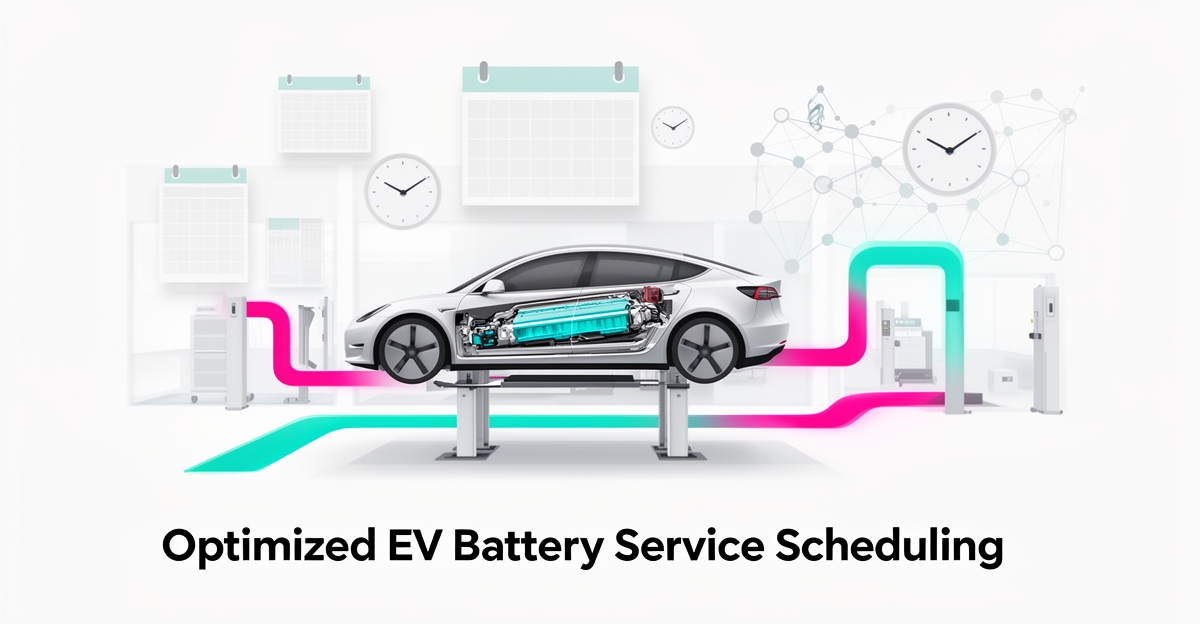
How an AI Dispatcher Can Optimize Service Scheduling at EV Battery Service Centers
Key Facts
- Field service technicians spend roughly 7 hours weekly on administrative tasks, a substantial share of which AI can absorb according to recent research
- Manual dispatching typically takes 2-4 hours daily compared to minutes with AI-powered optimization as shown in industry reports
- Fleets without AI route optimization can face up to 20% higher operating costs from inefficient routing per field service data
- AI dispatching can reduce daily planning time by 80-95% and generate optimized itineraries in minutes based on service center implementations
- Fleets using AI-powered dispatch report 20-35% fewer miles driven, freeing capacity for urgent battery calls per field service data
- A large majority of field service organizations report at least a moderate improvement in technician utilization due to AI per recent surveys
- AI dispatching can handle 5 to 500+ drivers with the same planning workflow, compared to roughly 10-15 for manual dispatch per scalability studies
Hire a team member that works 24/7 — for less than a part-time wage.
AI receptionists, SDRs, dispatchers and 99+ roles. Trained on your business, fully managed.
Not sure where to start? Ask our AI planner
The Hidden Cost of Manual Dispatching in EV Battery Service
EV battery service centers face mounting pressure to deliver rapid, reliable repairs in a safety-critical environment where delays can compromise both vehicle performance and customer trust. Yet many still rely on manual dispatching—a process that typically consumes 2 to 4 hours daily just to build service schedules, creating a significant bottleneck before any work even begins. This extended planning cycle directly impacts responsiveness, especially when urgent battery issues require immediate attention to prevent further damage or safety risks.
Manual dispatching also introduces costly inefficiencies in routing, with fleets lacking AI-powered optimization experiencing up to a 20% increase in operating costs due to unnecessary mileage, fuel consumption, and vehicle wear. These avoidable expenses accumulate quickly in high-volume service centers, eroding profitability while reducing the number of jobs technicians can complete each day. Beyond financial impact, poor routing contributes to longer customer wait times and inconsistent service delivery, undermining satisfaction in an industry where transparency and timeliness are paramount.
Perhaps most critically, technicians lose substantial time to administrative tasks that divert them from their core repair work. Research shows field service technicians spend an average of 7.27 hours per week on low-value administrative duties, with 37% stating these tasks actively prevent them from performing their actual jobs. This administrative burden not only reduces productive wrench time but also contributes to technician fatigue and attrition. In a specialized field like EV battery service—where expertise is scarce and safety protocols are stringent—losing skilled technicians to paperwork rather than repairs represents a significant operational and strategic risk.
- Technicians spend roughly 7.27 hours weekly on administrative tasks, a substantial share of which AI can absorb
- Manual dispatching typically takes 2-4 hours daily compared to minutes with AI-powered optimization
- Fleets without AI route optimization can face up to 20% higher operating costs from inefficient routing
By automating complex scheduling and route planning, AI dispatching frees technicians to focus on high-value diagnostics and repairs—directly supporting improved first-time fix rates and safer, more reliable service outcomes. For EV battery service centers operating in a high-stakes, high-downtime environment, eliminating these hidden costs of manual dispatching isn't just about efficiency—it's about ensuring every minute counts toward getting vehicles back on the road safely and quickly. AIQ Labs helps service centers rebuild these workflows through AI Workflow Builds—a fixed-price, phased engagement that targets the one workflow costing you the most, with the finished system owned outright.
How AI Dispatchers Optimize EV Battery Service Scheduling in Real Time
AI-powered dispatching transforms how EV battery service centers manage their most critical resource: technician-intensive workflows, by replacing hours of manual planning with real-time, algorithm-driven optimization. Instead of spending 2 to 4 hours each day building schedules, AI systems generate optimal technician assignments in minutes, factoring in live traffic, skill matrices, and urgent battery issue priorities industry reports confirm. This shift can reduce planning time by 80-95%, freeing dispatchers to focus on exception handling and customer escalations rather than route construction studies show. For service centers managing geographically dispersed assets, this efficiency enables faster response to safety-critical battery failures without increasing administrative overhead.
Beyond time savings, AI dispatching directly cuts operational waste by minimizing unnecessary travel. By continuously analyzing real-time traffic, road closures, and job locations, the system reduces total miles driven by 20-35% compared to intuition-based routing field service data indicates. This not only lowers fuel consumption and vehicle wear but also increases the number of service stops each technician can complete per day. When combined with dynamic skill matching—where AI assigns technicians based on certified expertise in battery diagnostics, thermal management, or high-voltage safety—utilization improves significantly. A large majority of field service organizations report at least a moderate improvement in technician utilization due to AI-driven task allocation recent surveys reveal.
The true power of AI dispatch lies in its ability to adapt mid-day as conditions change. If a technician encounters a delay or a new urgent battery issue arises—such as a thermal runaway risk or sudden power loss—the system instantly recalculates routes and reassigns the nearest qualified technician without requiring a full replan optimization platforms demonstrate. This dynamic reassignment ensures that priority tasks are handled by the right specialist at the right time, reducing downtime and improving first-time fix rates. For EV battery service centers, where delays can compound safety risks and customer dissatisfaction, this real-time responsiveness turns dispatching from a reactive chore into a proactive service advantage.
- Process live traffic and weather data to adjust routes in seconds
- Match technician skills to specific battery issue types using certified matrices
- Reprioritize urgent tasks dynamically without manual replanning
- Balance workloads evenly across technicians to prevent burnout
- Provide automated ETA updates to reduce customer inquiry volume
AIQ Labs supports this transformation in two ways: an AI Dispatcher as an AI Employee—a managed AI staff member that works alongside your human team at a fraction of the cost of a hire—or a Workflow Build that rebuilds your dispatch process end-to-end and integrates with your existing service management tools. Either way, you own the system outright. By eliminating manual planning bottlenecks and enhancing technician readiness, AI dispatching becomes a force multiplier for both operational efficiency and customer trust in high-stakes EV service environments.
Implementing AI Dispatch: From Assessment to Continuous Optimization at EV Service Centers
EV battery service centers can't afford manual dispatch delays when a thermal event or critical power loss is on the line. Moving to AI dispatch starts with honest assessment and ends with a system that continuously learns from every job.
Assessment begins by mapping the current pain points. Teams document how long manual planning takes—typically 2-4 hours—and how many drivers one dispatcher can manage, usually 10-15. Data readiness is checked next, ensuring technician skill sets, battery certifications, vehicle capacity, and real-time job status are digitized and accessible. Without clean, connected data, even the best algorithms underperform.
Solution design prioritizes EV-specific skill matching and real-time adaptability. The system must handle constraint-based routing, urgent priority levels, and integration with ERP and CRM systems. AIQ Labs approaches this through its AI Employee model for dispatchers—a managed AI staff member that works alongside human teams rather than replacing them with a subscription widget, or through a phased Workflow Build if you want the whole scheduling process rebuilt.
Integration connects the dispatch brain to the field. GPS trackers, IoT battery diagnostics, and mobile apps feed live location and job status into the system. Live traffic and weather data allow dynamic recalculation when a delay hits. Technicians receive optimized assignments on mobile, update status in real time, and capture proof of completion.
Staff retraining shifts the dispatcher role from route builder to operations manager. The focus moves to exception handling, customer escalations, and quality control. Technicians learn to trust AI-generated assignments and intervene when safety or site conditions require human judgment. This hybrid model reflects the majority of field service leaders who report at least a moderate improvement in dispatcher productivity due to AI.
Continuous optimization is driven by KPIs that matter to EV service. Teams monitor first-time fix rates, wait times, total miles driven, and technician utilization. Demand for technician dispatch optimization AI has grown steadily as of late 2026, driven by rising expectations for real-time workforce optimization across field service industries.
A practical rollout sequence keeps momentum:
- Audit current dispatch time and technician admin burden, with technicians averaging 7.27 hours per week on low-value tasks
- Configure optimization rules for battery-specific skills, SLAs, and appointment windows
- Connect GPS, IoT, and CRM data sources for live routing and skill matching
- Train staff on exception handling and mobile workflow adoption
- Monitor KPIs and refine algorithms for first-time fix and wait time improvement
When deployed correctly, AI dispatch reduces daily planning time by 80-95% and can generate optimized itineraries in minutes compared with hours manually. Fleets using AI-powered dispatch report 20-35% fewer miles driven, freeing capacity for urgent battery calls. The result is faster response, higher technician utilization, and a dispatch function that scales from 5 to 500+ drivers without proportional headcount growth.
Still paying for 10+ subscriptions that don’t talk to each other?
We build custom AI systems you own outright. No vendor lock-in. Full control.
Not sure where to start? Ask our AI planner
Frequently Asked Questions
How much time does manual dispatching really waste each day at an EV battery service center?
Will switching to AI dispatch actually lower our operating costs?
Can AI match technicians to EV battery issues based on certifications and safety skills?
How much admin work are my technicians losing to paperwork?
Is AI dispatch scalable as we add more service vans and technicians?
Is AI dispatch for technician scheduling a proven approach or just hype?
Every Minute Counts: Turning Dispatch Into Your Competitive Edge
The math is hard to ignore: manual dispatching burns 2-4 hours daily, inefficient routing can inflate operating costs by up to 20%, and technicians lose 7.27 hours a week to admin work that keeps them from the repairs they were trained to do. AI dispatching flips that equation—generating optimized schedules in minutes, cutting miles driven by 20-35%, and dynamically reassigning urgent battery jobs to the right specialist in real time. With most field service leaders planning to increase their AI investments, the question isn't whether to modernize dispatch—it's how quickly you can do it without disrupting safety protocols or your existing tools. That's where AIQ Labs comes in: we build AI Employees, including AI Dispatchers, and Workflow Builds that integrate with your current systems and that you own outright—no vendor lock-in, no invented numbers. Start small: audit your current dispatch time and technician admin burden this week, then map where automation delivers the fastest win. Take the two-minute Fit Check at aiqlabs.ai/apply, and book a free 30-minute strategy call to see if there's a clear win for your service center. If there isn't, we'll tell you that too.
Make AI your competitive advantage — not just another tool.
Strategy, implementation and ongoing optimization. One partner, end to end.
Not sure where to start? Ask our AI planner