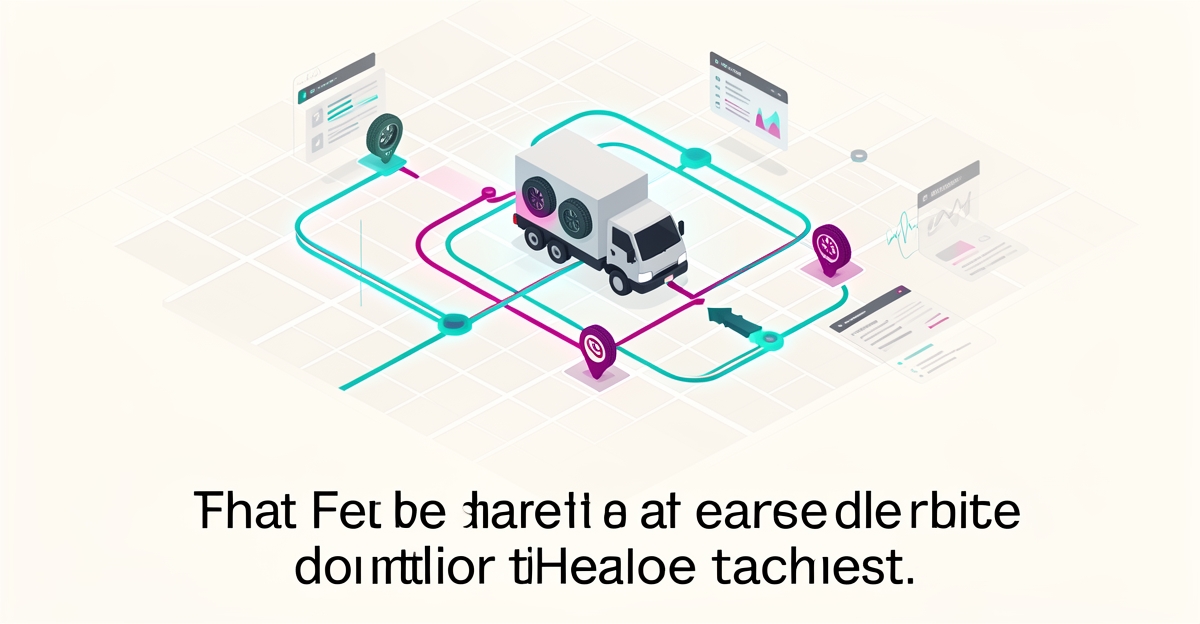
How an AI Dispatcher Can Optimize Tire Delivery Routes for Real-Time Traffic
Key Facts
- AI dispatchers can reduce manual planning time dramatically—industry analyses commonly report savings in the range of 80-95% compared to manual methods
- AI-powered dispatch systems typically cut fuel costs through optimized routing and reduced idling, with fleet analyses often citing improvements in the 15-25% range
- A single missed delivery can cost a tire retailer hundreds of dollars in wasted technician time, redelivery effort, and lost goodwill
- AI dispatch platforms commonly lower operational expenses via predictive maintenance and more efficient resource allocation
- AI dispatchers enable real-time route adjustments that prevent delays from traffic, road closures, and urgent requests
- The strongest AI dispatch systems combine dynamic route optimization, driver-aware assignment, and network-level density optimization on a single decision layer
Hire a team member that works 24/7 — for less than a part-time wage.
AI receptionists, SDRs, dispatchers and 99+ roles. Trained on your business, fully managed.
Not sure where to start? Ask our AI planner
The Hidden Cost of Manual Tire Delivery Planning
Every day, tire distributors lose money to inefficiencies that are invisible in their accounting systems but painfully obvious in their operations. Manual route planning creates a cascade of hidden costs that compound with every delivery cycle.
The most immediate drain is time. Industry comparisons of AI dispatch versus manual dispatch consistently show that manual planning consumes far more time than automated alternatives—commonly cited reductions fall in the 80-95% range. For a tire distribution operation handling dozens of deliveries daily, this translates to dispatchers spending hours each day plotting routes, assigning drivers, and adjusting schedules—time that could be spent on customer service or strategic planning.
Human error in route assignments creates another layer of waste. When dispatchers manually match drivers to deliveries based on memory or intuition rather than real-time data, mistakes multiply. A driver might be sent across town when another is already nearby, or a delivery might be assigned to a vehicle without the right tire inventory. These errors don't just waste fuel—they damage customer relationships.
The financial impact of missed deliveries is substantial. A single missed delivery can cost hundreds of dollars once you count idle technicians, redelivery effort, and frustrated customers. For tire retailers coordinating installations with customer appointments, a missed delivery means idle bays, rescheduled jobs, and potential lost business. Multiply this across a month of operations, and the cost becomes staggering.
Manual dispatch also fails to account for real-time variables that affect delivery success:
- Traffic congestion that changes by the minute, turning optimal morning routes into afternoon bottlenecks
- Vehicle capacity and inventory mismatches discovered only after the driver is en route
- Delivery windows that conflict with customer availability due to poor coordination
- Driver skill levels and familiarity with specific routes or customer locations
The operational overhead extends beyond the dispatcher's desk. Drivers spend excess time on the road, vehicles consume more fuel than necessary, and customer service teams field complaints about late or missed deliveries. Fleet management analyses frequently attribute fuel cost reductions in the 15-25% range to optimized routing and reduced idling.
Perhaps most critically, manual dispatch systems cannot adapt in real time. When a tire delivery route needs adjustment due to a road closure or urgent customer request, the entire schedule must be manually recalculated. By the time the dispatcher contacts all affected drivers and customers, the delay has already cascaded through the day's operations.
AIQ Labs builds AI dispatchers that eliminate these hidden costs by automating route optimization and real-time adjustments. The system continuously analyzes traffic patterns, vehicle locations, and delivery requirements to make split-second decisions that human dispatchers simply cannot match at scale. Learn more at AI Employees.
How AI Dispatchers Solve Real-Time Routing Challenges
AI dispatchers transform tire delivery operations by dynamically optimizing routes as conditions change, eliminating the lag and guesswork of manual planning. By continuously analyzing live traffic data, road closures, and delivery windows, these systems ensure drivers take the most efficient paths in real time. This capability directly addresses the core challenge of unpredictable urban logistics, where static routes quickly become obsolete due to congestion or incidents.
AI-powered dispatch assistants can reduce manual planning time dramatically—analyses commonly report reductions in the 80-95% range—while virtually eliminating human errors in route assignments, freeing up operational staff for higher-value tasks. These platforms achieve this through dynamic route optimization and real-time fleet awareness, which are widely identified as essential features for modern logistics. The best AI dispatch systems go further by combining driver-aware assignment and network-level density optimization on a single decision layer, enabling agentic execution that adapts to evolving conditions without constant human oversight.
- Reduces fuel costs through optimized routing and reduced idling—fleet analyses often cite 15-25% improvements
- Lowers operational expenses via predictive maintenance and efficient resource allocation
- Reduces missed deliveries—each of which can cost hundreds of dollars—by improving on-time arrival accuracy
For tire delivery fleets, these improvements translate into tangible savings and service reliability. AIQ Labs builds AI Employees that function as dispatchers, integrating directly with scheduling and telematics tools to automate route adjustments while maintaining compliance with delivery SLAs. This approach ensures field operations remain agile and cost-effective, even amid volatile traffic patterns.
Implementing an AI Dispatcher for Tire Delivery Operations
Deploying an AI dispatcher begins with assessing your current delivery workflows and identifying integration points with existing tools such as CRM and telematics systems. AIQ Labs follows a structured implementation methodology that starts with discovery and architecture, ensuring the AI employee aligns with your operational goals before development begins. This phase includes mapping delivery windows, driver availability, and real-time traffic data sources to build a foundation for dynamic route optimization.
During development and integration, the AI dispatcher is built to connect with telematics platforms for live vehicle tracking and with your CRM to sync customer delivery preferences and service history. Once deployed, staff training focuses on new workflows—such as monitoring AI-generated route adjustments and handling exceptions—while the system continuously learns from delivery performance data. By automating route assignments and real-time traffic adaptation, the dispatcher significantly reduces the administrative overhead of manual planning.
A phased rollout strategy minimizes risk and builds team confidence. Start with a pilot group of delivery routes to validate fuel savings and on-time performance before scaling across the fleet. Key steps include:
- Configure the AI dispatcher with your service areas, vehicle capacities, and delivery time windows
- Integrate with telematics for real-time GPS tracking and traffic-aware rerouting
- Train dispatchers and drivers on AI-assisted workflows and exception handling
- Monitor KPIs like fuel consumption and delivery punctuality during the pilot phase
- Expand to full fleet deployment with ongoing optimization based on performance data
This approach ensures the AI dispatcher enhances operational efficiency without disrupting daily operations. Optimized routing and reduced idle time directly impact your bottom line, and payment is straightforward: you can start monthly, build in milestones, or own the system outright—see pricing for how the models work. By combining dynamic route optimization with driver-aware assignment, the system adapts to real-time traffic, road closures, and changing delivery priorities—delivering consistent improvements in service reliability and cost control.
Ready to explore how an AI dispatcher can transform your tire delivery operations? Start the 2-minute Fit Check to assess your current systems and identify high-ROI automation opportunities, then book a free 30-minute strategy call to build a customized implementation plan.
Still paying for 10+ subscriptions that don’t talk to each other?
We build custom AI systems you own outright. No vendor lock-in. Full control.
Not sure where to start? Ask our AI planner
Frequently Asked Questions
How much time can an AI dispatcher save compared to manual route planning for tire delivery operations?
What is the financial impact of a single missed tire delivery, and how can AI dispatchers help reduce it?
Can AI dispatchers really reduce fuel costs for tire delivery fleets, and by how much?
What happens if there's a sudden road closure or urgent customer request during tire delivery operations with an AI dispatcher?
Is implementing an AI dispatcher disruptive to existing tire delivery workflows and tools like CRM or telematics systems?
How do AI dispatchers handle driver-specific factors like skill level or familiarity with certain routes in tire delivery?
From Static Routes to Real-Time Revenue
Manual tire delivery planning quietly erodes margin through wasted dispatcher hours, human error, and missed deliveries that each cost real money. AI dispatchers eliminate that drag by continuously optimizing for live traffic, road closures, vehicle inventory and delivery windows, cutting planning time dramatically while improving on-time performance. The result is fewer idle technicians, lower fuel spend, and a more reliable service promise that customers actually feel. For tire distributors, the shift is from reactive adjustments to proactive, driver-aware routing that adapts without constant oversight. AIQ Labs builds AI Employees that function as dispatchers, integrating with telematics and scheduling tools to automate route adjustments while maintaining SLAs. If you want to see where the hidden costs are in your current delivery operation and what a real-time routing system could save, start the Fit Check and then book a free 30-minute strategy call to map high-ROI automation opportunities for your fleet.
Make AI your competitive advantage — not just another tool.
Strategy, implementation and ongoing optimization. One partner, end to end.
Not sure where to start? Ask our AI planner