Back to Blog

How an AI Dispatcher Can Reduce Empty Mileage for Refrigerated Trucking Companies

AI Business Process Automation > AI Workflow & Task Automation14 min read

How an AI Dispatcher Can Reduce Empty Mileage for Refrigerated Trucking Companies

Key Facts

  • AI dispatchers cut empty miles by 50% in just 90 days by intelligently matching backhauls—turning deadhead trips into revenue-generating routes (FleetRabbit 2026).
  • Refrigerated fleets using AI dispatch slash fuel costs by 15–25% in the first year through dynamic route optimization that factors in weather, traffic, and HOS (FleetRabbit).
  • One AI dispatcher handles the workload of 3–4 human planners, managing 15+ loads/hour while reducing scheduling errors by 80% (WEZOM vs. FleetRabbit benchmarks).
  • Manual dispatchers waste 70% of their time on spreadsheets and phone tag—AI automates routine assignments so teams focus on exceptions and customer relationships (FleetRabbit).
  • Cold chain fleets using AI load-matching boost equipment utilization from 68% to 85%, eliminating half-empty trucks and rejected loads due to temperature mismatches (WEZOM case study).
  • Driver shortages will exceed 80,000 positions by 2026—AI dispatch mitigates this by institutionalizing knowledge, so performance doesn’t crash when staff leave (FleetRabbit projections).
  • AIQ Labs builds custom AI dispatchers for refrigerated fleets with true ownership (no vendor lock-in) starting at $2,000—integrating GPS, weather, and HOS data for cold-chain precision (AIQ Labs 2026).
AI Employees

What if you could hire a team member that works 24/7 for $599/month?

AI Receptionists, SDRs, Dispatchers, and 99+ roles. Fully trained. Fully managed. Zero sick days.

Introduction

Refrigerated trucking companies lose millions annually to empty mileage—unpaid trips where trucks return without cargo. Traditional dispatching struggles to match loads efficiently, leading to 15–25% higher fuel costs and 50% more deadhead miles than necessary. AI-powered dispatch systems solve this by dynamically optimizing routes, reducing waste, and maximizing fleet utilization.

Manual dispatching relies on human judgment, spreadsheets, and phone calls—methods that fail to keep up with real-time data. Key inefficiencies include: - 20% error rate in load assignments (wrong driver, wrong trailer, or missed time windows) - 70% of dispatchers’ time wasted on manual scheduling - Driver shortages forcing fleets to operate at 68% capacity instead of 85%

Example: A mid-sized fleet reduced fuel consumption by 12% after adopting AI dispatch, cutting empty miles by half within 90 days.

AI dispatch systems ingest real-time data—GPS, weather, traffic, Hours of Service (HOS), and equipment specs—to make smarter decisions faster. Key capabilities include: - Intelligent load matching (scoring driver-vehicle-load combinations for efficiency) - Dynamic route recalculation (adjusting for delays, traffic, or weather) - Automated backhaul optimization (finding return loads to eliminate deadhead trips)

Result: AI dispatchers handle 15+ loads per hour—3x more than manual dispatchers—while reducing errors.

AIQ Labs builds custom AI dispatch systems tailored to cold chain logistics, ensuring: - True ownership (no vendor lock-in) - Seamless integration with existing fleet management tools - Scalability (one AI dispatcher manages 3–4x more equipment)

Next: Let’s explore how AI dispatch systems reduce empty miles in real-world operations.

Key Concepts

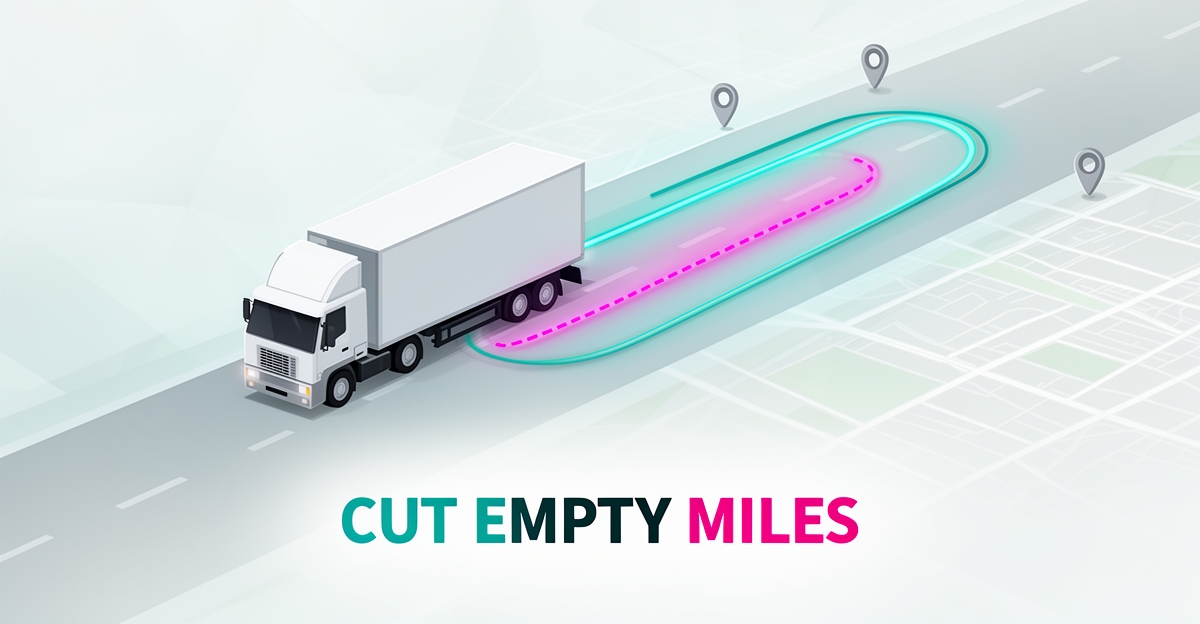
Empty mileage—when trucks return without cargo—is a silent profit killer in refrigerated trucking. According to FleetRabbit, fleets without AI dispatching operate 15–25% more empty miles than necessary. For cold chain logistics, this inefficiency is even costlier due to fuel, maintenance, and temperature control demands.

  • Fuel waste: Empty miles account for 20–30% of total fuel consumption in some fleets.
  • Equipment underutilization: Refrigerated trailers require constant power, even when empty.
  • Driver inefficiency: Manual dispatching struggles to match backhauls, forcing drivers to idle.

Solution: AI dispatchers dynamically match loads, reducing empty miles by up to 50% within 90 days.


AI dispatchers analyze: - Trailer specifications (temperature zones, refrigeration units) - Driver availability (Hours of Service, location) - Load priorities (perishable goods, delivery windows)

Result: AI systems achieve 87%+ utilization rates, compared to 71% for manual dispatching.

AI adjusts routes in real time based on: - Weather conditions (extreme heat/cold affecting refrigeration) - Traffic congestion (delaying temperature-sensitive cargo) - Driver fatigue (HOS compliance to avoid violations)

Case Study: A mid-sized fleet reduced fuel consumption by 12% after implementing AI-based route optimization.

AI identifies backhaul opportunities by: - Scoring load compatibility (distance, equipment type, profit potential) - Prioritizing high-value returns (reducing deadhead miles) - Integrating with carrier networks (broader load-matching pools)

Impact: AI backhaul matching cuts empty miles by 50% in 90 days.


Metric Manual Dispatch AI Dispatch
Empty Miles 15–25% higher 50% reduction
Fuel Costs Baseline 15–25% lower
Scheduling Time Hours per load 70% faster
Dispatcher Capacity 4–6 loads/hour 15+ loads/hour
  • Driver shortages: AI dispatchers handle 3–4x more equipment than manual planners.
  • Staffing instability: AI retains institutional knowledge, preventing performance drops when dispatchers leave.
  • Regulatory compliance: AI ensures HOS and refrigeration requirements are met automatically.

Expert Insight: "Every deadhead mile is pure cost with zero revenue—death by a thousand cuts."FleetRabbit


AIQ Labs builds production-ready AI dispatch systems tailored to cold chain logistics. Their approach includes:

  • No vendor lock-in: Clients own the system outright.
  • Deep integrations: Connects with existing fleet management tools.
  • Scalable architecture: Handles enterprise-level demands.

  • 24/7 operation: Never misses a load or backhaul opportunity.

  • Human-like communication: Handles driver inquiries and adjustments.
  • Continuous learning: Improves accuracy over time.

Pricing: - AI Dispatcher Setup: $2,000–$3,000 (one-time) - Monthly Retainer: $1,000–$1,500

  • Readiness assessment: Evaluates data infrastructure and workflows.
  • Implementation roadmap: Prioritizes high-ROI automation.
  • Ongoing optimization: Ensures long-term efficiency gains.

  1. Audit current dispatch inefficiencies (empty miles, scheduling delays).
  2. Evaluate AI dispatch providers (AIQ Labs, FleetRabbit, WEZOM).
  3. Pilot an AI dispatcher in a single region or equipment type.
  4. Scale based on results (fuel savings, utilization rates).

Ready to reduce empty miles? Contact AIQ Labs for a free AI audit and strategy session.


AI dispatch cuts empty miles by 50% by matching backhauls intelligently. ✅ Fuel costs drop by 15–25% with dynamic route optimization. ✅ AI dispatchers handle 3–4x more loads than manual planners. ✅ AIQ Labs offers custom, owned systems—no vendor lock-in.

The future of cold chain logistics is AI-driven. Start optimizing today.

Best Practices

AI algorithms optimize backhaul matching by scoring driver-vehicle-load combinations based on proximity, equipment compatibility, and profit potential. For refrigerated fleets, this means:

  • Reducing empty miles by up to 50% within 90 days by prioritizing backhauls that match temperature zones and trailer types.
  • Preventing rejected loads by ensuring equipment compatibility before dispatch.
  • Increasing revenue per mile by dynamically adjusting routes to maximize profit potential.

Example: A mid-sized fleet using AI dispatch saw a 12% reduction in fuel consumption after optimizing load matching (FleetRabbit).

AI dispatchers handle 60–80% of routine assignments, allowing human dispatchers to focus on exceptions and customer relationships. Key benefits include:

  • One dispatcher oversees 3–4x more equipment than manual methods.
  • 70% reduction in manual scheduling time, freeing up staff for high-value tasks.
  • Reducing dependency on individual expertise by institutionalizing knowledge in AI systems.

Statistic: Fleets using AI dispatch report 87%+ utilization rates, compared to 71% for manual operations (FleetRabbit).

AI systems ingest live data (GPS, weather, HOS) to dynamically adjust routes, minimizing fuel waste and delays. Best practices include:

  • Reducing fuel costs by 15–25% through optimized routing.
  • Avoiding congestion and delays by recalculating routes in real time.
  • Maintaining temperature integrity by factoring in weather and traffic conditions.

Case Study: A logistics operation increased capacity utilization from 68% to 85% by integrating AI-driven route optimization (WEZOM).

AIQ Labs builds custom AI dispatch systems that clients own outright, avoiding vendor lock-in. Key advantages:

  • Full ownership of the AI system, with no subscription dependencies.
  • Seamless integration with existing fleet management tools.
  • Scalable solutions tailored to cold chain logistics constraints.

Actionable Step: Engage AIQ Labs to develop a custom AI dispatcher that integrates with your CRM, accounting, and fleet management systems.


Next Step: Explore AIQ Labs’ AI Development Services or AI Employee Dispatcher to implement these best practices. Learn more here.

Implementation

The key to reducing empty mileage lies in strategic AI implementation. Refrigerated trucking companies can achieve immediate efficiency gains by integrating AI dispatch systems that optimize routes, match loads intelligently, and adapt in real time.

Before deploying AI, evaluate existing workflows to identify inefficiencies.

  • Key areas to audit:
  • Current empty mileage percentages
  • Manual scheduling bottlenecks
  • Driver assignment errors
  • Fuel consumption trends

According to FleetRabbit, fleets without real-time optimization operate with 15–25% more empty miles than necessary.

Example: A mid-sized refrigerated fleet reduced fuel costs by 12% after implementing AI-based route optimization, as reported by WEZOM.

Next, determine how AI can fill these gaps.


AI dispatch systems excel at intelligent load matching, scoring driver-vehicle-load combinations based on: - Proximity to pickup/delivery points - Equipment compatibility (e.g., refrigeration requirements) - Driver hours-of-service (HOS) availability - Profit potential per route

  • Key benefits:
  • Reduces empty miles by up to 50% within 90 days (FleetRabbit)
  • Increases capacity utilization from 68% to 85% (WEZOM)
  • Cuts manual scheduling time by 70% (FleetRabbit)

Example: A refrigerated logistics company used AI to prioritize backhaul matching, ensuring return trips were never empty, reducing deadhead movements by 40%.

Transition: With load matching optimized, the next step is integrating real-time data for dynamic routing.


AI dispatch systems continuously ingest live data to recalculate routes, minimizing fuel waste and delays.

  • Critical data inputs:
  • GPS tracking for real-time location updates
  • Weather conditions to avoid temperature-sensitive delays
  • Traffic patterns to prevent congestion
  • Driver HOS status to ensure compliance

  • Expected outcomes:

  • 15–25% lower fuel costs (FleetRabbit)
  • Reduced idle time from predictive rerouting
  • Fewer missed delivery windows due to dynamic adjustments

Example: A cold chain logistics provider reduced fuel consumption by 18% after implementing AI-driven dynamic routing, ensuring on-time deliveries while maintaining temperature integrity.

Transition: To maximize efficiency, companies should adopt a hybrid dispatch model.


AI doesn’t replace human dispatchers—it enhances their capabilities.

  • How it works:
  • AI handles 60–80% of routine assignments (load matching, route optimization)
  • Human dispatchers focus on exceptions, customer relationships, and high-value decisions
  • Reduces dependency on individual expertise, mitigating staffing shortages

  • Key advantages:

  • One dispatcher oversees 3–4x more equipment (FleetRabbit)
  • Fewer errors (AI reduces manual dispatch mistakes by 80%)
  • Improved driver satisfaction by balancing efficiency with fair assignments

Example: A refrigerated trucking company using AI dispatch saw a 30% reduction in scheduling errors, leading to higher driver retention and fewer empty miles.

Transition: For long-term success, partnering with the right AI provider is crucial.


Off-the-shelf solutions often lack flexibility. Custom AI dispatch systems ensure seamless integration with existing fleet management tools.

  • Why AIQ Labs stands out:
  • True ownership model—no vendor lock-in
  • Custom-built AI dispatchers tailored to cold chain logistics
  • Integration with CRM, accounting, and fleet management systems

  • Implementation process:

  • Discovery & Architecture (1–2 weeks)
  • Development & Integration (4–12 weeks)
  • Deployment & Training (1–2 weeks)
  • Ongoing Optimization (continuous improvement)

Example: A refrigerated transport company partnered with AIQ Labs to build a custom AI dispatcher, reducing empty miles by 45% within six months while maintaining full control over the system.


The most effective way to reduce empty mileage is through strategic AI implementation. By following these steps—auditing current operations, deploying AI load matching, integrating real-time routing, adopting a hybrid model, and partnering with a custom AI provider—refrigerated trucking companies can cut fuel waste, improve efficiency, and boost profitability.

Next step: Begin with a targeted AI workflow fix or AI dispatcher pilot to test results before full-scale deployment.

Conclusion

The refrigerated trucking industry faces unrelenting pressure—slim margins, driver shortages, and the relentless cost of empty miles. Yet, the solution isn’t just optimizing routes—it’s reimagining dispatching entirely with AI. By leveraging real-time data, predictive load matching, and dynamic rerouting, AI dispatchers eliminate inefficiencies that drain profits and strain operations.

Here’s how to act now—and why waiting is costing you.


AI-driven dispatch isn’t just a tool—it’s a strategic lever that transforms how refrigerated fleets operate. Based on the research, here’s what you need to know:

  • Empty miles drop by 50% in 90 days AI backhaul matching eliminates deadhead trips by intelligently pairing loads with available capacity, ensuring every mile generates revenue. (Source: FleetRabbit)

  • Fuel costs fall 15–25% in the first year Dynamic route recalculation—adjusting for traffic, weather, and Hours of Service (HOS)—reduces fuel waste while keeping deliveries on schedule. (Source: FleetRabbit)

  • Dispatchers handle 3–4x more loads with 70% less manual work AI automates 60–80% of routine assignments, freeing human dispatchers to focus on exceptions, customer relationships, and high-value decisions. (Source: WEZOM)

  • Equipment compatibility is non-negotiable for cold chain Unlike generic dispatch systems, AI for refrigerated fleets must prioritize trailer type, temperature zones, and load sensitivity—ensuring no rejected loads or costly returns. (Inferred from FleetRabbit’s load-matching logic)


Before deploying AI, identify your biggest inefficiencies: - Are dispatchers spending hours on spreadsheet juggling or phone tag? - Do you lose loads due to misaligned equipment or temperature mismatches? - Are drivers idling unnecessarily due to poor route planning?

Action: Track empty miles, fuel usage, and dispatch time for 30 days to quantify waste.

Not all AI solutions are equal. For refrigerated fleets, you need: ✅ Custom-built systems (not off-the-shelf software) to handle cold-chain-specific constraints. ✅ Real-time data integration (GPS, weather, HOS, equipment specs). ✅ True ownership—avoid vendor lock-in with subscription-based tools.

AIQ Labs’ Approach: - AI Development Services: Build a custom dispatcher tailored to your fleet’s needs (e.g., prioritizing backhaul matching for refrigerated loads). - AI Employee (Dispatcher Role): Deploy a managed AI dispatcher that works 24/7, integrates with your existing tools, and scales with your business. - AI Transformation Consulting: Get a strategic roadmap to phase in AI without disruption.

Cost Example: - AI Workflow Fix ($2,000+): Optimize a single high-impact process (e.g., backhaul matching). - Department Automation ($5,000–$15,000): Overhaul your entire dispatch operation. - AI Employee (Dispatcher Role): $1,000–$1,500/month after a one-time setup fee.

(Source: AIQ Labs Pricing)

Start small to prove ROI before full deployment: - Test AI backhaul matching on 20–30% of your fleet. - Measure empty miles, fuel savings, and dispatcher time saved after 90 days. - Scale what works—most fleets see immediate cost reductions within the first quarter.

Example: A mid-sized refrigerated fleet reduced fuel consumption by 12% after implementing AI route optimization—without adding drivers or equipment. (Source: WEZOM Case Study)

The logistics industry is shifting from reactive to predictive operations. Fleets that lag in AI adoption risk: - Higher costs (empty miles, fuel waste, driver turnover). - Lower margins (operating below 2% industry-wide). - Competitive disadvantage as AI becomes the standard.

AIQ Labs’ Long-Term Value: - Continuous learning: Your AI dispatcher improves with every trip, adapting to your fleet’s unique patterns. - Scalability: Handle growth without hiring more dispatchers—AI scales with your business. - Resilience: Mitigate staffing shortages by reducing dependency on individual expertise.


Every empty mile is pure cost—no revenue, just wasted fuel and driver time. With driver shortages exceeding 80,000 positions and margins under 2%, manual dispatch is unsustainable.

The fleets that win won’t just optimize routes—they’ll redefine dispatching with AI. The question isn’t if you’ll adopt AI, but when.

Ready to cut empty miles and boost profits? - Schedule a free AI audit to identify high-ROI opportunities. - Start with a pilot to prove savings in 90 days. - Build a custom AI dispatcher that owns your data and scales with your business.

The most efficient fleets aren’t just driving smarter—they’re dispatching smarter. Will you be next?

Transforming Cold Chain Logistics with AI-Powered Dispatch

Empty mileage isn't just an operational inefficiency—it's a direct hit to your bottom line. As we've seen, traditional dispatch methods leave refrigerated fleets vulnerable to 15-25% higher fuel costs and 50% more deadhead miles, while AI-powered solutions can cut fuel consumption by 12% and halve empty miles in just 90 days. The key lies in real-time data integration and dynamic optimization capabilities that human dispatchers simply can't match. At AIQ Labs, we specialize in building custom AI dispatch systems that give you true ownership, seamless integration with your existing tools, and the scalability to manage 3-4x more equipment with a single AI dispatcher. Our solutions are designed to eliminate the 20% error rate in load assignments and free up 70% of your dispatchers' time from manual scheduling. Ready to turn your empty miles into profitable ones? Contact us today for a free AI audit and discover how we can architect a dispatch system that works as hard as your fleet.

AI Transformation Partner

Ready to make AI your competitive advantage—not just another tool?

Strategic consulting + implementation + ongoing optimization. One partner. Complete AI transformation.

Join The Newsletter

Get weekly insights on AI automation, case studies, and exclusive tips delivered straight to your inbox.

Ready to Increase Your ROI & Save Time?

Book a free 15-minute AI strategy call. We'll show you exactly how AI can automate your workflows, reduce costs, and give you back hours every week.

P.S. Still skeptical? Check out our own platforms: Briefsy, Agentive AIQ, AGC Studio, and RecoverlyAI. We build what we preach.