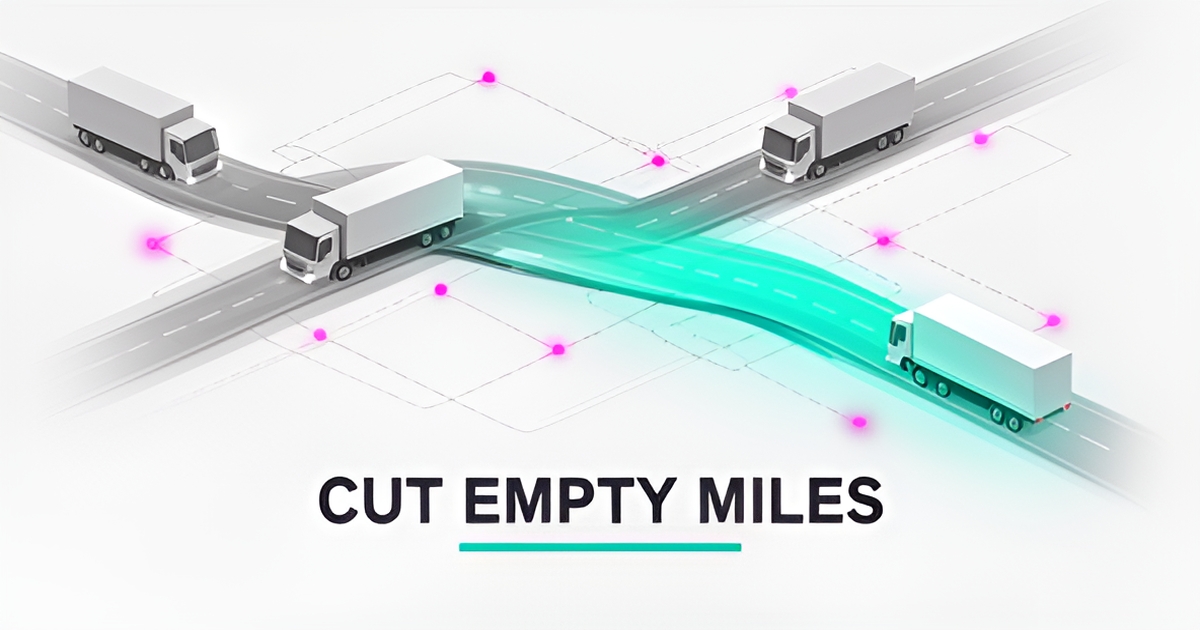
How an AI Dispatcher Can Reduce Empty Miles and Improve Fleet Utilization for Truck Rentals
Key Facts
- Roughly 35% of U.S. truck routes are driven without a load according to industry research.
- Between 15% and 30% of all truck miles are driven empty per fleet analysis.
- A 20% empty rate can waste about $37,000 per truck per year at $1.85 cost per mile.
- AI-powered routing can reduce operating costs by up to 15% in fleet studies.
- AI dispatch reduces daily planning time by 80-95% per dispatch comparison.
- AI enables one dispatcher to manage 35-50 vehicles vs a manual ratio of 1:10-12 in AI fleet management analysis.
- Year 1 ROI for AI fleet management is reported at 280% according to Velocity AI Insights.
Hire a team member that works 24/7 — for less than a part-time wage.
AI receptionists, SDRs, dispatchers and 99+ roles. Trained on your business, fully managed.
Not sure where to start? Ask our AI planner
The Hidden Cost of Empty Miles in Truck Rental Operations
Empty miles are the silent profit leak in truck rental operations, turning every return trip into unpaid cost. When vehicles move without revenue, fuel, maintenance and driver time are spent for nothing.
Approximately 35% of U.S. truck routes are driven without a load, a figure that reflects both industry-wide inefficiency and a direct hit to rental fleet utilization. Between 15% and 30% of all truck miles are driven empty, with the impact compounding for companies that rely on asset turnover for margins.
The math is stark at the truck level. A truck driving 100,000 miles per year with a 20% empty rate wastes 20,000 miles of fuel, maintenance and driver time. At an average $1.85 cost per mile, that equals roughly $37,000 in lost value per truck, per year. That waste is not theoretical; it is payroll, diesel and depreciation with no corresponding revenue.
Scale multiplies the loss quickly. For a 50-truck fleet, a 20% empty rate can translate to about $1.85 million in pure waste. Mid-sized rental operations feel this as lower fleet utilization, longer payback on vehicles and pressure to discount rates to win the next load. Empty miles also drive higher emissions, more frequent maintenance and harder-to-balance driver schedules.
The cost drivers behind empty miles are visible in daily operations:
- Deadhead returns after drop-offs with no backhaul secured
- Manual dispatch that cannot re-optimize mid-day when orders change
- Limited visibility into available loads while trucks are in transit
- Planning that relies on intuition instead of real-time traffic, weather and time windows
For truck rental companies, utilization is the business model. Idle trucks and empty repositioning miles erode the return on each asset and make it harder to promise reliable pickup and drop-off windows to customers. AI-powered dispatch systems address this by treating pickup and drop-off routing as a continuous optimization problem rather than a morning plan that is static by noon.
AIQ Labs builds AI systems tailored to fleet logistics needs — from an AI dispatcher that works alongside your team to a full rebuild of your dispatch workflow — with a focus on keeping vehicles loaded and moving. The shift from manual planning to intelligent route optimization can reduce operating costs by up to 15% while improving asset utilization by 8-10% through real-time load matching and dynamic routing.
Without intervention, empty miles remain a structural cost. With intelligent dispatch, the same fleet can carry more revenue per mile, reduce fuel burn and improve driver satisfaction by cutting unnecessary driving.
How AI Dispatch Systems Eliminate Empty Miles and Optimize Routes
The cognitive load of dispatch planning is staggering. A competent dispatcher building routes for 15 vehicles with 300 total stops is solving a combinatorial optimization problem with thousands of simultaneous variables—vehicle capacity, driver hours, time windows, road restrictions, live traffic, and customer priority commitments. Human cognition handles this through heuristics that produce acceptable solutions, not optimal ones.
AI dispatch systems fundamentally change this equation by evaluating millions of route combinations against all constraints simultaneously, completing in seconds what takes human dispatchers 2 to 4 hours each morning. According to industry research, fleets using AI-powered routing can reduce operating costs by up to 15% while improving asset utilization by 8-10% through intelligent route optimization and real-time load matching. The technology processes every stop, driver, constraint, and real-time variable at once, dynamically adjusting routes when orders change mid-day without requiring dispatchers to rebuild entire plans from scratch.
- Reduces daily planning time by 80-95%, from hours to minutes
- Achieves 92-98% route efficiency versus 75-85% for manual dispatch
- Enables one dispatcher to manage 35-50 vehicles instead of 10-12
- Cuts fuel costs by 15-25% through optimized routing and driver behavior coaching
- Improves ETAs and reduces customer wait times by up to 20%
The shift from manual to AI-assisted dispatch transforms the dispatcher's role from route builder to operations manager. Rather than replacing human expertise, AI enhances it by offloading repetitive tasks like route planning, traffic monitoring, and load matching to intelligent systems. Dispatchers become strategic operators who monitor, adjust, and improve routes based on real-time data and analytics. Co-Pilot mode addresses the trust barrier directly—the AI generates an optimized route plan for dispatcher review before dispatch, allowing them to accept, adjust, or override recommendations while the system learns from their adjustments.
For truck rental operations specifically, predictive matching capabilities anticipate when trucks will return without cargo and automatically suggest available loads before arrival, maintaining higher utilization rates. Predictive matching technology uses AI to forecast supply and demand, pairing trucks with cargo more efficiently and reducing wasted trips. AIQ Labs builds AI dispatch systems that integrate with existing TMS, ELD, and telematics platforms, enabling truck rental companies to implement this technology through a phased approach, with many fleets reaching break-even within the first few months.
The Real ROI: Cost Savings and Efficiency Gains from AI Dispatch
The financial impact of AI dispatch is immediate and measurable. For mid-sized truck rental fleets, implementing an AI dispatcher typically delivers annual savings in the tens of thousands of dollars through reduced fuel costs, lower overtime, and eliminated administrative overhead. Actual figures vary by fleet size and route profile, so treat published ranges as directional rather than guaranteed. These gains come from optimizing routes to cut empty miles by up to 30%, directly addressing one of the industry's most costly inefficiencies. Fleets using AI-powered routing see operating costs drop by as much as 15% while improving asset utilization by 8-10%, turning previously wasted miles into revenue-generating activity.
The return on investment accelerates quickly, with many fleets achieving break-even within the first few months. Industry analysis reports first-year ROI as high as 280%, driven by both hard savings and operational efficiencies. Dispatchers gain the capacity to manage 35-50 vehicles each—up from the manual limit of 10-12—without sacrificing service quality. This scalability reduces labor costs while improving response times, as AI completes daily route planning in under 60 seconds compared to the 2-4 hours required for manual planning.
- Fuel savings of 10-15% from optimized routing and reduced idle time
- 20-35% reduction in overtime and administrative hours
- Consolidated compliance and reporting instead of separate bolt-on tools
For truck rental operations where margins depend on utilization, these improvements compound rapidly. AIQ Labs builds AI dispatch systems that integrate directly with existing telematics and scheduling tools, ensuring seamless adoption. The result is a fleet that runs leaner, responds faster, and generates more revenue per vehicle—without adding headcount or complexity.
From Co-Pilot to Autopilot: Implementing AI Dispatch in Your Fleet
Most fleets don't go from manual planning to full automation overnight, and the ones that try usually lose trust before they see savings. A proven path starts with co-pilot mode, where AI generates optimized plans for human review, and graduates to autopilot for routine operations once the team is confident.
A typical implementation journey takes 6-8 weeks. Weeks 1-2 put Co-Pilot live, with the dispatcher reviewing and accepting or adjusting AI plans daily. By weeks 3-4, dispatcher acceptance rates often reach 85%+ and time spent on planning drops from 120 minutes to 20 minutes. Weeks 5-8 are used to encode remaining edge cases and constraints, then transition to Autopilot for routine days.
Co-pilot mode is designed to build trust. AI generates an optimized route plan and presents it for review before dispatch. The dispatcher can accept the plan as-is, adjust specific stops, override vehicle assignments, or flag constraints the system should learn from. AI dispatch reduces daily planning time by 80-95%, turning a 2 to 4 hour morning build into under five minutes of review.
Autopilot mode is for stable, well-defined route structures. Orders import from ERP or customer portal, the system builds and assigns optimized routes, pushes them directly to driver devices, and sends confirmation emails automatically. AI optimization completes the same planning in under 60 seconds that manual planning for a 15-vehicle fleet typically takes 90–150 minutes.
Common challenges surface early and are manageable with structure. Integration complexity is addressed by connecting AI to existing TMS, ELD, and telematics so data flows without duplicate entry. Change management matters because dispatchers shift from route builder to operations manager, a role change that requires training and clear success metrics. Data quality is also critical; inaccurate addresses or incomplete load details degrade routing decisions.
Implementation success is measured in operational and financial terms:
- Planning time falls from 2 to 4 hours to under five minutes with 80-95% reduction in daily planning time
- Dispatchers can manage 35-50 vehicles vs the manual ratio of 1:10-12
- Break-even typically occurs within the first few months, with savings scaling by fleet size
For truck rental operations, this phased approach protects service quality while unlocking utilization gains. AIQ Labs architects co-pilot to autopilot workflows that integrate with rental operations and load matching — whether as a standalone dispatch workflow build or as part of a broader AI operating system for your whole business. The result is fewer empty miles, faster planning, and dispatchers focused on strategic decisions rather than repetitive scheduling.
Building Your Custom AI Dispatcher with AIQ Labs
Empty miles are the silent profit drain in truck rental, and an AI dispatcher is how operators close the gap without adding headcount. Building the system around your existing TMS, telematics, and CRM means the documented savings from AI routing can be captured inside workflows you already use.
AIQ Labs offers three ways to get there. An AI Employee — a managed AI dispatcher among 99+ roles — handles day-to-day dispatch at a fraction of the cost of a human hire. A Workflow Build rebuilds the one workflow that costs you the most, at a fixed price and in phases. And an AI Operating System connects dispatch, booking, and customer communications into one operating layer you own outright. Integration is built first, so route optimization, load matching, and real-time adjustments flow between your transportation management system, telematics feeds, and customer records without manual re-entry.
The financial case is already established in the industry. Industry research shows approximately 35% of U.S. truck routes are driven without a load, and AI-powered routing can reduce operating costs by up to 15%. The same research finds AI can reduce average idle time by 12% and improve asset utilization by 8-10% through intelligent route optimization and real-time load matching.
A custom build translates those benchmarks into rental-specific logic. Rather than generic routing, the dispatcher learns your pickup and drop-off patterns, vehicle types, rental windows, and return-trip availability, then continuously matches backhauls to keep trucks moving. Analysis of AI fleet management reports break-even of 1-3 months, with year one ROI at 280% for fleets that move from manual planning to automated optimization.
With AIQ Labs' delivery model, the system is yours — owned code and agents, not a rented widget. That ownership aligns with how rental companies need control over pricing, customer data, and dispatch rules.
A tailored AI dispatcher typically includes:
- TMS and telematics integration for live vehicle location, hours-of-service, and maintenance status
- CRM and booking system sync to ingest reservations and push ETAs automatically
- Co-pilot to autopilot deployment path, starting with human-reviewed plans and scaling to full automation
- Predictive load matching that anticipates return trips and suggests freight before trucks go empty
The result is true ownership of the dispatch capability, with planning time dropping from hours to minutes and dispatchers shifting from route builders to operations managers. Fleets can scale one dispatcher to 35-50 vehicles instead of the manual ratio of 1:10-12, while improving customer ETAs and driver utilization.
Builds are delivered through three payment models — Start Monthly, Build in Milestones, or Own It Outright — so rental operators can match investment to cash flow and keep the system as a permanent asset. See aiqlabs.ai/pricing for how each model works.
Still paying for 10+ subscriptions that don’t talk to each other?
We build custom AI systems you own outright. No vendor lock-in. Full control.
Not sure where to start? Ask our AI planner
Frequently Asked Questions
How much do empty miles actually cost a truck rental fleet?
Can an AI dispatcher really reduce empty miles, or is it just hype?
Will AI dispatch replace my dispatchers?
How long does it take to implement AI dispatch and see a return?
Will an AI dispatcher work with my existing TMS and telematics systems?
What's the real efficiency difference between manual and AI dispatch?
Turning Empty Miles into Profitable Opportunities
Empty miles aren't just a cost—they're a solvable problem. AI dispatch systems transform truck rental operations by cutting planning time from hours to minutes, enabling one dispatcher to manage 35-50 vehicles, and reducing empty miles by up to 30% through real-time load matching and dynamic routing. The result is higher asset utilization, lower fuel costs, and faster ROI—often within the first few months. For rental fleets where every mile matters, this shift from reactive planning to intelligent optimization turns idle time into revenue. The path forward starts with understanding your specific workflow: AIQ Labs helps truck rental operators deploy AI dispatchers — as an AI Employee, a fixed-price Workflow Build, or a full AI Operating System — that integrate with existing TMS, telematics, and CRM systems and are owned outright. Start with the 2-minute Fit Check at aiqlabs.ai/apply; if it looks like a fit, book a free 30-minute strategy call at aiqlabs.ai/book to map your biggest bottleneck. No obligation, just clarity on where AI can pay off first.
Make AI your competitive advantage — not just another tool.
Strategy, implementation and ongoing optimization. One partner, end to end.
Not sure where to start? Ask our AI planner