Back to Blog

How an AI Dispatcher Can Reduce Empty Miles for Taxi Companies

AI Business Process Automation > AI Workflow & Task Automation15 min read

How an AI Dispatcher Can Reduce Empty Miles for Taxi Companies

Key Facts

  • Digital taxi dispatch tools are projected to reach a $1.05 billion global market by 2026.
  • AI-enabled systems reduce rider wait times to less than five minutes in major cities.
  • Automation handles ride assignments in seconds, cutting down on fuel-wasting 'dead miles'.
  • Electric vehicles in ride-hailing are growing at a rate of 16.55% annually.
  • Seattle plans to phase out its old medallion system by March 2026.
  • Many cities now require at least 50% of all taxis to be wheelchair-ready.
  • AI predicts future demand to position vehicles strategically before riders even request a car.
AI Employees

What if you could hire a team member that works 24/7 for $599/month?

AI Receptionists, SDRs, Dispatchers, and 99+ roles. Fully trained. Fully managed. Zero sick days.

The High Cost of Manual Dispatching

In 2026, relying on legacy manual dispatching is no longer just an operational inefficiency—it is a financial liability that threatens your company’s survival. Traditional dispatching often relies on manual decision-making, which results in longer wait times and inefficient driver allocation. This manual friction creates a cascade of problems, from frustrated customers to bleeding profit margins through wasted fuel and labor.

The market is shifting rapidly toward digital necessity. With the global market for digital taxi dispatch tools projected to reach $1.05 billion in 2026, the industry is clearly signaling that manual methods are obsolete. Companies that fail to adapt to this change risk being left behind by competitors who have already embraced automation.

Key inefficiencies of manual dispatch include:

  • Inefficient Driver Allocation: Human dispatchers cannot process real-time data fast enough to match every rider with the nearest available vehicle.
  • Longer Wait Times: Manual assignment delays result in customers waiting significantly longer than the less than five minutes now expected in major cities.
  • Increased "Dead Miles": Drivers frequently cruise without passengers, burning fuel and time while generating zero revenue.

According to industry analysis, "Artificial Intelligence (AI) is no longer a futuristic concept in transportation—it is becoming a competitive advantage for taxi companies worldwide." Manual dispatching cannot compete with the speed and precision of automated systems. The cost of inaction is measured in lost trips, higher operational expenses, and diminished brand reputation.

To understand the scale of the problem, consider the financial impact of "dead miles." When drivers cruise without passengers, they accumulate significant fuel costs and wear-and-tear expenses without offsetting revenue. Automation explicitly handles ride assignments in seconds, cutting down on "dead miles" where drivers cruise without a passenger. This efficiency directly saves on fuel and labor costs, creating an immediate bottom-line improvement.

Furthermore, manual systems lack predictive capabilities. Human dispatchers react to demand as it happens, whereas AI analyzes historical data to predict future needs. This allows companies to position vehicles strategically before demand occurs, ensuring drivers are already in high-traffic areas when requests come in. This proactive approach transforms idle time into productive earning time.

The regulatory landscape is also forcing this transition. Seattle, for example, plans to phase out its old medallion system by March 2026 to favor digital platforms. Companies clinging to manual processes will find themselves non-compliant with evolving digital-first regulations. Additionally, many cities now require at least half (50%) of all taxis to be wheelchair-ready, a complex logistical requirement that manual systems struggle to manage efficiently.

The hidden costs of manual dispatching extend beyond fuel:

  • Higher Labor Overhead: Human dispatchers require salaries, benefits, and coverage for breaks or shifts, whereas AI works 24/7/365.
  • Customer Churn: Longer wait times and unreliable service drive customers toward competitors with faster, app-based booking.
  • Scalability Limits: Manual systems cannot easily scale during peak events or holidays without a proportional increase in staff.

Research from Mobility Infotech highlights that tech is no longer just a support tool; it is the backbone of the entire business. When dispatching is manual, the backbone is brittle. When it is automated, the business becomes resilient, scalable, and profitable.

The transition from manual to AI-driven dispatch is not merely an upgrade; it is a fundamental restructuring of how value is created. By eliminating the bottlenecks of human error and slow processing, taxi companies can unlock significant operational efficiencies. However, achieving this requires more than just buying off-the-shelf software; it demands a custom-built system that integrates seamlessly with existing GPS and booking platforms. This is where custom AI development becomes critical for long-term success and true ownership of your operational infrastructure.

Three Mechanisms for Reducing Empty Miles

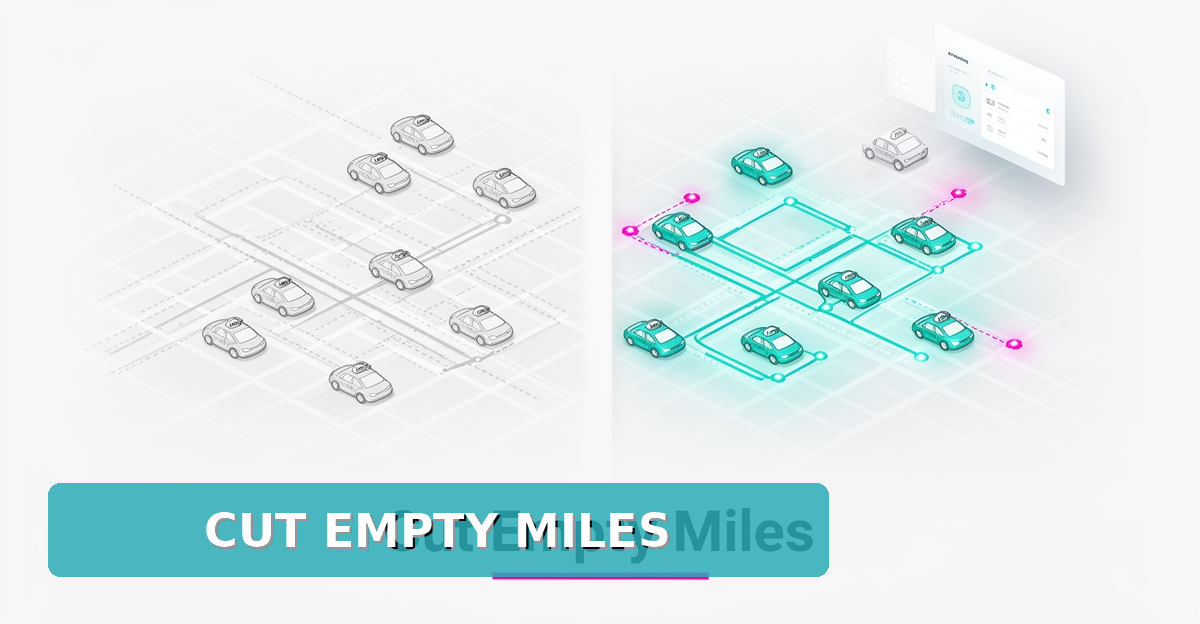
Empty miles, often called "dead miles," represent the single largest drain on taxi profitability, occurring when drivers cruise for passengers instead of earning revenue. By replacing manual decision-making with AI-driven dispatch, companies can systematically eliminate these inefficiencies through three core technical mechanisms. These systems don’t just react to demand; they anticipate it, positioning vehicles strategically before riders even open their apps.

The shift from legacy manual dispatch to automated intelligence is no longer optional—it is a competitive necessity. As reported by UnicoTaxi, traditional dispatching relies on human judgment that often results in inefficient driver allocation and frustratingly long wait times. AI transforms this bottleneck by analyzing multiple real-time factors to assign rides in seconds, directly cutting down on idle time and fuel waste.

The first mechanism eliminates the lag between a passenger request and driver assignment. Traditional systems often suffer from latency, allowing the nearest available car to become occupied by a driver further away. AI-driven dynamic matching algorithms calculate proximity, traffic conditions, and driver availability instantly.

This precision ensures that the closest driver is always linked to the nearest rider, minimizing the distance traveled without a fare. According to industry analysis from Mobility Infotech, this "smart math" approach significantly reduces the time a car spends empty. The result is a tighter fleet where vehicles are always moving with purpose, directly increasing completed trips per shift.

Beyond reacting to current requests, advanced AI predicts future demand using historical data and real-time market conditions. This proactive strategy allows taxi companies to position vehicles strategically before demand spikes, ensuring cars are already in high-traffic zones when riders need them.

AI analyzes past patterns to instruct drivers to move to busy spots before the rush starts, preventing empty cruising to catch requests. As noted by UnicoTaxi, this predictive capability is one of AI's biggest advantages in the modern transportation landscape. By positioning vehicles efficiently, companies ensure that drivers are never driving empty to pick up a request, but are instead waiting for a passenger who is already nearby.

The final mechanism refines the assignment process by prioritizing proximity and minimizing detours. Smart matching logic goes beyond simple square-meters distance, factoring in road networks and real-time congestion to determine the true fastest pickup time. This logic ensures that drivers aren’t assigned trips that require excessive empty travel to reach the passenger.

This efficiency directly saves on fuel and labor costs by reducing "dead miles" where drivers cruise without a passenger. Mobility Infotech reports that automation handles these ride assignments in seconds, drastically lowering the cost per trip. When combined with real-time fleet visibility, managers can quickly move cars to high-demand areas like major events, further reducing the likelihood of empty travel.

By integrating these three mechanisms, taxi companies can transform their dispatch operations from reactive cost centers into proactive revenue generators. This technological foundation sets the stage for implementing custom AI workflows that integrate seamlessly with existing GPS and booking platforms.

The Competitive Advantage of AI Ownership

Stop renting your competitive edge. While traditional vendors lock taxi operators into expensive, inflexible subscriptions, AIQ Labs delivers true ownership of your dispatch infrastructure. This distinction isn't just about branding; it is the difference between temporary relief and permanent operational dominance.

When you subscribe to generic vendor platforms, you pay recurring fees for features you may never use, all while surrendering control over your core business logic. In contrast, our custom-built systems integrate seamlessly with your existing GPS and booking tools, creating a unified asset that appreciates in value.

You gain complete control over customization without the risk of vendor lock-in or sudden platform price hikes. This approach transforms your dispatch system from a monthly expense into a owned digital asset that drives long-term profitability.

Legacy dispatch tools often suffer from rigid architectures that cannot adapt to the dynamic needs of modern ride-hailing. Manual decision-making in traditional dispatching remains a primary cause of inefficient driver allocation and longer wait times.

AI-powered systems analyze multiple factors in real time to achieve faster ride assignment, but generic vendors rarely allow you to tweak the underlying logic. This limitation leaves operators vulnerable to inefficiencies that directly impact their bottom line.

  • Recurring Subscription Costs: Continuous fees erode margins regardless of your fleet’s performance or growth.
  • Inflexible Feature Sets: You cannot customize workflows to match your specific operational nuances or local regulations.
  • Vendor Dependency: Your business continuity relies on a third party’s roadmap, not your strategic vision.

According to industry analysis, "Artificial Intelligence (AI) is no longer a futuristic concept in transportation—it is becoming a competitive advantage for taxi companies worldwide." However, this advantage evaporates if you do not own the technology driving it.

Building custom AI workflows allows taxi companies to eliminate "dead miles" through precise, tailored logic. Automation handles ride assignments in seconds, which cuts down on "dead miles" where drivers cruise without a passenger. This efficiency saves significantly on fuel and labor costs.

Our development team architects these systems using advanced frameworks like LangGraph, ensuring that every interaction between driver, passenger, and system is optimized for your specific business model. We replace costly subscription chaos with unified, owned digital assets.

One of AI's biggest advantages is its ability to predict future demand using historical data and real-time market conditions. By instructing drivers to move to busy spots before the rush starts, you ensure vehicles are positioned efficiently rather than driving empty to pick up requests.

  • Reduced Operational Costs: Lower fuel consumption and decreased reliance on human dispatchers.
  • Higher Driver Earnings: Smarter matching logic ensures drivers spend more time with paying passengers.
  • Scalable Infrastructure: Systems designed to handle enterprise-level demands without subscription caps.

True ownership means your code, your data, and your competitive moat remain entirely within your control. Unlike consultants who provide recommendations without implementation, AIQ Labs commits to end-to-end partnership, ensuring AI delivers sustainable business impact.

We build production-ready systems, not prototypes, that integrate deeply with your CRM, accounting, and fleet management tools. This creates a single source of truth across departments, eliminating the data silos that plague legacy systems.

Research from industry leaders confirms that tech is no longer just a support tool; it is the backbone of the entire business. By owning your AI infrastructure, you future-proof your operation against regulatory shifts, such as Seattle’s phase-out of old medallion systems in favor of digital platforms.

Ultimately, this strategy allows you to offer better prices to riders while maintaining profitability, as automation lowers the cost of every trip. Ready to take ownership of your fleet’s efficiency?

Implementing an AI Dispatcher Workflow

Deploying a custom AI dispatcher transforms chaotic manual operations into a streamlined, profit-generating engine. Unlike off-the-shelf software, an AIQ Labs AI Employee integrates directly with your existing GPS and booking platforms to eliminate vendor lock-in. This approach ensures your fleet operates with true ownership of its intelligence, turning idle time into revenue.

Traditional dispatching relies on manual decision-making, which industry experts identify as a primary cause of inefficient driver allocation. By contrast, AI-powered systems analyze multiple factors in real time to achieve faster ride assignment. According to UnicoTaxi, this shift from manual to automated logic is no longer optional but a critical competitive necessity for 2026.

Before building, identify the specific bottlenecks causing empty miles. Most taxi companies suffer from drivers cruising without passengers due to delayed response times. An AI Workflow Fix targets this single critical pain point, rebuilding the broken dispatch logic with a robust, custom solution.

This initial phase ensures we understand your unique operational constraints. We map your current GPS data flows and booking platform APIs to identify where human error or latency occurs. This targeted approach allows for rapid deployment and immediate visibility into efficiency gains.

The core of your new system is the AI Dispatcher, a role explicitly listed in AIQ Labs’ service catalog. This AI Employee handles multi-step workflows, using "smart math" to link riders with the closest available driver. This specific mechanism significantly reduces the time a car spends empty, helping drivers earn more while lowering your operational costs.

Key capabilities of this AI Employee include:

  • Real-Time Dynamic Matching: Instantly assigns rides based on proximity and driver availability.
  • Predictive Positioning: Uses historical data to instruct drivers to move to busy spots before rush hour.
  • 24/7 Availability: Never calls in sick or misses a call, ensuring consistent fleet coverage.

As reported by Mobility Infotech, automation handles ride assignments in seconds, cutting down on "dead miles" where drivers cruise without a passenger. This efficiency directly saves on fuel and labor costs, creating a measurable ROI from day one.

AIQ Labs builds production-ready systems that connect seamlessly with your current tech stack. We utilize Multi-Agent Architecture to ensure your AI Dispatcher communicates effectively with your GPS trackers, CRM, and booking engines. This integration creates a single source of truth, eliminating the need for manual data entry between disparate tools.

True ownership is central to our model. You receive full control over the custom-built system, ensuring no platform dependencies or future vendor lock-in. This allows you to scale operations without adding headcount or paying recurring subscription chaos.

Once live, we monitor performance metrics to continuously refine the dispatch logic. The AI learns from every trip, improving its predictive positioning accuracy over time. This ongoing optimization ensures your fleet remains agile against changing demand patterns, such as local events or seasonal spikes.

To maximize impact, ensure your system includes live map integration for real-time fleet visibility. This allows managers to intervene manually when necessary, maintaining the "human-in-the-loop" oversight that AIQ Labs emphasizes for critical decisions.

By following these steps, taxi companies can replace legacy dispatch workflows with a custom, owned AI system that optimizes fleet utilization. The result is a resilient operation that thrives in the digital-first mobility landscape.

AI Development

Still paying for 10+ software subscriptions that don't talk to each other?

We build custom AI systems you own. No vendor lock-in. Full control. Starting at $2,000.

Frequently Asked Questions

How exactly does an AI dispatcher reduce empty miles compared to my current manual system?
AI systems use 'smart math' to link riders with the closest driver instantly, whereas manual dispatch often suffers from latency and inefficient allocation. Additionally, AI predicts future demand using historical data to position vehicles strategically before rush hours, preventing drivers from cruising empty to catch requests.
Is AI dispatch software expensive, or are there recurring subscription costs I should worry about?
Unlike traditional vendors that lock you into recurring subscription chaos, AIQ Labs offers a 'True Ownership' model where you buy custom-built systems outright. You eliminate ongoing vendor lock-in and platform dependencies, transforming your dispatch infrastructure from a monthly expense into a owned digital asset.
Can an AI dispatcher handle complex requirements like wheelchair-accessible vehicles?
Yes, modern digital tools assist in dispatching specific vehicle types to meet regulatory needs, such as the requirement for half of all taxis to be wheelchair-ready. AIQ Labs can build custom workflows that automatically match these accessibility requirements with the appropriate fleet vehicles.
Will implementing AI help us stay compliant with new regulations like Seattle's medallion phase-out?
Absolutely; cities like Seattle are phasing out old medallion systems by March 2026 in favor of digital platforms, making automation essential for compliance. AIQ Labs ensures your custom system is future-proof and aligned with these evolving digital-first regulations.
Does replacing human dispatchers with AI negatively impact driver earnings or satisfaction?
On the contrary, AI increases completed trips and driver earnings by reducing the time cars spend empty and maximizing revenue-generating miles. Automation also removes the cost of human dispatchers, allowing companies to potentially offer better prices to riders while maintaining profitability.
How long does it take to implement a custom AI dispatcher workflow?
Implementation typically follows a phased approach starting with a 1-2 week Discovery & Architecture phase, followed by 4-12 weeks of Development & Integration. Once deployed, the system undergoes a 1-2 week Deployment & Training phase before entering ongoing optimization, allowing for rapid visibility into efficiency gains.

From Dead Miles to Digital Dominance

The era of manual dispatching is ending, replaced by a digital necessity where efficiency determines survival. As demonstrated, legacy systems drive up costs through inefficient driver allocation, extended wait times, and the financial drain of 'dead miles.' In contrast, AI-driven dispatching offers the speed and precision required to meet modern customer expectations and protect profit margins. At AIQ Labs, we transform these operational challenges into competitive advantages. We help businesses cut down on inefficient routes and empty miles by deploying custom AI-driven dispatch workflows that integrate seamlessly with existing booking platforms and GPS systems. Unlike vendors offering generic tools, we build production-ready systems that ensure better vehicle utilization and significantly lower fuel costs. Don’t let manual inefficiencies bleed your company dry. Partner with AIQ Labs to architect a custom solution that owns your data and drives real ROI. Schedule your Free AI Audit & Strategy Session today and discover how we can help you turn every mile into revenue.

AI Transformation Partner

Ready to make AI your competitive advantage—not just another tool?

Strategic consulting + implementation + ongoing optimization. One partner. Complete AI transformation.

Join The Newsletter

Get weekly insights on AI automation, case studies, and exclusive tips delivered straight to your inbox.

Ready to Increase Your ROI & Save Time?

Book a free 15-minute AI strategy call. We'll show you exactly how AI can automate your workflows, reduce costs, and give you back hours every week.

P.S. Still skeptical? Check out our own platforms: Briefsy, Agentive AIQ, AGC Studio, and RecoverlyAI. We build what we preach.