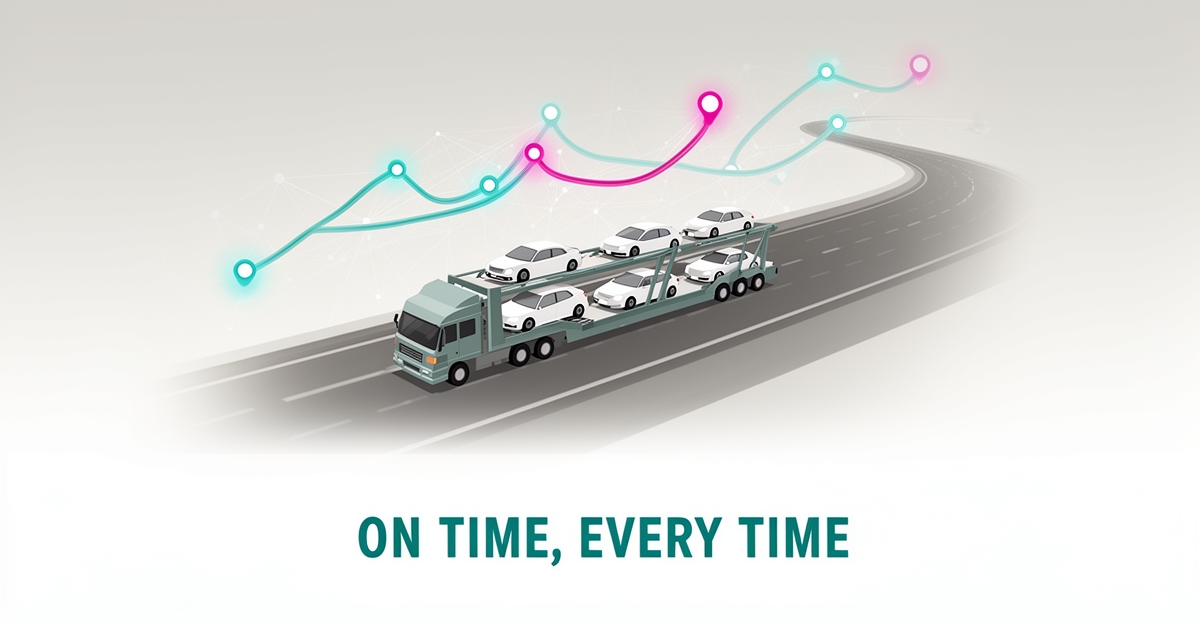
How an AI Dispatcher Can Reduce Late Deliveries in Auto Hauling Operations
Key Facts
- Many logistics companies still rely on manual dispatching methods, which fragments visibility and slows decisions according to industry guides
- AI dispatching can substantially reduce manual planning time per research on best AI dispatch software
- AI-powered dispatch systems are typically reported to cut fuel consumption by roughly 10-20% based on fleet automation reporting
- Vendors report on-time delivery rates approaching 98% with mature AI dispatch deployments as shown in fleet automation reporting
- Trucking operating margins are notoriously thin, so small efficiency gains compound quickly per industry analysis
Hire a team member that works 24/7 — for less than a part-time wage.
AI receptionists, SDRs, dispatchers and 99+ roles. Trained on your business, fully managed.
Not sure where to start? Ask our AI planner
The Cost of Manual Dispatching in Auto Hauling
Auto haulers relying on manual dispatching face mounting operational costs that erode already thin margins. With trucking operating margins notoriously slim, inefficiencies in routing, scheduling, and real-time adjustments quickly turn profitable routes into losses. Manual processes lack the agility to respond to traffic delays, weather disruptions, or last-minute load changes, leading to cascading delays across the supply chain.
These inefficiencies show up in measurable ways. Many logistics companies still rely on manual dispatching methods, according to industry guides, which contributes to suboptimal route planning and increased fuel consumption. AI-powered dispatch systems are typically reported to cut fuel consumption by roughly 10-20% by eliminating unnecessary idling, reducing deadhead miles, and optimizing load sequencing—savings that matter when every percentage point affects profitability.
Beyond fuel, manual dispatching inflates labor costs through excessive planning time and human error. AI dispatching can substantially reduce manual planning time, freeing dispatchers to focus on exception management and customer communication rather than spreadsheet-driven route building. This shift improves accuracy and reduces burnout in a role already strained by high-pressure decision-making.
The financial toll extends to service reliability. Without predictive capabilities, manual dispatchers cannot anticipate delays before they happen, resulting in missed delivery windows and dissatisfied dealerships or auction houses. Mature AI dispatch deployments are reported to reach on-time delivery rates approaching 98% by continuously re-optimizing routes based on real-time GPS, traffic, and weather data—turning unpredictability into a manageable variable.
For auto haulers, where timing is tightly coupled with vehicle value and dealer inventory needs, late deliveries trigger penalties, strained relationships, and increased administrative overhead to resolve disputes. The cumulative effect—wasted fuel, labor inefficiency, and service failures—creates a cycle where manual dispatching isn't just slow; it's actively undermining competitiveness in a low-margin industry. Breaking this cycle requires moving beyond spreadsheets toward systems that think ahead, adapt instantly, and operate with precision at scale. To explore how AI-driven dispatch automation can transform your hauling operations, start with a 2-minute Fit Check to assess your current workflows and identify high-impact opportunities.
How AI Dispatchers Prevent Delays Through Real-Time Optimization
Real-time optimization is where AI dispatchers deliver their most significant impact on delivery timeliness. By continuously analyzing live GPS data, traffic patterns, weather disruptions, and order changes, these systems dynamically adjust routes and assignments to prevent delays before they occur. Research on AI dispatch software suggests these systems can substantially reduce manual planning time, freeing dispatchers to focus on exception management rather than repetitive scheduling tasks. This shift from reactive to proactive operations forms the foundation of improved on-time performance.
AI systems achieve this through layered intelligence: first establishing optimized baseline routes using historical and real-time data, then applying machine learning models to predict potential delays from factors like congestion, weather, or loading dock availability. When predictions indicate a deviation from the planned schedule, the system automatically triggers re-optimization—reassigning tasks, adjusting sequences, or suggesting alternative routes without human intervention. Fleet automation reporting links these capabilities to on-time delivery rates approaching 98% in mature deployments, a critical benchmark for auto haulers managing time-sensitive vehicle transports. The ability to process thousands of data points per second keeps decisions both fast and contextually accurate.
- Continuous ingestion of GPS, traffic, and weather feeds for live situational awareness
- Predictive modeling of delay risks using historical patterns and real-time inputs
- Automatic task reassignment and route adjustment when thresholds are exceeded
- Feedback loops that refine predictions based on actual outcomes
- Integration with scheduling tools to maintain alignment across operations
For auto hauling companies, this level of automation translates directly to fewer missed delivery windows and stronger customer trust. AIQ Labs supports this transformation through AI Workflow Builds that rebuild the dispatch workflow that costs you the most—fixed price, delivered in phases—embedding these optimization layers into existing operations so AI augments rather than disrupts. The result is a self-correcting logistics network where delays are anticipated and mitigated in real time, turning unpredictability into a manageable variable rather than a chronic source of lateness.
Implementing an AI Dispatcher: From Data to Deployment
Late deliveries erode margin in auto hauling, where operating margins are notoriously thin according to industry analysis. An AI dispatcher replaces reactive firefighting with a measurable deployment path that starts with data and ends with dynamic reassignment.
Start by defining the problem tightly and measuring baseline KPIs. Teams track on-time delivery, planning hours, miles per load, and late-delivery root causes before any build. This baseline creates a clear ROI target and prevents optimizing the wrong workflow.
Data centralization comes next. GPS feeds, order manifests, driver logs, and historical ETAs are cleaned and unified into a single operational view. Industry guides on AI for logistics dispatch optimization note that many logistics companies still use manual dispatching methods, which fragments visibility and slows decisions.
With clean data in place, add quick wins through rule-based automation. Low-complexity jobs such as empty returns or same-route drops are auto-assigned by capacity and proximity rules. This frees dispatchers from repetitive tasks and builds trust before more advanced logic is introduced.
Optimization layers follow. Batch routing and capacity-aware assignment replace one-off planning. The system evaluates load size, trailer type, driver hours, and appointment windows together. Research on best AI dispatch software shows AI dispatching can substantially reduce manual planning time at this stage.
Predictive models are then layered on top. Machine learning algorithms forecast travel times, border delays, and order arrivals using historical and real-time signals. Predictions enable proactive re-planning rather than last-minute calls.
Real-time re-optimization closes the loop. The dispatcher continuously monitors vehicle locations and traffic, automatically reassigning tasks when delays emerge. Fleet automation reporting links this capability to fuel savings in the 10-20% range and on-time delivery rates approaching 98% in mature deployments.
A practical rollout follows this sequence:
- Centralize GPS, orders, driver logs and historical ETAs into one source of truth
- Deploy rule-based auto-assignment for low-complexity jobs
- Introduce batch routing and capacity-aware assignment
- Layer predictive ML for travel time and arrival forecasting
- Enable real-time re-optimization with automatic reassignment
AIQ Labs aligns this approach with its AI Workflow Builds service: we rebuild the one dispatch workflow that costs you the most, at a fixed price and in phases, so you keep full ownership of what gets built. The result is a dispatcher that learns, adapts, and reduces late deliveries without replacing human oversight where it matters. With 200+ multi-agent systems deployed, the rollout path is proven. Take the 2-minute Fit Check to see if your operation is a match.
Still paying for 10+ subscriptions that don’t talk to each other?
We build custom AI systems you own outright. No vendor lock-in. Full control.
Not sure where to start? Ask our AI planner
Frequently Asked Questions
How much time can an AI dispatcher actually save on manual planning tasks like route planning and scheduling?
Will using an AI dispatcher really help us cut fuel costs in our auto hauling operations?
What kind of on-time delivery performance can we realistically expect from an AI dispatcher?
Do most logistics companies still rely on manual dispatching, and why does that matter for us?
How does an AI dispatcher handle unexpected delays like traffic jams or weather disruptions?
What's the first step in implementing an AI dispatcher without disrupting our current workflow?
Turning the Tide on Late Deliveries with Smarter Dispatching
Auto haulers know that in an industry with notoriously thin margins, every minute and mile counts. Manual dispatching drains profits through wasted fuel, inefficient planning, and preventable delays—issues that compound quickly when timing is tied to vehicle value and dealer needs. AI-powered dispatch changes that by continuously optimizing routes using real-time GPS, traffic, and weather data, with vendors reporting fuel savings in the 10-20% range and on-time delivery rates approaching 98% in mature deployments. It also slashes manual planning time, letting dispatchers focus on exceptions and customer service instead of spreadsheets. For haulers ready to move beyond reactive firefighting, the path forward starts with understanding where AI can make the biggest impact. Take the 2-minute Fit Check at aiqlabs.ai/apply, then book a free 30-minute strategy call to assess your workflows and uncover high-ROI opportunities—no obligation, just clarity on how smarter dispatching can protect your margins and strengthen your reliability.
Make AI your competitive advantage — not just another tool.
Strategy, implementation and ongoing optimization. One partner, end to end.
Not sure where to start? Ask our AI planner