How an AI Dispatcher Can Reduce Late Deliveries in Freight Brokerage
Key Facts
- Choosing the cheapest freight quote can raise total landed cost significantly once delays, penalties, and downstream disruptions are factored in
- AI dispatchers reduce idle time by optimizing routes in real time based on traffic and weather
- Automated load matching improves asset utilization and reduces empty miles in freight brokerage
- Predictive vehicle availability enables proactive scheduling and fewer missed delivery windows
- AI dispatchers continuously learn from delivery outcomes to improve future scheduling decisions
- AIQ Labs deploys AI dispatchers as managed AI Employees that integrate with existing TMS and CRM systems
Hire a team member that works 24/7 — for less than a part-time wage.
AI receptionists, SDRs, dispatchers and 99+ roles. Trained on your business, fully managed.
Not sure where to start? Ask our AI planner
The Cost of Late Deliveries in Freight Brokerage
A single late delivery can quietly undo weeks of careful margin management in freight brokerage. What looks like a minor scheduling miss on paper often cascades into inflated landed costs, strained carrier relationships, and customers who quietly take their next load elsewhere.
The financial math is unforgiving. Cost-benefit analyses of freight options consistently show that choosing the cheapest quote can raise total landed cost substantially once delays, penalties, and downstream disruptions are factored in. Late deliveries don't just cost the fee on a single load — they inflate the true cost of every shipment they touch.
That cost compounds across operations. Delayed shipments turn productive time into wasted idle time, as trucks and drivers sit waiting on revised schedules, burning fuel budgets without moving freight. Last-mile inefficiencies grow worse when dispatchers scramble to reroute loads manually, and each rushed correction introduces new opportunities for human error and fatigue to creep in.
The operational ripple effects extend beyond the balance sheet:
- Eroded customer trust, as shippers increasingly expect real-time visibility and reliable delivery windows
- Higher fuel and labor costs from inefficient routing and reactive scheduling
- Strained carrier relationships when brokers repeatedly adjust commitments
- Lost capacity, as vehicles and drivers tied up in delay recovery can't take new loads
Customer expectations make the stakes higher still. Shippers now expect the speed, precision, and proactive communication they've grown accustomed to across modern software — and they bring those same expectations to their brokerage relationships. A broker relying on manual dispatch simply cannot match that responsiveness when traffic patterns, weather forecasts, and vehicle maintenance schedules shift mid-route.
Traditional dispatch methods struggle precisely because they depend on human attention across dozens of variables at once. Human dispatchers offer flexibility and adaptability, but they remain limited by fatigue and the sheer volume of data points involved in modern routing decisions. This is where AI-driven dispatch — such as the managed AI Dispatcher AI Employees AIQ Labs builds for logistics operations — changes the equation, predicting vehicle availability and optimizing routes in real time.
The cost of late deliveries, in short, is never just one late delivery. It's inflated landed costs, wasted capacity, and trust that's hard to win back — and it's the reason more brokers are rethinking how dispatch gets done.
How AI Dispatchers Improve On-Time Performance
Late deliveries erode trust and margin in freight brokerage, and the pressure to improve on-time performance is constant. AI dispatchers change the equation by handling the three decisions that drive punctuality every day.
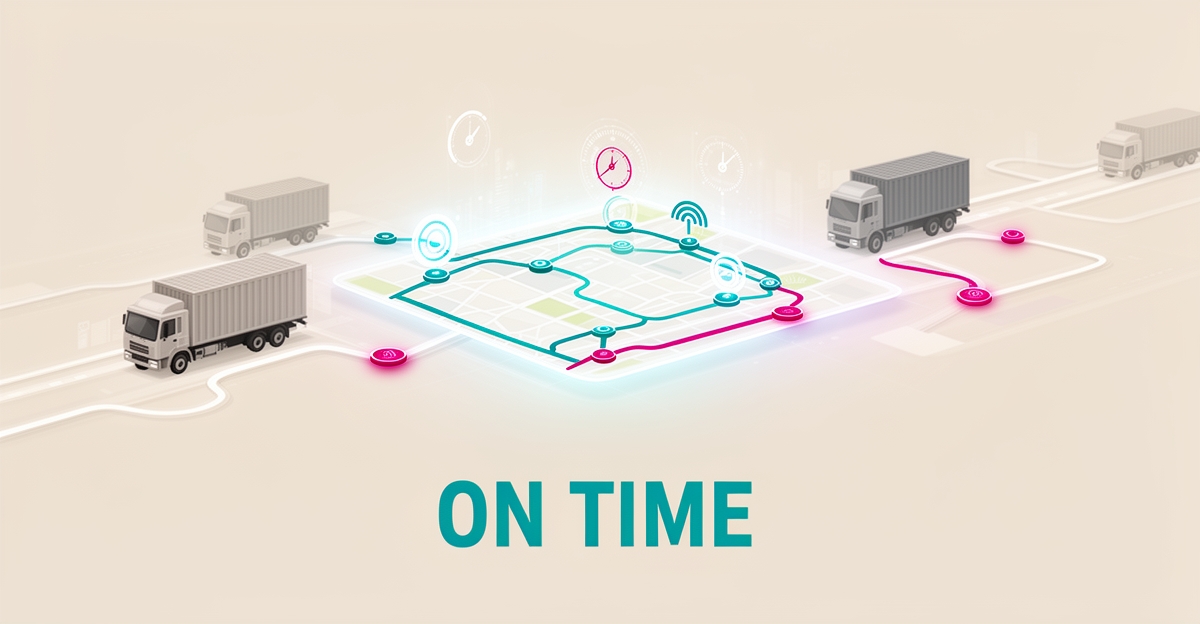
Real-time routing optimization keeps loads moving as conditions change. AI systems analyze traffic patterns, weather forecasts, and vehicle maintenance schedules to reroute before delays compound. This continuous adjustment reduces idle time and fuel costs while protecting delivery windows. AI agents cut waste by responding to live operational data rather than static plans.
Automated load matching pairs freight with the right carrier faster and more accurately than manual boards. By evaluating capacity, location, equipment type, and service requirements in parallel, AI dispatchers reduce empty miles and improve asset utilization. The result is stronger on-time delivery rates and higher customer satisfaction across the network. Freight brokers also avoid the hidden cost trap where choosing the cheapest quote raises total landed cost once delays and penalties are factored in.
Predictive vehicle availability gives dispatchers foresight instead of reaction. AI models forecast when trucks will be free, when maintenance is due, and where demand will spike, enabling proactive scheduling. This capability is central to AIQ Labs' managed AI Dispatcher approach, where a production AI employee handles routing and scheduling decisions alongside your team.
Core capabilities that lift on-time performance include:
- Real-time route recalculation based on live traffic, weather, and road events
- Automated load-to-carrier matching with multi-variable optimization
- Predictive availability forecasting for fleet and driver capacity
- Continuous learning from delivery outcomes to improve future decisions
Together these functions reduce idle time, lower fuel spend, and improve last-mile efficiency. Improved efficiency and accuracy is the primary advantage AI dispatchers hold over human dispatchers, who remain flexible but are limited by human error and fatigue.
For freight brokers, the operational impact is measurable: fewer missed windows, better asset use, and more reliable service promises. AIQ Labs delivers this as a managed AI employee that works alongside human teams, integrating with existing dispatch systems and learning business-specific constraints over time. For dispatch workflows that are deeply broken, a targeted Workflow Build can rebuild the single costliest process first.
Implementing an AI Dispatcher: From Pilot to Scale
Starting small with a focused pilot allows freight brokers to validate the impact of an AI dispatcher before scaling across operations. By targeting a single workflow—such as load matching for a specific lane or carrier network—brokers can measure improvements in on-time delivery rates and idle time reduction with minimal disruption. AIQ Labs' Start Monthly model supports this approach by providing a managed AI Employee that handles defined dispatch tasks, integrates with existing TMS and CRM systems, and includes ongoing monitoring and optimization. This enables brokers to test real-world performance, refine configurations, and build internal confidence before expanding scope.
Successful implementation depends on data readiness and system integration. AI dispatchers require clean, structured data on historical load patterns, carrier availability, transit times, and exception events to train predictive models for routing and scheduling. Brokers should audit data sources within their TMS, CRM, and carrier portals to identify gaps and standardize formats. Integration via APIs ensures the AI dispatcher can access real-time telematics, update load statuses, and communicate with carriers and shippers without manual intervention. AIQ Labs' Build in Milestones model aligns with this phased approach, allowing brokers to approve and pay for each integration phase as it ships—such as connecting to a TMS in phase one, enabling real-time rerouting in phase two, and adding predictive ETAs in phase three—while retaining all completed work.
Change management is critical to adoption. Dispatchers and operations teams must understand how the AI augments their role rather than replaces it, focusing on exception handling and strategic planning while the AI manages routine matching and rescheduling. Training programs should emphasize interpreting AI-generated recommendations, overriding decisions when needed, and providing feedback for continuous improvement. Clear communication about goals—such as reducing late deliveries by improving vehicle availability prediction and minimizing empty miles—helps align teams. As confidence grows, brokers can scale the AI dispatcher to additional lanes, modes, or regional hubs, leveraging the same integrated infrastructure to drive consistent gains in on-time performance and operational efficiency. To explore how an AI dispatcher can fit your freight brokerage workflow, take the two-minute Fit Check and then book a free 30-minute strategy call.
Still paying for 10+ subscriptions that don’t talk to each other?
We build custom AI systems you own outright. No vendor lock-in. Full control.
Not sure where to start? Ask our AI planner
Frequently Asked Questions
How much can late deliveries actually increase the total landed cost of a shipment?
What specific capabilities does an AI dispatcher use to improve on-time delivery rates?
Is an AI dispatcher meant to replace human dispatchers, or work alongside them?
How do AI dispatchers reduce idle time and fuel costs in freight operations?
What's the recommended way to start implementing an AI dispatcher without disrupting current operations?
Turn On-Time Delivery from a Hope into a Habit
Late deliveries don't just miss a window—they erode margins, strain carrier partnerships, and push customers toward more reliable alternatives. As this article showed, AI dispatchers tackle the root causes by optimizing routes in real time, matching loads with precision, and predicting vehicle availability before disruptions occur. The result isn't just fewer late shipments—it's lower idle time, reduced fuel waste, and a foundation for consistent, scalable reliability. For freight brokers ready to move beyond reactive fixes, the path forward starts with clarity. Take the two-minute Fit Check to see where an AI Employee could strengthen your dispatch workflow, then schedule your free 30-minute strategy call to explore a tailored approach—no obligation, just insight.
Make AI your competitive advantage — not just another tool.
Strategy, implementation and ongoing optimization. One partner, end to end.
Not sure where to start? Ask our AI planner