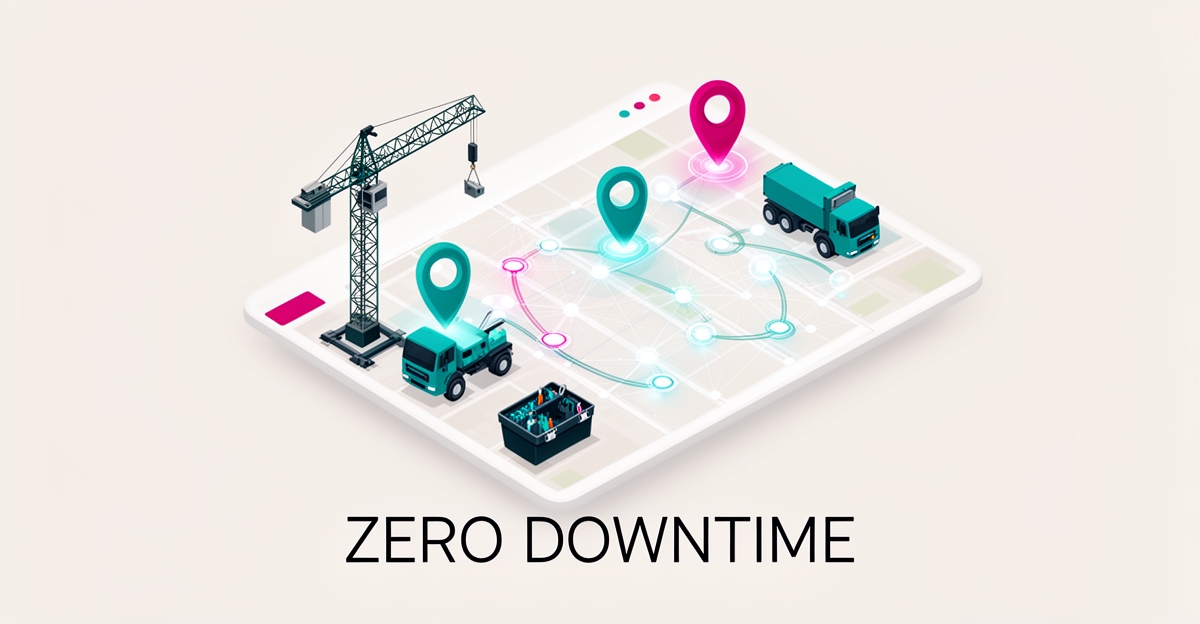
How an AI Dispatcher Can Streamline Equipment Dispatch and Reduce Downtime
Key Facts
- Approximately 30 million U.S. field service workers still rely on manual assignment methods.
- Companies adopting AI dispatchers typically see a 30–40% reduction in travel time within the first month.
- AI systems rebalance emergency schedules in seconds, replacing the typical 15–20 minute manual process.
- Predictive maintenance surfaces component failure risks 20–45 days before traditional diagnostics detect problems.
- Fleets of 100 vehicles can reduce annual downtime costs by $145,000–$385,000 using AI.
- A human dispatcher costs approximately $4,500 per month, while AI offers a fraction of that cost.
- Fleets implementing AI in 2026 gain a 12–18 month competitive advantage before the majority catches up.
What if you could hire a team member that works 24/7 for $599/month?
AI Receptionists, SDRs, Dispatchers, and 99+ roles. Fully trained. Fully managed. Zero sick days.
The Manual Dispatch Bottleneck
Whiteboards, spreadsheets, and endless text chains are no longer viable tools for modern field service operations. Approximately 30 million field service workers in the U.S. still rely on these legacy manual methods, creating a massive inefficiency gap that costs businesses time and money every day.
As operations scale, the inability to process complex variables like location, availability, and skill sets manually becomes a critical bottleneck.
- Whiteboards fail to update in real-time, leaving crews unaware of schedule changes.
- Spreadsheets cannot dynamically recalculate routes when emergencies arise.
- Text messages create information silos and lack a centralized source of truth.
According to FieldCamp’s industry research, this reliance on manual assignment methods persists despite the complexity of modern job requirements.
This manual friction leads directly to increased idle time and higher operational costs, as dispatchers spend hours coordinating rather than optimizing.
The human brain is not built to solve the "constraint satisfaction problem" at the speed required by today’s supply chains.
Dr. Ramesh Venkataraman of Georgia Tech notes that AI solves these computational constraints at a speed manual methods simply cannot match. When a dispatcher manually tries to match a technician’s certification, geographic proximity, and equipment availability, errors are inevitable.
Consider a typical emergency scenario: 1. A critical job comes in requiring a specific certified technician. 2. The dispatcher manually checks availability via phone or text. 3. It takes 15–20 minutes to locate and reassign the crew.
In contrast, an AI engine identifies the closest qualified technician and rebalances schedules in seconds.
Research from Analytics Insight highlights that conventional dispatch boards require manual drag-and-drop adjustments, whereas AI builds multi-day schedules instantly.
This delay isn’t just an inconvenience; it is a direct loss of revenue and customer trust.
Furthermore, without automated skill matching, businesses risk sending an apprentice to a commercial boiler job, leading to safety liabilities and rework.
The current manual model also fails to account for real-time traffic or unexpected vehicle breakdowns, causing cascading delays throughout the day.
The financial impact of manual dispatch extends far beyond wasted labor hours.
Companies adopting AI dispatching engines typically see a 30–40% reduction in travel time within the first month of deployment.
This efficiency gain is crucial for SMBs operating on thin margins.
- Reduced Drive Time: Less time on the road means more jobs completed per day.
- Lower Fuel Costs: Optimized routes significantly decrease vehicle wear and fuel consumption.
- Fewer Missed Opportunities: Automated systems can instantly accept jobs that manual dispatchers might miss due to overload.
A human dispatcher costs approximately $4,500 per month, whereas AI solutions offer a cost-effective alternative at a fraction of this price.
According to Robotics and Automation News, this cost disparity makes AI an accessible tool for small and medium-sized businesses.
Beyond direct labor costs, the hidden costs of poor dispatching include overtime pay for delayed jobs and customer churn due to missed windows.
For a fleet of 100 vehicles, AI-driven optimization can reduce downtime costs by $145,000–$385,000 annually.
This data, reported by FleetRabbit, underscores the massive ROI potential of moving away from manual coordination.
The transition from whiteboards to AI is not just a technology upgrade; it is a fundamental shift in operational capability that allows businesses to scale without proportionally increasing headcount.
By eliminating the manual bottleneck, companies can redirect their most valuable resource—their people—toward high-value tasks rather than administrative coordination.
The Data-Driven Solution: AI-Driven Efficiency
Manual dispatching is no longer just slow; it is a critical operational bottleneck that manual methods simply cannot solve at scale. AI dispatchers solve the constraint satisfaction problem computationally, analyzing complex variables like technician skills, real-time availability, and geographic proximity in seconds. This capability transforms chaotic scheduling into a precise, optimized workflow that human coordinators physically cannot replicate.
According to Analytics Insight, this computational approach allows businesses to handle multi-variable constraints that would overwhelm even the most experienced human dispatchers. While traditional boards require manual drag-and-drop adjustments, AI engines build and adjust multi-day schedules dynamically as conditions change.
- Eliminates Manual Bottlenecks: Processes location, skill, and availability data instantly.
- Dynamic Real-Time Adjustments: Reschedules crews immediately for emergencies or traffic.
- Optimized Skill Matching: Ensures the right technician is sent to the right job.
Consider the impact on emergency response times. Traditional manual coordination takes 15–20 minutes to identify the closest qualified technician and rebalance the schedule. Analytics Insight reports that AI systems complete this identical process in seconds, drastically reducing response lag for urgent calls.
Furthermore, the cost disparity is stark. A human dispatcher costs approximately $4,500 per month, whereas AI solutions offer comparable or superior efficiency at a fraction of that cost. Robotics and Automation News highlights that companies adopting AI dispatching engines see a 30–40% reduction in travel time within the first month. This efficiency gain directly translates to higher daily job capacity without adding headcount.
AIQ Labs leverages this technology through its AI Employee model, deploying trained AI dispatchers that work alongside field crews. These systems ensure equipment is matched to jobs efficiently, reducing idle time and preventing costly skill mismatches, such as sending an apprentice to a complex commercial job.
- 30–40% Reduction in Drive Time: Significantly lowers fuel costs and vehicle wear.
- Seconds vs. Minutes: Emergency reshuffling happens instantly, not after long delays.
- Cost Efficiency: Replaces $4,500/month human costs with scalable AI solutions.
The competitive advantage is also measurable. FleetRabbit research indicates that fleets implementing AI in 2026 gain a 12–18 month competitive lead before the majority catches up. By automating the "constraint satisfaction problem," businesses can focus human talent on high-value field work rather than administrative scheduling.
AIQ Labs integrates these AI Employees seamlessly into existing operations, ensuring that equipment dispatch is not just automated, but optimized for maximum uptime. This data-driven approach moves businesses from reactive chaos to proactive precision, setting the stage for deeper operational integration.
Measurable Impact: Downtime Reduction and Cost Savings
Implementing an AI dispatcher transforms equipment allocation from a reactive chore into a proactive strategic advantage. By automating the matching of technicians, equipment, and jobs based on location and availability, businesses can drastically cut idle time and accelerate service response.
AI dispatchers eliminate manual bottlenecks that traditionally plague field service operations. This automation ensures that the right resources are deployed at the right time, preventing costly delays and improving overall operational efficiency.
Manual coordination methods like spreadsheets and whiteboards cannot handle complex variables at scale. AI engines solve this by analyzing technician certifications, real-time availability, and geographic proximity to generate optimized schedules instantly.
The financial impact of this efficiency is immediate and significant. Companies adopting AI dispatching engines typically see a 30–40% reduction in travel time within the first month of deployment. This directly translates to more billable hours and lower fuel costs.
Furthermore, AI systems can identify the closest qualified technician and rebalance schedules for urgent calls in seconds. This process, which typically requires 15–20 minutes of manual coordination, is reduced to near-instantaneous action.
Consider the cost of a human dispatcher versus an AI solution. A human dispatcher costs approximately $4,500 per month, whereas AI offers a cost-effective alternative at a fraction of this expense. This disparity allows businesses to reallocate budget toward growth rather than overhead.
- 30–40% reduction in technician drive time within the first month
- 15–20 minutes saved per emergency response via instant rebalancing
- $4,500/month average cost of a human dispatcher vs. AI savings
Predictive maintenance is the highest-impact AI application in fleet management, with 68% of fleets prioritizing this capability. AI systems surface component failure risks 20–45 days before traditional diagnostics detect problems.
This early warning system allows maintenance teams to schedule repairs during planned downtime rather than facing emergency roadside situations. Leading AI platforms achieve 90%+ accuracy on component failure prediction after six months of operation.
By shifting from reactive repairs to proactive maintenance, businesses can avoid the exorbitant costs associated with unexpected equipment failure. This capability is a core component of AI fleet management that directly supports operational continuity.
The savings from reduced downtime and optimized routes accumulate into substantial annual figures. For every 100 vehicles annually, businesses can expect significant reductions across multiple cost categories.
Downtime costs alone can be reduced by $145,000–$385,000 annually, representing a 30–62% reduction. Maintenance costs see a similar drop, with reductions ranging from $175,000–$320,000 (25–40% reduction).
Additionally, accident costs can be lowered by $85,000–$210,000 due to improved safety monitoring and driver behavior analysis. These figures demonstrate that AI dispatching is not just an efficiency tool, but a critical financial safeguard.
- $145,000–$385,000 annual reduction in downtime costs per 100 vehicles
- $175,000–$320,000 annual reduction in maintenance costs
- 30–62% decrease in overall downtime expenses
Fleets implementing AI in 2026 gain a 12–18 month competitive advantage before the majority of the market catches up. With only 27% of fleets having deployed AI compared to 65% researching it, early adopters are securing significant market share.
This data supports the deployment of managed AI employees that work alongside human teams. By integrating these systems, businesses can ensure equipment is matched to jobs efficiently and on time, creating a sustainable competitive edge.
The transition from manual to AI-driven dispatching is no longer optional for industry leaders. Integrating these systems allows businesses to compete at the highest levels regardless of their size.
Implementation: The AI Employee Advantage
Stop treating AI as a software subscription and start hiring it as a workforce member. AIQ Labs deploys trained AI dispatchers that function as fully integrated "AI Employees," working alongside your human crews to eliminate the chaos of manual coordination.
Unlike static chatbots, these AI Employees possess defined roles, execute complex multi-step workflows, and communicate naturally via phone, email, and SMS. They do not just suggest solutions; they take action, ensuring your field teams have the right equipment and skills for every job.
Your existing tools are your foundation; AI is the engine that powers them. We build AI Employees that integrate directly into your CRM, scheduling software, and inventory systems via deep API connections. This ensures that every dispatch decision is based on real-time data, not guesswork.
This integration is critical for skill matching and compliance in regulated industries. An AI Dispatcher analyzes technician certifications, real-time availability, and geographic proximity to assign jobs accurately.
- Prevents costly misassignments, such as sending an apprentice to a specialized commercial boiler job
- Ensures every crew member holds the valid certifications required for specific job types
- Maintains an automated audit trail for all dispatch decisions and communications
- Dynamically adjusts schedules when emergencies arise, rebalancing routes in seconds
The true advantage of an AI Employee lies in its ability to process variables faster than any human dispatcher. While manual coordination for emergency reshuffling can take 15–20 minutes, AI systems identify the closest qualified technician and rebalance schedules in seconds. This speed translates directly to reduced downtime and higher revenue.
According to Robotics and Automation News, companies adopting AI dispatching engines typically see a 30–40% reduction in travel time within the first month of deployment.
Furthermore, AIQ Labs integrates predictive maintenance capabilities into the dispatch workflow. By surfacing component failure risks 20–45 days before traditional diagnostics, we enable repairs during planned downtime. As reported by FleetRabbit, this proactive approach can reduce annual downtime costs by up to 62% for fleets of 100 vehicles.
Hiring a human dispatcher costs approximately $4,500 per month, excluding benefits and training overhead. In contrast, an AI Employee provides 24/7/365 coverage, never calls in sick, and costs a fraction of that price. This isn't just about cutting costs; it's about amplifying the productivity of your existing human talent.
Consider a mid-sized electrical services firm that previously relied on whiteboards and text messages. By deploying an AIQ Labs AI Dispatcher, they automated scheduling and lead capture end-to-end. The result was not only a streamlined operation but also the construction of a 10,000+ page SEO-optimized website that captured organic traffic while the AI handled inbound leads.
- Eliminates the $4,500/month salary burden of human dispatchers
- Provides 24/7/365 availability without overtime or vacation coverage gaps
- Reduces operational errors by automating data entry and assignment logic
- Scales effortlessly during peak seasons without hiring temporary staff
Ultimately, this shift transforms your dispatch center from a cost center into a strategic asset that drives growth. Let’s explore how we can architect a custom AI solution tailored to your specific operational needs.
Strategic Advantage and Next Steps
The window for gaining a competitive edge through AI dispatching is narrowing rapidly. Fleets that implement these systems in 2026 secure a 12–18 month competitive advantage before the industry catches up (FleetRabbit data). Currently, a significant gap exists between the 65% of operators researching AI and the mere 27% who have successfully deployed it.
This delay represents lost revenue and operational inefficiency for organizations waiting on the sidelines. By acting now, businesses can lock in efficiency gains while competitors are still stuck in the exploration phase.
Manual dispatching is no longer just slow; it is financially unsustainable in a tight labor market. The average human dispatcher commands a salary of $4,500 per month, creating a massive overhead burden for small and medium-sized businesses. In contrast, AI dispatchers eliminate this recurring cost while providing superior accuracy and availability.
Beyond salary, the hidden costs of manual coordination are substantial. Businesses that delay adoption face:
- 30–40% higher drive times due to inefficient route planning
- 15–20 minute delays in emergency response coordination
- Missed predictive maintenance windows leading to costly roadside breakdowns
- Skill mismatches that result in rework and compliance risks
AIQ Labs offers a structured, low-risk entry point for businesses ready to automate their operations. We do not just provide software; we deploy trained AI Employees that work alongside your field crews to ensure equipment is matched to jobs efficiently and on time.
Our implementation process ensures you see measurable ROI from day one:
- Baseline Assessment: We measure your current dispatch metrics to establish a clear return-on-investment benchmark.
- Custom Integration: We build multi-agent systems that integrate with your existing CRM, scheduling tools, and telemetry data.
- Live Deployment: Your AI Dispatcher goes live with a dedicated phone number, email, and chat interface, ready to handle real-world workflows.
The technology to eliminate downtime and optimize fleet utilization is proven and production-ready. Whether you need a single AI Dispatcher to handle field service coordination or a complete Business AI System to transform your entire operation, AIQ Labs provides the engineering excellence and strategic guidance to make it happen.
Don’t let manual processes drain your profitability. Contact AIQ Labs today to schedule your free AI Audit and discover how we can architect your competitive advantage.
Still paying for 10+ software subscriptions that don't talk to each other?
We build custom AI systems you own. No vendor lock-in. Full control. Starting at $2,000.
Frequently Asked Questions
How much faster is an AI dispatcher compared to manual coordination during emergencies?
Does an AI dispatcher replace my human team or just make them more productive?
What financial savings can I expect from switching to AI dispatching?
Can the AI prevent sending the wrong technician to a job?
How does AI help reduce equipment downtime before it happens?
Is AI dispatching affordable for small businesses that can't hire full-time dispatchers?
From Manual Bottlenecks to AI-Driven Precision
The reliance on whiteboards, spreadsheets, and text chains creates a critical inefficiency gap that costs field service businesses time and money daily. As highlighted, manual dispatching struggles to process complex variables like location, availability, and skill sets, leading to increased idle time and higher operational costs. While it can take 15–20 minutes to manually locate a qualified technician for an emergency, AI engines solve these constraint satisfaction problems instantly, ensuring the closest qualified crew is dispatched immediately. At AIQ Labs, we move beyond theoretical AI to deliver production-ready solutions. We deploy trained AI Dispatchers that work alongside your field crews, automating equipment allocation based on location, availability, and job type to reduce idle time and improve service response. Whether through custom development services or managed AI Employees, AIQ Labs helps SMBs eliminate manual friction and achieve sustainable competitive advantages. Stop letting legacy tools bottleneck your growth. Contact AIQ Labs today to discover how we can architect your competitive advantage and transform your dispatch operations.
Ready to make AI your competitive advantage—not just another tool?
Strategic consulting + implementation + ongoing optimization. One partner. Complete AI transformation.