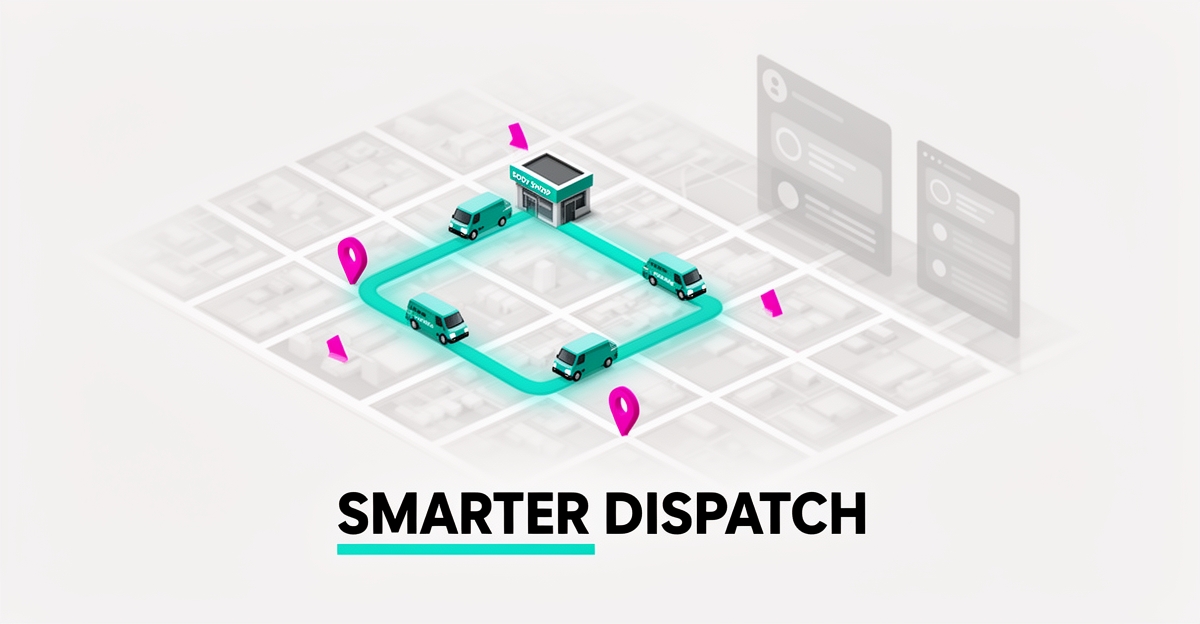
How an AI Dispatcher Can Streamline Mobile Technician Assignments in Body Shops
Key Facts
- A large majority of companies using field service software report real productivity gains, according to industry surveys as of late 2026.
- Contractors who reply to leads within five minutes typically book jobs far more often than those waiting half an hour, lead-response research suggests.
- Businesses with full asset visibility often see meaningful gains in maintenance productivity and reductions in repair costs, industry data indicates.
- A majority of global workers say they lack enough time or energy for their work, workforce research reports.
- The skilled trades face a significant worker shortage through 2027 and beyond, with substantial annual economic impact, labor analysts project.
- Only a minority of contractors currently use AI in any meaningful way, adoption research indicates as of late 2026.
Hire a team member that works 24/7 — for less than a part-time wage.
AI receptionists, SDRs, dispatchers and 99+ roles. Trained on your business, fully managed.
Not sure where to start? Ask our AI planner
The High Cost of Manual Dispatch: Why Body Shops Are Losing Jobs to Slower Competitors
Manual dispatch creates a bottleneck that costs body shops jobs every day. When a call comes in after hours or between scheduled appointments, the delay is immediate and measurable. Competitors with faster response systems capture the work while traditional shops are still finding a dispatcher.
The financial impact compounds quickly. Lead-response research suggests contractors who reply to a lead within five minutes typically book the job far more often than those who wait half an hour. In collision repair, that five-minute window often decides who gets the tow and who loses the estimate.
Inefficient routing inflates costs that erode margins. Without real-time location data, dispatchers assign the nearest technician on paper, not in reality. The result is excess drive time, missed slots, and technicians finishing late. Industry data indicates businesses with full visibility into their assets often see meaningful gains in maintenance productivity and reductions in repair costs. Visibility is the first step to control.
After-hours coverage is another revenue leak. Body damage does not wait for business hours, and most repair calls are unplanned emergencies. The company that answers the phone first usually wins the work. Manual teams go dark evenings and weekends, leaving calls to voicemail and jobs to faster competitors.
Cognitive overload makes manual dispatch unsustainable. Workforce research reports that a majority of the global workforce say they lack enough time or energy to do their work. Dispatchers juggling phones, spreadsheets, and radio calls make errors under pressure. Errors mean double bookings, missed pickups, and customer complaints.
Traditional dispatch also limits growth. Industry surveys consistently find that most companies using field service software report real productivity gains and say the software helped their business grow. Manual processes cap technician utilization and prevent scaling without adding headcount.
The pain points show up daily as:
- Missed after-hours calls that go to competitors with 24/7 coverage
- Suboptimal routing that increases fuel costs and reduces jobs per day
- Delayed lead response that loses estimates within minutes
- Dispatcher overload leading to scheduling mistakes and technician downtime
AI dispatchers address these gaps by using GPS, vehicle location, and job priority to assign repairs efficiently. AIQ Labs deploys managed AI dispatchers—part of its AI Employees service—that work 24/7 to ensure no job goes unattended, reducing response times and fuel costs through real-time data and historical job patterns. Faster response becomes a competitive advantage instead of an operational risk.
How AI Dispatchers Optimize Assignments Using GPS, Skills, and Real-Time Data
Modern dispatching transforms field service operations by leveraging real-time GPS data, technician skill matrices, and historical job patterns to make intelligent assignment decisions that reduce travel time and increase first-time fix rates. AI-powered systems continuously analyze vehicle locations, job priorities, and technician availability to match the most qualified worker to each repair task based on proximity, expertise, and current workload. This automated approach eliminates the guesswork of manual scheduling while ensuring optimal resource allocation across all shifts.
Industry surveys consistently show that a large majority of companies using field service software report real productivity gains from these optimization capabilities, with most also saying the software helps their business grow through improved technician utilization and reduced operational costs. The technology addresses critical industry challenges by maximizing the productivity of existing workforce resources—particularly valuable given the ongoing skilled trades shortage, which labor analysts project will carry a substantial annual economic impact through 2027 and beyond. By reducing unnecessary travel and ensuring appropriate skill matching, AI dispatchers enable body shops to serve more customers with fewer technicians.
- Real-time GPS tracking enables immediate response to technician delays, emergency calls, or last-minute cancellations
- Historical pattern analysis predicts demand peaks and optimizes resource allocation for routine maintenance schedules
- Continuous learning from past performance adjusts scheduling strategies to improve efficiency over time
- Skill-based matching ensures technicians are assigned to jobs matching their certified expertise and experience levels
- Dynamic reprioritization adjusts assignments as new high-priority jobs enter the queue throughout the day
AIQ Labs implements these capabilities through managed AI dispatchers that work 24/7 to ensure no job goes unattended, combining real-time vehicle location data with job priority logic to make optimal assignment decisions that reduce response times and fuel costs. The system continuously learns from historical job patterns to refine its decision-making, creating a feedback loop that improves first-time fix rates while minimizing unnecessary travel between assignments. This approach transforms dispatch from a reactive, human-dependent process into a proactive, data-driven operation that scales with business needs.
Quantifying the Impact: Productivity Gains and Operational Efficiency
Body shops facing technician shortages and rising customer expectations are finding that AI-powered dispatch systems deliver measurable productivity gains by optimizing every aspect of field service operations. Industry surveys consistently find that a large majority of companies using field service software report real productivity gains, demonstrating the tangible impact of intelligent scheduling on operational efficiency. These systems eliminate guesswork in technician assignments by continuously analyzing GPS data, vehicle locations, and job priorities to ensure the right technician is dispatched to the right job at the right time.
The operational benefits extend beyond simple scheduling improvements, directly addressing critical labor market challenges. AI dispatchers maximize existing technician utilization by reducing idle time between jobs, minimizing unnecessary travel, and ensuring skill-matched assignments—allowing body shops to serve more customers without expanding their workforce. This is particularly valuable given the projected skilled trades shortage through 2027, which labor analysts expect to carry a substantial annual economic impact. By squeezing more productivity from current teams, AI dispatch helps mitigate the impact of labor shortages while maintaining service quality.
AIQ Labs implements managed AI dispatchers that operate 24/7, ensuring no repair request goes unattended regardless of time or day—critical for emergency body shop services that occur outside standard business hours. These systems combine real-time operational data with historical job patterns to continuously refine scheduling decisions, reducing response times and fuel costs while improving first-time fix rates. The technology learns from past performance to optimize future assignments, creating a cycle of continuous improvement that scales with business growth.
Key operational advantages include:
- Reduced travel time between jobs through proximity-based technician matching
- Lower fuel consumption and vehicle wear from optimized routing
- Increased daily job completion rates via minimized downtime
- Improved customer satisfaction from faster, more reliable service delivery
- Better workload distribution preventing technician burnout during peak periods
The cognitive load reduction achieved through AI dispatch is equally significant. Rather than adding complexity, these systems simplify the dispatch process by handling the intricate calculations and data analysis that traditionally overwhelmed human dispatchers. The most successful implementations focus on solving specific problems effectively—providing relief from scheduling stress while ensuring consistent coverage. For body shops struggling with manual scheduling inefficiencies, AI dispatch represents not just a technological upgrade, but a fundamental shift toward sustainable operational excellence.
Implementing AI Dispatch: A Practical Roadmap for Body Shop Owners
Transitioning from manual dispatch to an AI-powered system doesn't require shutting down operations or gambling on unproven technology. The most successful implementations follow a deliberate roadmap that respects both your data and your people.
Start by auditing your current dispatch workflow to establish baseline metrics—response times, technician utilization rates, and fuel costs. This assessment reveals where AI can deliver immediate value while identifying the historical job data needed to train the system effectively.
Data integration forms the foundation of intelligent dispatch. Your AI dispatcher needs access to GPS vehicle tracking, real-time technician locations, and historical job patterns to make optimal assignments. Industry data indicates businesses with full visibility into their assets often see meaningful gains in maintenance productivity and reductions in repair costs. Ensure your customer management systems, inventory databases, and scheduling tools can feed clean, structured data into the AI platform before going live.
Staff resistance represents the biggest implementation hurdle, not technology. Adoption research indicates only a minority of contractors use AI in any meaningful way as of late 2026, often due to skepticism or fear of replacement. Overcome this by involving technicians early in the selection process and emphasizing how AI eliminates administrative burden rather than replacing human judgment. Successful tools reduce cognitive overload rather than creating it. Frame the AI dispatcher as a tool that handles routine assignments while empowering your team to focus on complex repairs and customer relationships.
Maintain operations during the switch by running parallel systems initially. Keep your manual dispatch process active while the AI system learns your operation's rhythms, then gradually shift volume as confidence builds. This redundancy ensures that emergency jobs receive immediate attention throughout the transition—critical because contractors who reply to leads within five minutes typically book jobs far more often than those who wait.
Your implementation checklist should include:
- Configure GPS integration and real-time location tracking for all mobile units
- Import historical job data and establish priority classification rules
- Train staff through hands-on sessions that demonstrate time-saving benefits
- Activate 24/7 automated coverage to capture after-hours emergency calls
- Monitor key metrics weekly and adjust assignments based on performance data
AIQ Labs structures these transitions using a phased approach—consistent with its Workflow Builds service—that lets body shops validate results at each milestone without disrupting daily operations, with payment tied to milestones rather than a single upfront commitment. Our managed AI dispatchers integrate with your existing systems and work around the clock from day one, ensuring that no emergency job goes unattended while your team adapts to the new workflow.
The goal isn't just automation—it's building a dispatch operation that scales without adding headcount. With most companies using field service software reporting productivity gains in industry surveys, the roadmap from manual chaos to AI-driven efficiency has never been clearer.
Still paying for 10+ subscriptions that don’t talk to each other?
We build custom AI systems you own outright. No vendor lock-in. Full control.
Not sure where to start? Ask our AI planner
Frequently Asked Questions
How fast does an AI dispatcher respond to incoming repair requests?
Will an AI dispatcher actually save my shop money on routing and fuel?
What happens to after-hours emergency calls if I'm using AI dispatch?
Do my technicians need to be tech experts to use an AI dispatch system?
Can I switch to AI dispatch without disrupting my current operations?
Is an AI dispatcher worth it if I'm already short on technicians?
Turn Every Call Into a Captured Job
Manual dispatch leaks revenue through missed after-hours calls, inefficient routing, and the five-minute response window that decides who wins the tow. AI dispatchers close these gaps by combining real-time GPS data with historical job patterns to assign the right technician instantly—operating 24/7 without fatigue, reducing fuel costs, and maximizing your existing team's productivity. With most companies using field service software reporting real productivity gains in industry surveys, the shift from reactive scheduling to proactive, data-driven dispatch is well established. If you're ready to stop losing jobs to faster competitors, start with the two-minute Fit Check at AIQ Labs to identify your biggest dispatch bottleneck, then book a free strategy call to map your implementation. No pressure—just a clear roadmap to capture every opportunity.
Make AI your competitive advantage — not just another tool.
Strategy, implementation and ongoing optimization. One partner, end to end.
Not sure where to start? Ask our AI planner