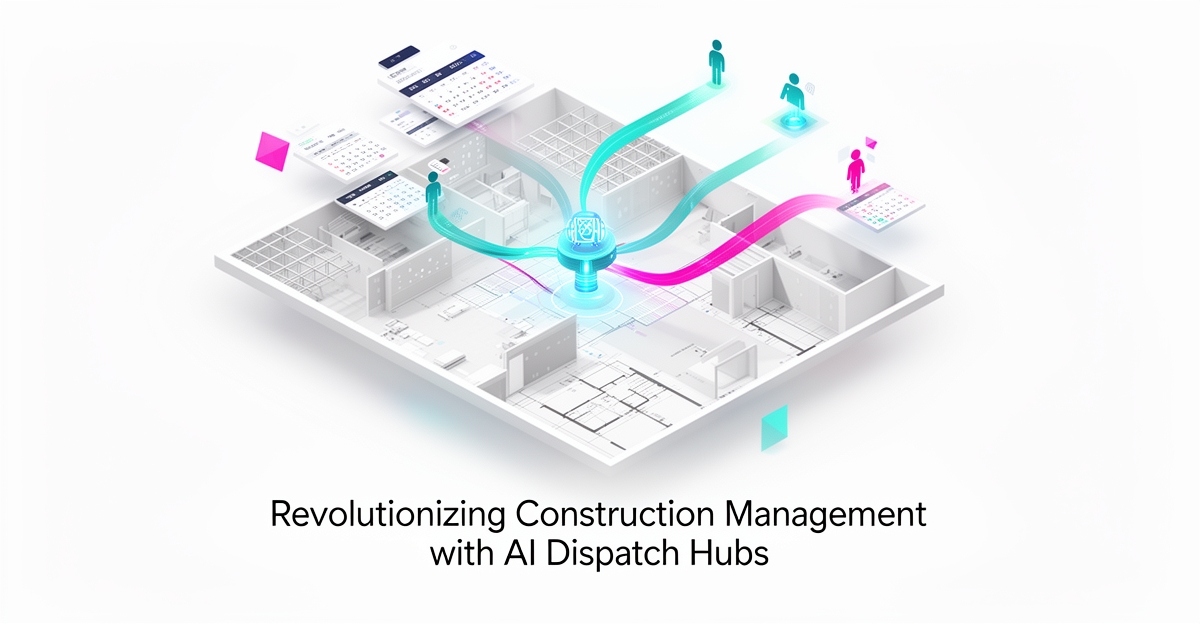
How an AI Dispatcher Can Transform Daily Operations in Tenant Improvement
Key Facts
- Manual planning and coordination typically consume the majority of a dispatcher's day
- AI dispatch systems typically deliver significant productivity gains over manual methods by eliminating repetitive workflows
- AI processes crew availability, skills, location, and workload simultaneously—something humans cannot do at scale
- Dynamic reoptimization lets schedules adjust in real time as delays, urgent jobs, and scope changes occur
- AIQ Labs has deployed 200+ multi-agent systems and runs 4 live SaaS products daily
Hire a team member that works 24/7 — for less than a part-time wage.
AI receptionists, SDRs, dispatchers and 99+ roles. Trained on your business, fully managed.
Not sure where to start? Ask our AI planner
The Dispatch Bottleneck in Tenant Improvement
Manual scheduling, reactive crew assignment, and scattered client follow-up create a persistent dispatch bottleneck in tenant improvement operations, leading to delays, missed visits, and pipeline leakage. Dispatchers often spend most of their day juggling spreadsheets, phone calls, and fragmented tools to coordinate crews and client visits. This manual overload exceeds human cognitive limits, resulting in errors, delayed responses, and missed opportunities as teams struggle to keep pace with incoming leads and scheduling demands.
The consequences ripple through the entire project lifecycle: clients experience slow response times and inconsistent communication, crews arrive unprepared or late due to poor assignment logic, and valuable leads fall through the cracks during follow-up gaps. AI dispatch systems typically improve productivity meaningfully over manual processes by eliminating repetitive workflows and enabling data-driven decisions. Without intervention, TI firms remain trapped in a cycle of reactive firefighting that constrains growth and erodes client trust.
- Manual planning and coordination dominate the dispatcher's day
- Reactive scheduling lets leads cool and crews sit idle
- Fragmented tools create errors, missed visits, and follow-up gaps
AIQ Labs addresses this bottleneck through managed AI Employees that function as intelligent dispatchers—proactively engaging leads, scheduling visits, and assigning crews based on real-time availability and skill sets. By embedding AI dispatch capabilities within existing operations, TI firms can reduce manual labor costs while increasing pipeline velocity and client satisfaction. The shift from reactive to proactive dispatch transforms daily operations from a source of friction into a competitive advantage.
What AI Dispatch Actually Does for TI Teams
Imagine your best project manager having a dozen conversations at once—calling prospects to gauge interest, coordinating schedules with property managers, and ensuring the right crew knows exactly where to be tomorrow morning. Now imagine that level of coordination happening automatically, without the phone tag and spreadsheet shuffling that typically consumes a dispatcher's day.
This is the operational reality AI dispatch systems deliver, and it centers on three core functions that traditionally require constant human oversight.
Proactive outreach replaces reactive waiting. Rather than hoping the phone rings, AI dispatchers initiate contact with potential clients at optimal times, qualifying interest and scheduling site visits without human intervention. They handle the initial back-and-forth that often kills momentum in TI projects, ensuring prospects receive immediate responses while your human team focuses on closing deals.
Intelligent scheduling eliminates the puzzle-work. Once a site visit is confirmed, the system automatically matches crew availability with project requirements, considering factors like specialized skills, location, and current workload. The technology processes these variables simultaneously—something human dispatchers simply cannot do at scale—which is where most of the productivity gains come from.
Dynamic assignment adapts in real-time. When a project scope changes or an emergency repair arises, the AI dispatcher reshuffles assignments instantly. For TI contractors, this means your existing office staff can manage significantly more projects without drowning in coordination chaos.
The technology handles the repetitive workflows that consume a dispatcher's day:
- Outbound calls to warm leads and past clients for new project opportunities
- Calendar coordination between prospects, property managers, and field supervisors
- Real-time crew assignment based on certifications, proximity, and availability
- Automatic rescheduling when delays or changes occur
- Status updates to all stakeholders without manual phone trees
AIQ Labs builds these capabilities into managed AI employees that integrate with your existing operations. Rather than replacing your team, the AI dispatcher works alongside them—handling the volume while your staff handles the exceptions and relationship-building that require human judgment. The result is a project pipeline that moves faster, with site visits scheduled promptly and crews deployed efficiently, all while reducing the administrative burden that typically limits growth.
From Reactive to Strategic: The Operational Shift
The daily grind of dispatch has long been defined by reactive firefighting—juggling spreadsheets, fielding urgent calls, and scrambling to reassign crews when plans fall apart. This constant state of triage consumes valuable time and mental bandwidth, leaving little room for strategic thinking or proactive planning. AI dispatch systems are changing that dynamic by automating the repetitive, time-intensive tasks that once dominated the dispatcher's role, freeing them to focus on higher-value decisions.
This shift isn't just about speed—it's about transforming the dispatcher from a reactive operator into a strategic commander who can anticipate needs, optimize resources, and drive operational excellence. Modern AI systems process thousands of variables—crew availability, certifications, equipment specs, and real-time conditions—to make optimal assignments in seconds rather than minutes.
One of the most striking improvements is in response timing: what once took a human dispatcher many minutes of cross-referencing—checking availability, confirming skills, locking a time slot—can happen in moments with AI. This acceleration enables faster response to client requests, tighter scheduling, and greater agility in dynamic environments. Multi-objective optimization allows AI to balance competing priorities—cost, service levels, crew utilization, and client commitments—simultaneously, something human dispatchers struggle to do consistently under pressure.
Dynamic reoptimization further enhances this capability, letting the system continuously adjust assignments throughout the day in response to traffic delays, weather changes, new urgent jobs, or crew availability shifts. For tenant improvement projects, this means crews can be rerouted efficiently based on skill proximity, project urgency, and material delivery windows—minimizing idle time and maximizing billable hours. AIQ Labs' managed AI Employees integrate this intelligence directly into existing workflows, working within current CRM, scheduling, and communication tools to automate dispatch functions without requiring a full system overhaul.
- Proactively identify and schedule client visits using predictive analytics
- Automatically assign crews based on expertise, location, and project timelines
- Dynamically reoptimize schedules in response to real-time changes
- Maintain seamless communication between dispatch, field teams, and clients
- Reduce manual coordination effort while improving project pipeline velocity
The result is a fundamental shift in operational posture: teams spend less time putting out fires and more time preventing them. Teams using AI dispatch support can typically manage substantially more volume without increasing headcount, while maintaining or improving service quality. This scalability is especially valuable in tenant improvement, where project pipelines fluctuate and rapid response to new opportunities can win competitive advantage.
By handling the cognitive load of constant coordination and re-planning, AI dispatch empowers human teams to focus on relationship-building, problem-solving, and process improvement—activities that drive long-term value. The technology doesn't replace expertise; it amplifies it, turning operational chaos into controlled, strategic execution. For businesses looking to move beyond survival mode, AI dispatch offers a clear path from reactive strain to proactive command.
Implementing an AI Dispatcher Without Disruption
Rolling out an AI dispatcher in tenant improvement does not have to mean a disruptive overhaul of crews, calendars, or client relationships. The most successful teams start with the data foundation and a narrow, high-value pilot, then expand once trust and results are proven.
A phased approach protects daily operations while building momentum. Begin with a data foundation assessment that maps crew availability, skill sets, project timelines, and client touchpoints. Field operations AI requires workforce data, real-time logistics, and asset inventory to feed into a single continuously updated decision layer, and integration gaps are a common blocker. Clean asset records, current certification matrices, and reliable system connections prevent the models from failing when fed inaccurate data.
Once the foundation is sound, launch a pilot focused on proactive outreach and scheduling. This is where tenant improvement gains immediate visibility. An AI dispatcher can proactively reach potential clients, schedule visits, and assign crews with far greater efficiency, shifting from reactive calls to predictive engagement. Assignments that once took a dispatcher many minutes of cross-checking happen in moments.
Workforce training runs in parallel with the pilot. Dispatchers and project managers need clear guidance on how to interpret and act on AI-generated recommendations, and on escalation paths when exceptions arise. Change management works best when AI is framed as an enhancement tool rather than a replacement, evolving the dispatcher from a reactive operator to a strategic commander.
Governance keeps the system reliable after launch. Maintain data quality routines, update crew skill matrices, and monitor performance metrics continuously. With manual planning offloaded, teams are freed for client-facing work, and organizations can scale operations without proportional staffing increases.
A practical rollout for TI operations typically includes:
- Data foundation assessment and real-time integration across CRM, scheduling, and crew management tools
- Phased pilot starting with proactive outreach, visit scheduling, and automated crew assignment
- Hands-on workforce training and human-in-the-loop controls for critical decisions
- Ongoing governance for data accuracy, certification updates, and performance optimization
Managed AI roles make this approach accessible without building an internal team. AIQ Labs offers managed AI roles that work within existing operations, reducing labor costs and improving project pipeline velocity—typically at roughly 80% less cost than a comparable human hire. Three payment models fit different risk appetites: Start Monthly provides one AI employee with setup, training, integrations, monitoring, and improvements included, with the ability to pause or adjust anytime; Build in Milestones suits firms rebuilding a specific high-cost workflow at a fixed price; and Own It Outright lets you own the system outright. This lets TI firms prove value with proactive client engagement and scheduling before expanding to a fuller AI operating system built in phases.
Still paying for 10+ subscriptions that don’t talk to each other?
We build custom AI systems you own outright. No vendor lock-in. Full control.
Not sure where to start? Ask our AI planner
Frequently Asked Questions
How much time can an AI dispatcher actually save my team?
Will an AI dispatcher replace my current dispatch staff?
How does AI decide which crew to send to a job?
What happens when a project changes or emergency comes up?
Is AI dispatch affordable for a small tenant improvement business?
How do I get started without disrupting my current operations?
From Dispatch Chaos to Competitive Advantage
The dispatch bottleneck in tenant improvement isn't just an operational annoyance — it's a growth ceiling. Manual scheduling consumes most of a dispatcher's day, leaving teams stuck in reactive mode while leads cool and crews wait. AI dispatch flips that dynamic: proactive outreach replaces phone tag, intelligent scheduling eliminates the daily puzzle, and dynamic assignment adapts in real time when scope shifts. AIQ Labs delivers this capability through managed AI Employees that integrate with your existing CRM, scheduling, and communication tools — no rip-and-replace required. Start with a data foundation assessment and a focused pilot on proactive outreach and visit scheduling. Train your team to work alongside the AI, not around it. The goal isn't automation for its own sake; it's freeing your people to focus on the relationships and decisions that actually win projects. Ready to see where the biggest win lives in your operation? Take the two-minute Fit Check and book a free 30-minute strategy call with an AI engineer — no pitch, just clarity.
Make AI your competitive advantage — not just another tool.
Strategy, implementation and ongoing optimization. One partner, end to end.
Not sure where to start? Ask our AI planner