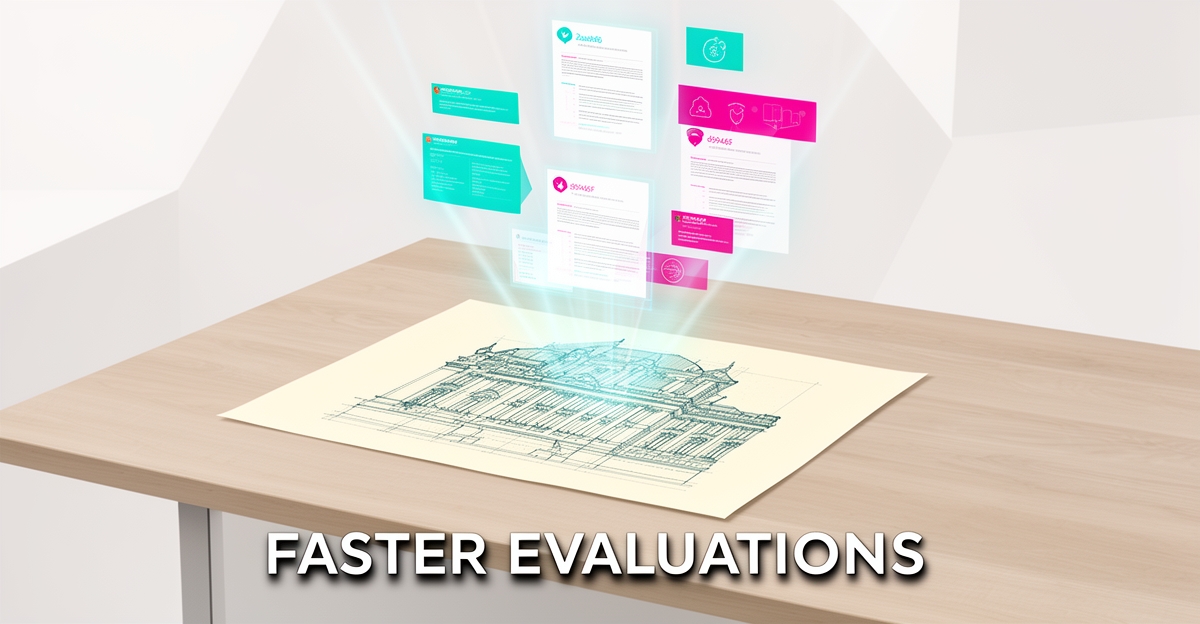
How an AI Document Manager Can Save Time in Historic Site Evaluations
Key Facts
- AI document management systems are widely reported to reduce template errors dramatically and draft documents many times faster than manual methods.
- The document management market has seen sustained multi-billion-dollar growth, with analysts projecting continued expansion through the next decade.
- A majority of finance and operations leaders rank improving data accuracy as a top priority—a concern equally critical for historic site evaluations.
- Mobile document access is now standard for a large share of knowledge workers, enabling field teams to retrieve historic site data remotely.
- The hyperautomation market is projected by multiple analysts to grow into the hundreds of billions over the coming decade, signaling strong momentum behind AI-powered workflows.
- AI systems can automatically scan, classify, and extract data from fragile blueprints and surveys, removing manual bottlenecks.
- Poor data quality and integration challenges remain the most common obstacles when deploying AI document management systems.
Hire a team member that works 24/7 — for less than a part-time wage.
AI receptionists, SDRs, dispatchers and 99+ roles. Trained on your business, fully managed.
Not sure where to start? Ask our AI planner
The Manual Bottleneck in Historic Site Reviews
Architects and consultants often spend countless hours manually reviewing blueprints, zoning maps, and surveys during historic site evaluations—a process that is both tedious and error-prone. This manual bottleneck consumes valuable time and increases the risk of inaccuracies that can lead to compliance issues, project delays, and costly rework. In an industry where precision and adherence to preservation standards are paramount, relying on outdated document handling methods undermines efficiency and jeopardizes project outcomes.
AI-powered document management systems address this directly by automating the scanning, classification, and data extraction from complex historical documents. Industry reporting consistently shows these systems reduce template errors substantially and draft documents many times faster than traditional methods. By eliminating repetitive manual tasks, professionals can redirect their focus toward analysis, design, and client consultation rather than document sorting and data entry. This shift accelerates evaluation timelines and improves the reliability of findings critical to regulatory approvals and historical integrity assessments.
- Automated scanning and indexing of fragile or degraded blueprints and surveys
- Intelligent classification of zoning overlays, easements, and structural annotations
- Rapid extraction of key metrics such as setbacks, elevations, and material specifications
- Consistent formatting and version control across multidisciplinary teams
- Audit-ready documentation trails for compliance with heritage regulations
The cost of delays and errors in historic site evaluations extends beyond missed deadlines—it can mean failed inspections, legal challenges, or irreversible alterations to culturally significant structures. With the document management sector in sustained growth, demand for intelligent, accurate, and compliant document handling keeps rising. AIQ Labs supports this shift through its AI Workflow Builds, which rebuild the one document workflow that costs your team the most—fixed price, delivered in phases. By reducing operational friction, AI-driven document management turns a traditional pain point into a strategic advantage in heritage conservation and adaptive reuse projects.
How AI Document Management Automates Scanning, Classification and Extraction
Historic site evaluations demand meticulous review of aging blueprints, surveys, and zoning maps—documents often fragile, inconsistent in format, and rich in critical details. Manually processing these materials slows project timelines and increases the risk of oversight, especially when accuracy impacts preservation decisions and regulatory compliance. AI-powered document management transforms this workflow by automating scanning, classification, and data extraction with precision and speed.
These systems use optical character recognition and machine learning to digitize physical documents, then classify them by type—architectural plans, land surveys, utility maps—based on layout, text patterns, and visual features. Once categorized, AI extracts key data points like dimensions, material specifications, zoning codes, and boundary markers, converting unstructured information into structured, searchable data. Industry research indicates these systems can cut template errors dramatically and draft documents many times faster than manual methods, directly accelerating evaluation cycles.
The efficiency gains extend beyond speed. By automating repetitive data entry and cross-referencing tasks, teams spend less time on administrative work and more on analysis and interpretation. Surveys of business leaders consistently rank improving data accuracy among top operational priorities—a concern equally vital in historic evaluations, where misread measurements or outdated annotations can lead to costly rework. AI systems minimize such risks through consistent, rule-based extraction and validation, ensuring critical details are captured reliably across hundreds of pages.
Compliance is another area where AI adds value. Automated tracking creates audit trails for every document processed, showing who accessed what and when, which supports adherence to heritage regulations and institutional review standards. Integrated with project management or GIS platforms, these systems enable seamless data flow—allowing architects, consultants, and preservationists to retrieve validated information instantly. In practice, AI document management doesn't just store files; it activates them as actionable intelligence.
For organizations navigating complex site assessments, this automation reduces bottlenecks while preserving the integrity of historical records. AIQ Labs builds custom document management workflows that fit the way heritage consultants and architectural firms actually work, ensuring the technology serves the mission—not the other way around. By replacing manual handling with intelligent automation, teams gain faster access to trustworthy data, enabling more informed decisions about preservation, adaptation, and reuse.
From Paper Archives to Actionable Insights for Architects
Paper archives of historic sites can stall evaluations for weeks, with blueprints, zoning maps and surveys scattered across formats and storage. AI document management changes that by preserving historical integrity while making critical information instantly accessible to architects and consultants.
AI-powered document management systems automate scanning, classifying and extracting key data from old blueprints, zoning maps and surveys. This automation improves efficiency, accuracy and compliance in historic site evaluations. Traditional manual review is time-consuming and prone to errors, while AI-driven systems are widely reported to reduce template errors sharply and draft documents far faster than traditional methods.
Access is no longer confined to a file room. A large share of employees now use mobile access to retrieve documents, and AI systems support that shift with searchable, structured repositories that teams can query from site. For evaluation teams, that means faster decisions without handling fragile originals.
Integration is the make-or-break factor for historic projects. AI-powered document management systems may require integration with existing systems and processes, which can be challenging, and data quality remains essential for effective performance. When configured correctly, the system automates repetitive tasks, reducing the time and effort required to manage documents while improving accuracy through automated data extraction and classification.
The market momentum supports adoption. The document management market continues its multi-year expansion, and analysts project the hyperautomation market to grow into the hundreds of billions over the coming decade. The emphasis business leaders place on data accuracy mirrors the precision architects need for code compliance and heritage reporting.
In practice, AI document management for site evaluations delivers:
- Automated ingestion and classification of mixed-format archives, from hand-drawn plans to scanned surveys
- Extracted key data points such as setbacks, materials, dates and revision history for instant comparison
- Version control and audit trails that preserve historical integrity while improving access
- Mobile-ready search that lets teams retrieve evidence in the field without moving originals
AIQ Labs deploys custom AI solutions that preserve historical integrity while improving access to critical information for architects and consultants, with integration considerations built into the design from day one. The result is actionable insights from paper archives without compromising the record, and a measurable reduction in manual review time for site evaluation teams.
Implementing AI Document Management for Site Evaluations
Historic site evaluations often involve sifting through fragile blueprints, outdated zoning maps, and handwritten surveys—a process that can consume days of expert time. AIQ Labs helps architecture and consulting teams overcome this bottleneck through AI Workflow Builds that automatically scan, classify, and extract critical data from these materials, preserving historical integrity while accelerating access to key information. AI-powered systems can draft documents many times faster than manual methods, turning archival research into actionable insights without sacrificing detail.
Implementation begins with a thorough inventory of all documents relevant to the site evaluation, including structural plans, environmental surveys, and municipal records. Teams should categorize these by type, age, and condition to prioritize digitization and identify which require specialized handling due to fragility or non-standard formats. This foundational step ensures the AI model is trained on representative samples, improving its ability to recognize legacy notations, faded ink, or unconventional layouts common in historic archives.
Next, the system is configured to automate core workflows: optical character recognition for scanned text, layout analysis for blueprint interpretation, and metadata tagging for zoning codes or survey dates. AIQ Labs builds these capabilities using custom multi-agent architectures that adapt to the quirks of historical documents, using intelligent pattern recognition to sharply reduce template errors. Unlike off-the-shelf tools, these systems are designed to integrate with existing project management and GIS platforms via API, ensuring extracted data flows directly into evaluation reports without manual re-entry. With 200+ multi-agent systems deployed, AIQ Labs has seen this pattern play out across document-heavy industries.
Finally, performance is monitored through metrics like processing speed, data extraction accuracy, and user adoption rates among architects and field consultants. Regular feedback loops allow for model retraining and workflow refinement, ensuring the system evolves with the project's needs. By anchoring automation in business-specific processes—rather than forcing workflows to fit generic software—AIQ Labs delivers document management solutions that save time, reduce errors, and support compliant, informed decision-making in historic preservation. To explore how this approach can be tailored to your site evaluation workflow, start with the two-minute Fit Check and book a free strategy call at AIQ Labs.
Still paying for 10+ subscriptions that don’t talk to each other?
We build custom AI systems you own outright. No vendor lock-in. Full control.
Not sure where to start? Ask our AI planner
Frequently Asked Questions
How much time can AI document management actually save on historic site evaluations?
Can AI handle old, fragile, or handwritten documents like legacy blueprints and faded surveys?
Will AI document management help with heritage compliance and audit requirements?
What are the biggest challenges when implementing AI document management?
Can my team access documents from the field during a site visit?
How do I get started with an AI document manager for my site evaluation workflow?
Turning Paper Archives into Preservation Progress
Historic site evaluations demand precision, yet manual document handling slows teams with tedious sorting, error-prone data entry, and compliance risks. AI-powered document management transforms this bottleneck by automating scanning, classification, and extraction—sharply reducing template errors and drafting documents far faster than traditional methods. This shift frees architects and consultants to focus on analysis, design, and client strategy rather than administrative overhead, directly supporting timely approvals and the protection of culturally significant structures. For firms ready to replace friction with flow, the path forward begins with clarity. Start the Fit Check—a free, no-obligation two-minute assessment—to pinpoint your highest-impact automation opportunity, followed by a 30-minute strategy call with an AI engineer who'll map a realistic, owned solution tailored to your workflow. No pitch, just practical next steps toward smarter heritage conservation.
Make AI your competitive advantage — not just another tool.
Strategy, implementation and ongoing optimization. One partner, end to end.
Not sure where to start? Ask our AI planner