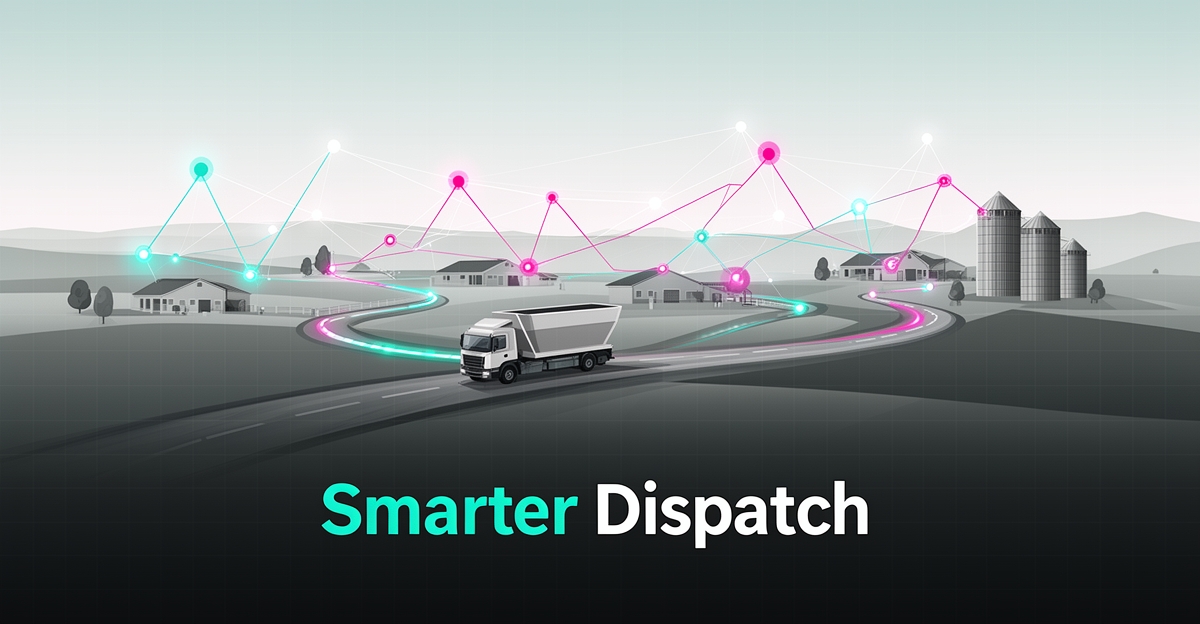
How an AI Employee Can Manage Field Service Requests for Feed Delivery
Key Facts
- Manual dispatch planning typically consumes hours each morning, while AI calculates optimal routes in seconds.
- In field service, customers overwhelmingly favor the first business that responds — speed is a competitive necessity, not a nice-to-have.
- AI dispatch algorithms process thousands of assignment combinations simultaneously, weighing distance, traffic, time windows, vehicle capacity, and driver skills.
- AI can analyze sensor and usage data to predict restocking and equipment needs before they become emergencies, enabling proactive scheduling that reduces downtime.
- AIQ Labs AI Employees typically cost around 80% less than an equivalent human hire while working 24/7/365.
- Fragmented feed supply chains create delays and inefficiencies due to siloed data and manual-heavy processes.
- Dynamic AI routing automatically adjusts for traffic, weather, and priority changes, reducing travel time and fuel costs while increasing daily delivery capacity.
Hire a team member that works 24/7 — for less than a part-time wage.
AI receptionists, SDRs, dispatchers and 99+ roles. Trained on your business, fully managed.
Not sure where to start? Ask our AI planner
The Hidden Cost of Manual Dispatching in Feed Delivery
Phone rings, email pings, spreadsheet updates pile up — and the morning dispatch plan for feed deliveries is already behind. For veterinary feed stores juggling clinics, farms, and drivers across fragmented tools, manual coordination creates daily friction that compounds into lost revenue.
Manual dispatch relies on phone, email, and spreadsheets that never sync in real time. For many operations, morning planning typically takes hours before the first truck moves, while AI dispatch software calculates optimal assignments in seconds. That planning lag leaves windows missed and drivers idle.
Fragmentation is the core cost driver. Feed supply chains that run on siloed systems suffer multiple manual touchpoints, delays from a lack of data synchronization, and poor coordination from manual-heavy processes. Clinics call for urgent restocks, farms text changes, and drivers report back via notes — none of it connects.
The revenue impact shows up in response speed. Field service operators consistently find that customers favor the first business that responds when they reach out online. When dispatch is stuck rebuilding routes by hand, the first-responder advantage goes to competitors with faster, integrated operations.
Manual-heavy processes also lock teams into reactive work. The traditional field service model is reactive: static schedules, manual dispatching, and firefighting. The modern model is predictive, data-driven orchestration. Without live visibility, stores cannot prioritize urgent deliveries, confirm stock availability, or re-route around traffic and weather.
The hidden cost shows up across the day:
- Morning planning consumes hours before any truck moves
- Missed or late delivery windows erode trust with clinics and farms
- Drivers receive conflicting instructions from calls, texts, and spreadsheets
- First-responder opportunities are lost while staff chase updates
These frictions turn field service into a cost center instead of a relationship builder. Operational friction accumulates as small delays, and each delay increases the chance of stockouts, emergency orders, and churn.
AIQ Labs works with veterinary feed stores to automate delivery scheduling, track vehicle routes, and manage field service requests from clinics or farms through fully trained AI Employees that handle scheduling, updates, and real-time dispatch. The shift moves dispatchers from route builders to operations managers, freeing human teams for judgment calls while automation handles the repetitive coordination.
When data flows between clinics, farms, and drivers, stores gain the visibility needed to deliver on time, respond first, and protect margin.
From Reactive to Predictive: How AI Transforms Feed Logistics
The feed supply chain is functionally mature, but it lacks the orchestration layer to manage data from disparate systems and turn it into actionable insights. This fragmentation creates delays, manual-heavy processes, and missed opportunities to prevent stockouts before they happen. For veterinary feed stores, the difference between a reactive scramble and a predictive operation determines whether a clinic receives its order on time or faces an empty bin.
The shift begins with data. AI in field service analyzes sensor data, service histories, and asset performance records to predict needs before they become emergencies. Instead of waiting for a farm to call about low feed levels, the system flags the probability based on consumption patterns and historical usage. This moves the operation from static delivery schedules to dynamic, data-driven orchestration.
Manual dispatch planning typically takes hours each morning, while AI processes thousands of assignment combinations in seconds. The algorithm weighs distance, traffic patterns, time windows, vehicle capacity, and driver skills simultaneously. When a clinic submits an urgent request mid-day, the system recalculates routes automatically rather than forcing a dispatcher to rebuild the entire schedule.
This predictive capability transforms how field service requests are handled. AI-driven predictive maintenance reduces emergency repairs by analyzing real-time sensor data and historical failure records. For feed delivery, this means the system identifies which farms will need restocking soonest and batches those deliveries efficiently. The result is fewer emergency runs, lower fuel costs, and more deliveries completed per day.
The operational benefits extend beyond routing. Because customers overwhelmingly favor the first business that responds, speed is a competitive necessity. An AI employee can acknowledge a field service request instantly, check inventory availability, and confirm a delivery window without human intervention. This responsiveness builds trust with veterinary clinics that cannot afford to wait for critical supplies.
Key capabilities that enable this transformation include:
- Proactive restocking suggestions based on sensor data and consumption patterns
- Dynamic route optimization that adjusts for traffic, weather, and priority changes
- Automated field service request handling from initial contact to dispatch confirmation
- Real-time visibility into vehicle locations and delivery status for customers
Moving from firefighting to strategic coordination requires integrating these capabilities into a single workflow. Connecting manufacturers, transporters, and farms into one ecosystem eliminates data silos. When the AI employee manages this orchestration, it frees human staff to handle complex customer relationships rather than administrative tasks.
AIQ Labs builds these systems as managed AI employees that integrate with existing tools. The dispatcher role shifts from route builder to operations manager, overseeing exceptions rather than manually assigning every stop. This allows veterinary feed stores to scale their delivery operations without proportionally increasing headcount, turning logistics from a cost center into a strategic advantage.
Meet Your AI Dispatcher: Automating Scheduling, Routing, and Communication
The morning dispatch board used to be a bottleneck — whiteboards, phone tag, and hours of manual route building that still left drivers stuck in traffic or missing delivery windows. An AI dispatcher changes that calculus entirely, shifting the role from route builder to operations manager by processing thousands of assignment combinations in seconds rather than the hours manual planning typically consumes each day.
- Intelligent scheduling that weighs distance, traffic patterns, time windows, vehicle capacity, and driver skills simultaneously
- Real-time route adjustments triggered by weather alerts, road closures, or urgent re-prioritization from clinics and farms
- Automated customer updates via voice, SMS, and email so recipients know exactly when feed arrives
- Seamless field service request handling — new orders from a veterinary clinic or farm flow straight into the optimization engine without human intervention
The impact compounds across the operation. Dynamic routing reduces travel time and fuel costs while adjusting automatically to shifting conditions, and because customers strongly favor the first responder, an AI employee that answers instantly — 24/7, without overtime — becomes a direct revenue lever. For veterinary feed stores juggling recurring deliveries and urgent field requests, this means fewer missed windows, lower cost per stop, and a dispatch function that never calls in sick.
AIQ Labs deploys AI Employees trained specifically for dispatch and logistics roles — one of 99+ managed roles including receptionists, SDRs, and dispatchers — integrating with existing scheduling tools, GPS systems, and communication platforms so the transition feels like onboarding a highly capable team member rather than implementing software. The result is a dispatch operation that runs continuously, learns from every route, and frees human staff to focus on exceptions and customer relationships instead of spreadsheets.
Deploying Your AI Employee: Integration, Oversight, and ROI
Deploying your AI employee begins with integration into your existing ERP and TMS systems, ensuring data flows without manual intervention. AIQ Labs connects directly to platforms like QuickBooks, Salesforce, or industry-specific feed management tools through secure API integrations, creating a unified operational hub. This eliminates the hours of daily planning time typically required for manual dispatching, because AI dispatch software processes all variables simultaneously, calculating optimal assignments in seconds while manual methods struggle with dynamic changes like last-minute order adjustments or traffic delays.
Human dispatchers transition into operations managers, focusing on exception handling, strategic planning, and continuous improvement rather than routine scheduling. With the AI employee managing real-time dispatch, route optimization, and customer updates — including voice-AI confirmations for delivery windows — staff can proactively address supply chain disruptions or equipment issues. This shift aligns with the evolution from reactive to predictive field service orchestration, where AI analyzes sensor data and service histories to prevent failures before they occur, enabling preemptive maintenance scheduling that reduces downtime and extends asset life.
AIQ Labs offers three flexible payment models: Start Monthly for rapid pilot deployment, Build in Milestones for phased workflow automation, or Own It Outright for full system ownership. Each model includes build, training, tool integration, monitoring, and continuous improvement — with the ability to pause or adjust as needed. See pricing for current details. A Start Monthly engagement delivers a fully trained AI dispatcher at roughly 80% less cost than an equivalent human hire, with 24/7/365 availability and no overtime, sick days, or missed shifts. This round-the-clock operation ensures no delivery windows are missed and positions you as the first responder when clinics and farms reach out.
By automating repetitive tasks like work order processing and schedule adjustments, the AI employee removes a large share of the administrative burden, freeing human teams to focus on high-value activities such as customer relationship management and route strategy. Faster, more accurate decisions follow naturally when AI handles the time-consuming coordination. The result is a scalable, resilient field service operation that turns dispatch from a cost center into a strategic advantage — ensuring every feed delivery arrives on time, every time.
Still paying for 10+ subscriptions that don’t talk to each other?
We build custom AI systems you own outright. No vendor lock-in. Full control.
Not sure where to start? Ask our AI planner
Frequently Asked Questions
How much time does manual dispatch planning typically take each morning for feed delivery operations?
Why does response speed matter so much in field service?
How does an AI employee improve field service request handling for veterinary feed stores?
What are the key capabilities of AI in transforming feed logistics from reactive to predictive?
Can AI employees work around the clock without breaks or sick days?
How does deploying an AI employee impact operational costs compared to human staff in dispatch roles?
Turn Dispatch Delays into Competitive Momentum
Manual dispatching in feed delivery isn't just inconvenient — it's actively eroding revenue through lost planning time, missed delivery windows, and delayed responses that hand advantages to competitors. Veterinary feed stores juggling clinics, farms, and drivers lose hours each morning to reactive scheduling, while fragmented communication creates confusion and delays that damage trust. The shift to an AI employee transforms this dynamic: by automating scheduling, optimizing routes in real time, and instantly handling field service requests, stores gain the visibility and speed needed to respond first, reduce operational friction, and turn logistics into a strategic advantage. AIQ Labs has deployed 200+ multi-agent systems and runs four live SaaS products daily — this is a managed AI Employee, trained, integrated, and continuously optimized, so your team can focus on relationships, not route spreadsheets. To see how this applies to your operation, start with the 2-minute Fit Check, or book a free 30-minute strategy call to map your biggest bottleneck and identify high-ROI automation opportunities.
Make AI your competitive advantage — not just another tool.
Strategy, implementation and ongoing optimization. One partner, end to end.
Not sure where to start? Ask our AI planner