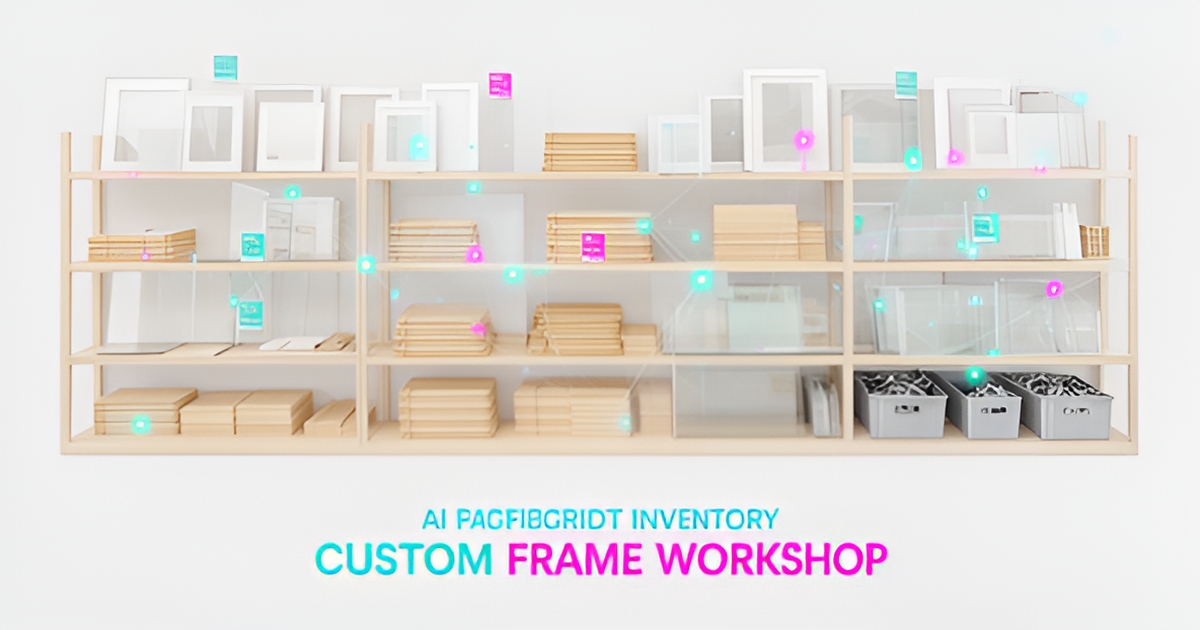
How an AI Employee Can Manage Inventory and Track Material Usage in Framing
Key Facts
- Industry research on agentic AI for inventory reports major reductions in both stockouts and excess inventory, freeing working capital
- AI-enhanced inventory forecasting typically cuts emergency orders by shifting from static reorder points to demand-driven replenishment
- AI inventory management automates tracking and ordering using machine learning, predictive analytics, computer vision and natural language processing
- Automated internal knowledge bases typically reduce repetitive questions from staff by a wide margin
- AIQ Labs has deployed 200+ multi-agent systems and runs 4 live SaaS products daily
Hire a team member that works 24/7 — for less than a part-time wage.
AI receptionists, SDRs, dispatchers and 99+ roles. Trained on your business, fully managed.
Not sure where to start? Ask our AI planner
The Hidden Cost of Manual Inventory Tracking in Framing
Framing shops don't just lose money on damaged glass or warped lumber; they bleed it daily through the quiet chaos of clipboards and spreadsheets. A missed cycle count here, a duplicate purchase order there, and suddenly a custom job stalls because the specific moulding profile is backordered with no warning.
The financial exposure of this blindness is severe. Businesses relying on manual tracking typically face greater losses from overcommitted capital and missed demand than the cost of modernizing their systems. Poor inventory visibility creates a direct pipeline to stockouts, excess holding costs, and missed revenue opportunities, turning the supply chain lifeline into a liability.
- Stockouts halting high-margin custom projects mid-assembly
- Over-ordering expensive materials like conservation glass and premium hardwoods
- Wasted labor hours spent reconciling physical counts with inaccurate records
- Inability to forecast seasonal demand spikes for holiday or wedding seasons
These blind spots force framers into a reactive posture—expediting shipments at premium rates or turning away work because materials aren't ready. AIQ Labs addresses this operational friction by deploying AI Employees that function as dedicated Inventory Managers, integrating directly with purchasing and project management tools to maintain a real-time single source of truth. Unlike static reorder points, these agents analyze historical consumption patterns and current project pipelines to dynamically adjust safety stock levels for every SKU, from V-nails to spacer tape.
The shift moves inventory from a counting exercise to a strategic function. A well-orchestrated inventory strategy drives efficiency, reduces waste, and strengthens resilience against disruptions by ensuring the right materials are available at the right time to meet customer expectations while controlling costs. For a framing business, that means the glass arrives before the artwork does, and capital stays deployed in growth—not sitting on a shelf gathering dust.
How AI Employees Enable Real-Time Material Tracking and Predictive Replenishment
Framing shops have long relied on manual counts and static reorder points, leaving them vulnerable to both stockouts and over-ordered moulding that ties up cash. An AI Employee changes that equation by turning inventory into a live, queryable data stream rather than a periodic snapshot.
Computer vision and predictive analytics form the backbone of this shift. Cameras or barcode scans at the workbench feed consumption data directly into the system, so every linear foot of wood, sheet of glass, and box of hardware is logged the moment it moves. Modern AI inventory platforms combine machine learning, predictive analytics, computer vision, and natural language processing to automate tracking, ordering, and distribution—moving well beyond traditional rule-based tools. The result is a single source of truth that updates in real time across purchasing, production, and finance.
- Object and image detection counts items and verifies placement without manual audits
- Dynamic reordering adjusts order points and quantities based on live demand signals
- Predictive models analyze historical patterns, seasonality, and project pipelines to forecast consumption
- Safety stock levels recalibrate automatically as supplier lead times shift
Agentic AI frameworks demonstrate how this plays out in practice: specialized agents analyze real-time data and historical trends to recommend acquisition and rebalancing actions, while a supplier communications agent automates vendor outreach and purchase-order follow-ups. Organizations using this approach typically report substantial reductions in both stockouts and excess inventory, freeing working capital and eliminating emergency expedite fees.
AIQ Labs deploys AI Employees that embed these capabilities directly into a framer's existing workflow—connecting to ERP, accounting, and project management tools so replenishment triggers align with actual job schedules, not generic minimums. The system learns each shop's consumption rhythms, supplier reliability, and seasonal swings, then adjusts buffers accordingly. No more guessing whether to order another pallet of maple or wait for the next delivery window.
From Pilot to Profit: Implementing AI Inventory Management with Measurable ROI
Jumping straight into a full-scale AI overhaul often leads to stalled pilots and wasted budget. A phased implementation approach mitigates risk by proving value at each stage before expanding scope.
The first phase targets a specific workflow fix: material tracking. Framing businesses frequently struggle with emergency orders and excess stock because inventory data lives in disconnected spreadsheets or outdated systems. AI agents address this by monitoring wood, glass, and hardware usage in real-time, integrating with existing ERP or shop management platforms to create a single source of truth. Poor inventory visibility leads to stockouts and excess holding costs, while well-orchestrated inventory strategies reduce waste and strengthen resilience against disruptions.
Once the initial workflow demonstrates measurable improvements—such as reduced emergency orders—integration deepens. The AI system connects with existing accounting and procurement tools to automate reordering based on dynamic thresholds rather than static minimums. AI-driven platforms enable dynamic reordering strategies by adjusting order points and quantities based on real-time demand signals, which minimizes stockouts and reduces reliance on expedited shipping. This integration phase typically involves connecting to your current software stack, ensuring data flows automatically between the shop floor and financial systems without manual entry.
AIQ Labs structures this expansion through a Build in Milestones model, allowing framing businesses to approve and pay for each phase as it ships. This approach lets you validate results phase-by-phase while retaining ownership of the custom-built agents, stopping anytime while keeping everything built so far. The milestone structure typically follows this progression:
- Real-time material tracking and usage monitoring
- Predictive forecasting for wood, glass, and hardware consumption
- Automated purchase order generation and vendor communications
- Full ERP integration and financial reporting automation
- Department-wide scaling to complete inventory automation
Scaling to full department automation transforms inventory from a cost center into a strategic advantage. AI agents analyze historical consumption patterns alongside current project pipelines to forecast material needs weeks in advance, optimizing cash flow by preventing over-ordering. Industry analysis confirms that intelligent automation reduces waste and improves accuracy while increasing labor productivity across warehouse operations.
The financial impact becomes measurable quickly. By maintaining optimal stock levels and eliminating rush orders, businesses free up working capital previously trapped in excess inventory. Improved cash flow results from aligning material purchases directly with production schedules rather than guessing at buffer stock requirements. This phased validation ensures that every dollar invested in AI automation delivers documented returns before the next phase begins.
Still paying for 10+ subscriptions that don’t talk to each other?
We build custom AI systems you own outright. No vendor lock-in. Full control.
Not sure where to start? Ask our AI planner
Frequently Asked Questions
How does an AI Employee actually track wood, glass and hardware usage in my framing shop?
Will AI inventory management stop stockouts on high-margin custom jobs?
Can AI reduce over-ordering of expensive materials like conservation glass and premium hardwoods?
Do I need to replace my ERP or shop management software to use an AI Inventory Manager?
What’s the ROI of moving from spreadsheets to AI inventory tracking?
How fast can I start and what does implementation look like?
From Clipboards to Capital Efficiency
Manual inventory tracking in framing isn't just an administrative burden—it's a silent profit leak. The shift from static spreadsheets to AI-driven material management turns reactive ordering into a strategic advantage: real-time consumption data replaces guesswork, predictive models align stock levels with actual project pipelines, and automated vendor communications eliminate the scramble of emergency expedites. Organizations deploying agentic AI for inventory typically report major reductions in both stockouts and excess inventory, freeing working capital that was previously trapped on shelves. AIQ Labs deploys AI Employees as dedicated Inventory Managers that embed directly into your existing ERP and project tools, learning your shop's unique rhythms—seasonal swings, supplier lead times, moulding consumption patterns—so materials arrive before the artwork does. The path forward doesn't require a rip-and-replace overhaul. Start with a single workflow fix: real-time tracking for your highest-cost materials. Validate the ROI, then expand. Ready to see what that first phase looks like for your shop? Take the two-minute Fit Check at aiqlabs.ai/apply and we'll map the highest-impact starting point on a free 30-minute strategy call at aiqlabs.ai/book.
Make AI your competitive advantage — not just another tool.
Strategy, implementation and ongoing optimization. One partner, end to end.
Not sure where to start? Ask our AI planner