How an AI Employee Can Manage Parking Violations and Enforcement Reports
Key Facts
- The global parking enforcement AI market was valued at $1.52 billion in 2024 according to market research
- The global parking enforcement AI market is projected to reach $7.5 billion by 2033 according to market forecasts
- The parking enforcement AI market is expected to grow at an 18.7% CAGR from 2025 to 2033 based on industry analysis
- AI-powered enforcement can achieve 100% revenue capture for parking facilities as claimed by Parkify
- Automated parking enforcement eliminates the need for officers on routine tasks per Parkify's operational claims
- License plate recognition is the foundation of modern parking control systems according to Parkify's technical assessment
- AI enforcement systems improve accuracy in violation identification while reducing labor costs based on industry research findings
Hire a team member that works 24/7 — for less than a part-time wage.
AI receptionists, SDRs, dispatchers and 99+ roles. Trained on your business, fully managed.
Not sure where to start? Ask our AI planner
The Hidden Costs of Manual Parking Enforcement
Traditional parking enforcement places a significant operational burden on organizations, consuming substantial resources while often delivering inconsistent results. The reliance on manual patrols and paper-based ticketing creates inefficiencies that directly impact both costs and revenue potential.
Labor costs represent the most visible expense, with enforcement officers spending considerable time on routine patrols that could be automated. Human error further compounds these costs, as missed violations or incorrect citations lead to disputes, administrative overhead, and lost revenue. Studies show that manual enforcement typically captures only a fraction of potential violations due to limited coverage and officer availability, creating significant revenue leakage. The global parking enforcement AI market, valued at $1.52 billion in 2024 and projected to reach $7.5 billion by 2033 with a 18.7% CAGR, reflects growing recognition that traditional methods are no longer sustainable for modern parking operations.
- Manual patrols cannot provide 24/7 coverage, leaving violations undetected during nights, weekends, and holidays
- Paper-based citation systems create delays in processing and increase the likelihood of lost or disputed tickets
- Inconsistent enforcement leads to perceived unfairness among users and reduces overall compliance rates
- Administrative overhead from manual data entry and ticket processing consumes valuable staff time
- Limited data collection prevents operators from identifying patterns or optimizing enforcement strategies
These hidden costs accumulate over time, eroding profitability and limiting the ability to reinvest in better parking experiences. As urban areas grow and parking demand increases, the gap between what manual enforcement can deliver and what modern operations require continues to widen. Organizations seeking to address these challenges are increasingly turning to automation solutions that eliminate routine enforcement tasks while improving accuracy and coverage. AIQ Labs supports this transition by providing AI Employees specifically trained for operational compliance functions, allowing human staff to focus on higher-value activities like customer service and strategic planning. The shift toward AI-powered enforcement isn't just about technology—it's about reclaiming operational efficiency and ensuring that parking resources are managed effectively for both operators and users.
What an AI Enforcement Employee Actually Does
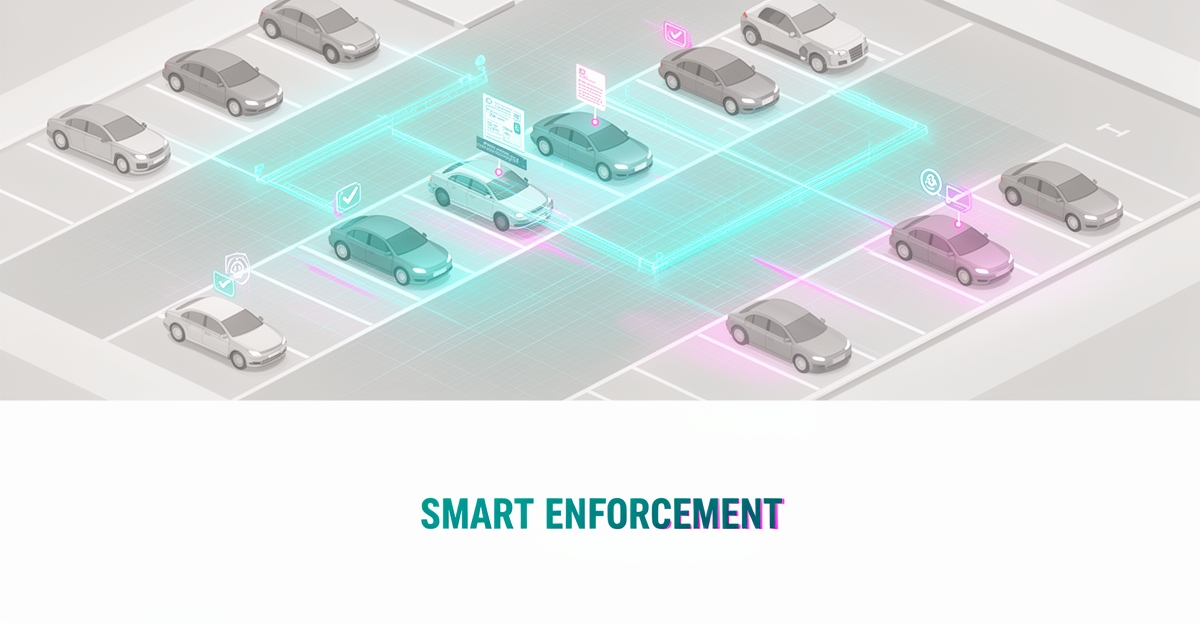
An AI enforcement employee transforms parking violation management from a reactive, labor-intensive process into a continuous, automated workflow. This AI employee operates 24/7, using license plate recognition and computer vision to monitor parking facilities in real time, identifying violations the moment they occur without fatigue or oversight. Unlike human officers limited by shift schedules, this AI agent maintains constant vigilance across multiple zones, instantly flagging expired meters, unauthorized parking, or time-limit breaches through integrated sensor data and video analysis.
The AI employee automates the entire enforcement cycle from detection to resolution. When a violation is confirmed, it generates a digital citation complete with timestamp, location, vehicle details, and applicable fine based on configured municipal ordinances. This citation is then delivered via SMS, email, or portal notification, while simultaneously logging the incident for audit trails and payment tracking. The system handles payment processing through integrated gateways, sends escalation notices for unpaid fines, and routes complex cases—such as disputes or repeat offenders—to human supervisors for review, ensuring compliance with due process requirements.
This operational role aligns with AIQ Labs' AI Dispatcher and AI Quality Assurance Agent functions within the Operations & Logistics category, where AI employees manage rule-based workflows requiring precision and consistency. By handling routine detection, documentation, and initial notification tasks, the AI enforcement employee reduces the burden on municipal staff, allowing them to focus on community engagement, complex adjudication, and strategic planning. As noted in industry research, AI-powered enforcement systems improve accuracy in violation identification and significantly reduce the labor costs associated with manual patrols and paper-based ticketing, creating a more efficient and scalable approach to parking compliance.
Core Workflows: From Violation Detection to Revenue Collection
The parking enforcement process begins the moment a vehicle enters a monitored zone. AI-powered systems use license plate recognition to instantly capture plate data as cars arrive or depart, enabling continuous, real-time surveillance without human patrols. This technology forms the foundation of modern parking control, allowing for immediate identification of vehicles that may be in violation of posted rules. Parkify's claim confirms that license plate recognition is essential for automated enforcement, and AIQ Labs integrates this capability into its AI Employee workflows to ensure no violation goes undetected.
Once a license plate is read, the AI Employee validates the observation against local ordinances using a configurable rule engine. This includes checking time limits, permit requirements, restricted zones, and payment status—all tailored to the specific municipality or private facility’s regulations. By automating this validation, the system eliminates guesswork and ensures consistent application of rules, reducing disputes and improving fairness. Parkify's claim notes that parking management software can be fully configured to match local laws, a feature AIQ Labs builds into every AI Employee deployment for accurate, compliant enforcement.
Upon confirmation of a violation, the AI Employee generates and delivers a digital citation instantly via SMS, email, or a secure portal—replacing paper tickets with a traceable, auditable record. The system then enables seamless payment collection through multiple channels, including credit cards, mobile wallets, and online portals, improving convenience for users and accelerating revenue flow. Parkify's claim highlights that automated enforcement supports multiple payment methods and can lead to 100% revenue capture, a outcome AIQ Labs designs its workflows to achieve through end-to-end automation.
- Real-time license plate recognition for immediate vehicle identification
- Rule-based validation against configurable local ordinances
- Instant digital citation delivery via SMS, email, or portal
- Multi-channel payment acceptance for faster revenue collection
- Audit-ready logging for compliance and reporting
Every step is logged with timestamps, geolocation, and rule references, creating a complete audit trail that supports regulatory compliance and financial accountability. This level of traceability ensures that all enforcement actions are transparent, defensible, and ready for review—critical for municipalities and private operators alike. By automating the full workflow from detection to revenue, AI Employees free up human staff to focus on higher-value tasks like customer service and exception handling, aligning with AIQ Labs’ approach in AI Payroll & HR Automation where intelligent systems handle repetitive, rule-based work to optimize team productivity.
Integration, Compliance & Human-in-the-Loop Safeguards
Deploying an AI employee for parking enforcement only delivers value when it fits cleanly into the technology stack already running the facility. The system connects to existing LPR cameras, occupancy sensors, and payment gateways through the Model Context Protocol, turning disparate hardware into a single, auditable workflow without ripping out legacy infrastructure. Parkify notes that license plate recognition forms the foundation of modern parking control, and MCP lets the AI employee read those feeds, cross-reference permit databases, and trigger digital citations in real time.
- Bidirectional sync with CRM, accounting, and dispatch platforms via standard APIs
- Configurable rules engine that maps local ordinances to automated actions
- Encrypted data paths that satisfy GDPR, CCPA, and municipal privacy statutes
- Audit trails captured at every decision point for compliance reviews
Regulatory alignment is baked into the architecture rather than bolted on afterward. The AI employee enforces only the rules loaded into its policy layer—time limits, zone restrictions, permit tiers—so citations remain defensible in adjudication. Market analysis projects the global parking enforcement AI sector to reach $7.5 billion by 2033, growing at an 18.7 % CAGR, a trajectory driven partly by municipalities demanding provable compliance with data-privacy and due-process requirements.
When the AI encounters an edge case—an obscured plate, a disputed handicap placard, or a vehicle matching a stolen-car alert—it escalates to a human reviewer with full context: timestamped images, sensor logs, and the specific rule triggered. This human-in-the-loop safeguard keeps error rates low while preserving the 24/7 coverage that operators report eliminates the need for routine patrol staff. AIQ Labs configures these escalation paths during onboarding, then monitors and refines them as part of the ongoing management included in the flat monthly plan.
Deployment Models: From Pilot to Full Enforcement Automation
Parking enforcement is shifting from reactive patrols to proactive, data-driven automation. AIQ Labs' engagement models provide a clear path for municipalities and private operators to adopt AI-powered systems without overhauling existing operations overnight. Starting with a single AI Enforcement Agent allows teams to test capabilities in real-world conditions while maintaining human oversight. This low-risk entry point begins with the Fit Check and free strategy call to map current workflows and identify high-impact automation opportunities.
For departments ready to scale, the Build in Milestones model breaks implementation into manageable phases—such as automating violation detection, fine generation, and notification workflows—with approval and payment at each stage. Teams retain all built components even if they pause, ensuring progress isn't lost. This approach aligns with the industry trend toward phased automation, where systems evolve from pilot projects to integrated enforcement tools. According to market research, the global parking enforcement AI market is projected to reach $7.5 billion by 2033, growing at an 18.7% CAGR from 2025 to 2033, driven by urbanization and smart city initiatives.
Organizations seeking full control can opt for Own It Outright, which delivers a complete parking operations OS with ownership of code, agents, and data. This model supports end-to-end automation—from license plate recognition to digital citation delivery—while eliminating dependency on third-party platforms. AIQ Labs integrates with existing tools like payment processors and CRM systems through the Model Context Protocol, ensuring seamless operation. As noted in industry analyses, AI-powered enforcement reduces labor costs significantly by automating routine tasks, improves accuracy in violation detection, and enhances revenue capture through streamlined digital processes. The three models collectively address the challenge of moving beyond pilot stages, offering structured pathways to scale AI adoption based on organizational readiness and budget constraints. Starting with the Fit Check ensures the first step is focused, measurable, and tied to specific operational pain points.
Still paying for 10+ subscriptions that don’t talk to each other?
We build custom AI systems you own outright. No vendor lock-in. Full control.
Not sure where to start? Ask our AI planner
Frequently Asked Questions
How much does the global parking enforcement AI market cost and how fast is it growing?
Will an AI enforcement employee completely replace human parking officers?
How does the AI ensure citations are legally defensible and compliant with local laws?
What happens to our existing cameras, sensors, and payment systems when we add an AI enforcement employee?
Can we start small with a pilot before committing to full automation?
How does digital citation delivery improve revenue collection compared to paper tickets?
Reclaim Enforcement Capacity Without Adding Headcount
Manual patrols, paper tickets and limited coverage are quietly eroding parking revenue and staff capacity. An AI Enforcement Employee changes that by delivering 24/7 license plate recognition, rule-based validation, instant digital citations and multi-channel payment collection, with human-in-the-loop safeguards for edge cases. The result is consistent enforcement, defensible audit trails and more revenue captured per zone, while freeing municipal and private teams to focus on customer service and strategic planning instead of routine patrols. With the global parking enforcement AI market projected to reach $7.5 billion by 2033, the shift from reactive patrols to continuous automation is becoming the operational standard. Start with a focused assessment of your highest-leakage workflows, map the rules you need enforced, and pilot one AI Employee for violation detection and notification. If you want a clear, no-obligation view of where automation fits first, Start the Fit Check at https://aiqlabs.ai/apply for a free 30-minute strategy call to map your biggest bottleneck and identify high-ROI automation opportunities.
Make AI your competitive advantage — not just another tool.
Strategy, implementation and ongoing optimization. One partner, end to end.
Not sure where to start? Ask our AI planner